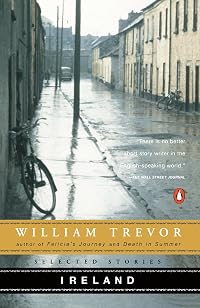
Ireland
by William Trevor
On This Page
Description
"These nineteen stories - selected by Trevor himself from The Collected Stories and After Rain - capture the nuances of rural and middle-class life in the Ireland he knows so well. Here are its people, their lives driven by love, faith, and duty, surviving in a culture that blends tradition with transformation."--BOOK JACKET.Tags
Recommendations















Member Reviews
There are a number of collections William Trevor's short stories. This may be the best one. Trevor portrays people trapped in lives they sometimes barely recognize and seemingly have little control over. There is love in many forms: illicit love, lost love, adulterous love, cruel love and even pure love. The stories in this collection, as the title suggests, are all set in Ireland.
Aging spinsters and bachelors in a small town meet at a dance on Saturdays and eventually settle for who they can before it gets too late in life. A young couple
marries because they have to. The bride thinks "they might make some kind of marriage together because there was nothing that could be destroyed, no magic or anything else."
A worldly priest convinces show more his homebound brother to take a trip to the holy land and their controlling mother dies while they're gone. "She'd know what she was doing by dying when she had." A British woman, part of a group that visit Ireland yearly, witnesses a suicide - an indirect result of the troubles. It changes her life and that of her feckless companions.
As well as tension between Protestants and Catholics, there is often the same between the Irish and English, as there is during the potato famine at the estate of an English family who return to Ireland when they inherit a farm.
Most of Trevor's writing mines deep below the surface of the story. He's pulling threads you didn't even know were there to pull. These stories are a pleasure to read as many times as you can. show less
Aging spinsters and bachelors in a small town meet at a dance on Saturdays and eventually settle for who they can before it gets too late in life. A young couple
marries because they have to. The bride thinks "they might make some kind of marriage together because there was nothing that could be destroyed, no magic or anything else."
A worldly priest convinces show more his homebound brother to take a trip to the holy land and their controlling mother dies while they're gone. "She'd know what she was doing by dying when she had." A British woman, part of a group that visit Ireland yearly, witnesses a suicide - an indirect result of the troubles. It changes her life and that of her feckless companions.
As well as tension between Protestants and Catholics, there is often the same between the Irish and English, as there is during the potato famine at the estate of an English family who return to Ireland when they inherit a farm.
Most of Trevor's writing mines deep below the surface of the story. He's pulling threads you didn't even know were there to pull. These stories are a pleasure to read as many times as you can. show less
Masterful short story writers make their craft seem easy. They give you a window to the world that is as accessible and intimate as if you were part of the story. In William Trevor’s case, the writing is so mellifluous that your instinct is to feel a bit guilty for eavesdropping on the lives of his characters.
Ireland is a 1998 collection of previously published stories by Trevor, and my own introduction to his work. Trevor, an Irishman who spent most of his long life in England, died in 2016 and is widely recognized as one of the finest short story writers in the English language. After reading this book, I understand why.
I can’t easily explain why I love Trevor‘s stories, but I do. There’s very little going on in them--at show more least on the outside. Yet he relates in a rich but digestible style the inner workings of his characters' hearts and minds, and explores their circumstances with a deft gift for description and pacing. He reveals the undercurrent of his characters' lives and so provides a touchstone for our own experiences. Though his stories are often set in the Ireland of the 1940s, there is a universal quality to them that is no doubt part of his global appeal.
We read about two brothers on a long awaited trip to the Holy Land who learn that their mother has passed away back home. We see them react differently to that news and learn about their delicate family dynamic in the process, which spurs us to consider the sensitivities of our own complicated family relationships.
We catch a glimpse of a young woman and her visits with her father, who has divorced her mother and no longer lives with them. He faithfully spends time with her, but their activity is always the same--oysters and drinks at the local pub, and the same surface chitchat interrupted by horse racing advice to various patrons. She takes the bus home; he leaves to his flat. Little happens, yet Trevor masterfully explores her self-doubts, her love for her dad, her worries about the life he leads and whether she could take care of him when she's older. We wonder about the echoes of familiarity with our own relationships.
Similar to Chekhov, Trevor's stories begin and end rather abruptly. This is part of their magic to me. We, the reader, are left to fill in the gaps. I found myself wondering often what became of the characters. In an interview with the BBC before he passed, Trevor said himself that this was part of the magic of short stories. I agree. But for the parts he does reveal to us, he makes a masterwork of it. I'll be on to more from him soon. To think I stumbled across this collection in a used book shop in Denver. show less
Ireland is a 1998 collection of previously published stories by Trevor, and my own introduction to his work. Trevor, an Irishman who spent most of his long life in England, died in 2016 and is widely recognized as one of the finest short story writers in the English language. After reading this book, I understand why.
I can’t easily explain why I love Trevor‘s stories, but I do. There’s very little going on in them--at show more least on the outside. Yet he relates in a rich but digestible style the inner workings of his characters' hearts and minds, and explores their circumstances with a deft gift for description and pacing. He reveals the undercurrent of his characters' lives and so provides a touchstone for our own experiences. Though his stories are often set in the Ireland of the 1940s, there is a universal quality to them that is no doubt part of his global appeal.
We read about two brothers on a long awaited trip to the Holy Land who learn that their mother has passed away back home. We see them react differently to that news and learn about their delicate family dynamic in the process, which spurs us to consider the sensitivities of our own complicated family relationships.
We catch a glimpse of a young woman and her visits with her father, who has divorced her mother and no longer lives with them. He faithfully spends time with her, but their activity is always the same--oysters and drinks at the local pub, and the same surface chitchat interrupted by horse racing advice to various patrons. She takes the bus home; he leaves to his flat. Little happens, yet Trevor masterfully explores her self-doubts, her love for her dad, her worries about the life he leads and whether she could take care of him when she's older. We wonder about the echoes of familiarity with our own relationships.
Similar to Chekhov, Trevor's stories begin and end rather abruptly. This is part of their magic to me. We, the reader, are left to fill in the gaps. I found myself wondering often what became of the characters. In an interview with the BBC before he passed, Trevor said himself that this was part of the magic of short stories. I agree. But for the parts he does reveal to us, he makes a masterwork of it. I'll be on to more from him soon. To think I stumbled across this collection in a used book shop in Denver. show less
I've been nursing myself through these stories for several weeks, mostly because one cannot read more than one of these thoughtful but often depressing gems at a time. Here are stories of Ireland in settings from the Famine Era up through the 1980's, over a hundred years of a culture in which its mythology was more positive than its reality. One can think of these as stories, but they are also insights into society and the social subconscious of a country. Some are disturbing, some -- like "Two More Gallants" -- cleverly and bitingly comment on Irish literary tradition, and a few reveal a glimmer of hope for readers and for Ireland. All are remarkable.
These bleak stories, all set in Ireland, highlight hopelessness of somesort. Two of the stories I found to be very depressing. Strangely, the others were not. In most there is a small triumph.. not enough to give hope or make you feel good but enough to make you carry on.
Ratings
Members
- Recently Added By
Lists

Tour of Ireland
40 works; 11 members
Author Information

120+ Works 13,475 Members
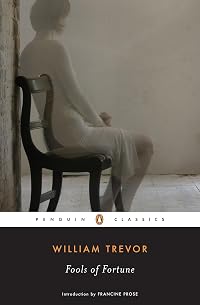
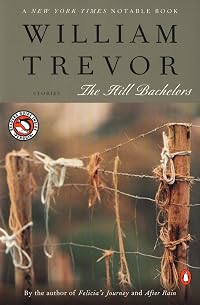
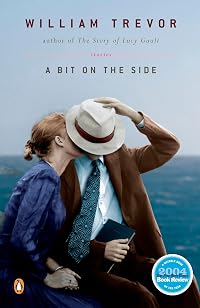
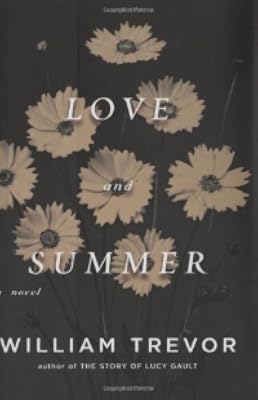
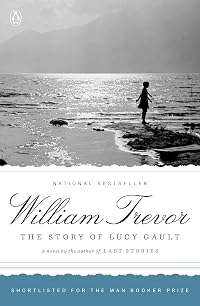
William Trevor Cox was born in Mitchelstown, County Cork, Ireland on May 24, 1928. He received a degree in history from Trinity College in 1950. Before becoming a full-time author in 1965, he worked as a sculptor, a teacher, and a copywriter at an advertising agency. He exhibited his sculptures in Dublin and England and was joint winner of the show more International Year of the Political Prisoner art competition in 1952. His first novel, A Standard of Behaviour, was published in 1958. His other novels include Other People's Worlds, Nights at the Alexandra, The Silence in the Garden, The Story of Lucy Gault, My House in Umbria, and Love and Summer. He won the Hawthornden Prize in 1964 for The Old Boys, the Whitbread Award in 1976 for The Children of Dynmouth, the Whitbread Award in 1983 for Fools of Fortune, and the Whitbread Award in 1994 for Felicia's Journey. His short story collections include The Day We Got Drunk on Cake and Other Stories, The Ballroom of Romance and Other Stories, Beyond the Pale, A Bit on the Side, Cheating at Canasta, and The Mark-2 Wife. The Hill Bachelors received the 2001 Irish Times Irish Literature Prize for Fiction and the PEN/Macmillan Silver Pen Award for Short Stories. He received the Allied Irish Banks' Prize in 1976, The Sunday Times Award for Literary Excellence in 1992, the David Cohen British Literature Prize in 1999, and the Bob Hughes Lifetime Achievement Award in Irish Literature in 2008. In 1977, he was awarded an honorary CBE in recognition of his services to literature. He died on November 20, 2016 at the age of 88. (Bowker Author Biography) show less
Classifications
Statistics
- Members
- 94
- Popularity
- 338,472
- Reviews
- 4
- Rating
- (4.29)
- Languages
- English
- Media
- Paper
- ISBNs
- 2