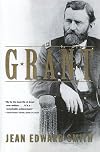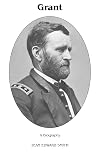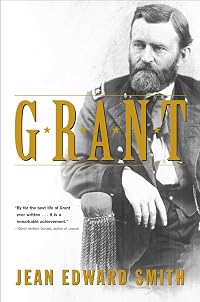
Grant
by Jean Edward Smith
On This Page
Description
Ulysses S. Grant was the first four-star general in the history of the United States Army and the only president between Andrew Jackson and Woodrow Wilson to serve eight consecutive years in the White House. As general in chief, Grant revolutionized modern warfare. Rather than capture enemy territory or march on Southern cities, he concentrated on engaging and defeating the Confederate armies in the field, and he pursued that strategy relentlessly. As president, he brought stability to the show more country after years of war and upheaval. He tried to carry out the policies of Abraham Lincoln, the man he admired above all others, and to a considerable degree he succeeded. Yet today, Grant is remembered as a brilliant general but a failed president. In this comprehensive biography, Jean Edward Smith reconciles these conflicting assessments of Grant's life, arguing that Grant is greatly underrated as a president. Following the turmoil of Andrew Johnson's administration, Grant guided the nation through the post-Civil War era, overseeing Reconstruction of the South and enforcing the freedoms of new African-American citizens. His presidential accomplishments were as considerable as his military victories, says Smith, for the same strength of character that made him successful on the battlefield also characterized his years in the White House. show lessTags
Recommendations





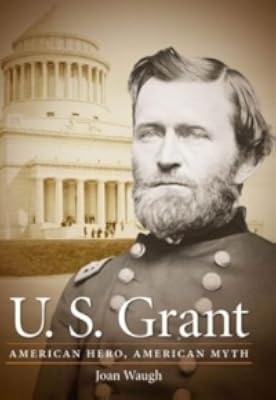
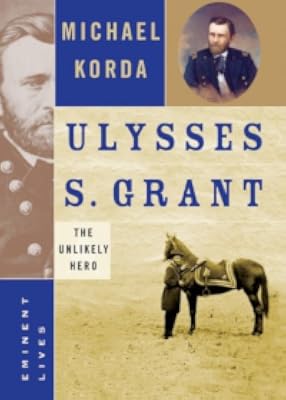


Member Reviews
One of my personal goals lately has been to read a biography of each US president in order. This approach has some distinct advantages - the biggest is the perspective one gets from seeing the overlapping look at events from the point of view of each president. As one might imagine, the quality of biographies varies, both on the scholarship and the interest side of writing. Clearly, the high point has been David McCullough's John Adams. After all, how many presidential biographies have been turned into a major series on HBO? Jean Edward Smith's Grant is easily on par with McCullough's work. The portrait of General Grant is sympathetic without glossing over his faults, interesting reading while keeping a high level of scholarship and show more analysis, and downright compelling in spots. The chapter on the surrender at Appomattox was one of the best pieces of writing I've read in a while.
There are, I'm sure, dissenting opinions on Grant. His military strategy, for example, is sometimes criticized for the heavy casualties it produced. His handling of relations with the Plains Indians was muddled and too trusting of those on the ground. He was in over his head dealing with business and finance, and was burned many times by less than scrupulous underlings. Smith recognizes these issues, but makes us see Grant's motivations, how that drove him to do the things he did, and the personal cost of these decisions through his life. And I don't think Smith was too easy on Grant - much of the discussion on his Presidency centered around how Grant's military style of leadership really wasn't well suited to the realities of a political office. Yet his popularity enabled him to get past this to succeed in major efforts Reconstruction and foreign policy even as his attempts to deal with Native American issues failed. Sometimes politics is about convincing others to do what you believe is right, not about command, and in many ways Grant didn't get that.
All in all, I highly recommend Smith's biography of Grant. It's good reading, and it's about an interesting person. He's also written a biography of FDR that I'm now going to make sure I read when the time comes! show less
There are, I'm sure, dissenting opinions on Grant. His military strategy, for example, is sometimes criticized for the heavy casualties it produced. His handling of relations with the Plains Indians was muddled and too trusting of those on the ground. He was in over his head dealing with business and finance, and was burned many times by less than scrupulous underlings. Smith recognizes these issues, but makes us see Grant's motivations, how that drove him to do the things he did, and the personal cost of these decisions through his life. And I don't think Smith was too easy on Grant - much of the discussion on his Presidency centered around how Grant's military style of leadership really wasn't well suited to the realities of a political office. Yet his popularity enabled him to get past this to succeed in major efforts Reconstruction and foreign policy even as his attempts to deal with Native American issues failed. Sometimes politics is about convincing others to do what you believe is right, not about command, and in many ways Grant didn't get that.
All in all, I highly recommend Smith's biography of Grant. It's good reading, and it's about an interesting person. He's also written a biography of FDR that I'm now going to make sure I read when the time comes! show less
Sadly, this is another book that sat on my shelf a little too long, and with Ron Chernow’s massive new biography just being published – a book I hope to read in the near future – I thought I’d better get busy reading Jean Edward Smith’s bio of the man who won the Civil War and then went on to be President. And having read it, I must confess to some shame at having too long passed by a great book that gives us an in depth look at Ulysses S. Grant, one that goes against some of the harsher judgments of historians. At a little more than 600 pages, Smith’s book is shorter than Chernow’s thick volume, but there is still plenty of depth and detail to satisfy the most fervent history buff. I especially liked the pace of book; show more Smith moves briskly through Grant’s early years in Ohio and Illinois, West Point and the Mexican War (which he thought was waged most unjustly) and arrives at the opening stages of the Civil War by Chapter Four on page 99.
Despite this fast pace early on, the author takes the time to give us a portrait of a man who went to West Point to get an education, served ably under fire in Mexico, and then floundered in the peace time army to the point where a drinking problem forced him to resign and return to civilian life, where he would fail in business and be reduced to working in a general store under his younger brothers. Just before the outbreak of the Civil War, Grant was selling fire wood on the streets of Galena, Illinois, in order to provide for his family; less than three years later, Grant was accepting the surrender of the Confederate commander at Vicksburg, the turning point of the war, one of the greatest reversals of personal fortune in American history. That Grant was humbled, even humiliated, in the years between the Mexican and Civil wars, there is no doubt, yet to his great credit, it did not make him bitter or arrogant in the later years when he was at the height of military and political power. Was Grant an alcoholic, as his enemies alleged during his lifetime, and many have implied in the years since? Smith gives plenty of evidence that the man had a problem with alcohol in his early years in the army, but that it was mainly acerbated by the separation, due to deployments, from his wife, Julia, and their children.
No period of American history has been better documented than years between 1961 and 1865, where the Civil War has been told and retold and revised from every conceivable viewpoint; what Smith does is concentrate on Grant as he rose from a Colonel in a company of Illinois volunteers to General in command of all Union armies in the field. If nothing succeeds like success, than Grant won by winning, more to the point, winning where others would have quit and retreated, like after the first day at Shiloh in 1862, where the Union army was routed from the field after a surprise attack by the Confederates at dawn; Grant held his ground, gathered reinforcements over night and counterattacked on the second day. In May of 1864, in Virginia at The Wilderness, Robert E. Lee’s army would pound the Union forces for three days, nearly rolling up the line and inflicting heavy casualties, yet when the carnage was done, Grant would flank Lee’s army and continue his relentless push toward Richmond, a campaign he that would not end until Appomattox. From Mill Springs to Forts Henry and Donaldson to Shiloh, Vicksburg, Chattanooga, The Wilderness, Spotsylvania, Cold Harbor, and Petersburg, Grant was cool under pressure, clear in his objectives, possessing an uncanny ability to get the most out of the forces at his command; he threw away the old Napoleonic War era playbook, and singlehandedly, forged the rules of modern warfare, where the destruction of the enemy’s capacity to wage war became the main goal. He would do all this, and still retain the confidence and affection of the men he ordered into battle, while earning the respect of his Confederate foes, to whom he gave generous terms and an outstretched hand on the day they surrendered.
After the assassination of Lincoln, Grant was the most universally popular figure in the nation, a position he somehow managed to retain as General of the Army through the turbulent politics of the early Reconstruction. That was not an easy feat as the irreconcilable goals of bringing the Confederates back into the Union while insuring and protecting the full rights of citizenship of the newly freed slaves brought on a clash between Lincoln’s politically inept successor, Andrew Johnson (who was Grant’s Commander in Chief) and the Republicans in Congress (who made the policy the Army would have to implement); the former wanted to restore the South to the Union (sans slavery) as if the war had never occurred, while the latter insisted on a military occupation of the Confederate states and vigorous protection by the federal government of the newly enfranchised freedman. It is not a high point in American history, and many of the prominent figures involved - Johnson, Charles Sumner, Edwin Stanton – did little to cover themselves in glory, but Grant remained true to the Constitution and the law as he saw, and straight forward in his dealings with all involved, while maneuvering his way through much political conniving. In 1868, he was the unanimous choice of the Republican Party and was elected President in a landslide, the first of two terms.
Smith does not give us a strictly linear account of Grant’s Presidency, instead giving us individual chapters devoted to how he handled foreign affairs, Reconstruction policy, the Indian Wars, and the Gilded Age. In the process, the author makes a good case that Grant was a much better President than he is given credit: patching up relations with Great Britain and settling grievances that had festered since the Civil War, establishing a harmonious relationship with the Mother country that has lasted to the present day; adapting a humane policy toward the Plains Indians as westward expansion increasingly brought them into conflict with white settlers, repeatedly resisting calls for an all out military solution advocated by Generals William Sherman and Philip Sheridan, both close friends of Grant; repeatedly using federal troops against the Klu Klux Klan and other white terrorist groups in the South, doing this even as support for Black American equality was rapidly diminishing in the Republican North. His order to the Treasury Department sell off part of its gold reserves on Black Friday (when speculators Jay Gould and Jim Fiske tried to corner the private gold market) helped stave off a devastating economic collapse, and was the first time the government in Washington had directly intervened to protect American citizens in an economic crisis. Quite a list of accomplishments, but it would be the squalid scandals and corruption of many of Grants appointees that would get the headlines, and sadly, would be what was most remembered from his administration. Grant’s own honesty was always above reproach, but in civilian life, he was not the best judge of character, and was far too trusting of men anxious to be his friend.
It was a trusting nature that would serve him poorly after the Presidency, when a part ownership in a Wall Street investment firm failed due to a dishonest partner would leave Grant penniless. He would restore financial security to his family by writing his memoirs of the Civil War years, written as Grant was dying of throat cancer. He finished the book only days before death. It was a bestseller; surprisingly, Grant was a natural born literary talent, his book is considered the benchmark against which all other Presidential memoirs are judged; it has never gone out of print. If I have one complaint, it is that Smith hurries through these last years, which are essential to understanding who Ulysses Grant was.
After reading this book, I think Grant, with the possible exception of George Washington, was the finest leader of men America ever produced, in warfare he had tenacity and drive that was simply unstoppable, put a Vicksburg or a Richmond in front of him, and it was as good as taken. He seemed devoid of vanity, and imbued with a humility and personal modesty that must have been a product of the hard times in his life, proving that the best leaders are people who have stumbled and fallen once or twice, and have had to get back up on their feet before success came their way.
Recently there have been calls by some in NYC, where Grant’s tomb is located, to remove his name from public monuments, part of an ongoing national jihad to punish the leaders of the past for being people of their times. Ulysses S. Grant deserves better from the nation he helped save in its worst crisis, read Jean Edward Smith’s fine biography and learn the story of a truly great American. show less
Despite this fast pace early on, the author takes the time to give us a portrait of a man who went to West Point to get an education, served ably under fire in Mexico, and then floundered in the peace time army to the point where a drinking problem forced him to resign and return to civilian life, where he would fail in business and be reduced to working in a general store under his younger brothers. Just before the outbreak of the Civil War, Grant was selling fire wood on the streets of Galena, Illinois, in order to provide for his family; less than three years later, Grant was accepting the surrender of the Confederate commander at Vicksburg, the turning point of the war, one of the greatest reversals of personal fortune in American history. That Grant was humbled, even humiliated, in the years between the Mexican and Civil wars, there is no doubt, yet to his great credit, it did not make him bitter or arrogant in the later years when he was at the height of military and political power. Was Grant an alcoholic, as his enemies alleged during his lifetime, and many have implied in the years since? Smith gives plenty of evidence that the man had a problem with alcohol in his early years in the army, but that it was mainly acerbated by the separation, due to deployments, from his wife, Julia, and their children.
No period of American history has been better documented than years between 1961 and 1865, where the Civil War has been told and retold and revised from every conceivable viewpoint; what Smith does is concentrate on Grant as he rose from a Colonel in a company of Illinois volunteers to General in command of all Union armies in the field. If nothing succeeds like success, than Grant won by winning, more to the point, winning where others would have quit and retreated, like after the first day at Shiloh in 1862, where the Union army was routed from the field after a surprise attack by the Confederates at dawn; Grant held his ground, gathered reinforcements over night and counterattacked on the second day. In May of 1864, in Virginia at The Wilderness, Robert E. Lee’s army would pound the Union forces for three days, nearly rolling up the line and inflicting heavy casualties, yet when the carnage was done, Grant would flank Lee’s army and continue his relentless push toward Richmond, a campaign he that would not end until Appomattox. From Mill Springs to Forts Henry and Donaldson to Shiloh, Vicksburg, Chattanooga, The Wilderness, Spotsylvania, Cold Harbor, and Petersburg, Grant was cool under pressure, clear in his objectives, possessing an uncanny ability to get the most out of the forces at his command; he threw away the old Napoleonic War era playbook, and singlehandedly, forged the rules of modern warfare, where the destruction of the enemy’s capacity to wage war became the main goal. He would do all this, and still retain the confidence and affection of the men he ordered into battle, while earning the respect of his Confederate foes, to whom he gave generous terms and an outstretched hand on the day they surrendered.
After the assassination of Lincoln, Grant was the most universally popular figure in the nation, a position he somehow managed to retain as General of the Army through the turbulent politics of the early Reconstruction. That was not an easy feat as the irreconcilable goals of bringing the Confederates back into the Union while insuring and protecting the full rights of citizenship of the newly freed slaves brought on a clash between Lincoln’s politically inept successor, Andrew Johnson (who was Grant’s Commander in Chief) and the Republicans in Congress (who made the policy the Army would have to implement); the former wanted to restore the South to the Union (sans slavery) as if the war had never occurred, while the latter insisted on a military occupation of the Confederate states and vigorous protection by the federal government of the newly enfranchised freedman. It is not a high point in American history, and many of the prominent figures involved - Johnson, Charles Sumner, Edwin Stanton – did little to cover themselves in glory, but Grant remained true to the Constitution and the law as he saw, and straight forward in his dealings with all involved, while maneuvering his way through much political conniving. In 1868, he was the unanimous choice of the Republican Party and was elected President in a landslide, the first of two terms.
Smith does not give us a strictly linear account of Grant’s Presidency, instead giving us individual chapters devoted to how he handled foreign affairs, Reconstruction policy, the Indian Wars, and the Gilded Age. In the process, the author makes a good case that Grant was a much better President than he is given credit: patching up relations with Great Britain and settling grievances that had festered since the Civil War, establishing a harmonious relationship with the Mother country that has lasted to the present day; adapting a humane policy toward the Plains Indians as westward expansion increasingly brought them into conflict with white settlers, repeatedly resisting calls for an all out military solution advocated by Generals William Sherman and Philip Sheridan, both close friends of Grant; repeatedly using federal troops against the Klu Klux Klan and other white terrorist groups in the South, doing this even as support for Black American equality was rapidly diminishing in the Republican North. His order to the Treasury Department sell off part of its gold reserves on Black Friday (when speculators Jay Gould and Jim Fiske tried to corner the private gold market) helped stave off a devastating economic collapse, and was the first time the government in Washington had directly intervened to protect American citizens in an economic crisis. Quite a list of accomplishments, but it would be the squalid scandals and corruption of many of Grants appointees that would get the headlines, and sadly, would be what was most remembered from his administration. Grant’s own honesty was always above reproach, but in civilian life, he was not the best judge of character, and was far too trusting of men anxious to be his friend.
It was a trusting nature that would serve him poorly after the Presidency, when a part ownership in a Wall Street investment firm failed due to a dishonest partner would leave Grant penniless. He would restore financial security to his family by writing his memoirs of the Civil War years, written as Grant was dying of throat cancer. He finished the book only days before death. It was a bestseller; surprisingly, Grant was a natural born literary talent, his book is considered the benchmark against which all other Presidential memoirs are judged; it has never gone out of print. If I have one complaint, it is that Smith hurries through these last years, which are essential to understanding who Ulysses Grant was.
After reading this book, I think Grant, with the possible exception of George Washington, was the finest leader of men America ever produced, in warfare he had tenacity and drive that was simply unstoppable, put a Vicksburg or a Richmond in front of him, and it was as good as taken. He seemed devoid of vanity, and imbued with a humility and personal modesty that must have been a product of the hard times in his life, proving that the best leaders are people who have stumbled and fallen once or twice, and have had to get back up on their feet before success came their way.
Recently there have been calls by some in NYC, where Grant’s tomb is located, to remove his name from public monuments, part of an ongoing national jihad to punish the leaders of the past for being people of their times. Ulysses S. Grant deserves better from the nation he helped save in its worst crisis, read Jean Edward Smith’s fine biography and learn the story of a truly great American. show less
I have been reading a number of biographies of US presidents, focusing on their years in office and skipping most of the earlier years. "Grant" devotes less about a quarter of its 628 page volume to his two terms as president, so I thought I would read a bit about his Civil War battles to get to know the man coming into the White House. I found those chapters so interesting, and with so many references to previous battles and officers on both sides, that I hopped back even further, to his battles in what was then called the 'west', Kentucky, Tennessee, etc. So my route through "Grant" was not typical, but very enjoyable nevertheless. Matter of fact, in the coming weeks, I will probably pick up the book once again, and read of his show more experiences in the Mexican War (I know little of that war anyway) and perhaps of his meeting Julia. I have become so enamored of Grant, that I have ordered his Memoirs, written over 130 years ago; I understand that book focuses mainly on the Civil War and the edition I ordered includes many personal letters that he wrote to family.
Coming into Smith's book I was certainly aware of Grant's bulldog tenacity, something not at all characteristic of the many generals who had preceded him. Most casual readers of Civil War history know that he went after Lee and just kept at him. Attack, attack, attack. What Smith's book does such a fine job at is describing what a strategic thinker Grant was, how his personality differed from most other generals, and how effective his leadership style was. Not only on the battlefield, but in handling his bosses back in Washington, including Lincoln.
If there was one portion of the book that I wished more detailed, it would be the White House years. Smith covers the major issues of the time, reconstruction, the economy, Native Americans and violence in the West, and budding diplomatic relationships, but there didn't seem to be much continuity. I had difficulty in occasionally identifying the specific time at which some of these events were happening. And there was little written about smaller issues. It seemed to me that 150 pages to cover two terms was insufficient.
Smith clearly liked Grant, and while he does mention his flaws, he may be a bit too kind in his judgments. I don't know; like many I had preconceived notions about Grant's drinking and the scandals that riddled his White House years, particularly the second term. Smith makes a convincing case that Grant wasn't the out of control drunk as portrayed in other accounts, nor was he guilty of any active participation in the several fraud cases surrounding his administration. But Smith would find him guilty of an unacceptable naivete, and an over-abundance of trust in his fellow man.
Grant died of cancer in 1885, only days after completing his memoirs. He was never an effective manager of his personal finances and was virtually penniless at the time of his death. But he was beloved by the country for both his leadership in the war and for his terms as president, and his memoirs sold extremely well providing Julia with sufficient funds thereafter. I recommend the book highly. show less
Coming into Smith's book I was certainly aware of Grant's bulldog tenacity, something not at all characteristic of the many generals who had preceded him. Most casual readers of Civil War history know that he went after Lee and just kept at him. Attack, attack, attack. What Smith's book does such a fine job at is describing what a strategic thinker Grant was, how his personality differed from most other generals, and how effective his leadership style was. Not only on the battlefield, but in handling his bosses back in Washington, including Lincoln.
If there was one portion of the book that I wished more detailed, it would be the White House years. Smith covers the major issues of the time, reconstruction, the economy, Native Americans and violence in the West, and budding diplomatic relationships, but there didn't seem to be much continuity. I had difficulty in occasionally identifying the specific time at which some of these events were happening. And there was little written about smaller issues. It seemed to me that 150 pages to cover two terms was insufficient.
Smith clearly liked Grant, and while he does mention his flaws, he may be a bit too kind in his judgments. I don't know; like many I had preconceived notions about Grant's drinking and the scandals that riddled his White House years, particularly the second term. Smith makes a convincing case that Grant wasn't the out of control drunk as portrayed in other accounts, nor was he guilty of any active participation in the several fraud cases surrounding his administration. But Smith would find him guilty of an unacceptable naivete, and an over-abundance of trust in his fellow man.
Grant died of cancer in 1885, only days after completing his memoirs. He was never an effective manager of his personal finances and was virtually penniless at the time of his death. But he was beloved by the country for both his leadership in the war and for his terms as president, and his memoirs sold extremely well providing Julia with sufficient funds thereafter. I recommend the book highly. show less
An excellent one-volume biography. Ulysses S. Grant just moved into position as one of my favorite presidents. I love how an ordinary guy, not particularly distinguished--dismissed, even from the army for drunkeness--falls bass-ackwards into the presidency. Well done! He may have been somewhat unsophisticated, as the New England elite were quick to point out, but he did genuinely believe in equal rights for black citizens.
Best biography I have read recently
It is a shame that history chose to downplay Grants importance during and after the civil war.
If you wish to learn the real General and President read Smith's biography. I now want to track down Grants memoirs. He wanted not only to do right by African Americans but the Native Americans as well. He also wanted to follow Lincoln's request that we show no malice to our Southern brethren by ending Johnson's animosity of the south. He had his generals end the Klu Klux Klan during his time he helped to get the country on a stable footing.
His biggest mistake was being to trusting of his closest confidants.
History buffs will enjoy this biography.
It is a shame that history chose to downplay Grants importance during and after the civil war.
If you wish to learn the real General and President read Smith's biography. I now want to track down Grants memoirs. He wanted not only to do right by African Americans but the Native Americans as well. He also wanted to follow Lincoln's request that we show no malice to our Southern brethren by ending Johnson's animosity of the south. He had his generals end the Klu Klux Klan during his time he helped to get the country on a stable footing.
His biggest mistake was being to trusting of his closest confidants.
History buffs will enjoy this biography.
Excellent biography of the most remarkable man. Significance of Grant in US history is well known, but this book made me realize what an extraordinary person he was. In fact, in terms of greatness of 19th century US presidents I rate him higher than Lincoln. It's quite amazing that he was penniless and totally unsuccessful in all his endeavors in his 30s. What an amazing transformation.
I do not know much about Grant. Well not in the great depth that author, Jean Edward Smith provided in this book. At over seven hundred pages, there is a ton of information. A good portion of the book starts out in very detail about the Civil War and the role and type of leader that Grant grew up to become. This played a strong part later in his life when he would become President.
As I stated, there is lots of information in this book. A history buff will enjoy this thoughtful book. If you didn't get enough information, you can find more facts in the footnotes throughout the book. These are gold nuggets to me. I enjoy reading these as they are packed full of interesting information. I am a fast reader but this book did take me a while show more to get through it due to all of the facts. After reading this book, I do have a better respect for Grant. I plan to check out other books written by this author. show less
As I stated, there is lots of information in this book. A history buff will enjoy this thoughtful book. If you didn't get enough information, you can find more facts in the footnotes throughout the book. These are gold nuggets to me. I enjoy reading these as they are packed full of interesting information. I am a fast reader but this book did take me a while show more to get through it due to all of the facts. After reading this book, I do have a better respect for Grant. I plan to check out other books written by this author. show less
Members
- Recently Added By
Lists

Recommend the 20 best books you've read in the last five years
2,168 works; 601 members

The Presidents
42 works; 2 members

Ulysses S. Grant & the American Civil War
24 works; 1 member
Author Information

11 Works 3,343 Members
Jean Edward Smith was born on October 13, 1932. He received an A.B. from Princeton University in 1954. He then went on to serve in the military from 1954-1961. In 1964, he obtained his Ph.D. from the Department of Public Law and Government of Columbia University. He is a well known biographer of several works inlcuding those featuring Franklin D. show more Rooselvelt and Ulysses S. Grant. He is the John Marshall Professor of Political Science at Marshall University and professor emeritus at the University of Toronto. In 2002 Jean Smith was a finalist for the Pulitzer Prize for Biography or Autobiography and in 2008 he won the Francis Parkman Prize. His title's inlcude: Bush, Eisenhower in War and Peace, FDR, Grant, and The Face of Justice: Portraits of John Marshall. (Bowker Author Biography) show less
Awards and Honors
Awards
Distinctions
Notable Lists
Common Knowledge
- Original publication date
- 2001
- People/Characters
- Ulysses S. Grant
- Important places
- Illinois, USA; Galena, Illinois, USA; St. Louis, Missouri, USA; Missouri, USA; Point Pleasant, Ohio, USA; Ohio, USA (show all 10); Washington, D.C., USA; United States Military Academy, West Point, New York, USA; Long Branch, New Jersey, USA; New Jersey, USA
- Important events
- American Civil War
- Dedication
- To John and Elizabeth Drinko, for their long and continued support of Americian education.
- First words
- Ulysses Grant was born at Point Pleasant, Ohio, April 27, 1822. (Chapter One)
- Last words
- (Click to show. Warning: May contain spoilers.)I have already too many trades to be proficient at any.
- Original language
- English
Classifications
- Genres
- History, Nonfiction, Biography & Memoir, General Nonfiction
- DDC/MDS
- 973.82092 — History & geography History of North America United States The Gilded Age, Reconstruction, Spanish American War (1865-1901) Ulysses S. Grant (1869-1877) 15th Amendment, Enforcements Acts, Panic of 1873
- LCC
- E672 .S627 — History of the United States United States Late nineteenth century, 1865-1900 Grant's administrations, 1869-1877
- BISAC
Statistics
- Members
- 704
- Popularity
- 40,419
- Reviews
- 15
- Rating
- (4.41)
- Languages
- English
- Media
- Paper, Audiobook, Ebook
- ISBNs
- 6
- ASINs
- 4