On This Page
Description
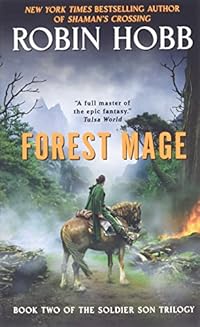
Plague has ravaged the prestigious King's Cavalla of Gernia, decimating the ranks of both cadets and instructors. Yet Nevare Burvelle has made an astonishingly robust recovery, defeating his sworn nemesis while in the throes of the disease and freeing himself-he believes-from the Speck magic that infected him. And now he is journeying home to Widevale, anticipating a tender reunion with his beautiful fiancée, Carsina, and a bright future as a commissioned officer. But there is no haven in show more the bosom of his kinfolk, for his nights are haunted by grim visions of treachery-and his days are tormented by a strange side-effect of the plague that shames his family and repulses the lady of his heart. And as the still-potent magic in his blood roars to life, Nevare realizes a terrible truth: that the enemy who seeks to destroy everything he loves dwells perhaps not without but within him. show lessTags
Recommendations

Member Reviews
This book seems to polarise readers and I can understand why. It’s long and slow paced, and Nevare is a difficult hero to love. Throughout the book he’s variously selfish, chauvinistic, hypocritical, and lacking a good moral compass. Even allowing for the influence of the magic it was hard to keep patience with him. I’ve noticed some reviewers complain of fat shaming. I’ve been bothered by this in other books but I don’t agree that it applies here. I don’t think that Hobb herself humiliated Nevare, or intended his weight to be a punchline, and her framing made all the difference to my mind. The use of prostitutes throughout the series by many of the male characters was a more uncomfortable aspect for me, and a further show more hindrance to how much I could sympathise with Nevare. On the other hand, I was glad that the main female characters came more into their own than in the first book, and I hope there will be more of this in book three. In the end, despite understanding, and even agreeing to a certain extent, with many of the negative reviews, I did enjoy this book, perhaps even more than book one. show less
If this is truly one of Hobb's weaker stories, as some of the other reviews here are saying, I should probably prepare myself to fall in love with her other work.
**vague spoilers from here on out**
I really dig this slow-burn style of writing. I liked the long conversations and the repetitions and whatnot. I liked watching her put all the pieces of wood on the stack before setting it aflame. The wild conflagration at the end of the story was made all the more believable for it.
Yes, the MC is a bit thickheaded and stubborn in his thinking. And the whole society seems to be built on a simpleminded loyalty to cruel traditions that no longer work. But those are two sides of the same coin and are also the point of the story. Nevare (Never!) show more refuses to leave the world that clearly no longer wants him and he is only becoming increasingly unsuited for it. But he won't leave it until he's basically pushed out of it. All of his thoughtfulness and industriousness is for naught.
It's like the story of Job except at the ending, instead of a reward for his faith in the Good God, he's stripped of everything he loves.
I don't know. I know people think she heaped too much misery on him, but I felt like it was a good set up for what I am expecting to be a satisfying third book. show less
**vague spoilers from here on out**
I really dig this slow-burn style of writing. I liked the long conversations and the repetitions and whatnot. I liked watching her put all the pieces of wood on the stack before setting it aflame. The wild conflagration at the end of the story was made all the more believable for it.
Yes, the MC is a bit thickheaded and stubborn in his thinking. And the whole society seems to be built on a simpleminded loyalty to cruel traditions that no longer work. But those are two sides of the same coin and are also the point of the story. Nevare (Never!) show more refuses to leave the world that clearly no longer wants him and he is only becoming increasingly unsuited for it. But he won't leave it until he's basically pushed out of it. All of his thoughtfulness and industriousness is for naught.
It's like the story of Job except at the ending, instead of a reward for his faith in the Good God, he's stripped of everything he loves.
I don't know. I know people think she heaped too much misery on him, but I felt like it was a good set up for what I am expecting to be a satisfying third book. show less
Robin Hobb's greatest strength as a writer is her ability to set characters with certain weaknesses and strengths of their own down into a set of circumstances and watch them react. I think she generally lets them react on their own, the way they would in such circumstances.
I think Hobb is one of the greatest living fantasy writers today. Her books make me think - over and over again. I read this one in a weekend. And I remembered what I'd forgotten about the Robin Hobb trilogies.
The middle book is always AWFUL.
Oh, I don't mean the writing is bad; it's not. But the situational turmoil the characters go through, and the emotional turmoil you share with them, is completely and utterly devastating. No holds barred. Hobbs pours on despair show more like the sand in one of those old B-movie closed-room booby traps... it just keeps coming and coming until it buries you and you drown in it or are crushed under the weight.
The few bright, hopeful spots are the size of fire-flies, tiny pin-pricks of light that do nothing at all substantial to hold back the darkness.
The world is still vibrant and alive, the whole situation still is rife with tension and interesting, there are some descriptions that almost approach food porn. But Nevarre, the protagonist, still continues to plod along with the most predictably insipid and boring decisions at every turn of the plot. Sadly, he has not a single spark of initiative or original thought in his boring, boring, BOOORING self. If he's with a Gernian, he goes with the Gernians. If he's with a Speck, he goes with the Specks. If he's a little town no-one cares about, he wants to stop and live there. And so and so forth and so on and so... Zzzzz... wake me up when someone finally pushes him to the finish line.
This is not the story of a man in conflict between two worlds. "Conflict" would imply he's actually taking some, any, action towards - anything-. This is, rather, the story of a man who stumbles through his life being pushed around by whoever is nearest to him at any one moment. And when's not, the time is spent with his whining over how he can't ever possibly decide or try to do anything.
Even the end, the great climax of the entire book, is nothing more than Nevarre being so far pushed by everyone else around him that he "makes" a decision, not because he actually makes it, but because it's the only possible action left to him other than death. In the beginning of book 1, he makes the decision to join the magic because if he doesn't he'll die... and... TWO ENTIRE BOOKS later... he essentially does the exact same thing again. *Yawn*. So much for character development. The only difference is before he didn't believe in magic, now he does.
And yet, I couldn't put it down. Never once while reading did I think, okay, this is depressing, I'm gonna quit. The book sucks you in with a totality so immense that you forget you have a separate life and personality outside its pages. You BECOME Nevare Burvelle for the space of those hours.
I could go on and on, but it would get repetitive, and if, you've read it, you already know what I'm talking about. If you HAVEN'T read it, I urge you NOT to read it until you have Renegade’s Magic (the third and final book) sitting ready to start. If the series stays true to Hobbs form, the ending will make up for it all, in ways you never imagined. I started it an hour after finishing this one. show less
I think Hobb is one of the greatest living fantasy writers today. Her books make me think - over and over again. I read this one in a weekend. And I remembered what I'd forgotten about the Robin Hobb trilogies.
The middle book is always AWFUL.
Oh, I don't mean the writing is bad; it's not. But the situational turmoil the characters go through, and the emotional turmoil you share with them, is completely and utterly devastating. No holds barred. Hobbs pours on despair show more like the sand in one of those old B-movie closed-room booby traps... it just keeps coming and coming until it buries you and you drown in it or are crushed under the weight.
The few bright, hopeful spots are the size of fire-flies, tiny pin-pricks of light that do nothing at all substantial to hold back the darkness.
The world is still vibrant and alive, the whole situation still is rife with tension and interesting, there are some descriptions that almost approach food porn. But Nevarre, the protagonist, still continues to plod along with the most predictably insipid and boring decisions at every turn of the plot. Sadly, he has not a single spark of initiative or original thought in his boring, boring, BOOORING self. If he's with a Gernian, he goes with the Gernians. If he's with a Speck, he goes with the Specks. If he's a little town no-one cares about, he wants to stop and live there. And so and so forth and so on and so... Zzzzz... wake me up when someone finally pushes him to the finish line.
This is not the story of a man in conflict between two worlds. "Conflict" would imply he's actually taking some, any, action towards - anything-. This is, rather, the story of a man who stumbles through his life being pushed around by whoever is nearest to him at any one moment. And when's not, the time is spent with his whining over how he can't ever possibly decide or try to do anything.
Even the end, the great climax of the entire book, is nothing more than Nevarre being so far pushed by everyone else around him that he "makes" a decision, not because he actually makes it, but because it's the only possible action left to him other than death. In the beginning of book 1, he makes the decision to join the magic because if he doesn't he'll die... and... TWO ENTIRE BOOKS later... he essentially does the exact same thing again. *Yawn*. So much for character development. The only difference is before he didn't believe in magic, now he does.
And yet, I couldn't put it down. Never once while reading did I think, okay, this is depressing, I'm gonna quit. The book sucks you in with a totality so immense that you forget you have a separate life and personality outside its pages. You BECOME Nevare Burvelle for the space of those hours.
I could go on and on, but it would get repetitive, and if, you've read it, you already know what I'm talking about. If you HAVEN'T read it, I urge you NOT to read it until you have Renegade’s Magic (the third and final book) sitting ready to start. If the series stays true to Hobbs form, the ending will make up for it all, in ways you never imagined. I started it an hour after finishing this one. show less
I was disappointed in this book partly because my expectations of Robin Hobb are so high. Her characterisations are excellent, her plots full and thought provoking. She writes with a passion, and makes you think about your own assumptions and actions.
But in this book, Nevare Burvelle IS Fitzchivalry Farseer. The protaganists are so similar that it quite spoiled the book. Both are procrastinators. Bith are cursed with an unacceptable magic. Both are forced to break all ties with their family and end up being believed dead by the ones they love. Both share a similar morality. The list goes on. Robin Hobb has simply recreated a character that she lovingly brought to a conclusion once before.
I still enjoyed the book enough to read it and show more the next one. But this will not be one of my all time favourites - unlike her previous works. show less
But in this book, Nevare Burvelle IS Fitzchivalry Farseer. The protaganists are so similar that it quite spoiled the book. Both are procrastinators. Bith are cursed with an unacceptable magic. Both are forced to break all ties with their family and end up being believed dead by the ones they love. Both share a similar morality. The list goes on. Robin Hobb has simply recreated a character that she lovingly brought to a conclusion once before.
I still enjoyed the book enough to read it and show more the next one. But this will not be one of my all time favourites - unlike her previous works. show less
I know these books aren't for everyone. They're a bit darker than a lot of the fantasy folks tend to slide nostalgically into - but I love how unique this world, these characters and this magic system is. If you're looking for a breath of fresh air - look no further than the Soldier's Son Trilogy. Just make sure you have a fresh box of Kleenex.
At the end of volume one of the series, there was a slight upbeat note as Nevare and some of his friends survive the plague caused by the Specks, the forest people that his own folk are in conflict with as they drive a road through the Specks' territory. He now seems free of the magic of Tree Woman, one of the Speck Great Ones, and the Academy is under new management which begins to smooth over the bitter rivalries between the sons of Old Nobles and the New Noble soldier sons, such as himself. Yet, remembering the ex-Cavalla man he met at the freak show where the plague started, I noted one throwaway comment by the doctor that, contrary to the skin and bone state of his fellow survivors, Nevare had recovered so well he had a layer of show more fat.
Therefore I wasn't suprised when, in this book, the same fate begins to befall Nevare - though, in his case, it is connected with the forest magic now filling him after his reunification with that part of his spirit which was split off when he first encountered Tree Woman. As the process develops, he is ridiculed, villified and blamed for self-indulgence even when it should be obvious to anyone that it is not caused by gluttonysuch as when his father locks him into his room, firstly on a restricted diet and then just leaves him there during an outbreak of the plague .
Nevare's life soon starts to unravel following a visit home for his brother's wedding. His youngest sister Yaril is alienated by his new state and he has a sad eyeopener about the character of his erstwhile fiance. But things go from bad to worse and soon all his dreams are destroyed as he is set on a new path by the magic which has its own plans for him.
I found this volume rather a slog. There are large chunks which are just made up of his ruminations about what he should do and not knowing what to do, and also his denial about his state which goes on for rather a long time. (The negative views about weight in this story, with constant villification of fat and fatness, even by the character himself, would also be unpleasant reading for anyone who has issues with weight in real life.) At every stage, Nevare is passive and acted upon; any 'action' he takes is always negative as in his constant refusal to be helped by friends. Eventually he is driven down as low as it is possible to be and only then does he finally give in to the demands of the magic.
The book is rather depressing - unavoidable to some extent as a great deal of it takes part at Gettys, the town at the end of the King's road where the Speck delaying tactics involve directing either depression or terror at the community to try to halt the tree felling. But the piling on of one misery after another onto the character in the end becomes so extreme as to be almost risible: such as when the community decide hanging on its own is too mild a punishment for Nevare's supposed crimes, and he should receive one thousand lashes first, which no one could be expected to survive of course . It was just so over the top that I couldn't take it seriously any more.
The story is character based rather than action - I do understand that - but the character is such a negative person and I could only root for minor characters such as his old mentor, Sergeant Duril, his friend Spink and his cousin Epiny. So given the dragging boredom of some stretches and the endless descriptions of food - yes, I do 'get' that he is highly attuned to food because of the magic, but it wasn't necessary to reiterate quite so often - and the plodding nature of a lot of the story, I can only rate this as an OK 2 stars. show less
Therefore I wasn't suprised when, in this book, the same fate begins to befall Nevare - though, in his case, it is connected with the forest magic now filling him after his reunification with that part of his spirit which was split off when he first encountered Tree Woman. As the process develops, he is ridiculed, villified and blamed for self-indulgence even when it should be obvious to anyone that it is not caused by gluttony
Nevare's life soon starts to unravel following a visit home for his brother's wedding. His youngest sister Yaril is alienated by his new state and he has a sad eyeopener about the character of his erstwhile fiance. But things go from bad to worse and soon all his dreams are destroyed as he is set on a new path by the magic which has its own plans for him.
I found this volume rather a slog. There are large chunks which are just made up of his ruminations about what he should do and not knowing what to do, and also his denial about his state which goes on for rather a long time. (The negative views about weight in this story, with constant villification of fat and fatness, even by the character himself, would also be unpleasant reading for anyone who has issues with weight in real life.) At every stage, Nevare is passive and acted upon; any 'action' he takes is always negative as in his constant refusal to be helped by friends. Eventually he is driven down as low as it is possible to be and only then does he finally give in to the demands of the magic.
The book is rather depressing - unavoidable to some extent as a great deal of it takes part at Gettys, the town at the end of the King's road where the Speck delaying tactics involve directing either depression or terror at the community to try to halt the tree felling. But the piling on of one misery after another onto the character in the end becomes so extreme as to be almost risible:
The story is character based rather than action - I do understand that - but the character is such a negative person and I could only root for minor characters such as his old mentor, Sergeant Duril, his friend Spink and his cousin Epiny. So given the dragging boredom of some stretches and the endless descriptions of food - yes, I do 'get' that he is highly attuned to food because of the magic, but it wasn't necessary to reiterate quite so often - and the plodding nature of a lot of the story, I can only rate this as an OK 2 stars. show less
Reviewing the whole Soldier Son trilogy in one review, since it's one ongoing story.
(Shaman's Crossing, Forest Mage, and Renegade's Magic)
I consider myself to be a fan of Robin Hobb. I've read everything published under her name, with the exception of the two most recent 'Dragon' novels. I've given every single on of those books 4 or 5 stars. I've also read about half of what she's published as Megan Lindholm, and loved most of that as well.
Unfortunately, I feel that the Soldier Son trilogy is her least successful work to date.
It's not terrible, but it didn't hold up to my high expectations.
I think that part of this is that while her previous epics have shown the reader a rich tapestry of a world, with multiple important characters and show more settings, this story follows one person, Navare (the Soldier Son) for over 2000 pages. And, to be honest, he's rather a tiresome person. I don't demand that characters be likable, but I just didn't find him interesting. He's a bit of an annoying prig. I wished that some of the more minor characters in the book had been fleshed out more, and that we had a chance to see things from their point of view. (Epiny! And her magic! It just gets dropped...) The third book is largely concerned with the conflicts of Navare's suddenly-split-personality. It's him arguing with himself for hundreds of pages. (Tiresome vs. annoying!) I feel like it's partly because other characters weren't developed enough.
The story also moves very slowly. I felt like Navare's journey could have been condensed into one book, one-third of the length, and it would have been improved. I love long books, but this story seemed to have two main themes: the problems of cultural imperialism, and the importance of not judging people based on their physical appearance. Now, these are two very valid and important themes, but part of the reason that I do really like long books is that they have room in them for lots and lots of different ideas and themes. Not just two, repeated frequently. I also felt that these two themes weren't dealt with very satisfactorily: OK, it's bad and wrong to disrespect another culture, regard them as primitive when they aren't, and to destroy their native lands. I'm with that. It's also inevitable that, due to economic and other factors, peoples move, expand, and come into conflict with each other, bringing about cultural change. I also agree that is true. So the solution? Cause an economic distraction somewhere else causing everyone to run off elsewhere. Eh, well, maybe. Not terrible, but not really a full analysis of the problem, either.
However, I had a bigger problem with the other issue. After a million or so pages of Navare being prejudiced against because of his magically-induced obesity, and having it pointed out ad infinitum that what one culture may consider reprehensible and disgusting, another culture may respect, etc, the story ends up with Navare (again magically) being restored to his former thin, handsome appearance. It really undercuts the whole message of the book.
However, like I said before, it wasn't terrible. Hobb is still an excellent writer, and I did like that each of the cultures in the book was portrayed as having both positive and negative qualities. It was interesting and thoughtful enough to get me through all three very long volumes. It just wasn't as good as I'd expected. show less
(Shaman's Crossing, Forest Mage, and Renegade's Magic)
I consider myself to be a fan of Robin Hobb. I've read everything published under her name, with the exception of the two most recent 'Dragon' novels. I've given every single on of those books 4 or 5 stars. I've also read about half of what she's published as Megan Lindholm, and loved most of that as well.
Unfortunately, I feel that the Soldier Son trilogy is her least successful work to date.
It's not terrible, but it didn't hold up to my high expectations.
I think that part of this is that while her previous epics have shown the reader a rich tapestry of a world, with multiple important characters and show more settings, this story follows one person, Navare (the Soldier Son) for over 2000 pages. And, to be honest, he's rather a tiresome person. I don't demand that characters be likable, but I just didn't find him interesting. He's a bit of an annoying prig. I wished that some of the more minor characters in the book had been fleshed out more, and that we had a chance to see things from their point of view. (Epiny! And her magic! It just gets dropped...) The third book is largely concerned with the conflicts of Navare's suddenly-split-personality. It's him arguing with himself for hundreds of pages. (Tiresome vs. annoying!) I feel like it's partly because other characters weren't developed enough.
The story also moves very slowly. I felt like Navare's journey could have been condensed into one book, one-third of the length, and it would have been improved. I love long books, but this story seemed to have two main themes: the problems of cultural imperialism, and the importance of not judging people based on their physical appearance. Now, these are two very valid and important themes, but part of the reason that I do really like long books is that they have room in them for lots and lots of different ideas and themes. Not just two, repeated frequently. I also felt that these two themes weren't dealt with very satisfactorily: OK, it's bad and wrong to disrespect another culture, regard them as primitive when they aren't, and to destroy their native lands. I'm with that. It's also inevitable that, due to economic and other factors, peoples move, expand, and come into conflict with each other, bringing about cultural change. I also agree that is true. So the solution? Cause an economic distraction somewhere else causing everyone to run off elsewhere. Eh, well, maybe. Not terrible, but not really a full analysis of the problem, either.
However, I had a bigger problem with the other issue. After a million or so pages of Navare being prejudiced against because of his magically-induced obesity, and having it pointed out ad infinitum that what one culture may consider reprehensible and disgusting, another culture may respect, etc, the story ends up with Navare (again magically) being restored to his former thin, handsome appearance. It really undercuts the whole message of the book.
However, like I said before, it wasn't terrible. Hobb is still an excellent writer, and I did like that each of the cultures in the book was portrayed as having both positive and negative qualities. It was interesting and thoughtful enough to get me through all three very long volumes. It just wasn't as good as I'd expected. show less
Members
- Recently Added By
Lists

Missing Books
46 works; 1 member

Read in 2014
334 works; 11 members

Books Read in 2014
2,342 works; 86 members

Books Read in 2012
815 works; 34 members
Author Information

155+ Works 106,589 Members
Robin Hobb was born in California but grew up in Alaska. It was there that she learned to love the forest and the wilderness. She has lived most of her life in the Pacific Northwest and currently resides in Tacoma, Washington. She is the author of five critically acclaimed fantasy series: The Rain Wilds Chronicles (Dragon Keeper, Dragon Haven, show more City of Dragons, Blood of Dragons), The Soldier Son Trilogy, The Tawny Man Trilogy, The Liveship Traders Trilogy, and The Farseer Trilogy. Under the name Megan Lindholm she is the author of The Wizard of the Pigeons, Windsingers, and Cloven Hooves. The Inheritance, a collection of stories, was published under both names. Her short fiction has won the Asimov's Readers' Award and she has been a finalist for both the Nebula and Hugo awards. (Publisher Provided) Margaret Astrid Lindholm Ogden was born in Berkeley, California on March 5, 1952. She writes under the pseudonyms Megan Lindholm and Robin Hobb. She writes fantasy and science fiction under the name Robin Hobb including the Farseer Trilogy, the Liveship Traders Trilogy, the Tawny Man Trilogy, the Soldier Son Trilogy, the Rain Wilds Chronicles, and the Fitz and the Fool Trilogy. Her title, Assassin's Fate, made The New York Times Best Seller List in 2017. (Bowker Author Biography) show less
Some Editions
Awards and Honors
Awards
Notable Lists
Series

Work Relationships
Common Knowledge
- Canonical title
- Forest Mage
- Original title
- Forest Mage
- Original publication date
- 2006-08-29
- People/Characters
- Nevare Burvelle; Epiny Burvelle Kester; Lord Kefton Burvelle; Amzil; Lisana / Tree Woman; Spinrek Kester (show all 11); Olikea; Jodoli; Yaril Burvelle; Caulder Stiet; Sergeant Duril
- Important places
- Gernia; Gettys
- Dedication
- To Alexsandrea and Jadyn, my companions through a tough year. I promise never to cut and run.
- First words
- There is a fragrance in the forest.
- Last words
- (Click to show. Warning: May contain spoilers.)One final glance around the cabin, and then I left, shutting the door firmly behind me on Kesey's rattling snore.
- Original language
- English
Classifications
Statistics
- Members
- 2,810
- Popularity
- 6,443
- Reviews
- 43
- Rating
- (3.35)
- Languages
- 5 — Dutch, English, German, Italian, Russian
- Media
- Paper, Audiobook, Ebook
- ISBNs
- 27
- ASINs
- 18