
My Early Life: 1874-1904
by Winston S. Churchill
On This Page
Description
This is the story of the first twenty-five years of Mr. Churchill's life, up to the point where his unique parliamentary career was just beginning. From childhood and his apprentice days at Harrow and Sandhurst we follow him on active service to Cuba, the Northwest frontier of India, Omdurman and the Boer War (including the historic story of his escape from captivity), while in the background are his early adventures in politics and literature. "I have tried, in each part of the show more quarter-century in which this tale lies, to show the point of view appropriate to my years, whether as a child, a schoolboy, a cadet, a subaltern, a war-correspondent or a youthful politician....When I survey this work as a whole I find I have drawn a picture of a vanished age." -from the author's Preface show lessTags
Recommendations

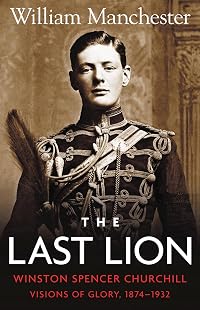

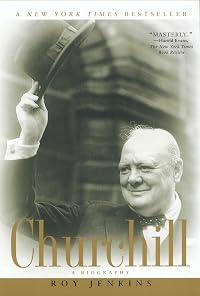
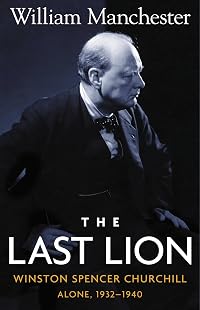
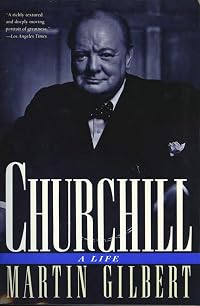






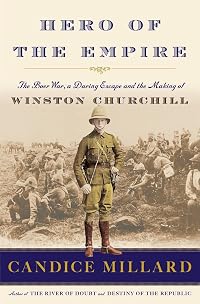


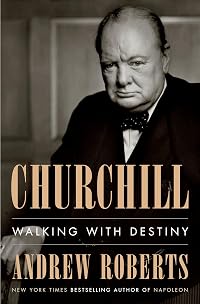

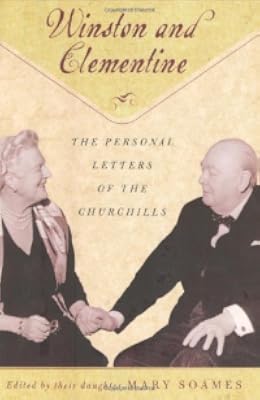
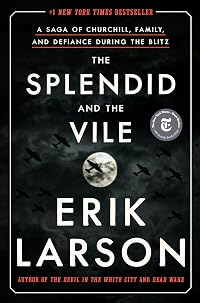






Member Recommendations
Member Reviews
Winston Churchill closes his 1930 memoirs with the line that, in September 1908, he “married and lived happily ever afterward.” The irony of this sentence works at two levels. First, there’s a roguish twinkle in the authorial eye since he and we both know that the Great War awaited those newlyweds. Second, we alone know what Churchill at the time could not: that his greatest adventure, and his place in history, lay ten years ahead in the shadow of the swastika.
We can, of course, forgive Churchill a certain complaisance. At age 55, he had already outlived his father by nearly a decade and hadn’t expected to live even this long. He was out of office and politically isolated with no reason to expect a twilight revival. His best show more days were behind him, and this was as good a time as any to reminisce about a youth spent trotting the globe in defense of Queen and Empire.
That perhaps is the best way to understand “My Early Life,” which is otherwise a book about nothing. I mean this in the most complimentary way possible. Apart from some sophistical but charming digressions about his flirtation with atheism (which he rejected in favor of holding head and heart in a pleasant tension), Churchill has no agenda beyond jotting down the best memories of an adventurous life. The result is a book that is light, breezy, witty, and takes itself none too seriously.
Of course, in our decolonized and decolonizing era, the murderous underbelly of the British Empire is hard to miss. Young Churchill’s military jaunts in Cuba, India, the Sudan, and South Africa run alongside or through a lot of dead locals. Without his later service in rallying Britain against Hitler, no doubt he would be remembered (if at all) as a quintessential Victorian never quite able to understand why the rest of the world should put up such a fuss about being managed well.
That’s not to say that he doesn’t recognize the ironies of empire, and this is one of the book’s graces. Beneath the rakish style is a recognition that Europeans aren’t always all they’re cracked up to be. For instance, Churchill observes that the “genial influence” of modern rifles on the Indian frontier allowed local tribes to kill each other more efficiently and thus improved “the respect which [they] entertained for Christian civilization.” He writes not as a secret revolutionary, but as a committed imperial who is nevertheless willing to puncture the fiction that empire’s side effects are unfailingly benign.
This dry British humor runs the length of the book, and Churchill is not averse to aiming that wit at his own follies. He’s the hero of his own story, but is more likely than not to stumble accidentally into triumph. As a student, he failed at classical languages and dropped into the study of English, turning him into one of history’s great orators. He attributes his political career to his celebrity status as an escaped P.O.W., but that escape succeeded only because he chanced to knock on the door of the only British sympathizer within 20 miles. Time and again Churchill ruminates that we never can anticipate or control life’s twists, concluding that fate and free will are just two sides of the same coin.
I couldn’t help but contrast Churchill’s boyish and self-aware realism with the overweening arrogance of Adolf Hitler as revealed in “Mein Kampf,” published five years prior. Where the one author thinks himself fading into the sunset, the other promotes himself as humanity’s new dawn. One is suffused with wry amusement at himself, the other with towering self-regard. One recoils from the bloody jaws of industrial war, and the other hungers to close them on the world’s neck. One rides fate to a grand adventure, and the other seeks to master it. The divergence between these books — not just in content, but in tone — reminds me that you’re usually better off not with the leader consumed by cosmic destiny, but with the one who frankly finds it all a bit funny. show less
We can, of course, forgive Churchill a certain complaisance. At age 55, he had already outlived his father by nearly a decade and hadn’t expected to live even this long. He was out of office and politically isolated with no reason to expect a twilight revival. His best show more days were behind him, and this was as good a time as any to reminisce about a youth spent trotting the globe in defense of Queen and Empire.
That perhaps is the best way to understand “My Early Life,” which is otherwise a book about nothing. I mean this in the most complimentary way possible. Apart from some sophistical but charming digressions about his flirtation with atheism (which he rejected in favor of holding head and heart in a pleasant tension), Churchill has no agenda beyond jotting down the best memories of an adventurous life. The result is a book that is light, breezy, witty, and takes itself none too seriously.
Of course, in our decolonized and decolonizing era, the murderous underbelly of the British Empire is hard to miss. Young Churchill’s military jaunts in Cuba, India, the Sudan, and South Africa run alongside or through a lot of dead locals. Without his later service in rallying Britain against Hitler, no doubt he would be remembered (if at all) as a quintessential Victorian never quite able to understand why the rest of the world should put up such a fuss about being managed well.
That’s not to say that he doesn’t recognize the ironies of empire, and this is one of the book’s graces. Beneath the rakish style is a recognition that Europeans aren’t always all they’re cracked up to be. For instance, Churchill observes that the “genial influence” of modern rifles on the Indian frontier allowed local tribes to kill each other more efficiently and thus improved “the respect which [they] entertained for Christian civilization.” He writes not as a secret revolutionary, but as a committed imperial who is nevertheless willing to puncture the fiction that empire’s side effects are unfailingly benign.
This dry British humor runs the length of the book, and Churchill is not averse to aiming that wit at his own follies. He’s the hero of his own story, but is more likely than not to stumble accidentally into triumph. As a student, he failed at classical languages and dropped into the study of English, turning him into one of history’s great orators. He attributes his political career to his celebrity status as an escaped P.O.W., but that escape succeeded only because he chanced to knock on the door of the only British sympathizer within 20 miles. Time and again Churchill ruminates that we never can anticipate or control life’s twists, concluding that fate and free will are just two sides of the same coin.
I couldn’t help but contrast Churchill’s boyish and self-aware realism with the overweening arrogance of Adolf Hitler as revealed in “Mein Kampf,” published five years prior. Where the one author thinks himself fading into the sunset, the other promotes himself as humanity’s new dawn. One is suffused with wry amusement at himself, the other with towering self-regard. One recoils from the bloody jaws of industrial war, and the other hungers to close them on the world’s neck. One rides fate to a grand adventure, and the other seeks to master it. The divergence between these books — not just in content, but in tone — reminds me that you’re usually better off not with the leader consumed by cosmic destiny, but with the one who frankly finds it all a bit funny. show less
This is a brilliantly written memoir by Churchill of his first 26 or so years, until the turn of the 20th century. It was published in 1930, so with the hindsight of Churchill having reached almost the highest political offices in both Liberal and Conservative governments, but still before his most famous period of wartime leadership. He writes beautifully about his childhood and his famously miserable schooldays, where he hated Latin and maths, but loved English and history. Not going to university, he says that he "would far rather have been apprenticed as a bricklayer’s mate, or run errands as a messengerboy, or helped my father to dress the front windows of a grocer’s shop".
His time in the army after attending Sandhurst took him show more to Cuba, India and Egypt. It is here and later in the many chapters of the book dealing with the Boer War that his attitudes are most jarring to the modern reader, though of course Churchill was naturally a man of his own time, with the generally held attitudes of his time and class: the oft mentioned view that going to war was a jolly jape that all young men should undertake and thoroughly enjoy; an unquestioning acceptance of the morally civilising mission of British imperial power - "We certainly felt as we dropped off to sleep the keenest realisation of the great work which England was doing in India and of her high mission to rule these primitive but agreeable races for their welfare and our own"; and, when speaking of the settlements of hostile tribes euphemistically that "These could all be destroyed and the tribesmen together with their women and children driven up to the higher mountains in the depth of winter, where they would certainly be very uncomfortable". His hindsight leads to him draw comparisons between these comparatively minor wars and the worldwide conflagration to strike little over a decade after the end of this book's narrative: "It was not like the Great War. Nobody expected to be killed. Here and there in every regiment or battalion, half a dozen, a score, at the worst thirty or forty, would pay the forfeit; but to the great mass of those who took part in the little wars of Britain in those vanished light-hearted days, this was only a sporting element in a splendid game". His capture and heroic escape from captivity by the Boers are thrillingly described (though much of the details of military manoeuvres left me cold). His early attempt and success in entering Parliament as a member for Oldham are also well described, and in his very early appearances in the House as a Conservative MP he was already out of step with his party in a number of respects and "I drifted towards the left", moving towards the Liberal Party.
This is a beautifully written memoir - Churchill was certainly a superb writer, in addition to his other virtues and faults. show less
His time in the army after attending Sandhurst took him show more to Cuba, India and Egypt. It is here and later in the many chapters of the book dealing with the Boer War that his attitudes are most jarring to the modern reader, though of course Churchill was naturally a man of his own time, with the generally held attitudes of his time and class: the oft mentioned view that going to war was a jolly jape that all young men should undertake and thoroughly enjoy; an unquestioning acceptance of the morally civilising mission of British imperial power - "We certainly felt as we dropped off to sleep the keenest realisation of the great work which England was doing in India and of her high mission to rule these primitive but agreeable races for their welfare and our own"; and, when speaking of the settlements of hostile tribes euphemistically that "These could all be destroyed and the tribesmen together with their women and children driven up to the higher mountains in the depth of winter, where they would certainly be very uncomfortable". His hindsight leads to him draw comparisons between these comparatively minor wars and the worldwide conflagration to strike little over a decade after the end of this book's narrative: "It was not like the Great War. Nobody expected to be killed. Here and there in every regiment or battalion, half a dozen, a score, at the worst thirty or forty, would pay the forfeit; but to the great mass of those who took part in the little wars of Britain in those vanished light-hearted days, this was only a sporting element in a splendid game". His capture and heroic escape from captivity by the Boers are thrillingly described (though much of the details of military manoeuvres left me cold). His early attempt and success in entering Parliament as a member for Oldham are also well described, and in his very early appearances in the House as a Conservative MP he was already out of step with his party in a number of respects and "I drifted towards the left", moving towards the Liberal Party.
This is a beautifully written memoir - Churchill was certainly a superb writer, in addition to his other virtues and faults. show less
I was concerned when Churchill started this biography with his own birth and ruminations, "When does one first begin to remember? When do the waving lights and shadows of dawning consciousness cast their print upon the mind of a child?" Inspired by Gibbon, I suppose (he does say later that he loved Gibbon's "Memoirs of My Life")—nonetheless I kept reading. Glad I did, it is a great story! In fact, some of the best parts—the funniest parts, at least–are from Churchill's childhood. His escape from the Boers also makes for a riveting story.
On math:
> We turned aside, not indeed to the uplands of the Delectable Mountains, but into a strange corridor of things like anagrams and acrostics called Sines, Cosines and Tangents. Apparently show more they were very important, especially when multiplied by each other, or by themselves! They had also this merit – you could learn many of their evolutions off by heart. There was a question in my third and last Examination about these Cosines and Tangents in a highly squarerooted condition which must have been decisive upon the whole of my after life. It was a problem. But luckily I had seen its ugly face only a few days before and recognised it at first sight. I have never met any of these creatures since.
> I had a feeling once about Mathematics, that I saw it all—Depth beyond depth was revealed to me—the Byss and the Abyss. I saw, as one might see the transit of Venus—or even the Lord Mayor's Show, a quantity passing through infinity and changing its sign from plus to minus. I saw exactly how it happened and why the tergiversation was inevitable: and how the one step involved all the others. It was like politics. But it was after dinner and I let it go!
> To plunge or not to plunge, that was the question! In a second I had plunged, throwing out my arms to embrace the summit of the fir tree. The argument was correct; the data were absolutely wrong. It was three days before I regained consciousness and more than three months before I crawled from my bed. The measured fall was 29 feet on to hard ground. But no doubt the branches helped.
On his father:
> Had he lived another four or five years, he could not have done without me. But there were no four or five years! Just as friendly relations were ripening into an Entente, and an alliance or at least a military agreement seemed to my mind not beyond the bounds of reasonable endeavour, he vanished for ever.
On religion:
> I accumulated in those years so fine a surplus in the Bank of Observance that I have been drawing confidently upon it ever since. Weddings, christenings and funerals have brought in a steady annual income, and I have never made too close enquiries about the state of my account.
> As it was I passed through a violent and aggressive anti-religious phase which, had it lasted, might easily have made me a nuisance. My poise was restored during the next few years by frequent contact with danger. I found that whatever I might think and argue, I did not hesitate to ask for special protection when about to come under the fire of the enemy: nor to feel sincerely grateful when I got home safe to tea. I even asked for lesser things than not to be killed too soon, and nearly always in these years, and indeed throughout my life, I got what I wanted. This practice seemed perfectly natural, and just as strong and real as the reasoning process which contradicted it so sharply. Moreover the practice was comforting and the reasoning led nowhere. I therefore acted in accordance with my feelings without troubling to square such conduct with the conclusions of thought.
> I therefore adopted quite early in life a system of believing whatever I wanted to believe, while at the same time leaving reason to pursue unfettered whatever paths she was capable of treading.
A letter from the American author, Winston Churchill:
> Mr Winston Churchill is extremely grateful to Mr Winston Churchill for bringing forward a subject which has given Mr Winston Churchill much anxiety. Mr Winston Churchill appreciates the courtesy of Mr Winston Churchill in adopting the name of ‘Winston Spencer Churchill’ in his books, articles etc. show less
On math:
> We turned aside, not indeed to the uplands of the Delectable Mountains, but into a strange corridor of things like anagrams and acrostics called Sines, Cosines and Tangents. Apparently show more they were very important, especially when multiplied by each other, or by themselves! They had also this merit – you could learn many of their evolutions off by heart. There was a question in my third and last Examination about these Cosines and Tangents in a highly squarerooted condition which must have been decisive upon the whole of my after life. It was a problem. But luckily I had seen its ugly face only a few days before and recognised it at first sight. I have never met any of these creatures since.
> I had a feeling once about Mathematics, that I saw it all—Depth beyond depth was revealed to me—the Byss and the Abyss. I saw, as one might see the transit of Venus—or even the Lord Mayor's Show, a quantity passing through infinity and changing its sign from plus to minus. I saw exactly how it happened and why the tergiversation was inevitable: and how the one step involved all the others. It was like politics. But it was after dinner and I let it go!
> To plunge or not to plunge, that was the question! In a second I had plunged, throwing out my arms to embrace the summit of the fir tree. The argument was correct; the data were absolutely wrong. It was three days before I regained consciousness and more than three months before I crawled from my bed. The measured fall was 29 feet on to hard ground. But no doubt the branches helped.
On his father:
> Had he lived another four or five years, he could not have done without me. But there were no four or five years! Just as friendly relations were ripening into an Entente, and an alliance or at least a military agreement seemed to my mind not beyond the bounds of reasonable endeavour, he vanished for ever.
On religion:
> I accumulated in those years so fine a surplus in the Bank of Observance that I have been drawing confidently upon it ever since. Weddings, christenings and funerals have brought in a steady annual income, and I have never made too close enquiries about the state of my account.
> As it was I passed through a violent and aggressive anti-religious phase which, had it lasted, might easily have made me a nuisance. My poise was restored during the next few years by frequent contact with danger. I found that whatever I might think and argue, I did not hesitate to ask for special protection when about to come under the fire of the enemy: nor to feel sincerely grateful when I got home safe to tea. I even asked for lesser things than not to be killed too soon, and nearly always in these years, and indeed throughout my life, I got what I wanted. This practice seemed perfectly natural, and just as strong and real as the reasoning process which contradicted it so sharply. Moreover the practice was comforting and the reasoning led nowhere. I therefore acted in accordance with my feelings without troubling to square such conduct with the conclusions of thought.
> I therefore adopted quite early in life a system of believing whatever I wanted to believe, while at the same time leaving reason to pursue unfettered whatever paths she was capable of treading.
A letter from the American author, Winston Churchill:
> Mr Winston Churchill is extremely grateful to Mr Winston Churchill for bringing forward a subject which has given Mr Winston Churchill much anxiety. Mr Winston Churchill appreciates the courtesy of Mr Winston Churchill in adopting the name of ‘Winston Spencer Churchill’ in his books, articles etc. show less
This memoir of Churchill's early life, spanning from 1874 to his twenty-sixth year in 1900, is well worth reading on two levels: superficially because Churchill's writing is superb, and more deeply for the historically knowledgeable reader, who can track back and forth between Churchill's perspective and others'.
The style is very pleasant, quick and often amusing or gripping to read--something that seems to have come very easily to Churchill, who was a very productive writer. He judiciously injects a very wry humor into almost everything, much of it engagingly self-deprecating. This brought me with him through the first third of the book, in which he discusses his childhood and schooldays and takes numerous opportunities to bestow his show more opinions on diverse topics--even though I can list the ones I agreed with on the fingers of one hand.
My Early Life was published in 1930 and what people then called 'The Great War' haunts its every chapter. I think it is this haunting that constitutes the work's best claim to literary merit. Churchill situates his youth in a carefree period of British history. "The minds of this generation, exhausted, brutalised, mutilated and bored by War, may not understand the delicious yet tremulous sensations with which a young British Officer bred in the long peace approached for the first time an actual theatre of operations." In this episode Churchill, nearing the completion of his training as a cavalry officer, has actually crossed an ocean in order to attend a war he has no part in (between the Cubans and Spanish, in 1895). Throughout the book he contrasts his youthful, patriotic delight in representing the world's strongest Empire in arms with his mature knowledge of the horrors of the First World War.
Neither of the above features is why I first picked up My Early Life. Rather, I was tracing a quotation from it that appeared in Sven Lindqvuist's stunning Exterminate All the Brutes. This work investigates the devastation of imperialism in Africa that is Europe's legacy. Lindqvist dwells at some length on the Battle of Omdurman (1898) in the Sudan. He sums it up: "At the battle of Omdurman, the entire Sudanese army was annihilated without once having got their enemy within gunshot" despite the overwhelming numbers of the Sudanese (or 'Dervishes'), due to British technological superiority.
Churchill's role here was that of newspaper war correspondent as well as military officer. He returns to the battle for some chapters in My Early Life, parts of which Lindqvist quotes. These quotations reveal Churchill's attitude to the battle--like a game, "full of fascinating thrills ... [n]obody expected to be killed" yet at the same time "the last link in the long chain of those spectacular conflicts whose vivid and majestic splendour has done so much to invest war with glamour."
My reading of these scenes in Early Life reveals Churchill watching with some admiration for the Sudanese who rush by the thousands down into the range of British bullets (but not yet in the range of Sudanese), their courage undimmed by the thousands upon thousands of corpses piling up until, as he romantically puts it, "the whole mass of the Dervishes dissolved into fragments and into particles and streamed away into the fantastic mirages of the desert." Directly put (which is something Churchill avoids when it means addressing the humanity, rather than the black-cloud-ness, of the Sudanese) this means that the Sudanese who were not slaughtered were forced out to die of exposure in the desert while the British army occupied the banks of the Nile and utterly demolished the Sudanese city of Omdurman.
I found Lindqvist to have exaggerated to some degree: Churchill participated in a cavalry charge whose object was to ride down a number of unmounted Sudanese, who at some point did achieve gunshot range. This seems to be where Churchill derives much of his nostalgically lamented "glamour," for the Sudanese unexpectedly turned out to be a better match at close range, unafraid of the galloping horses and able to inflict some damage before some hundreds of them were cut down.
Churchill at the same time deprecates his youthful enthusiasm for war and looks back with longing on the golden days when war did not mean being hidden in a trench without a shred of "vivid and majestic splendour," expecting to be killed at any second. The delightful rhetorical tension between these positions deflates sickeningly when with a more balanced understanding of the Imperial Era one realizes--the war of Churchill's youth was a play war because Churchill's side of it was so powerful as to guarantee victory with negligible losses against an enemy that few thought of being quite as human as white men.
Here is Churchill, putting his tongue in his cheek and speaking in the voice of his twenty-year-old self.
"It did seem a pity that it [military training] all had to be make-believe, and that the age of wars between civilized nations had come to an end for ever. If it had only been 100 years earlier what splendid times we should have had! Fancy being nineteen in 1793 with more than twenty years of war against Napoleon in front of one! However, all that was finished. The British Army had never fired on white troops since the Crimea, and now that the world was growing so sensible and pacific--and so democratic too--the great days were over. Luckily, however, there were still savages and barbarous peoples. There were Zulus and Afghans, also the Dervishes of the Soudan. Some of these might, if they were well-disposed, 'put up a show' some day. There might even be a mutiny or a revolt in India."
Don't we all miss the days when those uncivilized portions of the world provided such excellent toy soldiers to fight against, and we didn't have to inflict any REAL killing? show less
The style is very pleasant, quick and often amusing or gripping to read--something that seems to have come very easily to Churchill, who was a very productive writer. He judiciously injects a very wry humor into almost everything, much of it engagingly self-deprecating. This brought me with him through the first third of the book, in which he discusses his childhood and schooldays and takes numerous opportunities to bestow his show more opinions on diverse topics--even though I can list the ones I agreed with on the fingers of one hand.
My Early Life was published in 1930 and what people then called 'The Great War' haunts its every chapter. I think it is this haunting that constitutes the work's best claim to literary merit. Churchill situates his youth in a carefree period of British history. "The minds of this generation, exhausted, brutalised, mutilated and bored by War, may not understand the delicious yet tremulous sensations with which a young British Officer bred in the long peace approached for the first time an actual theatre of operations." In this episode Churchill, nearing the completion of his training as a cavalry officer, has actually crossed an ocean in order to attend a war he has no part in (between the Cubans and Spanish, in 1895). Throughout the book he contrasts his youthful, patriotic delight in representing the world's strongest Empire in arms with his mature knowledge of the horrors of the First World War.
Neither of the above features is why I first picked up My Early Life. Rather, I was tracing a quotation from it that appeared in Sven Lindqvuist's stunning Exterminate All the Brutes. This work investigates the devastation of imperialism in Africa that is Europe's legacy. Lindqvist dwells at some length on the Battle of Omdurman (1898) in the Sudan. He sums it up: "At the battle of Omdurman, the entire Sudanese army was annihilated without once having got their enemy within gunshot" despite the overwhelming numbers of the Sudanese (or 'Dervishes'), due to British technological superiority.
Churchill's role here was that of newspaper war correspondent as well as military officer. He returns to the battle for some chapters in My Early Life, parts of which Lindqvist quotes. These quotations reveal Churchill's attitude to the battle--like a game, "full of fascinating thrills ... [n]obody expected to be killed" yet at the same time "the last link in the long chain of those spectacular conflicts whose vivid and majestic splendour has done so much to invest war with glamour."
My reading of these scenes in Early Life reveals Churchill watching with some admiration for the Sudanese who rush by the thousands down into the range of British bullets (but not yet in the range of Sudanese), their courage undimmed by the thousands upon thousands of corpses piling up until, as he romantically puts it, "the whole mass of the Dervishes dissolved into fragments and into particles and streamed away into the fantastic mirages of the desert." Directly put (which is something Churchill avoids when it means addressing the humanity, rather than the black-cloud-ness, of the Sudanese) this means that the Sudanese who were not slaughtered were forced out to die of exposure in the desert while the British army occupied the banks of the Nile and utterly demolished the Sudanese city of Omdurman.
I found Lindqvist to have exaggerated to some degree: Churchill participated in a cavalry charge whose object was to ride down a number of unmounted Sudanese, who at some point did achieve gunshot range. This seems to be where Churchill derives much of his nostalgically lamented "glamour," for the Sudanese unexpectedly turned out to be a better match at close range, unafraid of the galloping horses and able to inflict some damage before some hundreds of them were cut down.
Churchill at the same time deprecates his youthful enthusiasm for war and looks back with longing on the golden days when war did not mean being hidden in a trench without a shred of "vivid and majestic splendour," expecting to be killed at any second. The delightful rhetorical tension between these positions deflates sickeningly when with a more balanced understanding of the Imperial Era one realizes--the war of Churchill's youth was a play war because Churchill's side of it was so powerful as to guarantee victory with negligible losses against an enemy that few thought of being quite as human as white men.
Here is Churchill, putting his tongue in his cheek and speaking in the voice of his twenty-year-old self.
"It did seem a pity that it [military training] all had to be make-believe, and that the age of wars between civilized nations had come to an end for ever. If it had only been 100 years earlier what splendid times we should have had! Fancy being nineteen in 1793 with more than twenty years of war against Napoleon in front of one! However, all that was finished. The British Army had never fired on white troops since the Crimea, and now that the world was growing so sensible and pacific--and so democratic too--the great days were over. Luckily, however, there were still savages and barbarous peoples. There were Zulus and Afghans, also the Dervishes of the Soudan. Some of these might, if they were well-disposed, 'put up a show' some day. There might even be a mutiny or a revolt in India."
Don't we all miss the days when those uncivilized portions of the world provided such excellent toy soldiers to fight against, and we didn't have to inflict any REAL killing? show less
("A Roving Commission" is the American title for what was published in the UK as "My Early Life.") A classic of autobiography; not only is it informative about certain military events that Churchill witnessed as a war correspondent and as a soldier (sometimes, both at the same time), but it is very funny with some arch, self-deprecating humour. Easily one of the most readable of Churchill's books, and very highly recommended.
This is one of the wittiest, and most poignant, books I have ever read. One laughs and cries throughout the reading; it is very difficult to put the book down. Written about 1930 during a time when Churchill was not very popular, his self-deprecating humor reveals a depth of character that only became clear to most people when he became Prime Minister during the darkest days of World War II.
It is said that "A man is not on his on oath in monumental inscriptions,." I'd say this is also true of autobiography. But WSC was a good journalist, and had a market for a volume of memoirs. Published at a low point in his career, he could see his past somewhat rosily, while reminding himself to some degree, that seeing what came next would be a sensible idea. It flows well, and gives one an idea about his interior mental furniture. The overall biography (one Volume) by Martin gilbert should be read after or before this one. There's also all eight volumes by (largely) the same writer.
Members
- Recently Added By
Lists

Books Read in 2023
5,638 works; 147 members
Author Information

561+ Works 34,715 Members
Sir Winston S. Churchill (1874-1965) was Prime Minister of the United Kingdom on two occasions, from 1940-1945 and again from 1951 to 1955. Celebrated as one of the greatest leaders of the twentieth century, he was also a gifted orator, statesman and historian. The author of more than 40 books, he was awarded the Nobel Prize for Literature in 1953 show more and in 1963 was made an honorary citizen of the United States. show less
Awards and Honors
Series
Belongs to Publisher Series
Nobelpreisträger Coron-Verlag (weiß) (1953 (Großbritannien))
Work Relationships
Is contained in
Has the adaptation
Common Knowledge
- Original title
- My Early Life
- Alternate titles
- A Roving Commission
- Original publication date
- 1930
- People/Characters
- Jennie Churchill; Lord Randolph Churchill; Winston Churchill; Benjamin Disraeli, 1st Earl of Beaconsfield (mentioned); William Ewart Gladstone (mentioned)
- Important places
- India; Sudan; South Africa; Harrow School, Harrow, London, England, UK; Sandhurst, Berkshire, England, UK
- Important events
- Battle of Omdurman; Second Boer War
- Related movies
- Young Winston (1972 | IMDb)
- First words
- When does one first begin to remember?
- Blurbers
- Hastings, Max; Deedes, William; Nicolson, Harold
- Disambiguation notice
- This book was written by the British Prime Minister, not by the American author Winston Churchill, though it has been listed under the American author on LibraryThing before.
Classifications
- Genres
- Biography & Memoir, History, Nonfiction, General Nonfiction
- DDC/MDS
- 941.084092 — History & geography History of Europe British Isles Historical periods of British Isles 1837- Period of Victoria and House of Windsor 1936-1945
- LCC
- DA566.9 .C5 .A3 — History of Europe, Asia, Africa and Oceania Great Britain History of Great Britain England History By period Modern, 1485- 20th century
- BISAC
Statistics
- Members
- 1,137
- Popularity
- 22,308
- Reviews
- 13
- Rating
- (4.27)
- Languages
- 11 — Czech, Danish, Dutch, English, Finnish, French, German, Norwegian (Bokmål), Portuguese, Spanish, Swedish
- Media
- Paper, Audiobook, Ebook
- ISBNs
- 43
- ASINs
- 69