
On This Page
Description
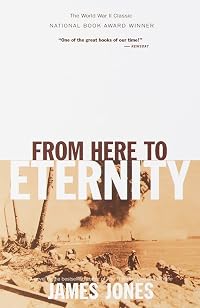
James Jones's epic story of army life in the calm before Pearl Harbor-now with previously censored scenes and dialogue restored At the Pearl Harbor army base in 1941, Robert E. Lee Prewitt is Uncle Sam's finest bugler. A career soldier with no patience for army politics, Prewitt becomes incensed when a commander's favorite wins the title of First Bugler. His indignation results in a transfer to an infantry unit whose commander is less interested in preparing for war than he is in boxing. But show more when Prewitt refuses to join the company team, the commander and his sergeant decide to make the bugler's life hell. An American classic now available with scenes and dialogue considered unfit for publication in the 1950s, From Here to Eternity is a stirring picture of army life in the months leading up to the attack on Pearl Harbor. This ebook features an illustrated biography of James Jones including rare photos from the author's estate. show lessTags
Recommendations


























Member Reviews
I have a picture of my father taken the day he and my mother were married. Recently discharged from the US Army and a deployment to a black, rubble-strewn Japan, his youthful swagger is evident. His hair is slicked back and parted to one side. A khaki suit coat drapes off of his square shoulders, open to expose a wide, flowered tie, hanging just to the top of his pants. He gazes stridently at the camera with a smile that says, “I’ve seen it and what I haven’t seen, well, I can deal with that, too.” He is more Burt Lancaster than Lancaster could have managed on his best day. Every time I look at that picture, I am reminded that my father was more than I ever could have known – and that his generation, with their silent show more strength, was indeed the Greatest Generation.
James Jones captured my father, and every subtle gradation of man like him, with his novel, [From Here to Eternity]. This is not a story that can be summed up by a few seconds of film showing a passionate embrace in the surf, as it is in most people’s minds. This is a much deeper and more difficult story. Set at Schofield Barracks in the months before Pearl Harbor, the story follows the exploits of the men of the 27th Infantry. Captain Holmes and First Sergeant Warden command Company G. The company is being split apart by a struggle between the career men and the newly inducted men. James brilliantly captures the complexity and nobility of this generation of men from the ground up, in their struggles to serve nobly while maintaining a sense of individuality.
Now that the generation of men and women who served as Jones’ subjects have nearly all left us, I’m not sure that we will ever completely understand them. But Jones’ honest and straightforward contemporaneous examination of their lives is a good start. Personally, I felt like I understood a small piece of my father that he never shared with me.
Bottom Line: The men and women of the Greatest Generation in all of their complexity.
4 bones!!!!! show less
James Jones captured my father, and every subtle gradation of man like him, with his novel, [From Here to Eternity]. This is not a story that can be summed up by a few seconds of film showing a passionate embrace in the surf, as it is in most people’s minds. This is a much deeper and more difficult story. Set at Schofield Barracks in the months before Pearl Harbor, the story follows the exploits of the men of the 27th Infantry. Captain Holmes and First Sergeant Warden command Company G. The company is being split apart by a struggle between the career men and the newly inducted men. James brilliantly captures the complexity and nobility of this generation of men from the ground up, in their struggles to serve nobly while maintaining a sense of individuality.
Now that the generation of men and women who served as Jones’ subjects have nearly all left us, I’m not sure that we will ever completely understand them. But Jones’ honest and straightforward contemporaneous examination of their lives is a good start. Personally, I felt like I understood a small piece of my father that he never shared with me.
Bottom Line: The men and women of the Greatest Generation in all of their complexity.
4 bones!!!!! show less
A fantastic uneven tidal force of a book. Reading it I couldn't help but get impressions of Melville's "Moby Dick" because like that work this book feels the summation of a lifetime of feelings, experiences, thoughts, aspirations, doubts, failures, and rage. The emotions of rage and disappointment in this book are so thick they're almost seperate characters unto themselves.
First, the negatives. This book is long and at times iceberg slow. Also, being a first novel, James Jones' style isn't always easily readable. He has a really annoying tendency to stuff waaaay too many adjectives in a sentence running from two to just way beyond what can be expected to be taken seriously. But this kind of adds to the feeling that this book truly is show more one of the few novels that could be called epic. It's because it's at times so flawed. It's a fantastically human story with very real, warts and all style, characters with very relatable and at times very base desires and goals.
Definitely worth reading. Somber and neither pro nor anti war, this book, to me, is a meticulous and hair tooth comb style study of normal people going through the simultaneous filters of life in the military and, later, life during war and whether or not they can maintain their humanity, forgetting about morals, but simply who they are in the human mess that is a world conflict. show less
First, the negatives. This book is long and at times iceberg slow. Also, being a first novel, James Jones' style isn't always easily readable. He has a really annoying tendency to stuff waaaay too many adjectives in a sentence running from two to just way beyond what can be expected to be taken seriously. But this kind of adds to the feeling that this book truly is show more one of the few novels that could be called epic. It's because it's at times so flawed. It's a fantastically human story with very real, warts and all style, characters with very relatable and at times very base desires and goals.
Definitely worth reading. Somber and neither pro nor anti war, this book, to me, is a meticulous and hair tooth comb style study of normal people going through the simultaneous filters of life in the military and, later, life during war and whether or not they can maintain their humanity, forgetting about morals, but simply who they are in the human mess that is a world conflict. show less
A doorstop (nearly 1000 pages) published in 1951 tells the fictional story from the inside of a number of enlisted men of an infantry division of the United States Army posted in Hawaii in 1941 taking in the attack on Pearl harbour. The author James Jones enlisted in the US army in 1939 at the age of 17 in the 25th infantry division stationed in Hawaii and uses that experience to make his novel drip with the realism of life in an army barracks during the first year of the second world war for the United States. This is not a novel for the feint hearted and forcibly expresses the culture of army life in the 1940's when men were hardened for war and all the women were called whores. It is a novel that takes you into another world, one show more that probably still exists to a certain extent and I found myself wrapped up in the edginess of the characters who fight to make sense of the life of men who serve in the armed forces.
About three quarters of the way through the novel Private Robert E Lee Prewitt is court-martialled for assaulting a senior offices. He is a man who you would be wise to ask first before using his nickname Prew. His pride and his obstinacy have set him up against the system that he knows and loves. He has been overlooked for a promotion and transferred to another unit who take him because of his boxing skills (before hostilities, commissioned officers lived or died by the athletic successes of the men they commanded), but Prewitt for personal reasons will not join the boxing team. He is given the "treatment" by his commanding officers who want to break his spirit and make him change his mind. When an irresistible force meets an immovable object then Prewitts path to a court martial and time in prison (the Stockade) seems inevitable
In room no 2 in the stockade Prew thinks that he is amongst men just like himself - he thinks “that he did not have to explain", because each one of them had the same hard unbroachable sense of ridiculous personal honour that he had never been able to free himself from either.
Hard labour in the stockade comes with cruel beatings as the breaking of a man's spirit is the only way of getting him in the right frame of mind to take his place back in the army.
Private Prewitts story runs in parallel to that of Milt Warden a staff sergeant who takes pride in his ability to play the system for his own ends. Like Prewitt he has the same pride in his abilities; pouring scorn on those around him who he can harass and bully. The Warden as he is called finds himself in deep water when he falls in love with his commanding officers wife. His playing of the system does not stretch quite far enough to allow him to indulge in a long term affair with Karen Holmes and like Prewitt who falls in love with Alma the most beautiful girl in the services-men's brothel he struggles to contain his feelings within the context of the harsh army life that he leads.
Towards the end of the novel the attack on Pearl Harbour which results in the infantry seeing action for the first time albeit far enough back from the centre of the attack so as not to endanger life: leads to the army being put on a war footing with the inevitable tightening of security measures. Both Prewitt and Warden are forced to make choices in a new lockdown situation.
Author James Jones knew how the army works and his own experiences would have enabled him to draw and refine the male characters that people his novel and while he may have too rosey a picture of the women who work in the brothels, he is more convincing with the restrictions that army wives must undergo and the life that they are forced to lead. His book bristles with machismo and sexism as the cultural norm, but there is room for finer feelings and briefly Warden and to a lesser extent Prewitt attempt to find a more enlightened viewpoint. They indulge themselves in cod psychology and Prewitt is searching for someone to provide him with some answers that he can accept. Jones is careful not to take this too far and the level of discussion is probably fitting to that of young army recruits, however these young recruits do not lack experience of the culture of a disciplined service that needs to be ready for war.
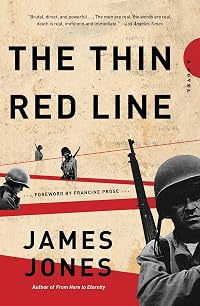
Jones attempts to re-create the dialogue that he would have heard during his time in the army and so there is some slang; phrases are shortened and words are made up or misspelt. This gives his story some authenticity, but is not overdone to the extent of making parts of his book unreadable. I found the whole novel very readable indeed. This was Jones first novel and he went onto write [Some Came Running] and [The Thin Red Line] among others in which his military experience and knowledge also played a major part. I am pleased to have been taken into the world that Jones inhabited, but probably won't feel the need to read another. However 4 stars for this mammoth undertaking.
I hope to catch a showing of the 1953 film soon if only to see Burt Lancaster and Deborah Kerr rolling about in the surf on the beach. show less
About three quarters of the way through the novel Private Robert E Lee Prewitt is court-martialled for assaulting a senior offices. He is a man who you would be wise to ask first before using his nickname Prew. His pride and his obstinacy have set him up against the system that he knows and loves. He has been overlooked for a promotion and transferred to another unit who take him because of his boxing skills (before hostilities, commissioned officers lived or died by the athletic successes of the men they commanded), but Prewitt for personal reasons will not join the boxing team. He is given the "treatment" by his commanding officers who want to break his spirit and make him change his mind. When an irresistible force meets an immovable object then Prewitts path to a court martial and time in prison (the Stockade) seems inevitable
In room no 2 in the stockade Prew thinks that he is amongst men just like himself - he thinks “that he did not have to explain", because each one of them had the same hard unbroachable sense of ridiculous personal honour that he had never been able to free himself from either.
Hard labour in the stockade comes with cruel beatings as the breaking of a man's spirit is the only way of getting him in the right frame of mind to take his place back in the army.
Private Prewitts story runs in parallel to that of Milt Warden a staff sergeant who takes pride in his ability to play the system for his own ends. Like Prewitt he has the same pride in his abilities; pouring scorn on those around him who he can harass and bully. The Warden as he is called finds himself in deep water when he falls in love with his commanding officers wife. His playing of the system does not stretch quite far enough to allow him to indulge in a long term affair with Karen Holmes and like Prewitt who falls in love with Alma the most beautiful girl in the services-men's brothel he struggles to contain his feelings within the context of the harsh army life that he leads.
Towards the end of the novel the attack on Pearl Harbour which results in the infantry seeing action for the first time albeit far enough back from the centre of the attack so as not to endanger life: leads to the army being put on a war footing with the inevitable tightening of security measures. Both Prewitt and Warden are forced to make choices in a new lockdown situation.
Author James Jones knew how the army works and his own experiences would have enabled him to draw and refine the male characters that people his novel and while he may have too rosey a picture of the women who work in the brothels, he is more convincing with the restrictions that army wives must undergo and the life that they are forced to lead. His book bristles with machismo and sexism as the cultural norm, but there is room for finer feelings and briefly Warden and to a lesser extent Prewitt attempt to find a more enlightened viewpoint. They indulge themselves in cod psychology and Prewitt is searching for someone to provide him with some answers that he can accept. Jones is careful not to take this too far and the level of discussion is probably fitting to that of young army recruits, however these young recruits do not lack experience of the culture of a disciplined service that needs to be ready for war.
Jones attempts to re-create the dialogue that he would have heard during his time in the army and so there is some slang; phrases are shortened and words are made up or misspelt. This gives his story some authenticity, but is not overdone to the extent of making parts of his book unreadable. I found the whole novel very readable indeed. This was Jones first novel and he went onto write [Some Came Running] and [The Thin Red Line] among others in which his military experience and knowledge also played a major part. I am pleased to have been taken into the world that Jones inhabited, but probably won't feel the need to read another. However 4 stars for this mammoth undertaking.
I hope to catch a showing of the 1953 film soon if only to see Burt Lancaster and Deborah Kerr rolling about in the surf on the beach. show less
https://nwhyte.livejournal.com/3151822.html
As usual, I liked the book more than the film. I think the only parts that grated were where relatively unsophisticated soldiers engaged in deep conversations about Art and Literature which felt a bit like the author talking to his imaginary friends. As noted above, the character of Maggio is much less well developed and the women get relatively less viewpoint time than in the film. But in general it's a lot more substantial, a lot more frank about sex and complex emotions; several particularly good subplots were cut from the script; the army of Jones' novel may not have any black soldiers, but it does have Jews and Indians, unlike the army in the film; the Hawaii of the novel has a lot more show more non-white people than the Hawaii of the film. And it's very well written, tensely close to the geography of 1941 Honolulu, to the point that one can follow Prewitt's track from Alma and Georgette's house to the fatal golf course quite readily on the mapping app of your choice. It's a darker story than the film (which is already dark enough); Warden and Karen's relationship is considerably more rocky on the page (there's a grim passage where they sneak away for a romantic break and discover that they can't actually stand each other's company for more than an hour or so) and Prewitt's final disintegration is recounted at length. I think it's a rather old-fashioned book, in that it's really all about the men, but it's pretty gripping all the same. show less
As usual, I liked the book more than the film. I think the only parts that grated were where relatively unsophisticated soldiers engaged in deep conversations about Art and Literature which felt a bit like the author talking to his imaginary friends. As noted above, the character of Maggio is much less well developed and the women get relatively less viewpoint time than in the film. But in general it's a lot more substantial, a lot more frank about sex and complex emotions; several particularly good subplots were cut from the script; the army of Jones' novel may not have any black soldiers, but it does have Jews and Indians, unlike the army in the film; the Hawaii of the novel has a lot more show more non-white people than the Hawaii of the film. And it's very well written, tensely close to the geography of 1941 Honolulu, to the point that one can follow Prewitt's track from Alma and Georgette's house to the fatal golf course quite readily on the mapping app of your choice. It's a darker story than the film (which is already dark enough); Warden and Karen's relationship is considerably more rocky on the page (there's a grim passage where they sneak away for a romantic break and discover that they can't actually stand each other's company for more than an hour or so) and Prewitt's final disintegration is recounted at length. I think it's a rather old-fashioned book, in that it's really all about the men, but it's pretty gripping all the same. show less
A deeply profound reading experience, and investigation into self and responsibility, and the tropes of alienation that more generally mark post-war American fiction. Jones' characters are stubbornly drawn and confounding. Reading Jones is a reading of one's own stumbling through the illogics of desire while attempting to conform to the structural prerogatives of society.
As part of the naturalistic tradition in American literature, including Twain, Hemingway, and Steinbeck, Jones' compellingly drawn characterizations and scenes are not formally tight, but, are, instead raw and human and often confusing/confused, which, here, is a very good thing.
As part of the naturalistic tradition in American literature, including Twain, Hemingway, and Steinbeck, Jones' compellingly drawn characterizations and scenes are not formally tight, but, are, instead raw and human and often confusing/confused, which, here, is a very good thing.
I was unsure if I was going to continue the book initially; the style of writing, the omission of apostrophes and the use of Army-specific acronyms made it a bit daunting. But I am glad that I persevered for it is a pretty powerful character study. The book reflects a time and culture that is far removed from today. Alcohol seems to power every man and there is this constant ebb-and-flow between boredom and sauced debauchery.
From Here to Eternity is one of the most authentic and realistic war novels ever penned, despite the fact that it includes very little actual combat. Its setting is the months and days preceding the Japanese attack on Pearl Harbor as viewed through the eyes of personnel stationed at an Army Barracks on Oahu. Perhaps its authenticity is in some way due to the proximity of its writing to the events themselves.
I’ve read many “war” novels, a good number of which deal with World War II, but there were aspects of army life from this period that I was completely unaware of prior to reading this book. For example, the interaction between the Hawaiian servicemen and the local homosexual population (was this limited to Hawaii?) was show more completely unknown to me, as were many of the issues relating to military discipline. Much of the jargon and regimental culture was also new. While there were some aspects of the military which were somewhat confusing (a lot of different classes of sergeant), by and large the book was extremely educational as it relates to the period and the military culture on the island at the time.
This novel is “real” and in your face, with very little symbolism or subtlety. Having read it, I will immediately pursue the author’s other work, especially the Thin Red Line, though I saw the movie and thought it was awful. I have a feeling the book will be a major improvement. show less
I’ve read many “war” novels, a good number of which deal with World War II, but there were aspects of army life from this period that I was completely unaware of prior to reading this book. For example, the interaction between the Hawaiian servicemen and the local homosexual population (was this limited to Hawaii?) was show more completely unknown to me, as were many of the issues relating to military discipline. Much of the jargon and regimental culture was also new. While there were some aspects of the military which were somewhat confusing (a lot of different classes of sergeant), by and large the book was extremely educational as it relates to the period and the military culture on the island at the time.
This novel is “real” and in your face, with very little symbolism or subtlety. Having read it, I will immediately pursue the author’s other work, especially the Thin Red Line, though I saw the movie and thought it was awful. I have a feeling the book will be a major improvement. show less
Members
- Recently Added By
Published Reviews
Reminded me a bit of Celine, unmitigated pressure, a cross between hell and purgatory set against the backdrop of paradise in the Hawaiian Islands.
added by Shortride
Lists

The Guardian's 1000 Novels Everyone Must Read
1,005 works; 547 members

Read the book and saw the movie
1,170 works; 192 members

National Book Award - Fiction
78 works; 10 members

Favorite Long Books
330 works; 42 members

1950s
340 works; 22 members
The Modern Library's 100 Best Novels: The Board's List
85 works; 6 members

Fiction For Men
142 works; 11 members

Books about World War II
241 works; 22 members

Best of American Literature
146 works; 9 members

Discontinued
19 works; 4 members

Books Set on Islands
190 works; 24 members

Publisher's Weekly Bestsellers - Part II - 1940 - 1979
355 works; 5 members

Page Turners
185 works; 11 members

Literary and artistic references in HBO's Lovecraft Country
32 works; 1 member

Best War Fiction Books
41 works; 4 members

The Art of Manliness' 100+ Books Every Man Should Read
108 works; 2 members

Books With the Most Memorable Titles
478 works; 158 members

THE WAR ROOM
813 works; 24 members
Modern Library's 100 Best Novels
100 works; 2 members
Author Information

21+ Works 5,056 Members
James Jones was born in Robinson, Illinois on November 6, 1921. He was unable to afford college, so he enlisted in the Army in 1939. His experiences during World War II inspired his best-known works: From Here to Eternity, which won the National Book Award in 1952, The Thin Red Line, and Whistle. His other works include The Pistol, Go to the show more Widow-Maker, The Ice-Cream Headache and Other Stories, and The Merry Month of May. Many of his books were adapted into movies including From Here to Eternity, Some Came Running, and The Thin Red Line. He died of congestive heart failure on May 9, 1977. (Bowker Author Biography) show less
Some Editions
Awards and Honors
Awards
Distinctions
Series

Belongs to Publisher Series
Work Relationships
Is contained in
Contains
Has the adaptation
Common Knowledge
- Canonical title*
- 's Levens taptoe
- Original title
- From Here to Eternity
- Original publication date
- 1951
- People/Characters
- Robert E. Lee Prewitt; Captain Dana Holmes; 1st Sergeant Milton Warden; Private Angelo Maggio; Karen Holmes
- Related movies
- From Here to Eternity (1953 | IMDb); From Here to Eternity (1979 | IMDb); From Here to Eternity (1980 | IMDb)
- Epigraph
- The sphinx must solve her own riddle. If the whole of history is in one man, it is all to be explained from individual experience. Emmerson.
I have eaten your bread and salt.
I have drunk your water and wine.
The deaths ye died I watched beside,
And the lives ye led were mine.
--Rudyard Kipling
Gentlemen-rankers out on a spree,
Damned from here to Eternity,
God ha'mercy on such as we,
Ba! Yah! Bah!
--Rudyard Kipling - Dedication
- To the United States Army
- First words
- When he finished packing, he walked out on to the third-floor porch of the barracks brushing the dust from his hands, a very neat and deceptively slim young man in the summer khakis that were still early morning fresh.
- Last words
- (Click to show. Warning: May contain spoilers.)"You really think so mother?" her son said anxiously.
*Some information comes from Common Knowledge in other languages. Click "Edit" for more information.
Classifications
Statistics
- Members
- 2,298
- Popularity
- 8,643
- Reviews
- 34
- Rating
- (4.01)
- Languages
- 15 — Danish, Dutch, English, Finnish, French, German, Hungarian, Italian, Norwegian (Bokmål), Polish, Portuguese, Slovenian, Spanish, Swedish, Turkish
- Media
- Paper, Audiobook, Ebook
- ISBNs
- 80
- UPCs
- 1
- ASINs
- 84