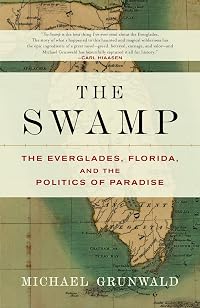
The Swamp: The Everglades, Florida, and the Politics of Paradise
by Michael Grunwald
On This Page
Description
The Everglades was America's last frontier, a wild country long after the West was won. In this book, Michael Grunwald chronicles how a series of visionaries tried to drain and "reclaim" it, and how Mother Nature refused to bend to their will; in the most harrowing tale, a 1928 hurricane drowned 2,500 people in the Everglades. But the Army Corps of Engineers finally tamed the beast with levees and canals, converting half the Everglades into sprawling suburbs and sugar plantations. And though show more the southern Everglades was preserved as a national park, it soon deteriorated into an ecological mess. The River of Grass stopped flowing, and 90 percent of its wading birds vanished. Now America wants its swamp back. Grunwald shows how a new breed of visionaries transformed Everglades politics, producing the $8 billion rescue plan. That plan is already the blueprint for a new worldwide era of ecosystem restoration. And The Swamp is a cautionary tale for that era. Through gripping narrative and dogged reporting, Grunwald shows how the Everglades is still threatened by the same hubris, greed, and well-intentioned folly that led to its decline. show lessTags
Recommendations
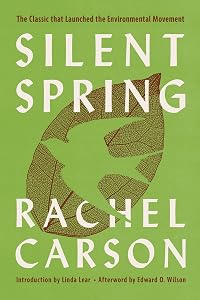
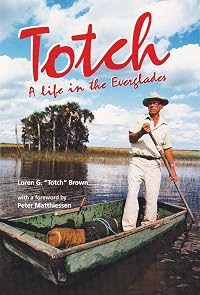

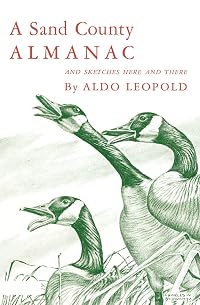
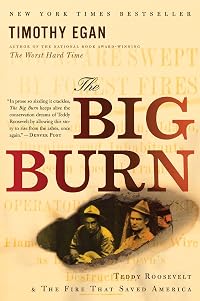






Member Recommendations
rareflorida Historical fiction masterpiece set in the Everglades.
Member Reviews
The history of human intervention into the Everglades, a story of hubris and ecological destruction, where each generation’s idea of management has turned out to be more destructive than that of the generation before. The last few chapters are about attempts to restore (parts of) the Everglades, but those are so bogged down—no pun intended—in politics that it’s more a story of despair as sugar growers and developers continue to come before nature or even natural bulwarks against disasters. I just looked up the news—mass dolphin deaths and out-of-place mangroves, so it hasn’t gotten better.
Did I ever tell you I fell in love with Florida two years ago? I thought I was too good for it, a ticky-tacky place with no wilds ruled by the Mouse. I avoided Florida all my life until I made the mistake of just-passin'-thru on the way to something else. I was a gone in 30 seconds from that warm, sweet air and the sight of my first palm tree swaying green and shirtless by the exit ramp.
In no time we were downing boilermakers (for when you need to catch up) and necking behind the pinball machine. And much too soon, I found myself doing the flight of shame back to Montreal. But I digress.
One of the enjoyments of reading this book is the names--Okeechobee, Calosahatchee. It's one big Bobby Gentry song. Unfortunately, there are many show more unbearable facts in this book. The Everglades swamp was a very slow river. It was a vast and delicate water cycle that is now stopped up through drainage projects, dams, canals, invasive plants, agricultural run-off, runaway development etc. As usual, the politics that come up against fixing it are complicated and powerful. The history of this mess is fascinating, sad, and through Grunwald, excellent reading.
Places like the Everglades, recently impenetrable, can give us a false sense of their immortality. This happens with the Far North as well. They are tough environments, but that doesn't mean they're tough. They're really just very well balanced and specialized, which makes them extremely delicate. This book gives a lesson in what's finite, the limits of the everlasting. Odd that a book about a wetland in the south can make me fear for the north. But all of it is finite; greed is not.
Interesting convergence p. 309: under politics
"Al Gore had lambasted Big Sugar in his book, but Alfonso Fanjul was so angry when the vice president endorsed penny-a-pound that he called the White House an hour later to complain. At the time, President Clinton was in the Oval Office telling an intern named Monica Lewinsky that he no longer felt right about their sexual relationship, but he interrupted the breakup to speak to Fanjul for twenty-two minutes.
"I think it's fair to say that tensions were high," Graham recalled." show less
In no time we were downing boilermakers (for when you need to catch up) and necking behind the pinball machine. And much too soon, I found myself doing the flight of shame back to Montreal. But I digress.
One of the enjoyments of reading this book is the names--Okeechobee, Calosahatchee. It's one big Bobby Gentry song. Unfortunately, there are many show more unbearable facts in this book. The Everglades swamp was a very slow river. It was a vast and delicate water cycle that is now stopped up through drainage projects, dams, canals, invasive plants, agricultural run-off, runaway development etc. As usual, the politics that come up against fixing it are complicated and powerful. The history of this mess is fascinating, sad, and through Grunwald, excellent reading.
Places like the Everglades, recently impenetrable, can give us a false sense of their immortality. This happens with the Far North as well. They are tough environments, but that doesn't mean they're tough. They're really just very well balanced and specialized, which makes them extremely delicate. This book gives a lesson in what's finite, the limits of the everlasting. Odd that a book about a wetland in the south can make me fear for the north. But all of it is finite; greed is not.
Interesting convergence p. 309: under politics
"Al Gore had lambasted Big Sugar in his book, but Alfonso Fanjul was so angry when the vice president endorsed penny-a-pound that he called the White House an hour later to complain. At the time, President Clinton was in the Oval Office telling an intern named Monica Lewinsky that he no longer felt right about their sexual relationship, but he interrupted the breakup to speak to Fanjul for twenty-two minutes.
"I think it's fair to say that tensions were high," Graham recalled." show less
My kind of book -- sweeping concept: the formation and destruction of the Everglades (let's be real); interesting tangents galore; and the comedy & tragedy of humans. Forever disappointed that "shared water" isn't everyone's philosophy.
This is a major and comprehensive history of South Florida, with “1000” interviews, and a zillion sources. It seems to have begun as an investigative journalism project on CERP, a hugely expensive plan passed in 2000 that was intended to save the Everglades, but instead, at best, somewhat slows down their demise while attempting to provide water for sugar cultivation and South Florida sprawl. However the book began, it ended up as a sort of multifaceted, well-written history that tries to cover everything from prehistory to 2005. It’s truly eye-opening. I grew up in South Florida. I knew I was clueless, having never even visited the Everglades, but I just had no idea how clueless I was.
By, multifaceted, I mean the book can kind show more of be broken into three parts. The first part has really nice sections on Everglades geology, early human history, the Seminole Wars, early drainage and development of South Florida and the Hurricanes in the 1920’s that halted the first population boom. Each section is fascinating. Then the book changes into what I would call the second part, where Grunwald tries to cover the post WWII development boom, the Corps disastrous C&SF project, and the development of the environmental movement, including the C-38 canal fight. (The C-38 canal destroyed the Kissimmee River for some minor flooding and irrigating benefits.) In the “second part” Grunwald is forced to leave the chronological flow, to summarize more and skip a few things. He breaks the history down into different themes and follows each theme. It’s mostly a success and quite interesting. The “third part” is the history of CERP. It’s a valiant effort, but, there are so many details, that, unless you really want to know a lot about CERP, the book bogs down here.
I read the first part of this book, and thought it was the best history of South Florida anyone could write. But, by the time I finished the book I was a bit exhausted. It probably didn’t help that I decided to read the 60 pages of notes as I read the book, bogging myself down even further. show less
By, multifaceted, I mean the book can kind show more of be broken into three parts. The first part has really nice sections on Everglades geology, early human history, the Seminole Wars, early drainage and development of South Florida and the Hurricanes in the 1920’s that halted the first population boom. Each section is fascinating. Then the book changes into what I would call the second part, where Grunwald tries to cover the post WWII development boom, the Corps disastrous C&SF project, and the development of the environmental movement, including the C-38 canal fight. (The C-38 canal destroyed the Kissimmee River for some minor flooding and irrigating benefits.) In the “second part” Grunwald is forced to leave the chronological flow, to summarize more and skip a few things. He breaks the history down into different themes and follows each theme. It’s mostly a success and quite interesting. The “third part” is the history of CERP. It’s a valiant effort, but, there are so many details, that, unless you really want to know a lot about CERP, the book bogs down here.
I read the first part of this book, and thought it was the best history of South Florida anyone could write. But, by the time I finished the book I was a bit exhausted. It probably didn’t help that I decided to read the 60 pages of notes as I read the book, bogging myself down even further. show less
Great overall history of South Florida, focusing specifically on the Everglades and how attempts to first drain and later restore the River of Grass have shaped the state, physically, socially and politically.
Explores the geological formation, biological/botanical/zoological attributes, historical settlement, ongoing destruction/attempted restoration, and complicated politics associated with the world's one and only Everglades. A great assemblage of investigative journalism on a subject important to all of us--whether we realize it yet or not. It should be required reading for anyone attempting to purchase a property or business in Florida and every registered voter in that state. Highly recommend.
Excellent history of this unique natural resource. Hard to read about how misguided and pigheaded we humans are when it comes to nature. Well written, especially considering the time span and the vast cast of characters. My only suggestion for improvement: more MAP!!!
Members
- Recently Added By
Author Information

2 Works 552 Members
Some Editions
Awards and Honors
Awards
Common Knowledge
- Canonical title
- The Swamp: The Everglades, Florida, and the Politics of Paradise
- Alternate titles
- The Swamp
- Original publication date
- 2006 (copyright) (copyright)
- People/Characters
- Hamilton Disston; Henry M. Flagler; Napoleon Bonaparte Broward; Spressard Holland; Majorie Stoneman Douglas; Arthur Marshall (show all 7); Jeb Bush
- Important places
- Everglades, Florida, USA; Florida, USA
- Dedication
- For Mom and Dad with love
- First words
- The natural Everglades was not quite land and not quite water, but a soggy confusion of the two.
- Last words
- (Click to show. Warning: May contain spoilers.)If we pass, we may deserve to keep the planet.
- Original language
- English
Classifications
- Genres
- Science & Nature, Nonfiction, General Nonfiction, History
- DDC/MDS
- 975.939 — History & geography History of North America Southeastern United States (South Atlantic states) Florida Peninsular Southeast Florida
- LCC
- F317 .E9 .G78 — Local History of the United States, Canada and Latin America United States local history Florida
- BISAC
Statistics
- Members
- 397
- Popularity
- 78,413
- Reviews
- 11
- Rating
- (4.08)
- Languages
- English
- Media
- Paper, Audiobook, Ebook
- ISBNs
- 5
- ASINs
- 5