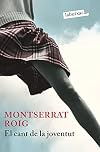
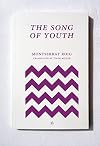
El cant de la joventut
by Montserrat Roig
On This Page
Description
In The Song of Youth, Montserrat Roig boldly presents eight remarkable stories that use language as a weapon against political and social "dismemory." Her powerful and striking prose allows the important stories of those silenced by the brutal Franco regime to, at last, come to the fore. The Song of Youth is undoubtedly feminist and deeply critical but, as always, Roig's lyrical writing gives shape, depth, and significance to the human experience.Tags
Recommendations












Member Reviews
Longlisted for the 2022 best UK/Irish small press award presented by the Republic of Consciousness. Writer, feminist, and Catalan activist Montserrat Roig’s final work before her early death at 45, published in 1989 and now translated into English, is a collection of short stories showcasing Roig’s feminist and anti-Francoist activism. Though it would be another year before she was diagnosed with aggressive cancer that would all too quickly kill her, every one of these eight stories features dying and death, as if she knew what was coming, giving this book a bit of a haunting effect.
My two favorite stories are linked through their general outline of a deathbed scene intermingling with memory. “Song of Youth” presents the show more character of an old woman in hospital, recently moved into an area for patients expected to die soon, resisting the meek dutifulness expected of her by the ill-mannered staff. Her sensory inputs in this setting meld with recalled sensations from a passionate encounter when she was a young woman, the strong back of the doctor clothed in white becoming the strong back of the white-shirted stranger and lover met in the cafe. In both places in time her rebelliously independent spirit shines forth strongly, contrasting with the change to her body: her hand, “protruding bones, riddled with swollen blue rivers cut through by clods of earth coloured stains,” was once otherwise - “The skin was still elastic then. There was fat underneath it.” It’s an effective story of the spirit defying the decline of the body.
A later story, “The Chosen Apple”, comes at it differently, and is a sensitive little gem of a story. Here it is an old married couple, the man dying at home with his wife caring for him. She remembers defying his mother who told her she was not smart enough for her intellectual son, but it is the essentialness of the person that matters more. A memory of being told, “It’s no use hoping you’ll be happy with him. You won’t understand each other. He was still just a small boy and we were already speaking in Latin together,” is immediately followed by the real time, “Now he wants me to bring him a hot-water bottle. There is cold in his bones, he tells me. I check his pulse and feel the slow beats. ‘Nadiejda,’ he says, ‘I’m still holding on.’ I kiss his forehead and my lips turn ice cold.” I mean, that gets you, does it not. And again, the body withers, but the spirit does not.
“The Chosen Apple” suggests a diminishment of intellectualism in favor of emotion and lived experience, which interestingly the intellectual Roig repeats in other stories as well. “Mar”, one of two longer stories, contrasts the characters of two women who develop a close relationship, one of whom is the stereotypical intellectual and the other of whom is the more earthy, carefree Mar. The narrator asks Mar, “why the attitude all the time towards intellectuals, and she immediately stopped laughing, abandoned her jocular tone and said: ‘Because you’re always trying to demonstrate what other people experience, as if you were all stone dead or something.’” And then in the story “Division”, we read that “After coffee was served, Glòria went out onto the veranda to sit in one of the wicker armchairs and devote herself to her favourite activity of all: not thinking about anything.”
The final and longest story, “Before I Deserve Oblivion”, centers a narrator who has abandoned both intellectualism and honestly lived emotion, resulting in a warped and rambling psyche mirrored by the form of the story. A Franco-era censor, now a bad literature teacher, he is haunted by a poem by Cavafy that unlike the rest of the words he censored, he remembers, as it convicts himself:
“Like the beautiful bodies of those who died before growing old,
sadly shut away in a sumptuous mausoleum,
roses by the head, jasmine at the feet –
so appear the longings that have passed
without being satisfied, not one of them granted
a single night of pleasure, or one of its radiant mornings.”
Regarding intellectualism and lived emotion, then, perhaps Roig would say, as another character in “Division” says, “The perfect [wo]man is a synthesis.”
3.5* show less
My two favorite stories are linked through their general outline of a deathbed scene intermingling with memory. “Song of Youth” presents the show more character of an old woman in hospital, recently moved into an area for patients expected to die soon, resisting the meek dutifulness expected of her by the ill-mannered staff. Her sensory inputs in this setting meld with recalled sensations from a passionate encounter when she was a young woman, the strong back of the doctor clothed in white becoming the strong back of the white-shirted stranger and lover met in the cafe. In both places in time her rebelliously independent spirit shines forth strongly, contrasting with the change to her body: her hand, “protruding bones, riddled with swollen blue rivers cut through by clods of earth coloured stains,” was once otherwise - “The skin was still elastic then. There was fat underneath it.” It’s an effective story of the spirit defying the decline of the body.
A later story, “The Chosen Apple”, comes at it differently, and is a sensitive little gem of a story. Here it is an old married couple, the man dying at home with his wife caring for him. She remembers defying his mother who told her she was not smart enough for her intellectual son, but it is the essentialness of the person that matters more. A memory of being told, “It’s no use hoping you’ll be happy with him. You won’t understand each other. He was still just a small boy and we were already speaking in Latin together,” is immediately followed by the real time, “Now he wants me to bring him a hot-water bottle. There is cold in his bones, he tells me. I check his pulse and feel the slow beats. ‘Nadiejda,’ he says, ‘I’m still holding on.’ I kiss his forehead and my lips turn ice cold.” I mean, that gets you, does it not. And again, the body withers, but the spirit does not.
“The Chosen Apple” suggests a diminishment of intellectualism in favor of emotion and lived experience, which interestingly the intellectual Roig repeats in other stories as well. “Mar”, one of two longer stories, contrasts the characters of two women who develop a close relationship, one of whom is the stereotypical intellectual and the other of whom is the more earthy, carefree Mar. The narrator asks Mar, “why the attitude all the time towards intellectuals, and she immediately stopped laughing, abandoned her jocular tone and said: ‘Because you’re always trying to demonstrate what other people experience, as if you were all stone dead or something.’” And then in the story “Division”, we read that “After coffee was served, Glòria went out onto the veranda to sit in one of the wicker armchairs and devote herself to her favourite activity of all: not thinking about anything.”
The final and longest story, “Before I Deserve Oblivion”, centers a narrator who has abandoned both intellectualism and honestly lived emotion, resulting in a warped and rambling psyche mirrored by the form of the story. A Franco-era censor, now a bad literature teacher, he is haunted by a poem by Cavafy that unlike the rest of the words he censored, he remembers, as it convicts himself:
“Like the beautiful bodies of those who died before growing old,
sadly shut away in a sumptuous mausoleum,
roses by the head, jasmine at the feet –
so appear the longings that have passed
without being satisfied, not one of them granted
a single night of pleasure, or one of its radiant mornings.”
Regarding intellectualism and lived emotion, then, perhaps Roig would say, as another character in “Division” says, “The perfect [wo]man is a synthesis.”
3.5* show less
A Song of Roig
Review of the Fum d'Estampa paperback edition (October 2021) translated by Tiago Miller from the Catalan language original "El cant de la joventut" (October 1989)
[Average 3.635, rounded up as a strong 4]
Longlisted and now Shortlisted for the 2022 Republic of Consciousness Prize.
Montserrat Roig (1946-1991) grew up in Barcelona during the years of the Franco regime. Her work as a Catalan writer and journalist is often in reaction to the repression and censorship of those years. The Song of Youth appears to be her first major English language translation, although a translation of her theatre work Reivindicació de la Senyora Clito Mestres (1990) (The Vindication of Senyora Clito Mestres) played in various theatres in North show more America in 2012.
See photograph at https://www.lavanguardia.com/rf/image_small/GODO/LV/p3/WebSite/2016/11/05/Recort...
Author Montserrat Roig. Image sourced from La Vanguardia.
The short stories in The Song of Youth are not all dated, but do appear to be mostly from the 1980s. The older protagonists often look back on the years of the Spanish Civil War and the years of the resulting Franco regime after the Republicans fought a losing struggle against the Fascist uprising (who were armed and supported by Nazi Germany). Six of the eight stories are quite short, about 5 to 10 pages. I enjoyed the two longer stories the most, especially #4 Mar with a woman's elegy / reminiscence of a lost friend whom she had bonded with. My favourite quote was in the old regime censor's confession in #8:
1. The Song of Youth **** An elderly woman awaiting death in a hospital banters with the doctor and nurses while having memories of her soldier fiancé/husband.
2. Love and Ashes *** A woman and her husband go on an African safari with fatal consequences.
3. Free From War and Wave *** A woman tells a tragic story of a conscripted teenage recruit in the Spanish Civil War which she had heard from her grandfather.
5. Division *** A woman and her husband entertain a Senator and his wife at their country home. The husband appears to be encouraging the wife to be receptive of the Senator's attention to her, and she resents him for it.
6. I Don't Understand Salmon **** [1980] The anonymous dead from the Republican army were buried with only numbers as markers. There is metaphor drawn to migrating salmon dying on the way back home to their birth grounds.
7. The Chosen Apple *** In old age, a woman looks back on her life with her husband whom she kept celibate for 7 days after their marriage (which the mother-in-law had tried to discourage).
8.Before I Deserve Oblivion **** [May 1988] A former censor of the Franco regime, later a schoolteacher until dismissed for peeping, tells his life story via his own 'fictional' short story.
I read The Song of Youth due to my interest in the Republic of Consciousness Prize for small independent publishers. I am a supporter of Prize through my subscription to the RoC Book of the Month (BotM) club. show less
Review of the Fum d'Estampa paperback edition (October 2021) translated by Tiago Miller from the Catalan language original "El cant de la joventut" (October 1989)
[Average 3.635, rounded up as a strong 4]
Longlisted and now Shortlisted for the 2022 Republic of Consciousness Prize.
Montserrat Roig (1946-1991) grew up in Barcelona during the years of the Franco regime. Her work as a Catalan writer and journalist is often in reaction to the repression and censorship of those years. The Song of Youth appears to be her first major English language translation, although a translation of her theatre work Reivindicació de la Senyora Clito Mestres (1990) (The Vindication of Senyora Clito Mestres) played in various theatres in North show more America in 2012.
See photograph at https://www.lavanguardia.com/rf/image_small/GODO/LV/p3/WebSite/2016/11/05/Recort...
Author Montserrat Roig. Image sourced from La Vanguardia.
The short stories in The Song of Youth are not all dated, but do appear to be mostly from the 1980s. The older protagonists often look back on the years of the Spanish Civil War and the years of the resulting Franco regime after the Republicans fought a losing struggle against the Fascist uprising (who were armed and supported by Nazi Germany). Six of the eight stories are quite short, about 5 to 10 pages. I enjoyed the two longer stories the most, especially #4 Mar with a woman's elegy / reminiscence of a lost friend whom she had bonded with. My favourite quote was in the old regime censor's confession in #8:
It was the same sentiment I'd go on to recognise in the texts it was my job to silence. I didn't cross out words with a sense of religious righteousness. No, that would have been far too easy: I assailed them with my pencil because I was envious. And what I envied was the creative act in its purest state. - excerpt from Before I Deserve Oblivion.
1. The Song of Youth **** An elderly woman awaiting death in a hospital banters with the doctor and nurses while having memories of her soldier fiancé/husband.
2. Love and Ashes *** A woman and her husband go on an African safari with fatal consequences.
3. Free From War and Wave *** A woman tells a tragic story of a conscripted teenage recruit in the Spanish Civil War which she had heard from her grandfather.
There are stories so old that they become like lullabies in times of peace. That's why I'm telling it to you now. You who live free from war and wave.4. Mar ***** [September 1980/Revised September 1988] A woman reminisces about her girl-friend Mar, two years after the latter died in an automobile accident.
5. Division *** A woman and her husband entertain a Senator and his wife at their country home. The husband appears to be encouraging the wife to be receptive of the Senator's attention to her, and she resents him for it.
6. I Don't Understand Salmon **** [1980] The anonymous dead from the Republican army were buried with only numbers as markers. There is metaphor drawn to migrating salmon dying on the way back home to their birth grounds.
7. The Chosen Apple *** In old age, a woman looks back on her life with her husband whom she kept celibate for 7 days after their marriage (which the mother-in-law had tried to discourage).
8.Before I Deserve Oblivion **** [May 1988] A former censor of the Franco regime, later a schoolteacher until dismissed for peeping, tells his life story via his own 'fictional' short story.
I read The Song of Youth due to my interest in the Republic of Consciousness Prize for small independent publishers. I am a supporter of Prize through my subscription to the RoC Book of the Month (BotM) club. show less
Shortlisted for the Republic of Consciousness Prize 2022
My ninth book from the Republic of Consciousness list is another surprising inclusion, since the Catalan writer has been dead since 1991. This is a collection of eight short stories, of which six are under 10 pages long, and the other two almost short novellas.
I am struggling to recall the shorter stories. The longer two are more interesting and surprising. Overall, I don't really feel qualified to write a detailed review.
Since the book lacks a list of contents, I will include one here:
7 The Song of Youth
16 Love and Ashes
21 Free From War and Wave
29 Mar
60 Division
67 I Don't Understand Salmon
72 The Chosen Apple
78 Before I Deserve Oblivion
My ninth book from the Republic of Consciousness list is another surprising inclusion, since the Catalan writer has been dead since 1991. This is a collection of eight short stories, of which six are under 10 pages long, and the other two almost short novellas.
I am struggling to recall the shorter stories. The longer two are more interesting and surprising. Overall, I don't really feel qualified to write a detailed review.
Since the book lacks a list of contents, I will include one here:
7 The Song of Youth
16 Love and Ashes
21 Free From War and Wave
29 Mar
60 Division
67 I Don't Understand Salmon
72 The Chosen Apple
78 Before I Deserve Oblivion
Arenys
Jan 10, 2026Catalan
Ratings
Members
- Recently Added By
Author Information

37+ Works 1,137 Members
Awards and Honors
Series
Belongs to Publisher Series
Common Knowledge
- Original publication date
- 1989
Classifications
Statistics
- Members
- 127
- Popularity
- 256,206
- Reviews
- 4
- Rating
- (3.54)
- Languages
- 5 — Catalan, English, French, Italian, Spanish
- Media
- Paper
- ISBNs
- 10