Ring Resounding
by John Culshaw
On This Page
Description
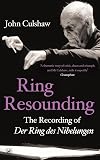
Nothing in the history of recording approaches Decca's mammoth venture in producing Wagner's Ringcomplete for the first time. It was eight years in the making and this book tells the story of how it was made and the people who made it, written by the man who - as the recording producer - was in charge of the whole project. Conducted by the great Georg Solti, Decca's recording has been voted the best recording ever made. All the celebrated Wagner singers of their age take their places in the show more story, including Birgit Nilsson, Kirsten Flagstad, Hans Hotter, Dietrich Fischer-Dieskau, Gottlob Frick and Wolfgang Windgassen. The recording was made in Vienna with the Viennese Philharmonic Orchestra, and Culshaw displayed extraordinary dedication to Wagner's musical requirements and to putting into practice his own belief that a stereo recording could create a 'theatre of the mind'. This is the story of how the recording evolved, and how it frequently almost came to grief. More than that, it is the story of how a new medium - recorded opera in stereo - reached fulfilment, and how this ground-breaking recording became seen as the highly influential gold standard for the future. show lessTags
Recommendations



















Member Reviews
A very good read for opera lovers. The eight-year creation of one of the most iconic albums of the 20th century is told first hand by John Culshaw, one of the men who made it happen. It's full of the exciting - and sometimes hilariously mundane - twists and turns that affected the recording. Culshaw's closeness with soprano Kirsten Flagstad is prominent in the first half, which perhaps is a bit extensive but also is a fascinating look at the last years of a great singer, and casts a long shadow over the rest of the book, explaining both the legacy of performers and also some of the reasons (other than money-making) that the recording mattered.
Being fifty years old, the book does sometimes betray its age. But Culshaw's thoughts on show more recording and the future of opera are - if anything - more interesting from our vantage point. (His thinly-disguised contempt for the so-called "enthusiast" is also sublimely hilarious.) show less
Being fifty years old, the book does sometimes betray its age. But Culshaw's thoughts on show more recording and the future of opera are - if anything - more interesting from our vantage point. (His thinly-disguised contempt for the so-called "enthusiast" is also sublimely hilarious.) show less
The 'Solti' recording of 'Der Ring des Nibelungen' made with the Vienna Philharmonic and recorded in Vienna (slightly out of sequence) between 1958 and 1965 is still unsurpassed 60 years on. That is not just my view, but one that carries a significant critical consensus. Musically and dramatically it is by far the most consistent account. Not just because of its casting (with a couple of important exceptions) with singers whose singing is never less than adequate and often more so and all of whom can act (stellar examples of both for example in Götterdamerung with Fischer-Dieskau and Gottlob Frick) but because of Solti's conception and his ability to hold to that over a seven year period. Sonically it sounds better than ever show more (remastered several times, the latest a Dolby Atmos remix in 2023) and crucially - as this book recounts - it was conceived of as a studio project which would capture an idealised stage version. It does this brilliantly and no subsequent set has come close, nor is it likely to. As Culshaw recounts this was an era when budgets for opera recording and classical music more generally were an all time high and it seems literally no expense was spared. Today's landscape is very different. Most opera recordings are DVDs from stage productions or of concert performances both of which can be problematic.
Anyway this is a genuinely interesting account. It's highly polite and indeed its status as the official history of this remarkable project was confirmed when Decca included it in its box set of the 2013 remastering. I found particularly fascinating that one of Culshaw's guiding principles was trying to capture great Wagnerian singers for posterity. Arguably Flagstad, Hotter, Windgassen (and I would maybe controversially add Nilsson) were all past their best, and yet (with the possible exception of Flagstad) all perform remarkably, cleverly supported by Culshaw and Solti's mindfulness of the need to give their voices as much chance as possible to recover between sessions. The account of how Windgassen ended up singing Siegfried after Culshaw had tried to stick with a relatively unknown, younger heldentenor is illuminating and reflects particuarly well on Windgassen who seemed to have no ego at all.
The written style is very of its time (BBC Third Programme syntax, standards and opinions) and the Epilogue slightly preachy and tedious but overall this is required reading for anyone who loves the recording. show less
Anyway this is a genuinely interesting account. It's highly polite and indeed its status as the official history of this remarkable project was confirmed when Decca included it in its box set of the 2013 remastering. I found particularly fascinating that one of Culshaw's guiding principles was trying to capture great Wagnerian singers for posterity. Arguably Flagstad, Hotter, Windgassen (and I would maybe controversially add Nilsson) were all past their best, and yet (with the possible exception of Flagstad) all perform remarkably, cleverly supported by Culshaw and Solti's mindfulness of the need to give their voices as much chance as possible to recover between sessions. The account of how Windgassen ended up singing Siegfried after Culshaw had tried to stick with a relatively unknown, younger heldentenor is illuminating and reflects particuarly well on Windgassen who seemed to have no ego at all.
The written style is very of its time (BBC Third Programme syntax, standards and opinions) and the Epilogue slightly preachy and tedious but overall this is required reading for anyone who loves the recording. show less
Fascinating reading for the 'Ring' fanatic about the trials and tribulation of the first LP recording. Really enjoyed the book but you may need to be a Wagnerite and have some degree of familiarity with 'The Ring of the Nibelung'.
A blow-by-blow account of the making of the first studio stereo recording of Wagner's 'Ring'. It is a picture of a vanished world - post-war central Europe, seen through the eyes of one of the few groups of people to have international mobility at that time, classical musicians. It is also not without humour, such as the account of Brunnhilde's invisible horse, the duelling Alpenhorns and the Musikverein cat. John Culshaw was at the centre of the action and has remained a major force in the classical music world ever since.
Ratings
Members
- Recently Added By
Author Information

16+ Works 235 Members
Work Relationships
Common Knowledge
- Original publication date
- 1967
- People/Characters
- Georg Solti; John Culshaw
Classifications
Statistics
- Members
- 102
- Popularity
- 317,023
- Reviews
- 4
- Rating
- (4.30)
- Languages
- English
- Media
- Paper
- ISBNs
- 4
- ASINs
- 4