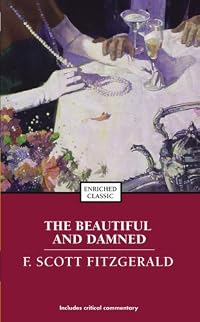
The Beautiful and Damned
by F. Scott Fitzgerald
On This Page
Description
Fitzgerald's second novel, a devastating portrait of the excesses of the Jazz Age, is a largely autobiographical depiction of a glamorous, reckless Manhattan couple and their spectacular spiral into tragedy. Published on the heels of "This Side of Paradise," the story of the Harvard-educated aesthete Anthony Patch and his willful wife, Gloria, is propelled by Fitzgerald's intense romantic imagination and demonstrates an increased technical and emotional maturity. "The Beautiful and Damned" show more is at once a gripping morality tale, a rueful meditation on love, marriage, and money, and an acute social document. As Hortense Calisher observes in her Introduction, " Though Fitzgerald can entrance with stories so joyfully youthful they appear to be safe-- when he cuts himself, you will bleed." show lessTags
Recommendations











Member Recommendations
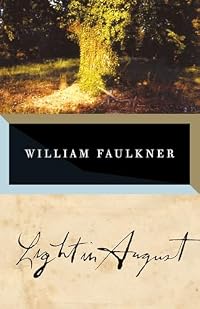
TineOliver Both look at love and marriage in the upper classes of New York society (however, at different time periods)
30
aprille Idleness of the wealthy leads to alcoholism and ennui.
Member Reviews
Every once in a while I will see a 2-star review for Hamlet, or Pride & Prejudice, or some such, and I will laugh at the hubris. That fact alone may explain why this is a 3 rather than a 2-star review. I fear people scoffing at me the way I scoff at those ridiculous 2-stars-for-Hamlet fools. So my fragile ego and the fact that Scott could write the hell out of sentence make this a 3-star. There were sentences so perfect in this I sighed with something approaching arousal. (Yes, great writing turns me on. Go ahead and judge me, but as a fetish advanced literary craftsmanship is rather tame.) The story in The Beautiful and Damned, on the other hand, made me sigh only with vexation. Gloria and Anthony are horrible characters. I don't say show more that because the are bad people or because I did not like them. They are bad people, and I did not like them, but often I enjoy reading about bad people I don't like. No, Gloria and Anthony are bad characters because they are one-note, charmless, stupid, lazy, vapid half-formed people. They are, simply, not interesting. This is a couple that makes Vanessa and Nick Lachey seem like Simone de Bouvior and Jean Paul Sartre. What happens to them does not matter. Was I sort of rooting for them to die in ditches covered with suppurating sores? Yeah, maybe. But I wasn't rooting with real gusto because I just did not care enough to bring any gusto to the party. The reading of this book brought on feelings of impatience and lethargy. I am no literary critic, but I am pretty sure that is a bad thing. Things improved in the last 75ish pages, but the improvement did not significantly redeem the whole. One good thing about the end of the book, the introduction of Dot made me realize there could be a character more unappealing than Gloria.
Also, it is worth noting that Scott really toned down his racism and anti-semetism in Gatsby and This Side of Paradise. Both were on regular and appalling display here. It is physically uncomfortable to read parts of this book even when you go in knowing that Fitzgerald was a White Power kinda guy. show less
Also, it is worth noting that Scott really toned down his racism and anti-semetism in Gatsby and This Side of Paradise. Both were on regular and appalling display here. It is physically uncomfortable to read parts of this book even when you go in knowing that Fitzgerald was a White Power kinda guy. show less
It took me forever to finish The Beautiful and the Damned. Not only because it drags on (a lot) and I have low boredom threshold, but because I didn't enjoy spending time with Anthony and Gloria Patch. Reading TBATD – at least in the beginning - felt like going from one party to the next and always ending up with a crowd you don’t like – which turns the whole night out into a bit of a disappointment.
However, there is also something quite gripping about the book.
For a start there is some wonderful writing. This is just one that stuck with me - it describes the routine of Gloria’s lunch appointments at around the time when she meets Anthony:
“With her fork she would tantalize the heart of an adoring artichoke, while her escort show more served himself up in the thick, dripping sentences of an enraptured man.”
And then there is that FSF injected some his personal experiences into the story. The obvious parallels are that couple live in an apartment in New York, Anthony joining the Army, and the importance of alcohol. Although, FSF may not have been able to predict in 1922 that similar to Anthony, his own life would be unraveled by alcoholism.
But what clinched the decision to not give up on the story for me was the very aspect that made it so hard to finish. The protagonists are unlikable (I could not even warm to Gloria’s sass). They have no aspirations, and the description of their wasted lives made reading about them at times seem like a waste of time, too. And then it occurred to me that I didn't dislike the story, only the characters, and then I very much wanted to see them fail. show less
However, there is also something quite gripping about the book.
For a start there is some wonderful writing. This is just one that stuck with me - it describes the routine of Gloria’s lunch appointments at around the time when she meets Anthony:
“With her fork she would tantalize the heart of an adoring artichoke, while her escort show more served himself up in the thick, dripping sentences of an enraptured man.”
And then there is that FSF injected some his personal experiences into the story. The obvious parallels are that couple live in an apartment in New York, Anthony joining the Army, and the importance of alcohol. Although, FSF may not have been able to predict in 1922 that similar to Anthony, his own life would be unraveled by alcoholism.
But what clinched the decision to not give up on the story for me was the very aspect that made it so hard to finish. The protagonists are unlikable (I could not even warm to Gloria’s sass). They have no aspirations, and the description of their wasted lives made reading about them at times seem like a waste of time, too. And then it occurred to me that I didn't dislike the story, only the characters, and then I very much wanted to see them fail. show less
In 1913, a 25-year-old man, Anthony Patch, falls in love with a socialite named Gloria. The pair is ill-suited, neither one practical or hardworking, but their passionate love is based more on momentary infatuation than a long-lasting partnership. What follows is their marriage and then their inevitable disillusionment with each other and their lives. Fitzgerald’s gift for language is clear in every description. His novel paints a poetic picture, even though the characters themselves fill you with disdain.
“Things are sweeter when they're lost. I know—because once I wanted something and got it. It was the only thing I ever wanted badly, Dot. And when I got it it turned to dust in my hands."
"I've often thought that if I hadn't got show more what I wanted things might have been different with me. I might have found something in my mind and enjoyed putting it in circulation. I might have been content with the work of it, and had some sweet vanity out of the success."
The progression of their marriage is all too familiar. They’re delighted with each new thing they discover about each other. Every new behavior is endearing instead of infuriating, but soon the delightful revelations turn to irritating quirks and then to soul-crushing habits. As you learn who your spouse truly is, flaws and all, it can be incredibly painful to come to terms with the marriage if you’ve chosen badly.
“It was, at first, a keen disappointment; later, it was one of the times when she controlled her temper."
Their downfall is so tragic because it’s so inevitable, yet it still comes as a surprise to them. They are trapped in a state of arrested development, perpetual partiers who are shocked when they begin to grow older and realize the life they love requires money that they don’t have.
Anthony is a pitiful character. He expects his family to give him money and has never had to work for a living. Because of this he has a view of self-importance but a lack of self-respect. As the story progresses he loses himself more and more in drink. Gloria reminded me of Estella from Great Expectations. She’s so admired that most men bore her. She flits from one to another with no real attachment. It’s not until she’s unhappily married for years that she begins to grow up. Her downfall feels all the more tragic because she doesn’t really become aware of what she values and desires until she is saddle with an alcoholic husband and those dreams are even farther out of reach.
BOTTOM LINE: For me it’s Fitzgerald’s writing and not his characters or plot that make him great. Tender is the Night is still my favorite of his books, but this one captures that unique moment in time when an entire generation glittered with hope before reality set in. That oft repeated pattern still rings true today when bright-eyed millennials realize the party finally has to stop.
“In a panic of despair and terror Anthony was brought back to America, wedded to a vague melancholy that was to stay beside him through the rest of his life.”
"A classic," suggested Anthony, "is a successful book that has survived the reaction of the next period or generation.”
“Surely the freshness of her cheeks was a gossamer projection from a land of delicate and undiscovered shades; her hand gleaming on the stained table-cloth was a shell from some far and wildly virginal sea…." show less
“Things are sweeter when they're lost. I know—because once I wanted something and got it. It was the only thing I ever wanted badly, Dot. And when I got it it turned to dust in my hands."
"I've often thought that if I hadn't got show more what I wanted things might have been different with me. I might have found something in my mind and enjoyed putting it in circulation. I might have been content with the work of it, and had some sweet vanity out of the success."
The progression of their marriage is all too familiar. They’re delighted with each new thing they discover about each other. Every new behavior is endearing instead of infuriating, but soon the delightful revelations turn to irritating quirks and then to soul-crushing habits. As you learn who your spouse truly is, flaws and all, it can be incredibly painful to come to terms with the marriage if you’ve chosen badly.
“It was, at first, a keen disappointment; later, it was one of the times when she controlled her temper."
Their downfall is so tragic because it’s so inevitable, yet it still comes as a surprise to them. They are trapped in a state of arrested development, perpetual partiers who are shocked when they begin to grow older and realize the life they love requires money that they don’t have.
Anthony is a pitiful character. He expects his family to give him money and has never had to work for a living. Because of this he has a view of self-importance but a lack of self-respect. As the story progresses he loses himself more and more in drink. Gloria reminded me of Estella from Great Expectations. She’s so admired that most men bore her. She flits from one to another with no real attachment. It’s not until she’s unhappily married for years that she begins to grow up. Her downfall feels all the more tragic because she doesn’t really become aware of what she values and desires until she is saddle with an alcoholic husband and those dreams are even farther out of reach.
BOTTOM LINE: For me it’s Fitzgerald’s writing and not his characters or plot that make him great. Tender is the Night is still my favorite of his books, but this one captures that unique moment in time when an entire generation glittered with hope before reality set in. That oft repeated pattern still rings true today when bright-eyed millennials realize the party finally has to stop.
“In a panic of despair and terror Anthony was brought back to America, wedded to a vague melancholy that was to stay beside him through the rest of his life.”
"A classic," suggested Anthony, "is a successful book that has survived the reaction of the next period or generation.”
“Surely the freshness of her cheeks was a gossamer projection from a land of delicate and undiscovered shades; her hand gleaming on the stained table-cloth was a shell from some far and wildly virginal sea…." show less
This was an intriguing read, but overall a very uneven novel; the three books feel very different in tone and theme, almost as if Fitzgerald were juggling so many issues without the ability to bring them fully into a narrative cohesion. There's a lot going on here: evocations of Freud and how the modern complexes are at variance with classical philosophy and aesthetic values; a fascinating portrayal of love and pain in Anthony and Gloria's relationship which plays out Fitzgerald's preoccupation with Hegel and Freud both; there is even some interesting dialogue that is very unique for blending different genres (e.g. screenplay, interior monologues, Greek tragedy, etc.).
What is perhaps most compelling in the novel is Fitzgerald's very show more overt pacifism, as well as his condemnation of the bourgeois class and the values associated with capital, money, and status -- values that run counter to art. Indeed, there is a nice tension between Anthony and his writer friend, Dick, about different kinds of art, how an artist can be bought and sold, how art can be catered to fit the needs of the masses and turn a profit instead of for the sake of art in and of itself. But all of these aspects, while compelling and beautifully drawn out, fail to speak to one another in a nice dialogue; the result is a very fragmented and scattered novel where many of the main characters aren't fleshed out enough, forcing the reader to view them as "types" and nothing more.
One brilliantly written chapter toward the end of book two, the longest one which takes place in the middle of the night and begins with Gloria's perspective and meanders through much of the philosophical and aesthetic debates above is Fitzgerald at his finest in this novel, I though, and the section might well stand on its own to illustrate his central concerns in the text and in his work more generally. show less
What is perhaps most compelling in the novel is Fitzgerald's very show more overt pacifism, as well as his condemnation of the bourgeois class and the values associated with capital, money, and status -- values that run counter to art. Indeed, there is a nice tension between Anthony and his writer friend, Dick, about different kinds of art, how an artist can be bought and sold, how art can be catered to fit the needs of the masses and turn a profit instead of for the sake of art in and of itself. But all of these aspects, while compelling and beautifully drawn out, fail to speak to one another in a nice dialogue; the result is a very fragmented and scattered novel where many of the main characters aren't fleshed out enough, forcing the reader to view them as "types" and nothing more.
One brilliantly written chapter toward the end of book two, the longest one which takes place in the middle of the night and begins with Gloria's perspective and meanders through much of the philosophical and aesthetic debates above is Fitzgerald at his finest in this novel, I though, and the section might well stand on its own to illustrate his central concerns in the text and in his work more generally. show less
This book is a marvel of styles: it can sometimes be very classically descriptive, even poetic in its romantic passages, or it can be quick witted dialogue and read like a play. The pace of the novel, as well, brilliantly changes as events precipitate: the first books set the stage: a fun-loving, party-going couple with no cares; the reader can predict tragedy, an inexorable end, until the war arrives and the whole dynamic changes. All of a sudden, the pace quickens, the characters, instead of seizing a chance for change, sink further into their habits until Anthony's alcoholism becomes pitiable and Gloria's vanity ridiculous. I did wonder how it would all end, and the ending is predictably dramatic - it was the irony that threw me show more off.
Fitzgerald's characters are not likable, nor are they meant to be, but they are intensely human and real, both puppets and makers of their lives. Although there are some lengthy passages, ultimately, the reader will become attached to these touching figures. show less
Fitzgerald's characters are not likable, nor are they meant to be, but they are intensely human and real, both puppets and makers of their lives. Although there are some lengthy passages, ultimately, the reader will become attached to these touching figures. show less
Being bulky compared to Scott's other gems, may arouse faint hopes of an epic. The Beautiful and the Damned isn't quite that, but it does plumb the entrails of a relationship. The novel isn't about seltzer and sernades, nor invitations and the celebrity pages. It is about the sweet insomnia of expectations and the early chafing where discord gulps heavily. FSF gnaws within these pages. This isn't Homeric like Tender Is The Night. This is a novel of tingles and unexplained bruises. It is worth most people's time.
It makes sense that it was like this in the 20s. No need to feel sorry for the protagonists, but to see the follow of being spoilt - maybe this is the message? Or maybe there is no message at all, just a reflection of the beautiful and the damned. Not sure you can find any solace in being honest and poor, though. FSF always leaves me navel-gazing. I believe his work is much more than a simple depiction of the Jazz Age.
Members
- Recently Added By
Lists

Radcliffe's 100 Best Novel of the 20th Century
100 works; 32 members

Unread books
1,063 works; 87 members
Novels from The Guardian's Great American Novelist Tournament
148 works; 24 members

20th Century Literature
1,161 works; 55 members

Folio Society
831 works; 49 members
The American Experience
173 works; 18 members

Blue Pyramid 1,276 Best Books of All Time
1,248 works; 32 members
Best of American Literature
146 works; 9 members
1920s
141 works; 6 members

Best Domestic Fiction
77 works; 6 members

SHOULD Read Books!
354 works; 9 members
American Lit for Eng 11 Research Project
368 works; 6 members

Bedbooks
8 works; 1 member

Books Read in 2024
4,623 works; 126 members
Author Information

626+ Works 142,473 Members
F(rancis) Scott Fitzgerald was born in St. Paul, Minnesota, on September 24, 1896. He was educated at Princeton University and served in the U.S. Army from 1917 to 1919, attaining the rank of second lieutenant. In 1920 Fitzgerald married Zelda Sayre, a young woman of the upper class, and they had a daughter, Frances. Fitzgerald is regarded as one show more of the finest American writers of the 20th Century. His most notable work was the novel, The Great Gatsby (1925). The novel focused on the themes of the Roaring Twenties and of the loss of innocence and ethics among the nouveau riche. He also made many contributions to American literature in the form of short stories, plays, poetry, music, and letters. Ernest Hemingway, who was greatly influenced by Fitzgerald's short stories, wrote that Fitzgerald's talent was "as fine as the dust on a butterfly's wing." Yet during his lifetime Fitzgerald never had a bestselling novel and, toward the end of his life, he worked sporadically as a screenwriter at motion picture studios in Los Angeles. There he contributed to scripts for such popular films as Winter Carnival and Gone with the Wind. Fitzgerald's work is inseparable from the Roaring 20s. Berenice Bobs Her Hair and A Diamond As Big As The Ritz, are two short stories included in his collections, Tales of the Jazz Age and Flappers and Philosophers. His first novel The Beautiful and Damned was flawed but set up Fitzgerald's major themes of the fleeting nature of youthfulness and innocence, unattainable love, and middle-class aspiration for wealth and respectability, derived from his own courtship of Zelda. This Side of Paradise (1920) was Fitzgerald's first unqualified success. Tender Is the Night, a mature look at the excesses of the exuberant 20s, was published in 1934. Much of Fitzgerald's work has been adapted for film, including Tender is the Night , The Great Gatsby, and Babylon Revisited which was adapted as The Last Time I Saw Paris by Metro-Goldwyn-Mayer in 1954. The Last Tycoon, adapted by Paramount in 1976, was a work in progress when Fitzgerald died of a heart attack on December 21, 1940, in Hollywood, California. Fitzgerald is buried in the historic St. Mary's Cemetery in Rockville, Maryland. (Bowker Author Biography) show less
Some Editions
Awards and Honors
Series
Belongs to Publisher Series
Work Relationships
Is contained in
Novels and Stories 1920-1922: This Side of Paradise / Flappers and Philosophers / The Beautiful and the Damned / Tales of the Jazz Age by F. Scott Fitzgerald
The Great Gatsby / Tender is the Night / This Side of Paradise / The Beautiful and the Damned / The Last Tycoon by F. Scott Fitzgerald
F. Scott Fitzgerald Collection: The Great Gatsby, The Beautiful and Damned and Tender is the Night (Collins Classics) by F. Scott Fitzgerald
Common Knowledge
- Canonical title
- The Beautiful and Damned
- Original title
- The Beautiful and Damned
- Original publication date
- 1922-03-01
- People/Characters
- Anthony Patch; Adam J. Patch; Maury Noble; Richard Caramel; Gloria Patch (nee Gilbert)
- Important places
- New York, New York, USA
- Important events
- Jazz Age
- Related movies
- The Beautiful and Damned (1922 | IMDb); The Beautiful and Damned (2008 | IMDb)
- Epigraph
- The victors belong to the spoils.
-Anthony Patch - Dedication
- To Shane Leslie, George Jean Nathan, and Maxwell Perkins
in appreciation of much literary help and encouragement - First words
- In 1913, when Anthony Patch was twenty-five, two years were already gone since irony, the Holy Ghost of this later day, had, theoretically at least, descended upon him.
- Quotations
- The notion of sitting down and conjuring up, not only words in which to clothe thoughts but thoughts worthy of being clothed...
- Last words
- (Click to show. Warning: May contain spoilers.)"I showed them," he was saying. "It was a hard fight, but I didn't give up and I came through!"
- Original language
- English
Classifications
Statistics
- Members
- 7,165
- Popularity
- 1,623
- Reviews
- 70
- Rating
- (3.67)
- Languages
- 12 — Chinese, Danish, English, Estonian, Finnish, French, German, Hungarian, Italian, Farsi/Persian, Portuguese, Spanish
- Media
- Paper, Audiobook, Ebook
- ISBNs
- 331
- UPCs
- 3
- ASINs
- 143