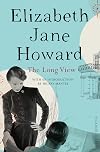
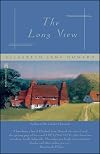
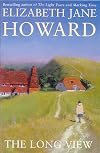
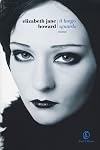
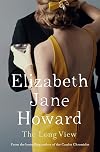
The Long View
by Elizabeth Jane Howard
On This Page
Description
Journeying backward in time-from 1950 to 1926-this masterpiece of women's literary fiction presents an indelible portrait of a marriage Forty-three-year-old Antonia Fleming is preparing a dinner party for eight at the house in Campden Hill Square she shares with her husband, Conrad. The occasion is the engagement of their son, Julian. Their other child, Deirdre, hates her father and resents her mother-a reality Conrad ponders, along with the disastrous state of Deirdre's single life, as he show more leaves the bed of his current mistress. In illuminating the quotidian details of domestic life, The Long View perfectly captures a long relationship, with its moments of joy and intimacy, loneliness and regret, and of the roads not taken. As the story moves backward in time, we learn about the events that led up to Conrad and Antonia's fateful first meeting-including a startling secret in Antonia's past. With brilliant use of reverse chronology, the bestselling author of the Cazalet Chronicles paints a realistic and revealing portrait of a marriage and the decisions, good and bad, right and wrong, that shape lives. show lessTags
Recommendations




















Member Recommendations
Member Reviews
‘The Long View’ by Elizabeth Jane Howard is not so much a ‘what happens next’ novel as ‘what has happened in the past to lead to this situation’ story. It is a novel about choices and where they can lead. Howard tells the story, backwards from 1950 to 1926, of the marriage of Antonia and Conrad Fleming. As the story starts, the marriage seems doomed and you cannot help but wonder how these two people ever got married in the first place. In fact, once I finished it I was tempted to read it again from back to front.
The first paragraph is a masterful example of scene setting. It opens with a dinner party to celebrate the engagement of Julian Fleming to June, who has secretly spent the afternoon alone at the cinema. As Antonia show more considers the complicated marital affairs of her son – and her daughter, Deirdre, who is pregnant by a man who does not love her – I wondered how her own marriage must have shaped her children’s handling of relationships and how hers, in turn, was shaped by her parents. I found Conrad an almost totally unsympathetic character, indeed in the first part he is referred to simply as Mr Fleming. ‘One of his secret pleasures was the loading of social dice against himself. He did not seem for one moment to consider the efforts made by kind or sensitive people to even things up; or if such notions ever occurred to him, he would have observed them with detached amusement, and reloaded more dice.’
This is very much a novel of its time in which middle-class women had limited choices. As a young woman, Antonia lacks the strength to break out. She is timid, feeling she has proved unsatisfactory for both her mother and father. ‘She grew up, therefore, feeling, not precisely a failure so much as an unnecessary appendage.’ Her mother bemoans her lack of interests [Antonia does have interests, simply not those of her mother] and her father her lack of intellect [but without stimulus of career or education]. We see the transition from hopeful, eager young girl experiencing first love, to weary, middle age when the ‘trees ahead so horribly resembled the trees behind, and the undergrowth of their past caught and clung and tore at them as they moved on’.
This is Howard’s second novel. I am most familiar with her later ‘Cazalet Chronicles’ series and there are some key comparisons to be made in the writing style. Sentences in ‘The Long View’ are longer, paragraphs longer, and the style not as simple and nuanced as the later books. Viewpoint also shifts within paragraphs, a technique she changed for the Cazalets. This is not to say this spoiled my enjoyment of ‘The Long View’, it is perhaps an observation for writers rather than readers, but it shows an interesting development in the author’s writing style. And I particularly enjoyed the descriptions of Antonia’s horse rides in Sussex, countryside in which the Cazalet’s house, Home Place, is set.
Read more of my book reviews at http://www.sandradanby.com/book-reviews-a-z/ show less
The first paragraph is a masterful example of scene setting. It opens with a dinner party to celebrate the engagement of Julian Fleming to June, who has secretly spent the afternoon alone at the cinema. As Antonia show more considers the complicated marital affairs of her son – and her daughter, Deirdre, who is pregnant by a man who does not love her – I wondered how her own marriage must have shaped her children’s handling of relationships and how hers, in turn, was shaped by her parents. I found Conrad an almost totally unsympathetic character, indeed in the first part he is referred to simply as Mr Fleming. ‘One of his secret pleasures was the loading of social dice against himself. He did not seem for one moment to consider the efforts made by kind or sensitive people to even things up; or if such notions ever occurred to him, he would have observed them with detached amusement, and reloaded more dice.’
This is very much a novel of its time in which middle-class women had limited choices. As a young woman, Antonia lacks the strength to break out. She is timid, feeling she has proved unsatisfactory for both her mother and father. ‘She grew up, therefore, feeling, not precisely a failure so much as an unnecessary appendage.’ Her mother bemoans her lack of interests [Antonia does have interests, simply not those of her mother] and her father her lack of intellect [but without stimulus of career or education]. We see the transition from hopeful, eager young girl experiencing first love, to weary, middle age when the ‘trees ahead so horribly resembled the trees behind, and the undergrowth of their past caught and clung and tore at them as they moved on’.
This is Howard’s second novel. I am most familiar with her later ‘Cazalet Chronicles’ series and there are some key comparisons to be made in the writing style. Sentences in ‘The Long View’ are longer, paragraphs longer, and the style not as simple and nuanced as the later books. Viewpoint also shifts within paragraphs, a technique she changed for the Cazalets. This is not to say this spoiled my enjoyment of ‘The Long View’, it is perhaps an observation for writers rather than readers, but it shows an interesting development in the author’s writing style. And I particularly enjoyed the descriptions of Antonia’s horse rides in Sussex, countryside in which the Cazalet’s house, Home Place, is set.
Read more of my book reviews at http://www.sandradanby.com/book-reviews-a-z/ show less
I am surprised Elizabeth Janes Howard is not a more well-known writer. She writes very well. 'The Long View' totally surprised me with its ingenuity and excellent writing. The plot moves backward so your view of Antonia and Conrad shifts, and you realize that at the beginning of their relationship, Conrad is the one who loved Antonia madly and Conrad had not always been so indifferent. What would have made the book perfect is some explanation of the changes in their relationship. Did Conrad's passion cool because of their children (he had not wanted children) or something else? We do not know.
Interesting structure: Beginning at middle age, then going backwards to early marriage and teenage years. Structure reminded me of Pinter's 'Betrayal'. But could not feel anything for the chilly, disconnected characters. Felt I should have sympathy with Antonia, but it was only her mother who showed any spark of life.
An early novel by Howard that shows the skills of detail she was to evolve by the time she gets to the Cazalett series, with a lighter less dense touch in the later novels. The novel starts with the Flemings in the 1950s, and each part takes you back a stage, showing different elements of how they got to where they were when the novel opens. What shaped and formed who they became.
The story of a marriage told in reverse. Fascinating but needs a review of the chapters in the other order before I am at peace with it. As usual, she write beautiful, witty, crafted language.
Dit boek heeft een bijzonders structuur. Het start in de jaren 50 en eindigt in 1926, als Antonia een jonge vrouw is. Het is het verhaal van haar mislukte huwelijk, de relatie met haar man maar ook met andere mannen. Niet alles wordt onthuld. Indrukwekkend!
Choices, marriage, 1926-1950 society
Members
- Recently Added By
Lists

Julie Parson’s Old Books
52 works; 4 members

Books Read in 2022
5,226 works; 115 members
Author Information

46+ Works 6,653 Members
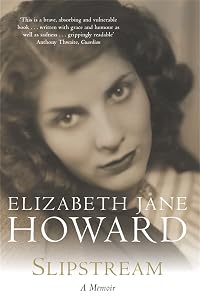
Elizabeth Jane Howard was born in London, England on March 26, 1923. She was educated by governesses at home. Her first novel, The Beautiful Visit, was published in 1950 and won the John Llewellyn Rhys prize. Her other works include the series the Cazalet Chronicles, Falling, and the autobiography Slipstream. The first two novels of the Cazalet show more Chronicles, The Light Years and Marking Time, became the BBC TV series The Cazalets in 2001. The other books in the series are Confusion, Casting Off, and All Change. She also edited several anthologies and wrote short stories, articles, television plays, film scripts and a book on food with Fay Maschler. She was made a CBE in 2000. She died on January 2, 2014 at the age of 90. (Bowker Author Biography) show less
Some Editions
Series
Belongs to Publisher Series
Work Relationships
Common Knowledge
- Canonical title
- The Long View
- Original publication date
- 1956
- People/Characters
- Antonia Fleming; Conrad Fleming; Julian Fleming; Deidre Fleming; Geoffrey Curran; Araminta Vaughan (show all 11); Thompson; Louis Vale; June Stoker; Imogen Stanford; Wilfrid Vaughan
- Dedication
- For E.M.
- First words
- This, then, was the situation.
Classifications
Statistics
- Members
- 312
- Popularity
- 102,830
- Reviews
- 10
- Rating
- (3.62)
- Languages
- 5 — Dutch, English, French, Italian, Spanish
- Media
- Paper, Audiobook, Ebook
- ISBNs
- 31
- ASINs
- 13