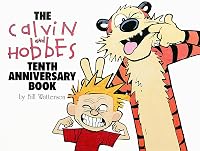
The Calvin and Hobbes Tenth Anniversary Book
by Bill Watterson
Calvin and Hobbes (Collections and Selections — Companion)
On This Page
Description
A collection of comic strips depicting the adventures of Calvin and his stuffed tiger, Hobbes.Tags
Recommendations




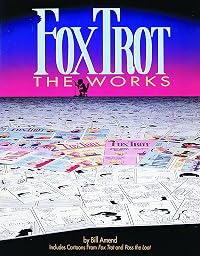
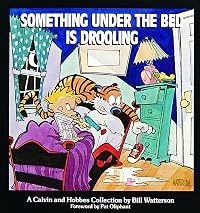


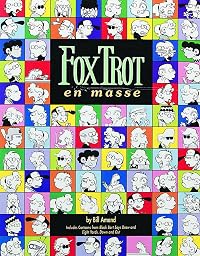
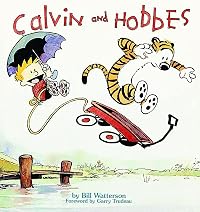
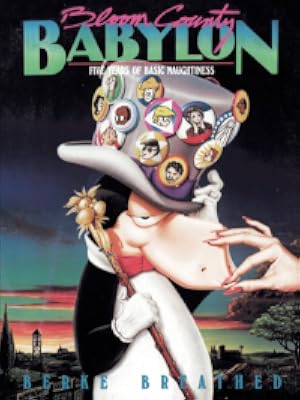

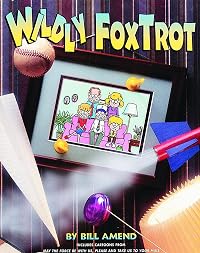
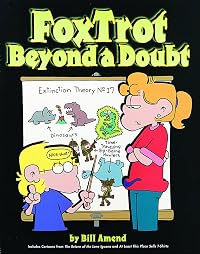



Member Recommendations
Peanuts: A Golden Celebration: The Art and the Story of the World's Best-Loved Comic Strip by Charles M. Schulz
dtw42 It's well known that Watterson considered Schulz a big influence. Both these books contain interesting introductions and commentaries alongside some of the strips, where the artist explains why some elements of the strips are the way they are. It's a nice insight into their minds.
21
Member Reviews
A collection of Calvin & Hobbes strips first published in 1995 to cerebrate the comic's tenth anniversary, featuring commentary from the cartoonist himself (a fairly rare thing from the notoriously reticent Watterson). Each strip (or set of strips) comes with a line or three about things like the inspiration, the art style, or the theme. There are also several pages of text in which he talks about the joys of cartoons as an art form and the disappointments and headaches of cartooning as a commercial enterprise, as well as laying out his reasons for never allowing officially licensed Calvin & Hobbes merchandise. Coming from anyone else, I suppose some of that might feel a bit pretentious, but by god, if anyone gets to talk about artistic show more integrity in comic strips, it's Watterson, who does indisputably practice real art and possess real integrity. I don't even have to talk about how funny, wise, irreverent, surprising, thoughtful, charming, profound, and delightfully silly C&H is, right? Everyone already knows this by now, right? And yet, somehow, coming back to it always surprises me all over again, especially in those moments when Watterson seems to tap into some combination of childhood nostalgia and an adult sense of the beauty and absurdity of life that spawns a feeling of deep recognition somewhere in my soul. Even, or perhaps especially, when that's interspersed with jokes about boogers or drawings of dinosaurs in fighter jets.
Rating: Yes, it's a collection of comics I've already read before with a few little bits of commentary. And yes, it still gets 5/5. Because it's Calvin and Hobbes. show less
Rating: Yes, it's a collection of comics I've already read before with a few little bits of commentary. And yes, it still gets 5/5. Because it's Calvin and Hobbes. show less
The only thing to dislike about the excellent Complete Calvin and Hobbes is that it has no room for the content of this book. Published for the strip's tenth anniversary (Watterson actually ended the strip during year ten, but the book refers to the strip in the present tense throughout), the book selects a number of individual strips and storylines from across the lifetime of Calvin and Hobbes with commentary from Bill Watterson on how he wrote and drew the strip. The commentary is great: Watterson explains how he devised the characters and their world, discusses his battles with the syndicate over what the strip could be, and goes into the minutiae of panel placement in Sunday strips (a thing I have remembered from this book since I show more read it at age 10).
Calvin and Hobbes really is a perfect comic strip: it's hard to imagine it working in any other medium even if the medium mostly produces crap these days. In a way, the book is Watterson's passionate defense of the possibilities of the medium, which makes it even more jarring when he slams comic books as "incredibly stupid" (171). Like, dude, your whole thing is finding art in a "low culture" medium, to the extent that there's a whole strip about it, where you say, "I would suggest that it's not the medium, but the quality of perception and expression, that determines the significance of art" (202).
But anyway, the delights to be found here are many and manifold. Many of the best storylines, and it's interesting to see what Watterson perceives as the best ones, versus what ones popular consensus has latched onto. And it's nice to see one-off strips get some prominence, since they're easy to forget. Calvin and Hobbes is four months younger than me, so I've loved it my entire life, and I imagine I will continue to do so, and this book is a nice reminder why. show less
Calvin and Hobbes really is a perfect comic strip: it's hard to imagine it working in any other medium even if the medium mostly produces crap these days. In a way, the book is Watterson's passionate defense of the possibilities of the medium, which makes it even more jarring when he slams comic books as "incredibly stupid" (171). Like, dude, your whole thing is finding art in a "low culture" medium, to the extent that there's a whole strip about it, where you say, "I would suggest that it's not the medium, but the quality of perception and expression, that determines the significance of art" (202).
But anyway, the delights to be found here are many and manifold. Many of the best storylines, and it's interesting to see what Watterson perceives as the best ones, versus what ones popular consensus has latched onto. And it's nice to see one-off strips get some prominence, since they're easy to forget. Calvin and Hobbes is four months younger than me, so I've loved it my entire life, and I imagine I will continue to do so, and this book is a nice reminder why. show less
This is my favorite Calvin and Hobbes collection. It has a lot of the best storylines and Watterson's commentary is curmudgeonly and fun.
My parents didn't subscribe to the newspaper, so I didn't have access to the comic strips as a kid. I would sometimes get access to compilations of comic strips the though (Garfield, Peanuts, etc.). It was in this venue that I first came across Calvin and Hobbes. Calvin's adventurousness and imagination was an inspiration for me and my friends. A few of my friends were obsessed with Calvin and Hobbes, and had read every book. I enjoyed it, but wasn't a fanatic.
It being the summertime, I felt in the mood for something carefree, and found this on my shelf. It is a different Calvin and Hobbes, in that it includes lengthy musings and reflections by the author, Bill Watterson. Even though I was given this book as a child, I had only ever show more paged through reading the comics, so this was my first time reading the text. I realize now that much of the lore my friends would tell me about Watterson likely comes from this book.
Watterson talks extensively about the evolution of comics, and the newspaper medium in general. The book was published in 1995, and the pressures facing news and art back then almost sound quaint compared to current affairs.
Although Calvin can seem innocent in his naïveté, I now realize that he was a bad influence on me both in childhood and in adulthood. Watterson says that Calvin accurately represents many of childish tendencies that have endured through adulthood. I feel like this attitude—that old people aren't adult or mature, just old—permeates especially the outlook of privileged white men. Sure, it is possible for this to occur, but it is deeply saddening. Cultures throughout the ages have developed ceremonies and mythologies based on a path of maturation, and these are generally absent from Western convention.
Watterson also muses on the ways in which racism and other judgmental stereotypes enter comics to their detriment. Ironically, in this very book, there are some lengthy misogynist episodes involving Calvin and Susie.
I hadn't realized it until after I had finished reading this book, but apparently Watterson stopped the strip in 1995, after ten years, when he himself was in his late thirties. He hasn't done anything comparable since. show less
It being the summertime, I felt in the mood for something carefree, and found this on my shelf. It is a different Calvin and Hobbes, in that it includes lengthy musings and reflections by the author, Bill Watterson. Even though I was given this book as a child, I had only ever show more paged through reading the comics, so this was my first time reading the text. I realize now that much of the lore my friends would tell me about Watterson likely comes from this book.
Watterson talks extensively about the evolution of comics, and the newspaper medium in general. The book was published in 1995, and the pressures facing news and art back then almost sound quaint compared to current affairs.
Although Calvin can seem innocent in his naïveté, I now realize that he was a bad influence on me both in childhood and in adulthood. Watterson says that Calvin accurately represents many of childish tendencies that have endured through adulthood. I feel like this attitude—that old people aren't adult or mature, just old—permeates especially the outlook of privileged white men. Sure, it is possible for this to occur, but it is deeply saddening. Cultures throughout the ages have developed ceremonies and mythologies based on a path of maturation, and these are generally absent from Western convention.
Watterson also muses on the ways in which racism and other judgmental stereotypes enter comics to their detriment. Ironically, in this very book, there are some lengthy misogynist episodes involving Calvin and Susie.
I hadn't realized it until after I had finished reading this book, but apparently Watterson stopped the strip in 1995, after ten years, when he himself was in his late thirties. He hasn't done anything comparable since. show less
The real joy of this book is remembering, even for just a couple of hours, what it was like to be a kid. I don't know if the comics transported me there through writing or if it was just the nostalgia. I remember picking up Calvin and Hobbes for the first time at a garage sale. It was 50 cents or thereabouts, and I really just picked it up because I was a bored little kid waiting for his parents. When I looked at the inside cover, I saw that the previous owner's name was the same as a friend of mine. Noting a chance for something in common (I was a socially awkward kid) I begged my parents for it, saying that "I always wanted this book!"
It sat neatly on my bookshelf for a couple months, then on a summer day when I was too lazy to go show more pretend I was a knight (or a robot, or a jedi) I sat in my little nook in the house and started to read it. First I skipped ahead to every colored "sunday comic." After exhausting the supply, I went back and read it cover to cover. I won't say that I was forever changed, but I'm pretty sure I went outside and started acting like a dinosaur right after.
I guess my real love of this comic didn't become apparent to me until earlier today. I was at my local bookstore, hoping to acquire a copy of Empire Magazine. The spot for it was empty, so here I was with ten dollars to spend and no book to spend it on. I browsed for about ten minutes before sighing and resigning myself to going home empty-handed. On my way out, I noticed the Tenth Anniversary book sitting on an impulse rack. Solidifying the bookseller's decision to have an impulse rack, (darn you!) I bought the book and went on my way.
Imitating my young self, I left it on my bed, and proceeded to watch movies all day. Once I finished my last movie, I went into my room, remembered my purchase and sat down to flip through it. Again I was unable to get up until I read it cover to cover.
The strips are fantastic, the stories remind me of myself and of ways that I wished I had been when I was younger. Many strips also have a line or two of writer commentary which I love. Nothing makes comics more meaningful than receiving some insight from the mind of the person that conceived it.
In short (or long, wow I didn't intend to write this much), this book is well worth picking up. Buy it for yourself. Buy it for your kid. Buy it for your neighbor's kid. Everybody should experience Calvin & Hobbes. show less
It sat neatly on my bookshelf for a couple months, then on a summer day when I was too lazy to go show more pretend I was a knight (or a robot, or a jedi) I sat in my little nook in the house and started to read it. First I skipped ahead to every colored "sunday comic." After exhausting the supply, I went back and read it cover to cover. I won't say that I was forever changed, but I'm pretty sure I went outside and started acting like a dinosaur right after.
I guess my real love of this comic didn't become apparent to me until earlier today. I was at my local bookstore, hoping to acquire a copy of Empire Magazine. The spot for it was empty, so here I was with ten dollars to spend and no book to spend it on. I browsed for about ten minutes before sighing and resigning myself to going home empty-handed. On my way out, I noticed the Tenth Anniversary book sitting on an impulse rack. Solidifying the bookseller's decision to have an impulse rack, (darn you!) I bought the book and went on my way.
Imitating my young self, I left it on my bed, and proceeded to watch movies all day. Once I finished my last movie, I went into my room, remembered my purchase and sat down to flip through it. Again I was unable to get up until I read it cover to cover.
The strips are fantastic, the stories remind me of myself and of ways that I wished I had been when I was younger. Many strips also have a line or two of writer commentary which I love. Nothing makes comics more meaningful than receiving some insight from the mind of the person that conceived it.
In short (or long, wow I didn't intend to write this much), this book is well worth picking up. Buy it for yourself. Buy it for your kid. Buy it for your neighbor's kid. Everybody should experience Calvin & Hobbes. show less
How can I review something that came to be so integral to shaping my worldview (yeah, I think I would go that far)? The entire opus of Bill Watterson's work on Calvin and Hobbes defies easy explanation. Others have already written so much more eloquent and capable responses than I, but I feel I need to share my thoughts. Calvin and Hobbes, along with the Far Side, were among the few worthy pieces of the newspaper comic sections in my childhood (let alone today) and Calvin's daydreaming of dinosaurs and space mirrored my own, even if I, like Watterson, was a more obedient kid. Hobbes' almost subversive philosophical asides seemed to make sense to me even then. I still remember various quotations from the strip nearly verbatim, which come show more to me at the oddest times; "Santa: jolly old elf, or CIA spook?," "welcome to Boomer Classic Radio, which promises never to expose you to anything you haven't heard a million times before!," "Here your lunboks. Hoffa gud day askool!" I found that this has not changed as I recently revisited the complete run of the comic, which, in spite of the mere ten years of its existence, culminating with the "Calvin and Hobbes Tenth Anniversary Book," which is probably the longest explanation by the notoriously reclusive Bill Watterson ever shared in his words regarding his creation, making it a gripping and illuminating read, and not just for the typically top notch comics.
In "The Calvin and Hobbes Tenth Anniversary Book," Watterson shares a few of his favorite strips and stories to exemplify his creative process and the work that went on behind the strip to create the increasingly sophisticated art style and Calvin and Hobbes' sharp sense of humor. Even more interestingly, Watterson also takes time to describe the creative philosophy that led to his rejecting all commercial uses of his characters. It was also Calvin and Hobbes, I feel, to have really led me to be interested in comics and graphic novels; in spite of loving Calvin and Hobbes, for a long time I felt that comics (meaning superheroes) were "incredibly stupid," (as expressed by Watterson in his commentary on the superhero industry), but through the comic and others like it I would later discover, I found that the world of comics was so much more vast. The Tenth Anniversary Book is required reading for anyone interested in Calvin and Hobbes. show less
In "The Calvin and Hobbes Tenth Anniversary Book," Watterson shares a few of his favorite strips and stories to exemplify his creative process and the work that went on behind the strip to create the increasingly sophisticated art style and Calvin and Hobbes' sharp sense of humor. Even more interestingly, Watterson also takes time to describe the creative philosophy that led to his rejecting all commercial uses of his characters. It was also Calvin and Hobbes, I feel, to have really led me to be interested in comics and graphic novels; in spite of loving Calvin and Hobbes, for a long time I felt that comics (meaning superheroes) were "incredibly stupid," (as expressed by Watterson in his commentary on the superhero industry), but through the comic and others like it I would later discover, I found that the world of comics was so much more vast. The Tenth Anniversary Book is required reading for anyone interested in Calvin and Hobbes. show less
I've tried to return some of the fun, magic, and beauty I've enjoyed in other comics. : "I've always loved cartoons. With 'Calvin and Hobbes', I've tried to return some of the fun, magic, and beauty I've enjoyed in other comics. It's been immensely satisfying to draw 'Calvin and Hobbes', and I will always be grateful to have had the opportunity to work in this wonderful art form." (p. 208)
This book allows us to see the man behind the pen. This collection is a selection of what Watterson thought was important, interesting or profound about various strips he drew. It is the equivalent of a director's commentary on a DVD.
I relished the introductory essay, which is far superior to the one found in the Monster Box Set. It covers more of show more the in and outs of drawing, Watterson's battle for control of Calvin, his no-marketing stance, and his push for those wonderful Sunday comics. We have yet to see his artistic superior, much less an equal.
If we read between the lines, Watterson's retirement was not a surprise. The battles he fought for his integrity really damaged a part of his soul. This book provides a better explanation than his terse press release, and I feel for him. The Far Side, Bloom County, and now Foxtrot have run their course, and like these other comics, we can use this book to stoke memories--the roses of the soul that charm us in winter.
From Watterson's point of view, this book is the best of the best. After reading it, I see what he meant. The reason why C&H was so popular was that he touched the soul's taproot. You have the two sides of the man, with the animal being human, and the human an animal, then the shifting frame of reference between the imaginary and real world. As a chronic daydreamer, I understand this perfectly. In fact, I find myself in many situations that Calvin does, with the same results.
This is art--we se ourselves, and are better for it. show less
This book allows us to see the man behind the pen. This collection is a selection of what Watterson thought was important, interesting or profound about various strips he drew. It is the equivalent of a director's commentary on a DVD.
I relished the introductory essay, which is far superior to the one found in the Monster Box Set. It covers more of show more the in and outs of drawing, Watterson's battle for control of Calvin, his no-marketing stance, and his push for those wonderful Sunday comics. We have yet to see his artistic superior, much less an equal.
If we read between the lines, Watterson's retirement was not a surprise. The battles he fought for his integrity really damaged a part of his soul. This book provides a better explanation than his terse press release, and I feel for him. The Far Side, Bloom County, and now Foxtrot have run their course, and like these other comics, we can use this book to stoke memories--the roses of the soul that charm us in winter.
From Watterson's point of view, this book is the best of the best. After reading it, I see what he meant. The reason why C&H was so popular was that he touched the soul's taproot. You have the two sides of the man, with the animal being human, and the human an animal, then the shifting frame of reference between the imaginary and real world. As a chronic daydreamer, I understand this perfectly. In fact, I find myself in many situations that Calvin does, with the same results.
This is art--we se ourselves, and are better for it. show less
Members
- Recently Added By
Lists

Recommended Comics / Graphic Novels
595 works; 122 members

Favorite Long Books
330 works; 41 members

Adult Books for YA Readers
194 works; 6 members

Books With Numbers in the Title
308 works; 13 members

Books Read in 2019
4,052 works; 110 members

Top-Rated Books on LibraryThing
272 works; 117 members
Author Information

319+ Works 80,991 Members
Cartoonist Bill Watterson was born in Washington, D.C. on July 5, 1958. He graduated from Kenyon College in 1980 with a B.A. in Political Science. Before beginning to publish his popular Calvin and Hobbes comic strip in 1985, Watterson worked briefly as a political cartoonist and also designed grocery advertisements. Calvin and Hobbes is one of show more the most well-regarded, successful comics of the twentieth century. Watterson depicted the adventures of an imaginative six-year-old boy and his stuffed tiger for ten years and ended the strip at the height of its popularity. The creator is known for his revolutionary design techniques and refusal to merchandise his characters or allow them to appear in an animated series. Watterson published several collections of his Calvin and Hobbes strips, including "It's a Magical World," "The Days Are Just Packed," and "The Revenge of the Baby-Sat." He has been recognized numerous times for excellence, including receiving two Reuben Awards for Cartoonist of the Year, consecutive Harvey Awards for Best Syndicated Comic Strip from 1990 to 1996, and two Eisner Awards for Best Comic Strip Collection. (Bowker Author Biography) show less
Awards and Honors
Awards
Notable Lists
Series

Work Relationships
Is contained in
Common Knowledge
- Canonical title*
- El último libro de Calvi y Hobbes. (Este no es el décimo aniversario de Calvin y Hobbes) (Este no es el décimo aniversario de Calvin y Hobbes)
- Original title
- The Calvin and Hobbes tenth anniversary book
- Alternate titles
- Calvin & Hobbes 10th Anniversary
- Original publication date
- 1995
- People/Characters
- Hobbes; Calvin [of Calvin and Hobbes]
- First words
- Grandpa says the comics were a lot better years ago when newspapers printed them bigger.
- Quotations
- Rainy days should be spent at home with a cup of tea and a good book.
- Last words
- (Click to show. Warning: May contain spoilers.)It's been immensely satisfying to draw Calvin and Hobbes, and I will always be grateful to have had the opportunity to work in this wonderful art form.
*Some information comes from Common Knowledge in other languages. Click "Edit" for more information.
Classifications
- Genre
- Graphic Novels & Comics
- DDC/MDS
- 741.5973 — Arts & recreation Drawing & decorative arts Drawing Comic books, graphic novels, fotonovelas, cartoons, caricatures, comic strips History, geographic treatment, biography North American United States (General)
- LCC
- PN6728 .C34 .W3852 — Language and Literature Literature (General) Literature (General) Collections of general literature Comic books, strips, etc.
- BISAC
Statistics
- Members
- 4,230
- Popularity
- 3,589
- Reviews
- 39
- Rating
- (4.63)
- Languages
- 9 — Danish, English, Finnish, German, Italian, Norwegian (Bokmål), Portuguese, Spanish, Swedish
- Media
- Paper
- ISBNs
- 25
- UPCs
- 1
- ASINs
- 7