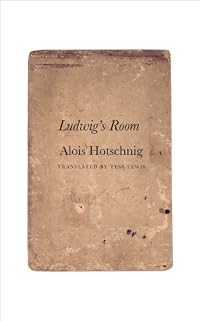
Ludwig's Room
by Alois Hotschnig
On This Page
Description
When Kurt Weber inherits his great-uncle's lakeside house, he finds traces of the dark secrets of his family's past. The early inhabitants of the house haunt his dreams nightly. And one day a ghostlike woman appears before him, hiding herself in a room that had been kept locked throughout his childhood. Inside, Kurt finds a hidden stash of photographs, letters, and documents. As he deciphers them, he gradually understands the degree of complicity in wartime horrors by his family and among show more his neighbors. As the story unfolds, it becomes clear that the entire village adheres to an old and widely understood agreement not to expose the many members in the community who had been involved with a nearby prison camp during World War II. This knowledge wraps the entire community--those involved, and those who know of the involvement--in inescapable guilt for generations. Translated from the original German by Tess Lewis, Ludwig's Room is a story of love, betrayal, honor, and cowardice, as well as the burden of history and the moral demands of the present. show lessTags
Member Reviews
This was a chilling and masterful exploration of collective guilt and the haunting nature of the past. It is an atmospheric, deeply psychological work that reveals the complexities of a community's involvement in wartime atrocities.
The plot revolves around Kurt Weber, who inherits his great-uncle's lakeside villa in Carinthia, Austria.
Kurt was forbidden as a child from entering "Ludwig's room," where his uncle Georg would spend nights pacing and shuffling papers.
Kurt discovers a hidden cache of letters, photographs, and documents following Georg's death, revealing his family's involvement with a nearby Nazi prison camp. Kurt recognizes that the entire community is bound by a "widely understood agreement" to keep silent about their show more shared history of betrayal and cowardice. The plot is similar to a "haunted house" story, with the ghosts representing the living and dead voices of a guilty past.
The author's prose is intense, aphoristic, and "superfluous-free." The book could be interpreted as a literary riddle. Tess Lewis' English translation captures the story's "wit and sheer power of description," as well as the nuanced concept of Heimat.
Due to its bleak subject matter, the book can be "dense and opaque" or "difficult to read," but the emotional payoff at the end makes it worthwhile. show less
The plot revolves around Kurt Weber, who inherits his great-uncle's lakeside villa in Carinthia, Austria.
Kurt was forbidden as a child from entering "Ludwig's room," where his uncle Georg would spend nights pacing and shuffling papers.
Kurt discovers a hidden cache of letters, photographs, and documents following Georg's death, revealing his family's involvement with a nearby Nazi prison camp. Kurt recognizes that the entire community is bound by a "widely understood agreement" to keep silent about their show more shared history of betrayal and cowardice. The plot is similar to a "haunted house" story, with the ghosts representing the living and dead voices of a guilty past.
The author's prose is intense, aphoristic, and "superfluous-free." The book could be interpreted as a literary riddle. Tess Lewis' English translation captures the story's "wit and sheer power of description," as well as the nuanced concept of Heimat.
Due to its bleak subject matter, the book can be "dense and opaque" or "difficult to read," but the emotional payoff at the end makes it worthwhile. show less
Wonderfully haunting prose. Beautifully captures the specter of the Other vis-a-vis death.
Members
- Recently Added By
Published Reviews
ThingScore 75
Hotschnigs Art des Hinterfragens nimmt für seinen Protagonisten Kurt Weber existenzielle Gestalt an. Die Übernahme des Hauses und die damit verbundene Nähe zu den vielen toten Zwangsarbeitern am Loibl darf man als selbst auferlegte Sühne für die zwielichtige und nicht aufgearbeitete Familienvergangenheit deuten. Dieses aus inneren Zwängen der Hauptfigur resultierende Martyrium hat Alois show more Hotschnig psychologisch gekonnt und mit großer sprachlicher Radikalität gestaltet. Ein bedrückender Roman über eine Selbstzerstörung. show less
added by Indy133
Author Information

7+ Works 120 Members
Some Editions
Awards and Honors
Awards
Common Knowledge
- Canonical title
- Ludwig's Room
- Original title
- Ludwigs Zimmer
- Original publication date
- 2014 (English translation) (English translation); 2000
- People/Characters
- Kurt Weber
- Quotations
- 'I've got a dead man in my house', he screamed, 'and that dead man is me'.
- Original language
- German
Classifications
- Genres
- Fiction and Literature, General Fiction
- DDC/MDS
- 833.914 — Literature & rhetoric German & related literatures German fiction 1900- 1900-1990 1945-1990
- LCC
- PT2668 .O84 .L8413 — Language and Literature German, Dutch and Scandinavian literatures German literature Individual authors or works 1961-2000
- BISAC
Statistics
- Members
- 17
- Popularity
- 1,445,834
- Reviews
- 2
- Rating
- (4.00)
- Languages
- English, German
- Media
- Paper
- ISBNs
- 4
- ASINs
- 1