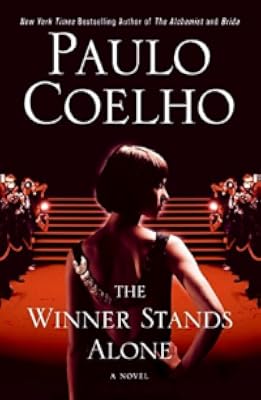
The Winner Stands Alone
by Paulo Coelho
On This Page
Description
At the Cannes Film Festival, a successful, driven entrepreneur goes to the darkest lengths to reclaim a lost love. Captured in all their crassness are producers, actors, aspiring starlets, supermodels, and notorious fashionistas, whose lives and actions hold sway over millions.Tags
Recommendations












Member Reviews
I found the intention of the story to be fascinating. But upon reading it, I have concluded that some of the concepts are a bit tiring to read because the story kept on repeating its point. However, I like the way how the backstory of the characters contributed to the main point of the story. I will admit that this book is not quite good as “The Alchemist”, my favorite book among Paulo’s books that I have read so far. I think I must have been disappointed a little because the story gave me an impression that there’s something more and more but as I went along, I didn’t found that something. Despite this, in conclusion, I think this book is nice.
I first learned of Coelho’s books when Clark was asked to read The Alchemist for his December book report. I heard a beauty and soul in the language and then picked up this novel in the library. On a thriller level it is fascinating. I read it quickly whenever I had spare time. An obvious psychopath, a successful Russian businessman named Igor, stalks his ex-wife and her husband to the Cannes Film Festival. He is obsessed with love for her and will “destroy worlds and universes” for her. Translate: kill people. He is the ultimate killer, the ultimate evil; each kill is to send a message to his wife, Ewa, that he loves her.
The story takes place among the “Superclass” of the film world, a backstory of superficiality and show more immorality for Igor’s quest. In the end, is there a difference between the “Superclass” and the protagonist? Or a difference between evil and passivity in the face of evil? I picked up another Coelho novel at the library today. show less
The story takes place among the “Superclass” of the film world, a backstory of superficiality and show more immorality for Igor’s quest. In the end, is there a difference between the “Superclass” and the protagonist? Or a difference between evil and passivity in the face of evil? I picked up another Coelho novel at the library today. show less
For me, the word macabre and love can never go together. But when it comes to Paulo Coelho's writings, you can obviously expect the unexpected. Before I picked up The Winner Stands Alone (TWSA), my experience with Coelho was moderately sweet. I had read three of his works- The Alchemist, Eleven Minutes and Veronica Decides To Die- and each one them, which I read separated by huge spaces in time, enthralled me at some level. So, while I could not exactly call myself and ardent fan of the author, I was definitely one who trusted him for writing good, out-of-the-box stuff.
Things changed a little with TWSA. It is his twelfth book, and like the earlier ones, touches on a something arcanely sublime, which is way above an ordinary person's show more realm of imagination and understanding. This, exactly, is what Coelho is famous for doing. TWSA pivots around one protagonist, although in totality, there are five names which shape and aid the development, pace and culmination of this book.
Igor Malev, is not just the protagonist, but the very subject of this book. He is an extremely successful Russian telecom giant, who visits Cannes Film Festival with a single thing on his mind- to win back his wife Ewa. Ewa, who was once the motivation and the very reason for his existence is now married to a couturier, Hamid Hussein- a man as successful as Igor, but a powerful contradiction in character to him. Igor never recovers from the loss of his wife, and after two years of separation, decides to win her back. He calls himself to be on a 'mission of love', a mission that requires sacrifices- murders. Set against the backdrop of glitz and glamour of the world's most famous film festival, what then ensues is a tale of 'extraordinary violence' (as the book cover puts it), lasting just under 24 hours, revealing the evil which hides in each human soul and busting the myths associated with the world of celebrities.
TWSA is one of Coelho's most criticized books, as I learnt later. The reason for that, as I can guess, are many. For me, however, the prime reason for finding it an unsatisfactory read, was the profound sense of darkness which as an engrossed reader, TWSA filled me up with. The portrayal of the world of glamour, no doubt realistic, is very depressing. It is depicted as an arena in which under the glimmer of stars, what exists is deep darkness, an abyss of depression from which no return is possible. Gabriela, an aspiring and aging actress, and Jasmine, a young and wise model are the characters who are used to convey this aspect of the story, though in a very repetitive fashion. The narrative of the story keeps shifting between all the five characters (and also a few more), and which though essential to the fabric of the story, hinders the lucidity of the storyline at places. The development of the characters, besides that of Igor and perhaps Hamid Hussein, leaves a lot to be desired. The worst bit for me was the contemplative end of the novel. I like stories which end in light, and even though TWSA does not end in total darkness, it gives me nothing positive to carry in my heart.
What I would keep due credit to Coelho for, though, is his hero- Igor Malev. Yes, he is a character I hated, but that is what this character was intended for- to be unabashedly hated by some and to be justified by others. Both categories of people were not expected to like this character, even if they empathized with him at some points. He was a mirror for all the evil thoughts we allow and justify within ourselves. Igor displays what is known as the Lucifer Effect, a kind of psychological condition, in which an otherwise normal individual develops a mindset where he crosses the dividing line between good and evil, and engages in evil action thoroughly justified in his brain. A good revelation of the psyche of the serial killers can be provided by reading this book; though a tale of love I still refuse to believe this book is. Igor's appentence for Ewa is understandable, but his ways and means and thoughts and actions are capable of powerfully unnerving the young believers in love like me.
I've had long, passionate discussions on this novel with three of my friends; Coelho does stimulate your brain that much for sure. So I might go on presenting my opinion of this book in a tiring, dilatory tone. However, succinctly put, it is not a book for all types of readers. Even for Paulo Coelho admirers, may be this is one book you can skip.Love might not have been the central theme of this book, but it is depicted as the underlying motivation for all things evil. I would give it only about 2 stars on five, and maintain, that for me, macabre and love can never go together.
http://nascentemissions.blogspot.com/2011/11/winner-stands-alone-by-paulo-coelho... show less
Things changed a little with TWSA. It is his twelfth book, and like the earlier ones, touches on a something arcanely sublime, which is way above an ordinary person's show more realm of imagination and understanding. This, exactly, is what Coelho is famous for doing. TWSA pivots around one protagonist, although in totality, there are five names which shape and aid the development, pace and culmination of this book.
Igor Malev, is not just the protagonist, but the very subject of this book. He is an extremely successful Russian telecom giant, who visits Cannes Film Festival with a single thing on his mind- to win back his wife Ewa. Ewa, who was once the motivation and the very reason for his existence is now married to a couturier, Hamid Hussein- a man as successful as Igor, but a powerful contradiction in character to him. Igor never recovers from the loss of his wife, and after two years of separation, decides to win her back. He calls himself to be on a 'mission of love', a mission that requires sacrifices- murders. Set against the backdrop of glitz and glamour of the world's most famous film festival, what then ensues is a tale of 'extraordinary violence' (as the book cover puts it), lasting just under 24 hours, revealing the evil which hides in each human soul and busting the myths associated with the world of celebrities.
TWSA is one of Coelho's most criticized books, as I learnt later. The reason for that, as I can guess, are many. For me, however, the prime reason for finding it an unsatisfactory read, was the profound sense of darkness which as an engrossed reader, TWSA filled me up with. The portrayal of the world of glamour, no doubt realistic, is very depressing. It is depicted as an arena in which under the glimmer of stars, what exists is deep darkness, an abyss of depression from which no return is possible. Gabriela, an aspiring and aging actress, and Jasmine, a young and wise model are the characters who are used to convey this aspect of the story, though in a very repetitive fashion. The narrative of the story keeps shifting between all the five characters (and also a few more), and which though essential to the fabric of the story, hinders the lucidity of the storyline at places. The development of the characters, besides that of Igor and perhaps Hamid Hussein, leaves a lot to be desired. The worst bit for me was the contemplative end of the novel. I like stories which end in light, and even though TWSA does not end in total darkness, it gives me nothing positive to carry in my heart.
What I would keep due credit to Coelho for, though, is his hero- Igor Malev. Yes, he is a character I hated, but that is what this character was intended for- to be unabashedly hated by some and to be justified by others. Both categories of people were not expected to like this character, even if they empathized with him at some points. He was a mirror for all the evil thoughts we allow and justify within ourselves. Igor displays what is known as the Lucifer Effect, a kind of psychological condition, in which an otherwise normal individual develops a mindset where he crosses the dividing line between good and evil, and engages in evil action thoroughly justified in his brain. A good revelation of the psyche of the serial killers can be provided by reading this book; though a tale of love I still refuse to believe this book is. Igor's appentence for Ewa is understandable, but his ways and means and thoughts and actions are capable of powerfully unnerving the young believers in love like me.
I've had long, passionate discussions on this novel with three of my friends; Coelho does stimulate your brain that much for sure. So I might go on presenting my opinion of this book in a tiring, dilatory tone. However, succinctly put, it is not a book for all types of readers. Even for Paulo Coelho admirers, may be this is one book you can skip.Love might not have been the central theme of this book, but it is depicted as the underlying motivation for all things evil. I would give it only about 2 stars on five, and maintain, that for me, macabre and love can never go together.
http://nascentemissions.blogspot.com/2011/11/winner-stands-alone-by-paulo-coelho... show less
The Winner Stands Alone is a thriller set in the Cannes Film Festival. The main character is Igor, a wealthy Russian business man who is trying to win back his wife, after she left him two years ago. Igor has a very twisted view of how to win a woman’s affection, and so decides to kill a series of people in order to attract her attention. The methods of murder were interesting, as they involved a great deal of skill, and some of the observations about how little people at the film festival notice their surroundings were well made, but the majority of the book was disappointing.
The writing was simple, so easy to read, but lacked the depth found in great books. This book is supposed to be a satirical look at the world of celebrity, but show more I thought the observations were too close to the mark, and therefore not at all funny. I found the characters to be shallow, materialistic, and extremely irritating, so I developed no empathy for any of them. The pace of the book was also quite slow, so it didn’t really work as a thriller.
Overall, I found the plot to be too basic, and the ending disappointing. I’m afraid I can’t recommend this one. show less
The writing was simple, so easy to read, but lacked the depth found in great books. This book is supposed to be a satirical look at the world of celebrity, but show more I thought the observations were too close to the mark, and therefore not at all funny. I found the characters to be shallow, materialistic, and extremely irritating, so I developed no empathy for any of them. The pace of the book was also quite slow, so it didn’t really work as a thriller.
Overall, I found the plot to be too basic, and the ending disappointing. I’m afraid I can’t recommend this one. show less
 This review was written for LibraryThing Early Reviewers.
What exactly is fame? Is fame really worth losing your soul over? I for one believe fame is a tool that drives two sides of humanity apart and that it's not worth of losing your soul over, for five minutes of fame that can get as easily taken away from you as they are given. But still some people desire fame and lust for fame, for they don't know other, and they don't see a much bigger picture that's locked away behind perverse doors of infamous entertainment industry. This book deals with such perspective of things, traps that are kept hidden far away from the naked and gullible eye, and it's that what makes this book so special and a truly worthy read worth remembering for many generations to come.
The most provacative of all Coelho's books that I've read, but not in a warming way. It niggles into fears we all habor about how seemingly sane people can be completely and murderously insane. I also am starting to dislike how he writes . . . not naming people, but calling them by his "description" i.e. the "Superclass", or the "Star." It becomes a lecture as often as it is a story. I know he is doing this to write about a group as a whole and its particular character, but often it's too simplistic and it was annoying this time. Still, Coelho is interesting as always in that he makes me think beyond the brainwashing of our societal standards, yet if asked if you should read this book, I'd say, no. It's too disturbing and lacks story or show more characters to care about. show less
It is hard to enjoy the experience of a narrative from the point of view of a serial killer, but that is what Paulo Coelho expects of his readers with this book. The serial killer is one of several unsympathetic characters variously obsessed with fame and celebrity in the fashion and movie industries. This book is a rant against the so-called 'Superclass', the high-consuming, vain and vapid elite powerbrokers of the world. However the Coelho's clear and simple language, so effective in the fable of 'The Alchemist', comes across here as rather simplistic. For one thing, lumping all of the super-rich into this category is quite a generalisation.
The story itself is mostly about the activities (well, the murders) of the serial killer, but show more it is (in Coelho's own words) 'not a thriller'. It isn't a thriller because there is no suspense about who killed who, or any real likelihood that the killer will be caught. It is hard to empathise with either the killer or his victims. The clear style got me through the book but it was a disheartening read. show less
The story itself is mostly about the activities (well, the murders) of the serial killer, but show more it is (in Coelho's own words) 'not a thriller'. It isn't a thriller because there is no suspense about who killed who, or any real likelihood that the killer will be caught. It is hard to empathise with either the killer or his victims. The clear style got me through the book but it was a disheartening read. show less
Members
- Recently Added By
Lists

KayStJ's to-read list
1,616 works; 11 members
Author Information

231+ Works 101,092 Members
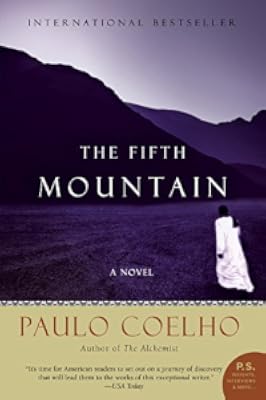
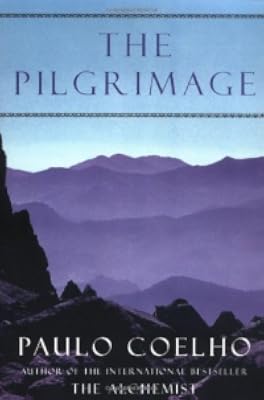
Paulo Coelho was born in Rio de Janeiro, Brazil on August 24, 1947. As a teenager, he wanted to become a writer, but his parents wanted him to pursue a more substantial and secure career. At the age of 17, his introversion and opposition to his parents led them to commit him to a mental institution. He escaped three times before being released at show more the age of 20. Once released, he abandoned his ideas of becoming a writer and enrolled in law school to please his parents. He stayed in law school for one year. In 1986, Coelho walked the 500-plus mile Road of Santiago de Compostela in northwestern Spain, a turning point in his life. On the path, he had a spiritual awakening, which he described in his book The Pilgrimage. Before becoming a full-time author, he worked as theatre director and actor, lyricist, and journalist. He wrote song lyrics for many famous performers in Brazilian music including Elis Regina, Rita Lee, and Raul Seixas. His first book, Hell Archives, was published in 1982. He has written over 25 books since then including The Alchemist, Brida, The Fifth Mountain, The Devil and Miss Prym, Eleven Minutes, The Zahir, The Witch of Portobello, Like a Flowing River, and Adultery. He received numerous awards including Las Pergolas Prize, The Budapest Prize, Nielsen Gold Book Award, and the Grand Prix Litteraire Elle. In 1996, he founded the Paulo Coelho Institute, which provides aid to children and elderly people with financial problems. In 2007, Coelho was named a Messenger of Peace to the United Nations. (Bowker Author Biography) show less
Some Editions
Series
Belongs to Publisher Series
Common Knowledge
- Canonical title
- The Winner Stands Alone
- Original title
- O vencedor está só
- Original publication date
- 2008
- Important places
- Cannes, Alpes-Maritimes, Provence-Alpes-Côte d'Azur, France
- Epigraph*
- Maria, ohne Sündde empfangen, bete für uns, die wir uns an dich wenden. Amen.
- Dedication*
- Für N.P.D., die zur Welt kam, um uns den Guten Kampf zu lehren.
- First words*
- Die kompakte Beretta PX4 ist etwas grösser als ein Handy, wiegt etwa 700 Gramm und hat zehn Schuss.
- Last words*
- (Click to show. Warning: May contain spoilers.)Seine Alpträume sind vorüber, ein Engel mit dichten Augenbrauen wacht über ihn und wird ihm den Weg weisen, den er von nun an zu gehen hat.
- Original language*
- Brasilianisches Portugiesisch
*Some information comes from Common Knowledge in other languages. Click "Edit" for more information.
Classifications
- Genres
- Fiction and Literature, General Fiction
- DDC/MDS
- 869.342 — Literature & rhetoric Spanish Literature Literatures of Portuguese and Galician languages Portuguese fiction 20th Century 1945-1999
- LCC
- PQ9698.13 .O3546 .V4613 — Language and Literature French, Italian, Spanish and Portuguese literatures Portuguese literature Provincial, local, colonial, etc. Brazil
- BISAC
Statistics
- Members
- 1,639
- Popularity
- 13,812
- Reviews
- 43
- Rating
- (3.17)
- Languages
- 24 — Arabic, Catalan, Czech, Danish, Dutch, English, Estonian, Finnish, French, German, Greek, Hungarian, Indonesian, Italian, Norwegian (Bokmål), Polish, Romanian, Serbian, Slovak, Spanish, Swedish, Turkish, Ukrainian, Portuguese (Portugal)
- Media
- Paper, Audiobook, Ebook
- ISBNs
- 95
- ASINs
- 22
