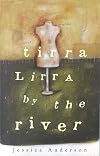
Tirra Lirra by the River
by Jessica Anderson
On This Page
Description
A novel that tells of one woman's remarkable life. Nora Porteous flees her small-town family and stifling marriage and creates a new life for herself in London. In her seventies, she returns to Queensland to settle in her childhood home and discovers that everything is not as she remembers.Tags
Recommendations






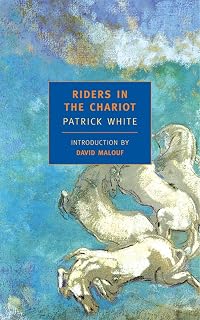


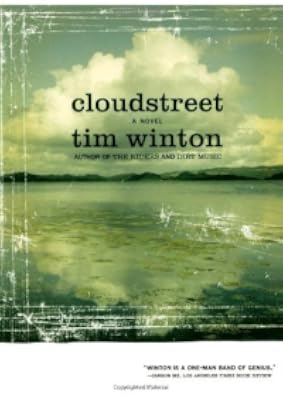

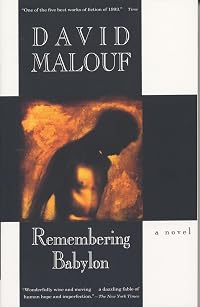


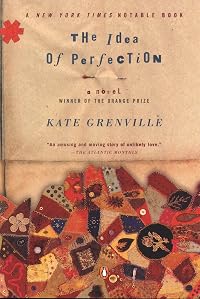









Member Recommendations
Leonielanguishing Another australian classic in this genre...girl finds self!!

Bjace Another book about a woman nearing the end of her life and looking back.
Member Reviews
In Anderson's Miles-Franklin-award-winning novel, an elderly woman, Nora Roche Porteous, returns to her childhood home in Brisbane, after living many years abroad. Diagnosed with pneumonia upon her arrival, she spends many days in bed, tended to by kind neighbours. As she rests, she reflects on her life--on the stifling conventionality of her childhood home in which she finds herself once again, and particularly on her overbearing, now deceased, elder sister. Early on in life, Nora found it natural and necessary to create a realm of the imagination for herself--a place in which she could take intense and joyful refuge. At first this kingdom was based on what she saw from one of the windows of the house by the river, but eventually it show more could be entered through the poetry found in one of her father's books, and then spontaneously as needed.
Nora's father died when she was a child, and there is a sense throughout the book that this event has haunted her, trailed and affected her in a slippery way she can't quite grasp. Family members have commented that she was broken to bits by grief, yet she has almost no recollection of the event or her response to it . . . until the end of the novel when a dreamlike image emerges as her convalescence comes to an end.
Much of Tirra Lirra focuses on the small human tragedy of Nora's marriage to a petty tyrant and her attempts to flee this claustrophobic and stultifying relationship. She finds some freedom with a group of artists who live near her flat. A creative and skilled seamstress teaches Nora some fundamentals of dress-making and encourages the artistic spirit within her. However, Nora's husband resents and rails against her hanging about with this decadent, free-spirited lot, and is particularly threatened by the fact that she has a close male friend who is gay. Ultimately, the Porteouses move from their lovely rooms in a decaying Sydney mansion to live with Nora's overbearing mother-in-law, the ever critical and perpetually dissatisfied, Una. The fact that Nora can't seem to produce a child only makes matters worse for her. In the end, though, the lack of dependents makes it a great deal easier for her to escape to England, where she is able, finally, to come into herself.
A commentary at the end of the edition I read states that Jessica Anderson saw Nora as an artist who did not fully understand that she was one. Nora's struggles against convention, her quest to find a place to be herself, as well as her yearning to create and be surrounded by beauty represent the impulses and the archetypal journey of the artist. In naming her book Tirra Lirra by the River, Anderson nods to Tennyson's poem, The Lady of Shalott, and enriches the novel with a poetic subtext about the tensions between artistic creativity--which requires solitude and detachment--and the romantic, social, and physical yearnings of a woman.
Initially, I found the novel a little disorienting. Anderson quite deliberately discombobulates the reader, perhaps to encourage more complete identification and sympathy with the ailing and displaced Nora, the first-person narrator throughout. However, it didn't take long to be rewarded by the book. I enjoyed it very much and was surprised by the degree to which I could relate to Nora's experiences, though I'm of quite a different generation. show less
Nora's father died when she was a child, and there is a sense throughout the book that this event has haunted her, trailed and affected her in a slippery way she can't quite grasp. Family members have commented that she was broken to bits by grief, yet she has almost no recollection of the event or her response to it . . . until the end of the novel when a dreamlike image emerges as her convalescence comes to an end.
Much of Tirra Lirra focuses on the small human tragedy of Nora's marriage to a petty tyrant and her attempts to flee this claustrophobic and stultifying relationship. She finds some freedom with a group of artists who live near her flat. A creative and skilled seamstress teaches Nora some fundamentals of dress-making and encourages the artistic spirit within her. However, Nora's husband resents and rails against her hanging about with this decadent, free-spirited lot, and is particularly threatened by the fact that she has a close male friend who is gay. Ultimately, the Porteouses move from their lovely rooms in a decaying Sydney mansion to live with Nora's overbearing mother-in-law, the ever critical and perpetually dissatisfied, Una. The fact that Nora can't seem to produce a child only makes matters worse for her. In the end, though, the lack of dependents makes it a great deal easier for her to escape to England, where she is able, finally, to come into herself.
A commentary at the end of the edition I read states that Jessica Anderson saw Nora as an artist who did not fully understand that she was one. Nora's struggles against convention, her quest to find a place to be herself, as well as her yearning to create and be surrounded by beauty represent the impulses and the archetypal journey of the artist. In naming her book Tirra Lirra by the River, Anderson nods to Tennyson's poem, The Lady of Shalott, and enriches the novel with a poetic subtext about the tensions between artistic creativity--which requires solitude and detachment--and the romantic, social, and physical yearnings of a woman.
Initially, I found the novel a little disorienting. Anderson quite deliberately discombobulates the reader, perhaps to encourage more complete identification and sympathy with the ailing and displaced Nora, the first-person narrator throughout. However, it didn't take long to be rewarded by the book. I enjoyed it very much and was surprised by the degree to which I could relate to Nora's experiences, though I'm of quite a different generation. show less
This is an absolute stunner. It gets Australia completely right without the cheapness of St John's shots. It nails the state of captivity of women without agency. Nora's need to escape, and taking marriage as the way out is heartbreaking. The role of education, and even more that of reading, which I might add is big in Women in Black and also in My Brilliant Friend comes comes into play here too. To be educated is to escape the poverty and meanness of life in city Australia and country Australia as much as it may extract you from neighbourhood Naples. To forsake education in favour of marriage as one's saviour is to court utter ruination. To read is to build one's dreams of escape. Oh, I did this as a child and many must have had it show more much, much worse than I.
Rest here:
https://alittleteaalittlechat.wordpress.com/2017/01/07/tirra-lirra-by-the-river-... show less
Rest here:
https://alittleteaalittlechat.wordpress.com/2017/01/07/tirra-lirra-by-the-river-... show less
This is an absolute stunner. It gets Australia completely right without the cheapness of St John's shots. It nails the state of captivity of women without agency. Nora's need to escape, and taking marriage as the way out is heartbreaking. The role of education, and even more that of reading, which I might add is big in Women in Black and also in My Brilliant Friend comes comes into play here too. To be educated is to escape the poverty and meanness of life in city Australia and country Australia as much as it may extract you from neighbourhood Naples. To forsake education in favour of marriage as one's saviour is to court utter ruination. To read is to build one's dreams of escape. Oh, I did this as a child and many must have had it show more much, much worse than I.
Rest here:
https://alittleteaalittlechat.wordpress.com/2017/01/07/tirra-lirra-by-the-river-... show less
Rest here:
https://alittleteaalittlechat.wordpress.com/2017/01/07/tirra-lirra-by-the-river-... show less
Nora Porteous returns to her childhood home after being away nearly 40 years. Well into in her 70s, Nora is somewhat frail. The long journey from London to Sydney to northern Australia wears her out; she becomes ill and is cared for by neighbors who were children when she left. As she moves in and out of sleep, she is flooded with memories: first of her failed marriage, which was the impetus for leaving the country, and then of her childhood. Her reminiscences are a way for the reader to get to know Nora. As the story progresses, Nora retrieves bits and pieces that have long been suppressed, and a more complex portrait emerges.
Nora is the only surviving member of her family, and most of the people she knew as a child have either died or show more moved away. She's a bit crotchety and resents her need for caregivers, even though they also help fill her in on happenings during her absence. She is treated by one of the town doctors, the son of a woman Nora had admired, but Nora discovers some shocking news about her death. Nora's convalescence is also an opportunity for healing and self-discovery, and eventually Nora accepts that she has entered another new phase in her life.
First published in 1978, this 140-page novella is quiet and contemplative, similar to more recent works like Tinkers and Gilead. show less
Nora is the only surviving member of her family, and most of the people she knew as a child have either died or show more moved away. She's a bit crotchety and resents her need for caregivers, even though they also help fill her in on happenings during her absence. She is treated by one of the town doctors, the son of a woman Nora had admired, but Nora discovers some shocking news about her death. Nora's convalescence is also an opportunity for healing and self-discovery, and eventually Nora accepts that she has entered another new phase in her life.
First published in 1978, this 140-page novella is quiet and contemplative, similar to more recent works like Tinkers and Gilead. show less
This 1978 novel won the Miles Franklin Award for its author Jessica Anderson. It's not surprising as this is an impressive piece of writing, particularly in its structure. The story is told in the first person by Nora Porteous. It opens with Nora, as an old woman, arriving back in the Queensland town she fled many years before for Sydney and artistic adventure. Now she is back after years of a stultifying marriage in Sydney, divorce and life in London as a theatrical costume maker. The structure is the most impressive aspect of the novel as Nora moves moves seamlessly from her current life, as she lies in her sister's house in the small south Queensland town, and her memories. Encounters with locals set off memories of a moody teenager, show more of a gullible housewife in her mother-in-law's house in Sydney, and escaping to London and learning dressmaking. Nora describes how her husband and mother-in-law convinced her it must be her fault for being unable to produce a child. Her husband Colin denies it's his fault; implying that he has already proved his virility by getting another woman pregnant. Suddenly, Colin announces he wants a divorce as he's found a new wife likely to give him children. On the sea voyage to London Nora realises that Colin is unlikely to find children with his new wife. Nora steps off the ship in Southampton pregnant from a shipboard romance. Nora vividly describes her abortion in London with the doctor taking all her money, refusing to offer an anaesthetic and lecturing her throughout the procedure on how she wanted the pleasure at the time, now she's going to feel the pain. The novel is a graphic depiction of life for women in Australia between the two World Wars, and the liberation offered in bohemian Potts Point in Sydney where Nora lives for the early months of her marriage to Colin, before her husband insists they move to his mother's house in suburban Sydney to save money during the Depression. It's while back in the Queensland town of her youth that Nora discovers that a school friend, much admired for her poise and artistic temperament at school, and described by Nora's sister as an ideal wife and mother, took an axe to her husband and children, and gassed herself in the oven. show less
Probably the most flawlessly structured novel I have ever read: there is not a single word of this beautiful book that is uneccessary. The novel tells the story of Nora - her return to her childhood home as an elderly woman triggers memories of her repressive upbringing in pre war Brisbane, her disastrous marriage, her escape to London and her affair with a married man.
As a GR friend has said, the writing feels awkward at the start of the novel, but settles down reasonably quickly, and thereafter is a pleasure to read. It's also a fine technical feat: two parallel narratives, one of Nora in the let's call it present, and then the how did she get to be in this present narrative that she's remembering. Most impressive of all is present Nora's own interpretation of past Nora's activities, and even of present Nora's; few books are willing to explicitly show the workings of the character's mind about herself in such depth.
Otherwise, a raft of themes and issues that make this an obvious revival book: gender, art, poverty, modernization, you name it, all done in an unpretentious, non-judgemental way. Which show more makes sense, since the narrator is an aged, sickly woman who is slightly distant from her self and others around her. show less
Otherwise, a raft of themes and issues that make this an obvious revival book: gender, art, poverty, modernization, you name it, all done in an unpretentious, non-judgemental way. Which show more makes sense, since the narrator is an aged, sickly woman who is slightly distant from her self and others around her. show less
Members
- Recently Added By
Lists

500 Great Books by Women
507 works; 60 members

Booktopia's 50 Must Read Australian Novels
50 works; 5 members
TML 200 Best Books 1950-1999
202 works; 10 members

Australian Classics: Fifty Great Writers and Their Celebrated Works
43 works; 1 member

The Modern Library (The Two Hundred Best Novels....
202 works; 1 member
Author Information

8+ Works 728 Members
Born in Brisbane, Australia, Jessica Anderson lived mainly in Sydney, Australia. The cosmopolitan city has been the setting for much of her work, including her first novel, An Ordinary Lunacy (1963), which satirizes Sydney society. The Last Man's Head followed in 1970. Anderson's birthplace figures in her third novel, The Commandant (1975), which show more contains a vivid account of a penal settlement in the early nineteenth century. The historically based story focuses in part on how women fare in such a place, the role of women in society being a recurrent theme in Anderson's work. Her best-known book is Tirra Lirra by the River (1978), which retraces the life of a 70-year-old bedridden woman. The Impersonators (1980) examines the way money affects a Sydney family's outward lives. Anderson's novel Taking Shelter (1989), again examines Sydney society, this time in contemporary terms as the characters deal with their sexuality in the age of AIDS. Although Anderson did not begin to write novels until after she was 40 or so, she established herself as a major figure both in Australia and abroad. Anderson was noted for varied and exact characterization, spare narrative strategies, lyrical style, subtle irony, and truthfully rendered dialogue. She won the Miles Franklin Literary Award twice. Anderson died on July 9, 2010; she was 93 years old. (Bowker Author Biography) show less
Awards and Honors
Awards
Series
Belongs to Publisher Series
Common Knowledge
- Original title
- Tirra Lirra by the River
- Original publication date
- 1978
- Important places
- Australia; Brisbane, Queensland, Australia; London, England, UK; New South Wales, Australia; Queensland, Australia; Sydney, New South Wales, Australia
- Original language
- English
Classifications
Statistics
- Members
- 440
- Popularity
- 70,022
- Reviews
- 15
- Rating
- (3.82)
- Languages
- English
- Media
- Paper, Audiobook, Ebook
- ISBNs
- 12
- ASINs
- 5