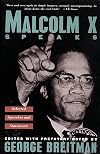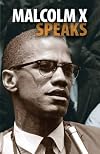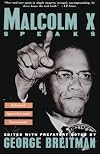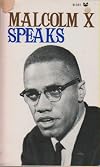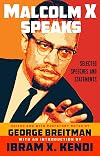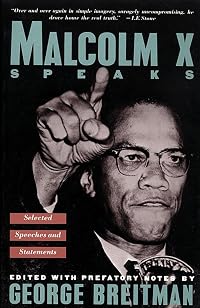
Malcolm X Speaks: Selected Speeches and Statements
by Malcolm X
On This Page
Description
A collection of fourteen speeches by one of the revolutionary African-American leaders of the 20th century.Tags
Recommendations

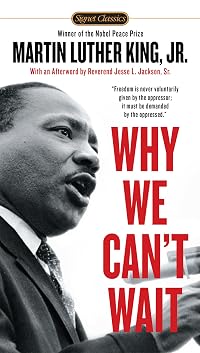
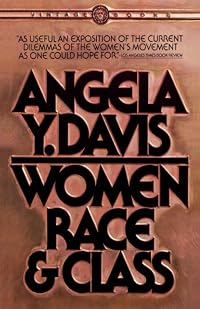
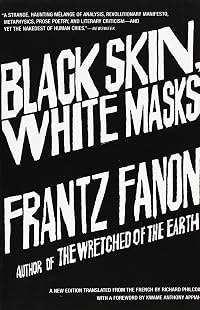
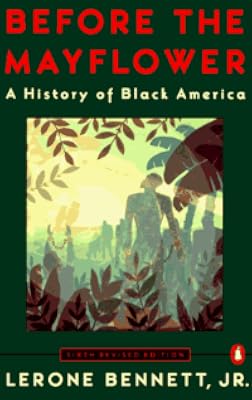

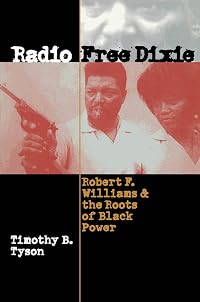
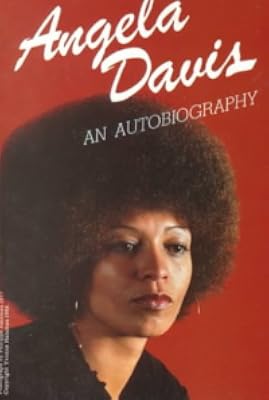
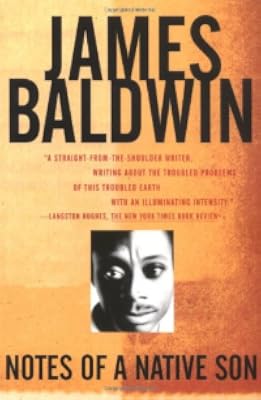

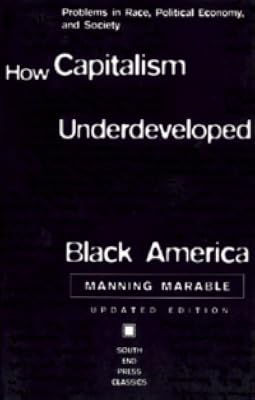
Member Reviews
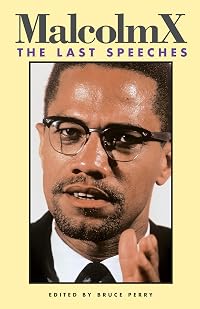
Regardless of what I think about Malcolm X the man or the activist, this is an invaluable collection of speeches, interviews, and historical narrative that traces the evolution of his thought in his last year, maybe his most dynamic in terms of personal and political growth. While the speeches toward the end get repetitive, the first several are sharp, articulate, and nearly jump off the page with an angry energy. Several times while reading I wished I had been able to see him speak just once, but I suppose I'll have to content myself with any available recordings.
In his later speeches, beginning with the address to the African nations, one can see his idealism getting the better of him. After the discussion with Gary Hall, you are show more left wondering how rational Malcolm was (versus delusional) in his assessment of the popularity and chances of his own movement. The book doesn't really answer these questions, but it provides a great jumping off point to further research. And even if you determine, as I did, that Malcolm's ideas about communism, Africa, China, and history were simplistic and naive, you have to marvel at the discipline and determination required to educate himself out of his ignorant gangsterhood into a learned and eloquent human rights spokesman. show less
In his later speeches, beginning with the address to the African nations, one can see his idealism getting the better of him. After the discussion with Gary Hall, you are show more left wondering how rational Malcolm was (versus delusional) in his assessment of the popularity and chances of his own movement. The book doesn't really answer these questions, but it provides a great jumping off point to further research. And even if you determine, as I did, that Malcolm's ideas about communism, Africa, China, and history were simplistic and naive, you have to marvel at the discipline and determination required to educate himself out of his ignorant gangsterhood into a learned and eloquent human rights spokesman. show less
Worth reading.
Ratings
Members
- Recently Added By
Lists

History is a Weapon Recommended Reading List
43 works; 3 members

Books cited in Progress by Samuel McDonald
160 works; 1 member
Author Information

39+ Works 13,217 Members
Born in Omaha, Nebraska, and the son of a Baptist minister, Malcolm Little grew up with violence. Whites killed several members of his family, including his father. As a youngster, he went to live with a sister in Boston where he started a career of crime that he continued in New York's Harlem as a drug peddler and pimp. While serving a prison show more term for burglary in 1952, he converted to Islam and undertook an intensive program of study and self-improvement, movingly detailed in "Autobiography of Malcolm X." He wrote constantly to Elijah Muhammad (Elijah Poole, 1897--1975), head of the black separatist Nation of Islam, which already claimed the loyalty of several of his brothers and sisters. Upon release from prison, Little went to Detroit, met with Elijah Muhammad, and dropped the last name Little, adopting X to symbolize the unknown African name his ancestors had been robbed of when they were enslaved. Soon he was actively speaking and organizing as a Muslim minister. In his angry and articulate preaching, he condemned white America for its treatment of blacks, denounced the integration movement as black self-delusion, and advocated black control of black communities. During the turbulent 1960's, he was seen as inflammatory and dangerous. In 1963, a storm broke out when he called President Kennedy's assassination a case of "chickens coming home to roost," meaning that white violence, long directed against blacks, had now turned on itself. The statement was received with fury, and Elijah Muhammad denounced him publicly. Shocked and already disillusioned with the leader because of his reputed involvement with several women, Malcolm X went on a pilgrimage to Mecca and then traveled to several African countries, where he was received as a fellow Muslim. When he returned home, he was bearing a new message: Islam is a religion that welcomes and unites people of all races in the Oneness of Allah. On the night of February 21, 1965, as he was preaching at Harlem's Audubon Ballroom, he was assassinated. (Bowker Author Biography) show less
Some Editions
Common Knowledge
- People/Characters
- Malcolm X
- Important events
- African-American Civil Rights Movement
- Blurbers
- Stone, I. F.
- Canonical DDC/MDS
- 301.45196073
- Canonical LCC
- E185.61
Classifications
- Genres
- Nonfiction, General Nonfiction, Politics and Government, History, Biography & Memoir, Religion & Spirituality
- DDC/MDS
- 301.45196073 — Society, government, & culture Social sciences, sociology & anthropology Sociology and anthropology Formerly: Social structure Africans and people of African descent
- LCC
- E185.61 — History of the United States United States Elements in the population Afro-Americans Status and development since emancipation
- BISAC
Statistics
- Members
- 669
- Popularity
- 42,846
- Reviews
- 2
- Rating
- (4.43)
- Languages
- English, French, Spanish, Swedish
- Media
- Paper
- ISBNs
- 13
- ASINs
- 14