
The Prince
by Jerry Pournelle, S. M. Stirling (Author)
Falkenberg's Legion (Collections and Selections — Omnibus 1-4), CoDominium Internal Chronology (Collections and Selections — Omnibus 3-6)
On This Page
Description
In the 21st century, the Soviet-American CoDominium had kept the peace, both on earth and among far-flung colonies. But now the CoDominium is dying, and its death-throes will be terrible; already the nations arm for their final battle.Tags
Recommendations






















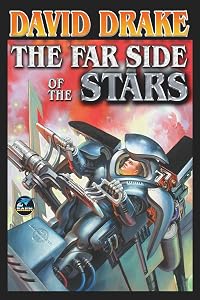

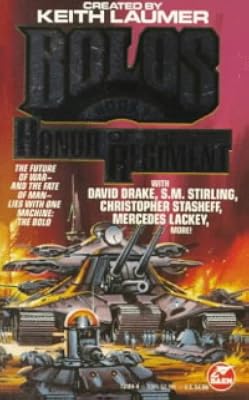

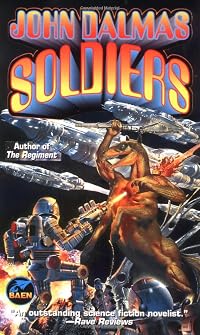
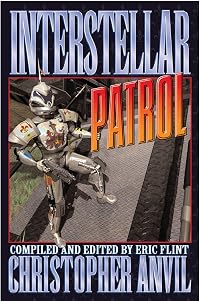

Member Recommendations

We Were Soldiers Once... and Young: Ia Drang--The Battle That Changed the War in Vietnam by Harold G. Moore
bespen Pournelle and Stiring's work of fiction covers the same ground of small unit tactics and the ties that men form under combat as Moore and Galloway's classic.
bespen I see a surprising amount of convergence between the tactics discussed by Poole and the fictional Colonel Falkenberg. Maneuver warfare with the goal of breaking the enemy's resistance rather than annihilating him is the object of both books.
Member Reviews
The Mercenary, by Jerry Pournelle (1977) Pocket Books, New York
West of Honor, by Jerry Pournelle (1978 Pocket Books, New York
Prince of Mercenaries, by Jerry Pournelle (1989) Pocket Books, New York
Go Tell the Spartans, by Jerry Pournelle and S. M. Stirling (1991) Pocket Books, New York
Prince of Sparta, by Jerry Pournelle and S. M. Stirling (1993) Pocket Books, New York
The Prince [Omnibus Edition] by Jerry Pournelle and S. M. Stirling (2002) Baen Books, New York.
This book review refers to the series of books centering upon John Christian Falkenberg in the CoDominium universe. These stories have been printed several times, starting with short stories featured in magazines, and ending with the omnibus edition The Prince. For simplicity, if show more you want to read the whole thing, just get The Prince. I found the 5 separate volumes listed above in a used bookstore, but other combinations are possible, since The Mercenary and West of Honor are also collected in Falkenberg's Legion (1990). There are some related stories that are found in other collections, such as "He Fell Into a Dark Hole" in Black Holes. However, the tales collected in The Prince form a coherent whole.
I have never wanted to be anyone more than I want to be Colonel John Christian Falkenberg. Falkenberg serves as my archetype of a leader; he exerts a magnetic attraction upon me, despite not being real. For clarity, I entitled this review with his name, but the truth is John Christian does not even appear in the last two volumes, although his presence is felt everywhere. Even when absent, he can influence events and the minds of men. A discourse on leadership could be created from this work. However, that is not the task here. Let us discuss the story.
When Pournelle and Niven created the CoDominium, a post-Cold War alliance between the US and the USSR, it was science fiction. Now, it is alternative history. It is interesting to see what has come true and what has not been realized in history. Technology has fallen far behind the timetable Pournelle set, but social order has proven stronger. There is nothing quite so frightening as the Welfare Islands of the United States, vast Le Corbusier constructions full of the indolent and angry, kept complacent only by the public provision of mind-numbing substances. Other authors have predicted similar urban decay [David Feintuch for example], but Pournelle's dystopia is disturbing for its plausibility. I have actually met the forefathers of the Citizens who inhabit the Welfare Islands, and I do not find them congenial company.
By the mid-twenty first century, American politics on Earth are riven by the conflicts between the prole Citizens and the Taxpayer class who support them, but Earth itself is tettering on the brink of war due to resurgent nationalism. The CoDominium wields great power, but the political will to sustain this unnatural alliance is waning. Adding to the discontent is a general ban on scientific research. The CoDominium had at first simply sought to prevent weapons research to preserve the status quo, but it quickly became apparent that just about any science has potential military applications, so they just ended up banning everything. Physicists are licensed and tracked, as potential enemies of the state.
John Christian Falkenberg III is born into interesting times in 2043, in Rome. The ancient city is outside of the jurisdiction of either of the superpowers, so Falkenberg has no other option than to seek the stars, that that there is much opportunity left on Earth. The US is now a caste society, and the USSR has become much like China today but without the economic growth, theoretically Communist but really a mercantilist military state. At least 40 worlds have been settled by the use of the Alderson drive [invented before 2010!], but the CoDominium uses these worlds as pressure relief valve by shipping out political dissidents and criminals as involuntary colonists.
The CoDominium Navy is tasked with keeping the peace both on Earth and her colonies, but as the alliance fades away so does its budget. John Christian Falkenberg steps into this gap, not entirely voluntarily himself. Falkenberg is an officer in the CoDo Marines, a service that traces back to the French Foreign Legion. The Navy is an interesting amalgam of American and Russian customs, but the Marines maintain the traditions of the Légion étrangère.
Falkenberg is tasked with preserving public order in the colonies, in the hope that civilization may survive the coming conflagration on Earth. The political landscape of Earth is based in part upon the work of C. Northcote Parkinson [this is detailed in A Step Further Out], who sought to update Aristotle's Politics with the data of twenty-five intervening centuries. The title of the omnibus work is taken from Machiavelli; this is an extended discourse upon politics in novel form. About the same time I was reading these, the Magistra was reading a biography of Henry VIII. Without even being told of the collected work's title, she commented that the plot "sounded Machiavellian." Indeed.
One could also learn a great deal from this work about small unit tactics and guerilla warfare. As I noted before, hard scifi is not necessarily about technology. Due to the CoDominium's technology restrictions, and the poor economic development of the colonies, battlefield tactics resemble WWII or Korea, except with much smaller forces. Falkenberg's Legion is on the order of 5,000 men, and it is usually a decisive unit in theater, if not the only one. As the state contracts from its Great Lifetime peak, smaller concentrations of force can effectively disrupt the social order, but it also takes smaller forces to rout the brigands.
Pournelle's great contributions to scifi are his wealth of historical knowledge and his psychological acumen. Both are on display here. There is an especially poignant chapter of Prince of Mercenaries [originally a short story] based upon the Spanish Civil War. However, what interests me the most is Falkenberg's character. Despite the Late Republic setting of The Prince, Falkenberg exhibits the virtues of Cinncinatus. He really wants nothing more than to be able to retire to his farm, which is precisely why he can be entrusted with great power: he doesn't want it. show less
West of Honor, by Jerry Pournelle (1978 Pocket Books, New York
Prince of Mercenaries, by Jerry Pournelle (1989) Pocket Books, New York
Go Tell the Spartans, by Jerry Pournelle and S. M. Stirling (1991) Pocket Books, New York
Prince of Sparta, by Jerry Pournelle and S. M. Stirling (1993) Pocket Books, New York
The Prince [Omnibus Edition] by Jerry Pournelle and S. M. Stirling (2002) Baen Books, New York.
This book review refers to the series of books centering upon John Christian Falkenberg in the CoDominium universe. These stories have been printed several times, starting with short stories featured in magazines, and ending with the omnibus edition The Prince. For simplicity, if show more you want to read the whole thing, just get The Prince. I found the 5 separate volumes listed above in a used bookstore, but other combinations are possible, since The Mercenary and West of Honor are also collected in Falkenberg's Legion (1990). There are some related stories that are found in other collections, such as "He Fell Into a Dark Hole" in Black Holes. However, the tales collected in The Prince form a coherent whole.
I have never wanted to be anyone more than I want to be Colonel John Christian Falkenberg. Falkenberg serves as my archetype of a leader; he exerts a magnetic attraction upon me, despite not being real. For clarity, I entitled this review with his name, but the truth is John Christian does not even appear in the last two volumes, although his presence is felt everywhere. Even when absent, he can influence events and the minds of men. A discourse on leadership could be created from this work. However, that is not the task here. Let us discuss the story.
When Pournelle and Niven created the CoDominium, a post-Cold War alliance between the US and the USSR, it was science fiction. Now, it is alternative history. It is interesting to see what has come true and what has not been realized in history. Technology has fallen far behind the timetable Pournelle set, but social order has proven stronger. There is nothing quite so frightening as the Welfare Islands of the United States, vast Le Corbusier constructions full of the indolent and angry, kept complacent only by the public provision of mind-numbing substances. Other authors have predicted similar urban decay [David Feintuch for example], but Pournelle's dystopia is disturbing for its plausibility. I have actually met the forefathers of the Citizens who inhabit the Welfare Islands, and I do not find them congenial company.
By the mid-twenty first century, American politics on Earth are riven by the conflicts between the prole Citizens and the Taxpayer class who support them, but Earth itself is tettering on the brink of war due to resurgent nationalism. The CoDominium wields great power, but the political will to sustain this unnatural alliance is waning. Adding to the discontent is a general ban on scientific research. The CoDominium had at first simply sought to prevent weapons research to preserve the status quo, but it quickly became apparent that just about any science has potential military applications, so they just ended up banning everything. Physicists are licensed and tracked, as potential enemies of the state.
John Christian Falkenberg III is born into interesting times in 2043, in Rome. The ancient city is outside of the jurisdiction of either of the superpowers, so Falkenberg has no other option than to seek the stars, that that there is much opportunity left on Earth. The US is now a caste society, and the USSR has become much like China today but without the economic growth, theoretically Communist but really a mercantilist military state. At least 40 worlds have been settled by the use of the Alderson drive [invented before 2010!], but the CoDominium uses these worlds as pressure relief valve by shipping out political dissidents and criminals as involuntary colonists.
The CoDominium Navy is tasked with keeping the peace both on Earth and her colonies, but as the alliance fades away so does its budget. John Christian Falkenberg steps into this gap, not entirely voluntarily himself. Falkenberg is an officer in the CoDo Marines, a service that traces back to the French Foreign Legion. The Navy is an interesting amalgam of American and Russian customs, but the Marines maintain the traditions of the Légion étrangère.
Falkenberg is tasked with preserving public order in the colonies, in the hope that civilization may survive the coming conflagration on Earth. The political landscape of Earth is based in part upon the work of C. Northcote Parkinson [this is detailed in A Step Further Out], who sought to update Aristotle's Politics with the data of twenty-five intervening centuries. The title of the omnibus work is taken from Machiavelli; this is an extended discourse upon politics in novel form. About the same time I was reading these, the Magistra was reading a biography of Henry VIII. Without even being told of the collected work's title, she commented that the plot "sounded Machiavellian." Indeed.
One could also learn a great deal from this work about small unit tactics and guerilla warfare. As I noted before, hard scifi is not necessarily about technology. Due to the CoDominium's technology restrictions, and the poor economic development of the colonies, battlefield tactics resemble WWII or Korea, except with much smaller forces. Falkenberg's Legion is on the order of 5,000 men, and it is usually a decisive unit in theater, if not the only one. As the state contracts from its Great Lifetime peak, smaller concentrations of force can effectively disrupt the social order, but it also takes smaller forces to rout the brigands.
Pournelle's great contributions to scifi are his wealth of historical knowledge and his psychological acumen. Both are on display here. There is an especially poignant chapter of Prince of Mercenaries [originally a short story] based upon the Spanish Civil War. However, what interests me the most is Falkenberg's character. Despite the Late Republic setting of The Prince, Falkenberg exhibits the virtues of Cinncinatus. He really wants nothing more than to be able to retire to his farm, which is precisely why he can be entrusted with great power: he doesn't want it. show less
baen ebook
Ratings
Members
- Recently Added By
Author Information

146+ Works 40,651 Members
Jerry Eugene Pournelle was born in Shreveport, Louisiana on August 7, 1933. During the Korean War, he served in the U. S. Army. He received a B.S. in psychology in 1955, an M.S. in psychology in 1958, and a Ph.D. in political science in 1964 from the University of Washington. He worked for Boeing and NASA where he worked on the Mercury, Gemini, show more and Apollo missions. He also advised the federal government on military matters and space exploration. He wrote science fiction and helped popularize the military science fiction genre. His first novel, Red Heroin, was published in 1969 under the pen name Wade Curtis. His other novels published under his own name included Janissaries, Starswarm, and The Mercenary. He also wrote novels with Larry Niven including Oath of Fealty, The Mote in God's Eye, Lucifer's Hammer, Inferno, Escape from Hell, and Footfall. Pournelle was widely credited as the first major author to write a published novel entirely on a computer. He wrote a witty advice columns for computer users in Byte magazine. He received the John W. Campbell Award for Best New Writer of 1973. He died of heart failure on September 8, 2017 at the age of 84. (Bowker Author Biography) show less

Stephen Michael Stirling is a French-born Canadian-American science fiction and fantasy author. His Birthday is September 30, 1953. He has lived in several countries and currently resides in the United States in New Mexico with his wife. He is probably best known for his Draka series of novels and his more recent time travel/alternate history show more Nantucket series and Emberverse series. In 2014 his title The Golden Princess made The New York Times Best Seller List. (Bowker Author Biography) show less
Some Editions
Series

Falkenberg's Legion
4 works (Collections and Selections — Omnibus 1-4)

CoDominium Internal Chronology
10 works (Collections and Selections — Omnibus 3-6)
Belongs to Publisher Series
Work Relationships
Contains
Common Knowledge
- Canonical title
- The Prince
- Original publication date
- 2002 (omnibus) (omnibus)
Classifications
Statistics
- Members
- 186
- Popularity
- 177,005
- Reviews
- 3
- Rating
- (3.86)
- Languages
- English
- Media
- Paper
- ISBNs
- 1
- ASINs
- 2


