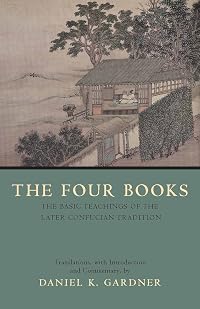
The Four Books: The Basic Teachings of the Later Confucian Tradition
by Daniel K. Gardner
On This Page
Description
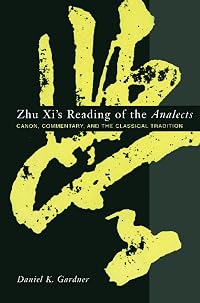
In this engaging volume, Daniel Gardner explains the way in which the Four Books-- Great Learning , Analects , Mencius , and Maintaining Perfect Balance --have been read and understood by the Chinese since the twelfth century. Selected passages in translation are accompanied by Gardner's comments, which incorporate selections from the commentary and interpretation of the renowned Neo-Confucian thinker, Zhu Xi (1130-1200). This study provides an ideal introduction to the basic texts in the show more Confucian tradition from the twelfth through the twentieth centuries. It guides the reader through Zhu Xi's influential interpretation of the Four Books, showing how Zhu, through the genre of commentary, gave new coherence and meaning to these foundational texts. Since the Four Books with Zhu Xi's commentary served as the basic textbook for Chinese schooling and the civil service examinations for more than seven hundred years, this book illustrates as well the nature of the standard Chinese educational curriculum. show lessTags
Recommendations







Member Recommendations
Member Reviews
This book presents the four classical works that Chinese scholar-officials studied for the entrance examinations to the ruling bureaucracy. The Neo-confucian commentator Zhu Xi, whose interpretations guided the examinations for 700 years, holds center stage. Selected passages from each of the four books (The Great Learning, The Analects, The Mencius, Maintaining Perfect Balance) have been translated and the author provides a passage-by-passage commentary which focuses mostly on Zhu Xi's interpretations. I think this is a very useful and probably unique preliminary work if you plan to learn more about Chinese imperial government. The book may be of less interest as a work in Chinese philosophy because the Analects and the Mencius, at show more least, are available in more detailed translations elsewhere. show less
An odd volume: Gardner translates passages from the four books, then comments on them. I think the commentaries are all meant to be neo-Confucian, and particularly the interpretation of Zhu Xi. But there isn't much actual quotation from Zhu, and many of the interpretations are just straightforward. I'm glad to have read it; I suspect it would make more sense if read as part of a seminar with Gardner himself. Alas, few of us will have that chance. I'm half-way through Gardner's translation of selections of Zhu Xi's work, and would recommend that as a first stop--provided you've read the four books to begin with. (And if you haven't read the four books, I don't really know why you'd want to read this!)
Ratings
Members
- Recently Added By
Author Information
6 Works 237 Members
Daniel K. Gardner is the D.W. Morrow Professor of History at Smith College.
Common Knowledge
- First words
- The Way of Great Learning lies in letting one's inborn luminous virtue shine forth, in renewing the people, and in coming to rest in perfect goodness.
Classifications
- Genres
- Philosophy, Nonfiction, Religion & Spirituality, History, General Nonfiction
- DDC/MDS
- 181.112 — Philosophy & psychology Ancient, medieval & eastern philosophy Eastern philosophy Far East and South Asia China & Korea Confucianism and Neo-Confucianism
- LCC
- PL2463 .Z6 .S75 — Language and Literature Languages and literatures of Eastern Asia, Africa, Oceania Languages of Eastern Asia, Africa, Oceania Chinese language and literature Chinese literature Collections
- BISAC
Statistics
- Members
- 65
- Popularity
- 479,129
- Reviews
- 2
- Rating
- (3.50)
- Languages
- English
- Media
- Paper, Ebook
- ISBNs
- 3