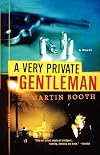
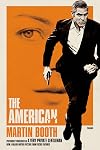
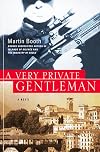
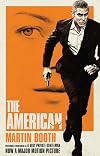
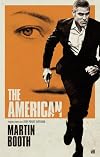
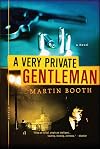
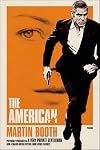
A Very Private Gentleman
by Martin Booth
On This Page
Description
The locals in the southern Italian town where he lives call him Signor Farfalla-Mr. Butterfly: for he is a discreet gentleman who paints rare butterflies. His life is inconspicuous-mornings spent brushing at a canvas, afternoons idling in the cafes, and evening talks with his friend the town priest over a glass of brandy. Yet there are other sides to this gentleman's life: Clara: the young student who moonlights in the town bordello. And another woman who arrives with $100,000 and a show more commission, but not for a painting of butterflies. With this assignment returns the dark fear that has dogged Signor Farfalla's mysterious life. Almost instantly, he senses a deadly circle closing in on him, one which he may or may not elude. Part thriller, part character study, part drama of deceit and self-betrayal, A Very Private Gentleman shows Martin Booth at the very height of his powers. show lessTags
Recommendations









Member Reviews
I want to be kind, for the author's sake, but George Clooney in the film adaptation aside, this novel is one honking cliche of a male fantasy - and nothing even happens until the final few pages (I'd say last chapter, but breaking up such a dedicated stream of bollocks would be expecting too much).
Unnamed Narrator bangs on about not giving away too many clues about himself and his location, or he'd have to kill you, then adds 'I am not an assassin. I have never killed a man by pulling a trigger and taking a pay-off. I wonder if you thought I had. If this is so, then you are wrong'. Well, shit, why I am reading this very boring book about an ageing gunsmith, then? All he does is potter around the Italian countryside, where he is planning show more on 'retiring' to after one last job, drinking wine, talking to priests, and shagging young girls (he goes into copious details about his menage-a-trois with two local dolly birds who are regulars at a bordello but are really hard-working students, honest guv'nor). Like James Bond crossed with A Year In Provence, I kept expecting sudden violence, or at least a bit of drama, but no. Unnamed Narrator spouts sexist twaddle about a female assassin - ooh, such a big gun for a pretty girl with perfect breasts, etc - and gets stalked by someone out to do him in. I saw the twist coming a mile off, but even that failed to drive the plot. The film might be better, but I've just developed an allergic reaction to the story, so I can't be bothered finding out. Pure tosh. show less
Unnamed Narrator bangs on about not giving away too many clues about himself and his location, or he'd have to kill you, then adds 'I am not an assassin. I have never killed a man by pulling a trigger and taking a pay-off. I wonder if you thought I had. If this is so, then you are wrong'. Well, shit, why I am reading this very boring book about an ageing gunsmith, then? All he does is potter around the Italian countryside, where he is planning show more on 'retiring' to after one last job, drinking wine, talking to priests, and shagging young girls (he goes into copious details about his menage-a-trois with two local dolly birds who are regulars at a bordello but are really hard-working students, honest guv'nor). Like James Bond crossed with A Year In Provence, I kept expecting sudden violence, or at least a bit of drama, but no. Unnamed Narrator spouts sexist twaddle about a female assassin - ooh, such a big gun for a pretty girl with perfect breasts, etc - and gets stalked by someone out to do him in. I saw the twist coming a mile off, but even that failed to drive the plot. The film might be better, but I've just developed an allergic reaction to the story, so I can't be bothered finding out. Pure tosh. show less
A Very Private Gentleman is narrated by, well, a very private gentleman. He tells his story, both current day (some indefinable year during the 1980s, as best I can tell) and some past stories. The picture that slowly builds (the first forty pages at least is scene building) is of a complete sociopath.
Of no fixed address, or any particular nationality, Mr Butterfly (or Signor Farfalla) is currently undertaking one final job in a small village in Italy. He is hoping to retire after this job, but knowing the work he's in, he's not sure if that will be possible. He's resisting putting down roots in this village, but is tempted by its great beauty, and the friendships he's struck up with the local priest, Father Benedetto, and two young show more women working as prostitutes, Clara and Dindina. This all slowly and lusciously builds to the climax, with pages filled with descriptive scenes and also filled with tension as Mr Butterfly's shady world is revealed.
"I am death's telegram boy, death's kissogram. And that is the beauty of it. In my line of business, everything I do flows uncompromisingly towards one tiny moment, a final destination of perfection. How many artists can claim as much?"
A fascinating and great read. show less
Of no fixed address, or any particular nationality, Mr Butterfly (or Signor Farfalla) is currently undertaking one final job in a small village in Italy. He is hoping to retire after this job, but knowing the work he's in, he's not sure if that will be possible. He's resisting putting down roots in this village, but is tempted by its great beauty, and the friendships he's struck up with the local priest, Father Benedetto, and two young show more women working as prostitutes, Clara and Dindina. This all slowly and lusciously builds to the climax, with pages filled with descriptive scenes and also filled with tension as Mr Butterfly's shady world is revealed.
"I am death's telegram boy, death's kissogram. And that is the beauty of it. In my line of business, everything I do flows uncompromisingly towards one tiny moment, a final destination of perfection. How many artists can claim as much?"
A fascinating and great read. show less
One more point for the "Book is Better than the Movie" club! The movie in fact, called "The American" and starring one George Clooney, was quite a hair-pullingly dull dud. And let's look at how they got it wrong: gorgeous Italian village setting, tender scenes of peaches and brandy, simmering hints of intrigue and pursuit, an unlikely love story, and that wonderful title and they botched ALL that up. How did they get the movie so wrong? In it, from what I can dimly recall, Clooney moped around spending time caressing various gun parts. Nothing much happened. Then it ended.
But happily in the book, even though not that much happens, one doesn't regret spending time with Signor Farfalle (Mr. Butterfly) as our hero is called by the show more villagers. In fact the opening scenes hooked me something bad. I wanted to BE there sitting with old Father Benedetto under the peach trees every evening, discussing the meaning of history and drinking armagnac. I wanted to climb all the stairs to the octagonal loggia of the hero's house, watching the Italian night sky alive with fireflies, eating that rose-petal jam or gorging on wild honey. I wanted to mosey around the cafes drinking espresso, chatting with villagers who give me sweet nicknames.
That's where the desires end, though. For our man, you see, is 'very private' for a darn good reason. Slowly he recounts various reasons why we shouldn't actually know anything about him: not the name of the village, not his own name. The way he talks about guns and gun parts tells us plainly that we'd be wise not to ask questions. In fact at times I got the feeling I was reading an actual memoir of an expat in Italy, with liberal recounting of his past lives in other places.
Only towards the end of the book does the relationship with Clara become prominent. This young student moonlights as a lady of the night at the local bordello, and sure enough there's more to her than that. Alas the gentleman has hinted that things won't end well and they don't. Even if the final twist was a tad guessable, it still arrived satisfyingly. A tragedy occurs in the town center, and from it ripple multiple smaller tragedies.
Overall then, an intensely satisfying read for the Italian-village part of the story. Once before I loved a book just for a certain part of its setting, and no surprise that too was an Italian village: I'm thinking of Jesse Walters's Beautiful Ruins. Maybe it's finally time to head there after all; enough time has been spent mooning about and drooling over rural Italy in pictures, videos, movies, and books. show less
But happily in the book, even though not that much happens, one doesn't regret spending time with Signor Farfalle (Mr. Butterfly) as our hero is called by the show more villagers. In fact the opening scenes hooked me something bad. I wanted to BE there sitting with old Father Benedetto under the peach trees every evening, discussing the meaning of history and drinking armagnac. I wanted to climb all the stairs to the octagonal loggia of the hero's house, watching the Italian night sky alive with fireflies, eating that rose-petal jam or gorging on wild honey. I wanted to mosey around the cafes drinking espresso, chatting with villagers who give me sweet nicknames.
That's where the desires end, though. For our man, you see, is 'very private' for a darn good reason. Slowly he recounts various reasons why we shouldn't actually know anything about him: not the name of the village, not his own name. The way he talks about guns and gun parts tells us plainly that we'd be wise not to ask questions. In fact at times I got the feeling I was reading an actual memoir of an expat in Italy, with liberal recounting of his past lives in other places.
Only towards the end of the book does the relationship with Clara become prominent. This young student moonlights as a lady of the night at the local bordello, and sure enough there's more to her than that. Alas the gentleman has hinted that things won't end well and they don't. Even if the final twist was a tad guessable, it still arrived satisfyingly. A tragedy occurs in the town center, and from it ripple multiple smaller tragedies.
Overall then, an intensely satisfying read for the Italian-village part of the story. Once before I loved a book just for a certain part of its setting, and no surprise that too was an Italian village: I'm thinking of Jesse Walters's Beautiful Ruins. Maybe it's finally time to head there after all; enough time has been spent mooning about and drooling over rural Italy in pictures, videos, movies, and books. show less
Anyone who has seen The American with George Clooney will not recognize this book. The opposite is also true. They are very different. The book is literate; the movie is entertaining (unless you like car crashes and piles of bodies dripping gore in which case you will be bored -- I was not.)
The man’s character and occupation are revealed in bits and pieces, slowly, almost like creating a mosaic or jigsaw, although, as he repeatedly states, much of it may be untrue in order to hide his location and identity. “I have hidden in the crowds all my life. Another face, as anonymous as a sparrow, as indistinguishable from the next man as a pebble on a beach. I may be standing next to you at the airport check-in, at the show more bus-stop, in the supermarket queue. I may be the old man sleeping rough under the railway bridge of any European city. I may be the old buffer propping up the bar in a rural English pub. I may be the pompous old bastard driving an open Roller — a white Corniche, say —."
The protagonist meditates on killing, that he is a part of history through his actions, that killing itself is essentially meaningless, since death is something that happens to all of us. “Death is but a part of a process, inescapable and irrevocable. We live and we die. Once born, these are the only certainties, the only inevitabilities. The only true variable is the timing of the event of death. It is as pointless to fear death as it is to fear life. We are presented with the facts of both and have to accept them. There is no Faustian avoidance on offer. All we can do is attempt to delay or accelerate the approach of death. Men strive to postpone it.” How the killing is accomplished is important: surgically, quickly. “. . .for death can always be justified. It was the mutilation that was wrong. They should have been satisfied with the end of their enemy. It is not a matter of aesthetics or moralities, of political expediency or humanity. It is simply a waste of time. The dead feel nothing. For them, it is over. For the killers, there is nothing.” “History is nothing unless you can actively shape it. Few men are afforded such an opportunity. Oppenheimer was lucky. He invented the atom bomb. Christ was lucky. He invented a religion. Mohammed was just as fortunate. He invented another religion. Karl Marx was lucky. He invented an anti-religion”
Assassins are essential, he muses, “society would stagnate. There would be no change save through the gradations of politics and the ballot box. That is most unsatisfactory. The ballot box, the politician, the system can be corrupted. The bullet cannot. It is true to its belief, to its aim and it cannot be misinterpreted. The bullet speaks with firm authority, the ballot box merely whispers platitudes or compromise. . . .There is more gross profanity in one corner of the political world than in the whole of the red-light areas of Naples, Amsterdam and Hamburg all rolled into one.” “For what is hell if it is not the modern world, crumbling into dissolution, polluted by sins against the people and the earth mother, twisted by the whims of politicians and soured by the incantations of hypocrites. I drove away in a hurry.”
And yet, he is not the killer; he only supplies the means. “As I care little for death, it follows I care not that I create it for others. I am not an assassin. I have never killed a man by pulling a trigger and taking a pay-off. I wonder if you thought I had. If this is so, then you are wrong. My job is the gift-wrapping of death. . . . “ Has he contrition or committed sins requiring forgiveness? “ “I have told untruths. I have been economical with the truth in the very best traditions of those who govern us. These lies of mine have never done harm, have always protected me at no expense to others and are, therefore, not sins. If they are such, and there is a god, I shall be prepared to answer my case in person when we meet. I shall take a good book to read — say War and Peace or Gone With the Wind or Doctor Zhivago — for the queue for this category of sinner will be very long and, knowing the arrogance of the Christian church, will be headed by cardinals, bishops, papal nuncios and not a few Popes themselves.”
Many lovely phrases. One I particularly liked: “Bats do not so much fly as flicker-splash in neurasthenic parabolæ.” Another: “ Here, rain is an Italian man who does not kiss hands and fawn like a Frenchman, or bow discreetly like an Englishman, keeping sex at bay, or get brazen like an American sailor on shore leave. Here, the rain is passionate. It does not fall in sheets like the tropic downpour or drizzle miserably like an English complaint, snivelling like a man with a blocked nose. It slants down in spears, iron rods of grey water which strike the earth and pockmark the dust, spread out like damp stars upon the dry cobblestones of the streets and the flagstones of the Piazza del Duomo. The earth, far from succumbing to the assault, rejoices in it. After a brief shower, one can hear the earth click and pop as it sucks its drink.”
Part meditation on life, happiness, society, individual worth, personal satisfaction, I very much enjoyed this book, a thriller, but not in the traditional sense of providing a thrill, but rather providing intense sensations. As Farfella himself says, “In a book, Salome can seduce me, I can fall in love with Marie Duplessis, have my own Lady of the Camellias, a private Monroe or exclusive Cleopatra. In a book I can rob a bank, spy on the enemy, kill a man. Kill any number of men. No, not that. One man at a time is enough for me. It always was. And I do not always seek experience second-hand.” Exactly. show less
The man’s character and occupation are revealed in bits and pieces, slowly, almost like creating a mosaic or jigsaw, although, as he repeatedly states, much of it may be untrue in order to hide his location and identity. “I have hidden in the crowds all my life. Another face, as anonymous as a sparrow, as indistinguishable from the next man as a pebble on a beach. I may be standing next to you at the airport check-in, at the show more bus-stop, in the supermarket queue. I may be the old man sleeping rough under the railway bridge of any European city. I may be the old buffer propping up the bar in a rural English pub. I may be the pompous old bastard driving an open Roller — a white Corniche, say —."
The protagonist meditates on killing, that he is a part of history through his actions, that killing itself is essentially meaningless, since death is something that happens to all of us. “Death is but a part of a process, inescapable and irrevocable. We live and we die. Once born, these are the only certainties, the only inevitabilities. The only true variable is the timing of the event of death. It is as pointless to fear death as it is to fear life. We are presented with the facts of both and have to accept them. There is no Faustian avoidance on offer. All we can do is attempt to delay or accelerate the approach of death. Men strive to postpone it.” How the killing is accomplished is important: surgically, quickly. “. . .for death can always be justified. It was the mutilation that was wrong. They should have been satisfied with the end of their enemy. It is not a matter of aesthetics or moralities, of political expediency or humanity. It is simply a waste of time. The dead feel nothing. For them, it is over. For the killers, there is nothing.” “History is nothing unless you can actively shape it. Few men are afforded such an opportunity. Oppenheimer was lucky. He invented the atom bomb. Christ was lucky. He invented a religion. Mohammed was just as fortunate. He invented another religion. Karl Marx was lucky. He invented an anti-religion”
Assassins are essential, he muses, “society would stagnate. There would be no change save through the gradations of politics and the ballot box. That is most unsatisfactory. The ballot box, the politician, the system can be corrupted. The bullet cannot. It is true to its belief, to its aim and it cannot be misinterpreted. The bullet speaks with firm authority, the ballot box merely whispers platitudes or compromise. . . .There is more gross profanity in one corner of the political world than in the whole of the red-light areas of Naples, Amsterdam and Hamburg all rolled into one.” “For what is hell if it is not the modern world, crumbling into dissolution, polluted by sins against the people and the earth mother, twisted by the whims of politicians and soured by the incantations of hypocrites. I drove away in a hurry.”
And yet, he is not the killer; he only supplies the means. “As I care little for death, it follows I care not that I create it for others. I am not an assassin. I have never killed a man by pulling a trigger and taking a pay-off. I wonder if you thought I had. If this is so, then you are wrong. My job is the gift-wrapping of death. . . . “ Has he contrition or committed sins requiring forgiveness? “ “I have told untruths. I have been economical with the truth in the very best traditions of those who govern us. These lies of mine have never done harm, have always protected me at no expense to others and are, therefore, not sins. If they are such, and there is a god, I shall be prepared to answer my case in person when we meet. I shall take a good book to read — say War and Peace or Gone With the Wind or Doctor Zhivago — for the queue for this category of sinner will be very long and, knowing the arrogance of the Christian church, will be headed by cardinals, bishops, papal nuncios and not a few Popes themselves.”
Many lovely phrases. One I particularly liked: “Bats do not so much fly as flicker-splash in neurasthenic parabolæ.” Another: “ Here, rain is an Italian man who does not kiss hands and fawn like a Frenchman, or bow discreetly like an Englishman, keeping sex at bay, or get brazen like an American sailor on shore leave. Here, the rain is passionate. It does not fall in sheets like the tropic downpour or drizzle miserably like an English complaint, snivelling like a man with a blocked nose. It slants down in spears, iron rods of grey water which strike the earth and pockmark the dust, spread out like damp stars upon the dry cobblestones of the streets and the flagstones of the Piazza del Duomo. The earth, far from succumbing to the assault, rejoices in it. After a brief shower, one can hear the earth click and pop as it sucks its drink.”
Part meditation on life, happiness, society, individual worth, personal satisfaction, I very much enjoyed this book, a thriller, but not in the traditional sense of providing a thrill, but rather providing intense sensations. As Farfella himself says, “In a book, Salome can seduce me, I can fall in love with Marie Duplessis, have my own Lady of the Camellias, a private Monroe or exclusive Cleopatra. In a book I can rob a bank, spy on the enemy, kill a man. Kill any number of men. No, not that. One man at a time is enough for me. It always was. And I do not always seek experience second-hand.” Exactly. show less
Hard to think of this without wondering how and why it was changed for the movie. Like the movie, it is nothing like what one would suspect based on the subject matter, but rather a lyric exploration of a vivid and complex narrator, who just happens to manufacture assassins' weapons for a living. Mr. Butterfly makes it perfectly clear throughout the novel that he is a particularly unreliable narrator, but while obscuring facts and details, he gradually exposes something more important: the truth, both about who he really is and how he views the world. As a spectacularly black tumor in an idyllic setting, his insights are both surprising and thought-provoking.
On the flip side, if patience isn't your strong suit as a reader, or if you show more just don't enjoy slow, languorous books, you should probably skip this (and the movie too, for that matter). show less
On the flip side, if patience isn't your strong suit as a reader, or if you show more just don't enjoy slow, languorous books, you should probably skip this (and the movie too, for that matter). show less
The narrator of Martin Booth’s “A Very Private Gentleman,” republished as “The American” to coincide with the release of the film, is a man of detail. As a maker of custom sniper rifles used for assassinations, he has to be. Heading into a self-imposed retirement, “Senor Farfalla,” as he is known because of his cover occupation as an illustrator of butterflies, describes the Italian hill-top town where he lives in loving detail, along with the small group of friends that he is attached to – although he cannot confide in them. He muses over – and attempts to justify – his chosen profession and the results. While working on a final a weapon his retirement plans are endangered by a man – a shadow-dweller – who shows show more up in town and appears to be surveilling him.
The story is precisely paced and detailed, which matches the narrator’s character. Although some details differ in the film version, it takes this pacing and precision sensibility from the novel. show less
The story is precisely paced and detailed, which matches the narrator’s character. Although some details differ in the film version, it takes this pacing and precision sensibility from the novel. show less
Very interesting novel. Although one would expect lots of action in the story told from the perspective of the armorer who creates unique and specialized weapons for the shadow world of assassins (think that guy from original Day of the Jackal) it is not a case here. Entire novel reads like an intimate conversation with this man who lives off producing unique weaponry wherever and whenever required. We are presented with his reflections on his profession, his experiences and his longing to live a normal life [although he is realist enough to know it is not easy (if at all) to achieve that goal].
Very interesting novel, might be slow to some but believe it is worth the effort. Author must truly adore the Italian landscapes and quiet small show more towns.
Recommended. show less
Very interesting novel, might be slow to some but believe it is worth the effort. Author must truly adore the Italian landscapes and quiet small show more towns.
Recommended. show less
Members
- Recently Added By
Author Information

47+ Works 2,804 Members
Martin Booth (September 7, 1944-February 12, 2004) was a prolific British novelist and poet. He also worked as a teacher and screenwriter, and was the founder of the Sceptre Press. Booth died after an 18-month struggle with cancer in 2004. (Bowker Author Biography)
Work Relationships
Has the adaptation
Common Knowledge
- Canonical title
- A Very Private Gentleman
- Alternate titles
- The American
- Original publication date
- 1990
- People/Characters
- Signor Farfall (Mr. Butterfly); Clara
- Important places
- Italy
- Related movies
- The American (2010 | IMDb)
- First words
- High in these mountains, the Apennines, the spinal cord of Italy, with its vertebrae of infant stone to which the tendons and the flesh of the Old World are attached, there is a small cave high up a precipice.
Classifications
Statistics
- Members
- 313
- Popularity
- 102,669
- Reviews
- 25
- Rating
- (3.77)
- Languages
- 7 — Dutch, English, French, German, Hungarian, Italian, Portuguese (Portugal)
- Media
- Paper, Audiobook, Ebook
- ISBNs
- 30
- ASINs
- 13