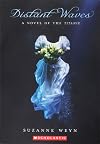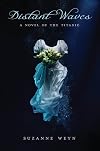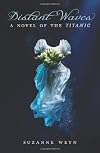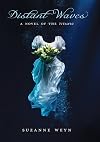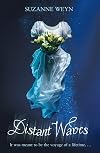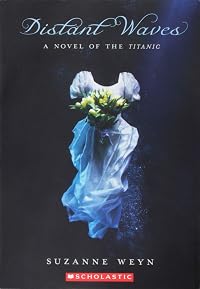
Distant Waves
by Suzanne Weyn 
On This Page
Description
In the early twentieth century, four sisters and their widowed mother, a famed spiritualist, travel from New York to London, and as the Titanic conveys them and their acquaintances, journalist W.T. Stead, scientist Nikola Tesla, and industrialist John Jacob Astor, home, Tesla's inventions will either doom or save them all.Tags
Recommendations




























Member Recommendations
jordantaylor This book is my favorite fictional Titanic story!
Member Reviews
Garbage.
The narrator is four years old for 42 pages and uses the words "violently, convulsing, frigidity, overwhelming, impulse, beseeched, reverie, reticence, condescension". She meets the great Nikola Tesla and listens to her mother have an entire conversation with him. The four year old manages to follow the whole thing and retain words like "electromechanical oscillator". She isn't an unacknowledged genius, here. Weyn doesn't seem to be self-aware of what she's doing. This continues.
The novel is filled with cameos of celebrities from the time period. There's even a helpful author's note at the end to explain who they all are. It gets to a point where I put the book down and asked, outloud, "What am I reading?!". In chapter 10 Jane show more is standing in the penthouse of the Waldorf-Astoria hotel comparing Tesla to Einstein with Tesla's assistant while Guggenheim uses the phone in another room and his girlfriend dresses up Jane's sister in the next. None of this takes place on the Titanic.
Character information is written like facts ripped from a biography.
"I wish Jack wouldn't insist on being called Colonel Astor," Mr. Guggenheim cried. "It's so ridiculous. He donated his yacht and bought himself a brigade of volunteers just so he could have that ludicrous title! It's absurd."
"Colonel Astor served his country with distinction during the Spanish-American War," Mr. Boldt insisted loyally.
It's cringeworthy.
Suzanne Weyn has written over 180 novels. She has had the chance to hone her craft. Clearly, neither she nor the people who publish her work give a s###. show less
The narrator is four years old for 42 pages and uses the words "violently, convulsing, frigidity, overwhelming, impulse, beseeched, reverie, reticence, condescension". She meets the great Nikola Tesla and listens to her mother have an entire conversation with him. The four year old manages to follow the whole thing and retain words like "electromechanical oscillator". She isn't an unacknowledged genius, here. Weyn doesn't seem to be self-aware of what she's doing. This continues.
The novel is filled with cameos of celebrities from the time period. There's even a helpful author's note at the end to explain who they all are. It gets to a point where I put the book down and asked, outloud, "What am I reading?!". In chapter 10 Jane show more is standing in the penthouse of the Waldorf-Astoria hotel comparing Tesla to Einstein with Tesla's assistant while Guggenheim uses the phone in another room and his girlfriend dresses up Jane's sister in the next. None of this takes place on the Titanic.
Character information is written like facts ripped from a biography.
"I wish Jack wouldn't insist on being called Colonel Astor," Mr. Guggenheim cried. "It's so ridiculous. He donated his yacht and bought himself a brigade of volunteers just so he could have that ludicrous title! It's absurd."
"Colonel Astor served his country with distinction during the Spanish-American War," Mr. Boldt insisted loyally.
It's cringeworthy.
Suzanne Weyn has written over 180 novels. She has had the chance to hone her craft. Clearly, neither she nor the people who publish her work give a s###. show less
Budding journalist Jane Taylor grew up in an unconventional household. Her mother is a prominent medium in Spirit Vale, a town dedicated to communing with the dead. Jane herself is agnostic on the question - while she's definitely seen instances of her mother's trickery, she also has seen moments that she's not sure how else to explain.
Since a terrifying encounter during an earthquake when she was young, Jane has been fascinated with the life and inventions of Nikola Tesla. It's only natural, then, that when she has a chance to enter a journalism competition, she travels to New York to ask him for an interview. And this is the very trip that sets things in motion - Jane encounters Nikola's handsome assistant, Thad, and her sister Mimi show more meets Benjamin Guggenheim's mistress Ninette who invites Mimi to travel with them, and who is eventually responsible (at least in part) for the family's trip on the ill-fated Titanic. Because, of course, we have to end up on the Titanic - it's in the subtitle, it's on the cover, and it's foretold!
For a novel billed as being about the Titanic (including several references and foreboding prophecies), we barely spend time aboard, and we spend even less time with the sinking due to a bit of a weird plot twist that didn't seem to fit with the rest of the story for me. This was most disappointing because I was interested in several of the themes of the novel (classism which cuts both ways, race, science vs. spiritualism) - some of which I found new and unusual based on my reading about the disaster thus far (though I grew weary of Gilded Age Celebrity Name-dropping - the Astors, the Guggenheims, Sir Arthur Conan Doyle, Harry Houdini, not to mention Tesla), and which I would have enjoyed seeing play out during the course of the disaster.
Given that Thad is pretty convinced that anyone who has money can only be a selfish jerk (Thad, you are NOT a bad person if you would like to have a lobster dinner, drink champagne and sleep in an incredibly fancy hotel room for once and BOOK it would have been nice to challenge him on this), I would have thought that the sinking of the Titanic, with the steerage passengers kept locked below while the ship filled with water and half-empty lifeboats being sent off so there was no class-mixing, would have been a great way to drive this point home - but class differentiation is only lightly touched upon and we spend next to no time dealing with the consequences of the iceberg due to the aforementioned odd plot twist.
Another theme that is raised, but promptly relegated to the background, is the issue of race, especially in Gilded Age America. A significant character turns out to be of Haitian descent - though the character's light skin allows this heritage to remain hidden unless revealed. The character struggles with a sense of identity and whether there is a need for deception in some scenes, but for all this spends most of the book passing as Caucasian and therefore avoiding any problems which made me wonder that the author included this plot thread (which I would have liked to see explored in more depth)at all.
Ultimately, though, I was most disappointed by the cop-out (in this reader's opinion) of not actually having anyone experience the horrors of the shipwreck. There is barely a mention of all those trapped in steerage. And there is little discussion of the bodies in the water, the ridiculously empty lifeboats or the trauma of survivors' guilt. I know that some may consider these aspects "done to death", but it seems to me a novel billed as about the Titanic that simply glosses over all of these points is doing the inherent drama of the setting a disservice.
More at A Hoyden's Look at Literature. show less
Since a terrifying encounter during an earthquake when she was young, Jane has been fascinated with the life and inventions of Nikola Tesla. It's only natural, then, that when she has a chance to enter a journalism competition, she travels to New York to ask him for an interview. And this is the very trip that sets things in motion - Jane encounters Nikola's handsome assistant, Thad, and her sister Mimi show more meets Benjamin Guggenheim's mistress Ninette who invites Mimi to travel with them, and who is eventually responsible (at least in part) for the family's trip on the ill-fated Titanic. Because, of course, we have to end up on the Titanic - it's in the subtitle, it's on the cover, and it's foretold!
For a novel billed as being about the Titanic (including several references and foreboding prophecies), we barely spend time aboard, and we spend even less time with the sinking due to a bit of a weird plot twist that didn't seem to fit with the rest of the story for me. This was most disappointing because I was interested in several of the themes of the novel (classism which cuts both ways, race, science vs. spiritualism) - some of which I found new and unusual based on my reading about the disaster thus far (though I grew weary of Gilded Age Celebrity Name-dropping - the Astors, the Guggenheims, Sir Arthur Conan Doyle, Harry Houdini, not to mention Tesla), and which I would have enjoyed seeing play out during the course of the disaster.
Given that Thad is pretty convinced that anyone who has money can only be a selfish jerk (Thad, you are NOT a bad person if you would like to have a lobster dinner, drink champagne and sleep in an incredibly fancy hotel room for once and BOOK it would have been nice to challenge him on this), I would have thought that the sinking of the Titanic, with the steerage passengers kept locked below while the ship filled with water and half-empty lifeboats being sent off so there was no class-mixing, would have been a great way to drive this point home - but class differentiation is only lightly touched upon and we spend next to no time dealing with the consequences of the iceberg due to the aforementioned odd plot twist.
Another theme that is raised, but promptly relegated to the background, is the issue of race, especially in Gilded Age America. A significant character turns out to be of Haitian descent - though the character's light skin allows this heritage to remain hidden unless revealed. The character struggles with a sense of identity and whether there is a need for deception in some scenes, but for all this spends most of the book passing as Caucasian and therefore avoiding any problems which made me wonder that the author included this plot thread (which I would have liked to see explored in more depth)at all.
Ultimately, though, I was most disappointed by the cop-out (in this reader's opinion) of not actually having anyone experience the horrors of the shipwreck. There is barely a mention of all those trapped in steerage. And there is little discussion of the bodies in the water, the ridiculously empty lifeboats or the trauma of survivors' guilt. I know that some may consider these aspects "done to death", but it seems to me a novel billed as about the Titanic that simply glosses over all of these points is doing the inherent drama of the setting a disservice.
More at A Hoyden's Look at Literature. show less
Reviewed by Amber Gibson for TeensReadToo.com
What would you do if you had foreseen the sinking of the Titanic?
DISTANT WAVES is one of many re-tellings of the mysterious happenings surrounding the greatest shipwreck of all time, but Suzanne Weyn's version stands out with its breadth of historical research and, most importantly, with its allusions to the paranormal.
Maude Oneida Taylor is a famed psychic, one of the most respected clairvoyants in Spirit Vale, a small liberal town teeming with spiritualists and feminists. Mrs. Taylor's five daughters grow up in rather unusual circumstances, and none of them are typical American girls.
Mimi, the oldest, is stunningly beautiful, leaving home to pursue a more luxurious lifestyle and travel show more through Europe, though she can never truly escape her heritage. Jane, a budding journalist, is the most logical of the bunch, and the story is told through her perspective. Emma and Amelie, twins, seem to have inherited some of their mother's powers. Blythe, the youngest of the group, is completely mesmerized by the power that accompanies fame and fortune.
Growing up in Spirit Vale, the Taylor girls have seen so many clairvoyants, some who perhaps really have the gift and others who are clearly frauds. Jane has even seen her mother cheat, scribbling her own messages during "automatic writing" that are supposedly from loved ones that have passed on. There have been times though, when even Jane's jaded self doesn't know what to believe, such as during her sister Amelie's dangerous sleepwalking episodes.
Jane's life is influenced greatly by the ideas and attitudes of physicist Nikola Tesla. After a chance meeting in a man-made earthquake in New York City when she was only four, she has followed his career carefully, regarding him as a father-figure of sorts. Tesla's manipulation of electricity and inventive mind are incredible, only eclipsed by his generosity and lack of capitalist greed. Though Jane admires Tesla, it is his handsome assistant, Thad, who captures her heart.
As the Titanic sets sail from London, all five sisters find themselves on board, despite multiple predictions of its sinking. Sailing toward what might very well be their demise, Jane and her sisters must hope that somebody or something is out there watching out for them.
Weyn clearly understands the time period thoroughly, though occasionally the incorporation of facts seems slightly forced and almost weighs the story down. Readers do gain a wealth of knowledge, including little-known trivia about many celebrities of the era.
This book is a must-read for anyone who remembers Leonardo DiCaprio's "I'm king of the world!" line from the movie, or for anyone who has ever entertained the idea that maybe clairvoyancy isn't so far-fetched after all. show less
What would you do if you had foreseen the sinking of the Titanic?
DISTANT WAVES is one of many re-tellings of the mysterious happenings surrounding the greatest shipwreck of all time, but Suzanne Weyn's version stands out with its breadth of historical research and, most importantly, with its allusions to the paranormal.
Maude Oneida Taylor is a famed psychic, one of the most respected clairvoyants in Spirit Vale, a small liberal town teeming with spiritualists and feminists. Mrs. Taylor's five daughters grow up in rather unusual circumstances, and none of them are typical American girls.
Mimi, the oldest, is stunningly beautiful, leaving home to pursue a more luxurious lifestyle and travel show more through Europe, though she can never truly escape her heritage. Jane, a budding journalist, is the most logical of the bunch, and the story is told through her perspective. Emma and Amelie, twins, seem to have inherited some of their mother's powers. Blythe, the youngest of the group, is completely mesmerized by the power that accompanies fame and fortune.
Growing up in Spirit Vale, the Taylor girls have seen so many clairvoyants, some who perhaps really have the gift and others who are clearly frauds. Jane has even seen her mother cheat, scribbling her own messages during "automatic writing" that are supposedly from loved ones that have passed on. There have been times though, when even Jane's jaded self doesn't know what to believe, such as during her sister Amelie's dangerous sleepwalking episodes.
Jane's life is influenced greatly by the ideas and attitudes of physicist Nikola Tesla. After a chance meeting in a man-made earthquake in New York City when she was only four, she has followed his career carefully, regarding him as a father-figure of sorts. Tesla's manipulation of electricity and inventive mind are incredible, only eclipsed by his generosity and lack of capitalist greed. Though Jane admires Tesla, it is his handsome assistant, Thad, who captures her heart.
As the Titanic sets sail from London, all five sisters find themselves on board, despite multiple predictions of its sinking. Sailing toward what might very well be their demise, Jane and her sisters must hope that somebody or something is out there watching out for them.
Weyn clearly understands the time period thoroughly, though occasionally the incorporation of facts seems slightly forced and almost weighs the story down. Readers do gain a wealth of knowledge, including little-known trivia about many celebrities of the era.
This book is a must-read for anyone who remembers Leonardo DiCaprio's "I'm king of the world!" line from the movie, or for anyone who has ever entertained the idea that maybe clairvoyancy isn't so far-fetched after all. show less
I’ve never read a fictional story based around the Titanic, this one was wonderful. It was well written and inventive. Weyn seems to have done a lot of research on the actual even of the Titanic sinking and is well versed on those traveling aboard the ship. She combines reality with fiction throughout the entire story, blending the two seamlessly. Two of my favorite “real people” to make appearances are Nikola Tesla and Sir Arthur Conan Doyle.
The first half of the book focus on the mother, the five sisters (not four as the description states), and their lives at the spiritualist town. It isn’t until the second half of the book that much talk about the “unsinkable Titanic” comes into play. Once aboard the Titanic the story show more picks up and becomes even more exciting, which caused me to devour the rest of the book in one sitting. Weyn was clever in leaving out some of the truly tear jerking moments and leaped through the story towards the end so that we are still left on a high note. show less
The first half of the book focus on the mother, the five sisters (not four as the description states), and their lives at the spiritualist town. It isn’t until the second half of the book that much talk about the “unsinkable Titanic” comes into play. Once aboard the Titanic the story show more picks up and becomes even more exciting, which caused me to devour the rest of the book in one sitting. Weyn was clever in leaving out some of the truly tear jerking moments and leaped through the story towards the end so that we are still left on a high note. show less
A lot of people say this book isn't any good because the centre plot point, the Titanic, doesn't appear til near the end. Which is fine, that's true, it doesn't. But if you treat it as a story that simply ends on the Titanic, it's a fine book. This is the book that made me interested in Tesla, and despite 75% of the characters being entirely fictional, I thoroughly enjoyed this new twist to the Titanic story that has been repeated over and over again. It made it unique!
More of a two and half for me.
As James Cameron said in Ghosts of the Abyss: "Titanic is like a great novel that actually happened."
Distant Waves? Not so much. I picked this up from my rec pages here on GoodReads, having a Titanic tag and Paranormal tag gracing my shelves, this seemed like a natural direction for me.
Props to Suzanne Weyn for mentioning some of the ships inhabitants because they are an integral part to any Titanic tale, but for the most part it's just name dropping and most of the interatcions of these characters takes place on dry land BEFORE the ship sets sail. Once the story jumps aboard the ill fated ship, the book is already three fourths done. We don't get a lot of ship life as we spend most of it following the show more heroine as she fawns over inventor Tesla and his assistant whom she develops a close relationship with, but keeps bringing up their age difference being a scandle. When the book finally kicks into high gear, the ship starts to take on water and through the miracle of science, we jump ahead two minutes after the ship sinks beneath the ocean and our heroine is left alone in the world after the disappearance of her sister and love interest. It's not until two years later that her sister and love interest show up, unchanged and unscathed. Wouldn't you know? She's now 18, the same age as her love interest, disaster and scandal adverted.
This leaves me to say that if you're looking for a novel that focus' on the sinking of the ship itself, or looking for new or interesting details documenting the ship, this may not be the book for you. The book more surrounds the paranormal then it does the Titanic. show less
As James Cameron said in Ghosts of the Abyss: "Titanic is like a great novel that actually happened."
Distant Waves? Not so much. I picked this up from my rec pages here on GoodReads, having a Titanic tag and Paranormal tag gracing my shelves, this seemed like a natural direction for me.
Props to Suzanne Weyn for mentioning some of the ships inhabitants because they are an integral part to any Titanic tale, but for the most part it's just name dropping and most of the interatcions of these characters takes place on dry land BEFORE the ship sets sail. Once the story jumps aboard the ill fated ship, the book is already three fourths done. We don't get a lot of ship life as we spend most of it following the show more heroine as she fawns over inventor Tesla and his assistant whom she develops a close relationship with, but keeps bringing up their age difference being a scandle. When the book finally kicks into high gear, the ship starts to take on water and through the miracle of science, we jump ahead two minutes after the ship sinks beneath the ocean and our heroine is left alone in the world after the disappearance of her sister and love interest. It's not until two years later that her sister and love interest show up, unchanged and unscathed. Wouldn't you know? She's now 18, the same age as her love interest, disaster and scandal adverted.
This leaves me to say that if you're looking for a novel that focus' on the sinking of the ship itself, or looking for new or interesting details documenting the ship, this may not be the book for you. The book more surrounds the paranormal then it does the Titanic. show less
This is one of my favorite all time books from this decade! its wonderful how history, love, and family are incorparated throughout this book;I loved the parts when Jane shows how much she loves Thad, and Thad likewise.It shows the blossoming of young love, and it even shows a real person during that time-Tesla. I thought It was a really nice historical fiction, and if Suzanne Weyn ever decdes to write a sequel, I want to read it!
Members
- Recently Added By
Lists

RMS Titanic -- children's/young adult fiction and non-fiction
69 works; 3 members
Author Information

205+ Works 13,710 Members
Awards and Honors
Awards
Notable Lists
Common Knowledge
- Canonical title
- Distant Waves
- Original publication date
- 2009-04-15
- People/Characters
- John Jacob Astor IV; W. T. Stead; Nikola Tesla; Maude Oneida Taylor; Amelie Taylor; Jane Taylor (show all 7); Mimi Taylor
- Important places
- Atlantic Ocean; North Atlantic Ocean; Titanic (Steamship); New York, New York, USA; London, England, UK
- Important events
- Gilded Age; Sinking of the Titanic (1912-04-14 | 1912-04-15)
- Epigraph
- I have had three or four very striking and vivid premonitions in my life which have been fulfilled to the letter. I have others which await fulfilment. Of the latter, I will not speak here - although I have them duly record... (show all)ed - for were I to do so I should be accused to being party to bringing about the fulfilment of my own predictions.
W.T. Stead, famed British journalist who did not survive the sinking of the Titanic but predicted it.
there are more things in heaven and earth...Than are dreamt of in your philosophy.
--William Shakespeare, Hamlet - First words
- Prologue: Dear Friend, I have never told this story before for fear of not being believed - or, worse, ridiculed.
- Last words
- (Click to show. Warning: May contain spoilers.)One thousand, five hundred and seventeen people died.
Classifications
Statistics
- Members
- 898
- Popularity
- 29,966
- Reviews
- 22
- Rating
- (3.50)
- Languages
- English
- Media
- Paper, Ebook
- ISBNs
- 6
- ASINs
- 1