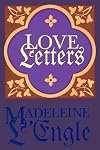
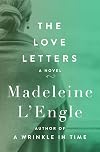
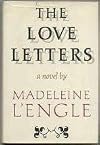
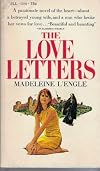
The Love Letters
by Madeleine L'Engle
On This Page
Description
Past and present collide in this heartfelt novel of love and loss from the National Book Award–winning author of A Wrinkle in Time.After the tragic death of her son and the seeming collapse of her marriage, Charlotte Napier flees to Portugal in the hopes of finding guidance from her mentor: her mother-in-law, Violet. Instead, she finds solace in the letters of Mariana Alcoforado, a seventeenth-century nun.
Charlotte and Mariana's stories may be different in origin, but they share the show more same inner turmoil. As she reads the letters, Mariana's spiritual journey sheds light on Charlotte's own crisis. Finding inspiration in the nun's struggles with sin, temptation, and faith, Charlotte gains perspective on her own mind—and sets out to accept the demanding, challenging nature of love.
This ebook features an illustrated biography of Madeleine L'Engle including rare images from the author's estate.
. Literature. Fiction. show less
Tags
Recommendations













Member Reviews
Because I remember L'Engle's "Wrinkle in Time" so fondly, I keep expecting that I'll like anything she writes. Wrong. I had forgotten how strongly she is into Catholicism.
This book has a lot of internal agonizing over love relationships, twining 2 separate tales: that of a Portugese nun several centuries ago who has an affair with a soldier and that of Charlotte, a modern 20-something mother who has not been able to relate to her husband since their son was killed in an accident. Charlotte was raised mainly in convent schools, so can relate to the nun's experiences. We wade thru a lot of jealousies or conflicts between various women in the Portugese convent community.
This book has a lot of internal agonizing over love relationships, twining 2 separate tales: that of a Portugese nun several centuries ago who has an affair with a soldier and that of Charlotte, a modern 20-something mother who has not been able to relate to her husband since their son was killed in an accident. Charlotte was raised mainly in convent schools, so can relate to the nun's experiences. We wade thru a lot of jealousies or conflicts between various women in the Portugese convent community.
What an odd reading experience. I procured this book at some point with an aim of completing my Madeleine L'Engle collection, and the description discouraged me from attempting it until now; I possibly should have listened to my instincts.
The book switches between the stories of Charlotte, a young "modern" ('70s?) New York woman grieving the loss of her five-year-old son; and Mariana, a 17th century Portuguese nun having an affair with a French soldier. (It turns out she may be real, or may be an invention, but anyway is not L'Engle's invention.) We're supposed to find a lot of parallels between the two women's lives, but the whole thing is a little bit forced. There are a number of ideas and themes that were more thoroughly explored in show more her other books; it doesn't quite all come together here. I would have thought this was an early book, but in fact it was written significantly after some of her other works that I enjoyed a lot more.
Written in L'Engle's typical emotive style, this was easy enough to get through, but I wouldn't recommend it unless you've feeling particularly completist. I'm also looking sideways at the ending, in whichCharlotte decides to go back to her husband, after he raped her and accused her of adultery?! And we're supposed to think this is a good decision?!?! show less
The book switches between the stories of Charlotte, a young "modern" ('70s?) New York woman grieving the loss of her five-year-old son; and Mariana, a 17th century Portuguese nun having an affair with a French soldier. (It turns out she may be real, or may be an invention, but anyway is not L'Engle's invention.) We're supposed to find a lot of parallels between the two women's lives, but the whole thing is a little bit forced. There are a number of ideas and themes that were more thoroughly explored in show more her other books; it doesn't quite all come together here. I would have thought this was an early book, but in fact it was written significantly after some of her other works that I enjoyed a lot more.
Written in L'Engle's typical emotive style, this was easy enough to get through, but I wouldn't recommend it unless you've feeling particularly completist. I'm also looking sideways at the ending, in which
Once again Madeleine does not disappoint me. I think if I am truthful part of the reason I did not finish this book when I initially started it was because I wasn't really ready for it. This has happened with me before. I pick up a book, find that I am bored by it and I put it away waiting for the time when I'll pick it up again and will no longer be bored for it. This time finally came this summer.
I think what I loved about this is definitely the aspect of it that is fairly unique - the two interwoven stories and the messages that are captured within each one. As we read through Mariana's story we are pulled into the present by Charlotte's story running parallel to Mariana's. I think it's the range of the emotions that moved me into show more the story and perhaps too simply the reminders of what is important in life.
Madeliene L'Engle reminds me in nearly every book of hers that I pick up how I want to live. I somehow generally come to the conclusion that there is a form of Christianity that comes through within her writing that is so basic and essential that I do not really want to try anything else. It's the same Christianity discussed in The Celtic Way of Prayer and I am drawn to the simplicity of thinking and yet realise that it is not truly simplistic and that to live with that inner peace and calm throughout all of the difficulties, uncertainties, and discrepancies that life may throw at you is anything but simple. I believe it's referred to in The Celtic Way of Prayer as peregino (I'm not certain I've got that spelled correctly but I don't have the book on hand to reference and spell check) a type of journeying that requires a calm inner core.
Madeleine L'Engle refers to this some in Love Letters, pulling back around to it as the book reaches the end and as I read this I was reminded once more of my own goals for my life.
Although this title is not perhaps as dynamic or showy as some of L'Engle's works, it is beautifully done and portrays amongst everything else L'Engle's ideas on marriage and love, which is something I can deeply appreciate. There is much in it that I agree with. show less
I think what I loved about this is definitely the aspect of it that is fairly unique - the two interwoven stories and the messages that are captured within each one. As we read through Mariana's story we are pulled into the present by Charlotte's story running parallel to Mariana's. I think it's the range of the emotions that moved me into show more the story and perhaps too simply the reminders of what is important in life.
Madeliene L'Engle reminds me in nearly every book of hers that I pick up how I want to live. I somehow generally come to the conclusion that there is a form of Christianity that comes through within her writing that is so basic and essential that I do not really want to try anything else. It's the same Christianity discussed in The Celtic Way of Prayer and I am drawn to the simplicity of thinking and yet realise that it is not truly simplistic and that to live with that inner peace and calm throughout all of the difficulties, uncertainties, and discrepancies that life may throw at you is anything but simple. I believe it's referred to in The Celtic Way of Prayer as peregino (I'm not certain I've got that spelled correctly but I don't have the book on hand to reference and spell check) a type of journeying that requires a calm inner core.
Madeleine L'Engle refers to this some in Love Letters, pulling back around to it as the book reaches the end and as I read this I was reminded once more of my own goals for my life.
Although this title is not perhaps as dynamic or showy as some of L'Engle's works, it is beautifully done and portrays amongst everything else L'Engle's ideas on marriage and love, which is something I can deeply appreciate. There is much in it that I agree with. show less
Uneven with generally unlikable characters.
Here's what I wrote in 2008 about this read: "Struggling to remember the gist of this novel/book; something about Spain, nuns, a hurt young woman. Amazon.com does not have info, although does have a cover picture that jogs memory and simply fantastic information about L'Engle: letters and comments from here, her history, etc. Very interesting woman who is apparently still living among us (born 1918).". Well she did pass in 2007, so wasn't still among us even then AND she is a very interesting woman. And the setting was Portugal.
Ratings
Members
- Recently Added By
Lists

Books featuring monks and/or nuns
166 works; 33 members
Author Information

121+ Works 128,565 Members
Author Madeleine L'Engle was born in New York City on November 29, 1918. She graduated from Smith College. She is best known for A Wrinkle in Time (1962), which won the 1963 Newbery Medal for best American children's book. While many of her novels blend science fiction and fantasy, she has also written a series of autobiographical books, including show more Two Part Invention: The Story of a Marriage, which deals with the illness and death of her husband, soap opera actor Hugh Franklin. In 2004, she received a National Humanities Medal from President George W. Bush. She died on September 6, 2007 of natural causes. Since 1976, Wheaton College in Illinois has maintained a special collection of L'Engle's papers, and a variety of other materials, dating back to 1919. (Bowker Author Biography) show less
Work Relationships
Was inspired by
Common Knowledge
- Original publication date
- 1966
- People/Characters
- Charlotte Napier (Cotty); Patrick Napier; Mariana Alcoforado; Violet Napier; Sister Joaquina; Noël Bouton (Marquis de Chamilly)
- Important places
- Beja, Portugal; New York, New York, USA
- Epigraph
- Love is a revolt against the finitude of the finite, the transience of the transient, the relativity of the relative.
--George Tyrell - Dedication
- For Alan
- First words
- It was an old moon, late in rising, and lopsided, shining wetly through the gathering clouds.
- Last words
- (Click to show. Warning: May contain spoilers.)She left the doctor and moved through the sunlight to the house.
Classifications
Statistics
- Members
- 293
- Popularity
- 109,641
- Reviews
- 5
- Rating
- (3.31)
- Languages
- English, German
- Media
- Paper, Audiobook, Ebook
- ISBNs
- 9
- ASINs
- 5