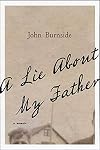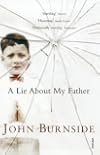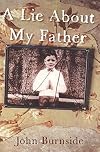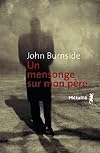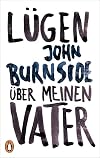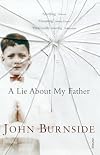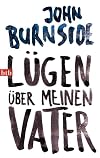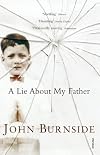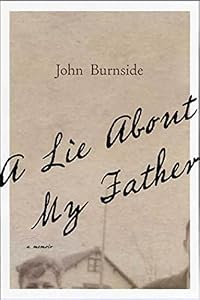
A Lie About My Father: A Memoir
by John Burnside
On This Page
Description
A moving, unforgettable memoir of two lost men- a father and his child.He had his final heart attack in the Silver Band Club in Corby, somewhere between the bar and the cigarette machine. A foundling; a fantasist; a morose, threatening drinker who was quick with his hands, he hadn't seen his son for years. John Burnside's extraordinary story of this failed relationship is an exquisitely written evocation of a lost and damaged world of childhood and the constants of his father's world- men show more defined by the drink they could take and the pain they could stand, men shaped by their guilt and machismo..A LIE ABOUT MY FATHER is about forgiving but not forgetting, about examining the way men are made and how they fall apart, about understanding that in order to have a good son you must have a good father. show lessTags
Recommendations









Member Reviews
John Burnside's memoir about his father is a brilliant, but brutal account of what it was like for him growing-up in the fifties and sixties in Cowdenbeath and Corby. As well as being a liar, his father is a drunk and a bully who is singularly ill-qualified for fatherhood, even by the standards of 1950s Scotland.
A Lie About My Father covers the time from John's birth to his early twenties when his dad dies. It is tough going – his dad burning his teddy bear at six, his mother bundling him out of the bedroon window late at night to avoid drunken beatings, the broken arm from a holiday in Blackpool that goes undiagnosed for three weeks, the teenage obsession with fire-lighting – but not at all gloomy. He seems to cope remarkably well show more with his lot and there is a complete lack of self-pity or wallowing in his predicament. Like millions of other teenagers he survives with the help of books, music and a complete rejection of his father's principles.
Of course, however, it all takes its toll and as the book ends he is diagnosed with mental illness, hospitalised and losing himself in serious drug abuse from which it takes him a decade to escape.
"When they warn you about all that bohemian stuff, they always talk about the seductive properties of alcohol, or drugs, or loose morals, but they never say how seductive falling is, what a great pleasure it is to be lost. Perhaps they don't know. Perhaps only the lost know. Far from home, far from the known, the imagination starts to play beautiful, terrifying tricks on us. Maybe it is the road of excess that leads to the palace of wisdom – which is just another word for a certain kind of crazy. Being lost, being crazy: while I was falling, I knew I was on to something. I knew I wasn't anywhere near there yet, but I also knew that I couldn't get there from where I was."
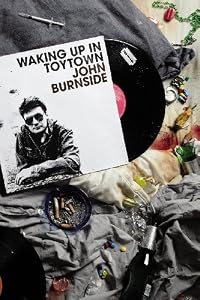
His recent memoir Waking up in Toytown covers this lost decade and his escape into suburbia of all places. A Lie About My Father ends positively and, although I don't want to spoil the book for anyone, it is safe to say that he isn't going to repeat the mistakes his father made. show less
A Lie About My Father covers the time from John's birth to his early twenties when his dad dies. It is tough going – his dad burning his teddy bear at six, his mother bundling him out of the bedroon window late at night to avoid drunken beatings, the broken arm from a holiday in Blackpool that goes undiagnosed for three weeks, the teenage obsession with fire-lighting – but not at all gloomy. He seems to cope remarkably well show more with his lot and there is a complete lack of self-pity or wallowing in his predicament. Like millions of other teenagers he survives with the help of books, music and a complete rejection of his father's principles.
Of course, however, it all takes its toll and as the book ends he is diagnosed with mental illness, hospitalised and losing himself in serious drug abuse from which it takes him a decade to escape.
"When they warn you about all that bohemian stuff, they always talk about the seductive properties of alcohol, or drugs, or loose morals, but they never say how seductive falling is, what a great pleasure it is to be lost. Perhaps they don't know. Perhaps only the lost know. Far from home, far from the known, the imagination starts to play beautiful, terrifying tricks on us. Maybe it is the road of excess that leads to the palace of wisdom – which is just another word for a certain kind of crazy. Being lost, being crazy: while I was falling, I knew I was on to something. I knew I wasn't anywhere near there yet, but I also knew that I couldn't get there from where I was."
His recent memoir Waking up in Toytown covers this lost decade and his escape into suburbia of all places. A Lie About My Father ends positively and, although I don't want to spoil the book for anyone, it is safe to say that he isn't going to repeat the mistakes his father made. show less
A sad and moving tale from the poet/author John Burnside growing up in the 50's/60's in deprived area of Fife in Scotland with an alcoholic father. It's not Shuggie Bain hopelessness/grimness - his dad never misses a day of work ever (as this is seen as something a REAL man would never do) but a different sort of painful childhood upbringing.
The threat of violence rather than it's actual delivery, and the failed dreams of the father (and the lies he told) wearing down both his wife and family.
There's a poignant scene in the final chapter at his father's wake, where his barfly friends either don't wish to question the dead mans lies or choose to actually believe them.
Questioning them would reflect badly on them though, so they become show more gospel.
It's ironic, that people talk about the present generation as presenting one image (online) with the actual reality, and that it's a new thing.
For the males of that era and class, an image/story must be presented constantly regardless of the facts or the reality, and after a while it absorbs the lie element and becomes the truth. show less
The threat of violence rather than it's actual delivery, and the failed dreams of the father (and the lies he told) wearing down both his wife and family.
There's a poignant scene in the final chapter at his father's wake, where his barfly friends either don't wish to question the dead mans lies or choose to actually believe them.
Questioning them would reflect badly on them though, so they become show more gospel.
It's ironic, that people talk about the present generation as presenting one image (online) with the actual reality, and that it's a new thing.
For the males of that era and class, an image/story must be presented constantly regardless of the facts or the reality, and after a while it absorbs the lie element and becomes the truth. show less
It's well written .... but suffers from being episodic and looping. There are times when I get the impression that Burnside edited out certain parts, but still refers to those parts in an oblique way. He hints at things to come, but then fails to follow up with any further mention. It's foreshadowing gone wrong. When it's good, it's very very good. But it was obviously written in self-contained chunks, and those chunks do not always clearly relate to each other.
A gripping, dark memoir of the author’s childhood; specifically his relationship with his father. It is not exactly an autobiography; nor is it a biography of Burnside’s father, but a heavily weighted account of their destructive relationship. As such, it is compelling and fluent, though narrow in focus. It is an unusually well-crafted example of the sub-genre of biography which has come to be known, since Frank McCourt’s Angela’s Ashes, as the miserablist memoir. Indispensable for fans of Burnside’s poetry and fiction.
A story about a destructive and self-destructive father and the impact of this on the child.
Jem Poster: "one of the most serious and authoritative voices in contemporary British poetry"
Independent: Creative Lives by Boyd Tonkin: "brings to tender painful life the poet's damaged and damaging parent"
Jem Poster: "one of the most serious and authoritative voices in contemporary British poetry"
Independent: Creative Lives by Boyd Tonkin: "brings to tender painful life the poet's damaged and damaging parent"
Quite likes it.
Apr 2, 2012German
Ratings
Members
- Recently Added By
Author Information

56+ Works 1,921 Members
John Burnside is a poet, novelist, and memoirist whose many books include Still Life with Feeding Snake and On Henry Miller (Princeton). He is professor of English at the University of St Andrews and a regular contributor to the London Review of Books.
Awards and Honors
Awards
Distinctions
Common Knowledge
- First words
- Every year, it comes as a surprise.
Classifications
- Genres
- Biography & Memoir, Fiction and Literature, Literature Studies and Criticism
- DDC/MDS
- 828.91409 — Literature & rhetoric English & Old English literatures English miscellaneous writings English miscellaneous writings 1900- English miscellaneous writings 1900-1999 English miscellaneous writings 1945-1999 Individual authors
- LCC
- PR6052 .U6683 .Z59 — Language and Literature English English Literature 1961-2000
- BISAC
Statistics
- Members
- 127
- Popularity
- 256,210
- Reviews
- 6
- Rating
- (4.25)
- Languages
- English, French, German
- Media
- Paper, Ebook
- ISBNs
- 12
- ASINs
- 5