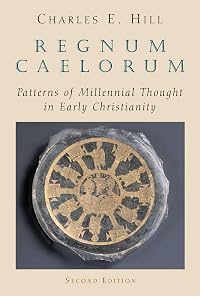
Regnum Caelorum: Patterns of Millennial Thought in Early Christianity
by Mr. Charles E. Hill
On This Page
Description
Did the early Christians believe that the righteous "went to heaven" at death, or did they believe a subterranean refreshment awaited the saints? Did most Christians look for a millennium on earth, a thousand-year, glorious reign of Christ to ensue upon his second coming and to precede the last judgement, or did they cling to the hope that Christ would judge the world and distribute eternal rewards immediately upon his return? By demonstrating the links between "global" and "individual" show more eschatological notions in the period from the New Testament to Dionysius of Alexandria, this book reveals two competing patterns of eschatological teaching which vied for acceptance in the fledgling Church. show lessTags
Recommendations


Member Reviews
This is a very well researched and argued book. The author is acquainted with all sorts of literature on the patristic resources and their eschatologies, in multiple languages! Although very academic, it was surprisingly enjoyable, especially to research.
This is probably the book that I most thoroughly have studied (aside from Scripture) and checked the references to the Fathers, especially of the chiliasts, in the Church Fathers volumes available online and read them in context. The author does not take them out of context. It was surprising to me how the chiliasts of the first three centuries, at least, denied a heavenly intermediate state to believers. It seems so clear to me from the Scripture and therefore I was really show more surprised.
The theses of the book is to show how closely related the idea of a subterranean intermediate state is related to chiliasm. He defines chilism as the belief in an intermediate earthly kingdom after the resurrection and before the final judgment. This is a wide definition and hereby he surveys Jewish and Christian literature around that time concerning this idea of an intermediate kingdom on earth of whatever length.
Whenever the idea of a subterranean intermediate state is found, it is held by chiliasts. The only exception is Methodius of Olympus. All the other chiliasts which were surveyed from the first three centuries, held to a subterranean intermediate state for the dead. The translated (e.g. Elijah, Enoch, the Lord Jesus) were already in heaven, in the presence of God. Some (Irenaeus, Justin Martyr, Tertullian) allowed martyrs in heaven. While the rest of the chiliasts of this period (with surviving material, at least) did not make a concession for the martyrs.
I loved and enjoyed the honestly of the author. When some fathers provided a basic Amillennial scheme without saying something direct about the Millennium, he was careful to classify them as indefinite or perhaps Amillennarian. This, I believe, is not the typical premillenniarian aproach.
While surveying Jewish literature as 2 Baruch and 4 Ezra, he showed how many of the concepts of the early Christian chiliasts were basically borrowed or influenced by extra-biblical Jewish literature, and not by Scripture directly. The idea of a subterranean intermediate state is straight out of extra-biblical Jewish sources.
His survey of the non-chiliasts was also enjoyable. The non-chiliasts who were surveyed include Clement of Rome, Polycarp, Hermas, Melito of Sardis, Jude's grandsons, Hippolytus, Origen and Cyprian.
His quick survey of the intermediate state in the NT was likewise enjoyable. There is a chapter on the book of Revelation and how it is inconsistent with chiliasm, especially in light of its recognition of a heavenly intermediate state. I was very glad that he put all the non-chiliastic comments on Revelation 20 in a separate chapter, easily accessible.
Although academic and technical at times, this book was a very enjoyable read and very enlightening. I will no doubt revisit some sections again! show less
This is probably the book that I most thoroughly have studied (aside from Scripture) and checked the references to the Fathers, especially of the chiliasts, in the Church Fathers volumes available online and read them in context. The author does not take them out of context. It was surprising to me how the chiliasts of the first three centuries, at least, denied a heavenly intermediate state to believers. It seems so clear to me from the Scripture and therefore I was really show more surprised.
The theses of the book is to show how closely related the idea of a subterranean intermediate state is related to chiliasm. He defines chilism as the belief in an intermediate earthly kingdom after the resurrection and before the final judgment. This is a wide definition and hereby he surveys Jewish and Christian literature around that time concerning this idea of an intermediate kingdom on earth of whatever length.
Whenever the idea of a subterranean intermediate state is found, it is held by chiliasts. The only exception is Methodius of Olympus. All the other chiliasts which were surveyed from the first three centuries, held to a subterranean intermediate state for the dead. The translated (e.g. Elijah, Enoch, the Lord Jesus) were already in heaven, in the presence of God. Some (Irenaeus, Justin Martyr, Tertullian) allowed martyrs in heaven. While the rest of the chiliasts of this period (with surviving material, at least) did not make a concession for the martyrs.
I loved and enjoyed the honestly of the author. When some fathers provided a basic Amillennial scheme without saying something direct about the Millennium, he was careful to classify them as indefinite or perhaps Amillennarian. This, I believe, is not the typical premillenniarian aproach.
While surveying Jewish literature as 2 Baruch and 4 Ezra, he showed how many of the concepts of the early Christian chiliasts were basically borrowed or influenced by extra-biblical Jewish literature, and not by Scripture directly. The idea of a subterranean intermediate state is straight out of extra-biblical Jewish sources.
His survey of the non-chiliasts was also enjoyable. The non-chiliasts who were surveyed include Clement of Rome, Polycarp, Hermas, Melito of Sardis, Jude's grandsons, Hippolytus, Origen and Cyprian.
His quick survey of the intermediate state in the NT was likewise enjoyable. There is a chapter on the book of Revelation and how it is inconsistent with chiliasm, especially in light of its recognition of a heavenly intermediate state. I was very glad that he put all the non-chiliastic comments on Revelation 20 in a separate chapter, easily accessible.
Although academic and technical at times, this book was a very enjoyable read and very enlightening. I will no doubt revisit some sections again! show less
The author provides detailed evidence from early church writings to support his thesis that those theologians who believed in an interim heavenly state of existence after death did not believe in a future earthly reign of Christ (millennium), whereas those who believed in a millennium typically held an undeveloped view of the interim state as existence in a subterranean Hades-like place.
Ratings
Members
- Recently Added By
Author Information
10+ Works 829 Members
Charles Hill is Professor of New Testament at the Reformed Theological Seminary, Orlando, Florida
Classifications
Statistics
- Members
- 119
- Popularity
- 274,538
- Reviews
- 2
- Rating
- (4.58)
- Languages
- English
- Media
- Paper
- ISBNs
- 2
- ASINs
- 1