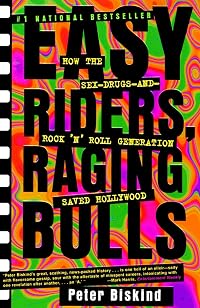
Easy riders, raging bulls : how the sex-drugs-and-rock 'n' roll generation saved Hollywood
by Peter Biskind
On This Page
Description
"Easy Riders, Raging Bulls vividly chronicles the exuberance and excess of the times: the startling success of Easy Rider and the equally alarming circumstances under which it was made, with drugs, booze, and violent rivalry between costars Dennis Hopper and Peter Fonda dominating the set; how a small production company named BBS became the guiding spirit of the youth rebellion in Hollywood and how, along the way, some of its executives helped smuggle Huey Newton out of the country; how show more director Hal Ashby was busted for drugs and thrown in jail in Toronto; why Martin Scorsese attended the Academy Awards with an FBI escort when Taxi Driver was nominated; how George Lucas, gripped by anxiety, compulsively cut off his own hair while writing Star Wars; how a modest house on Nicholas Beach occupied by actresses Margot Kidder and Jennifer Salt became the unofficial headquarters for the New Hollywood; how Billy Friedkin tried to humiliate Paramount boss Barry Diller; and how screenwriter/director Paul Schrader played Russian roulette in his hot tub. It was a time when an "anything goes" experimentation prevailed both on the screen and off."--Jacket. show lessTags
Recommendations

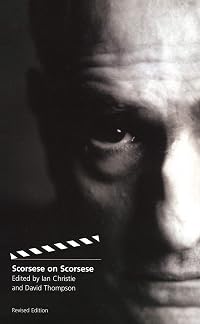
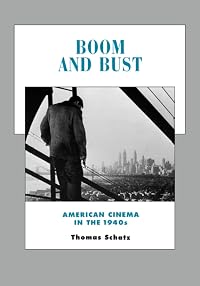
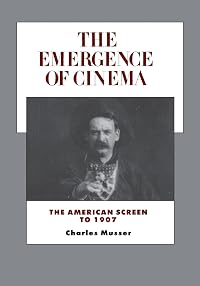
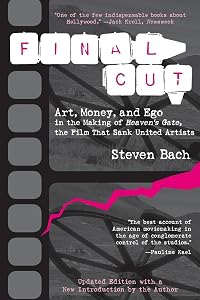








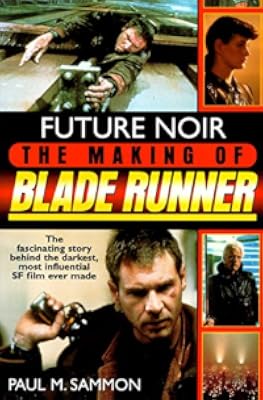
Member Recommendations
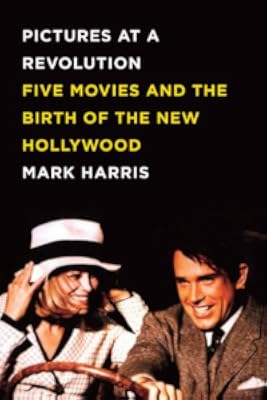
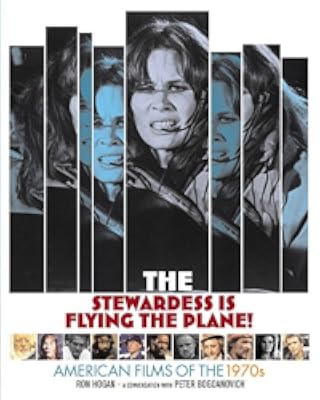
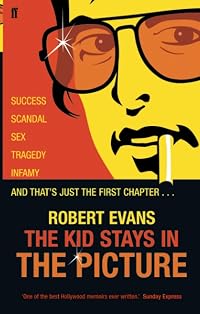
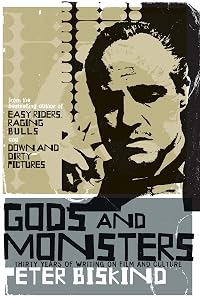
sanddancer A different perspective on the films of Spielberg, Lucas and those inspired by them, and their impact on Hollywood.

ABVR Biskind tells the story of the early 1970s, when the changes that Mordden shows building over the course of the 1960s came to a climax.

by anonymous user
by anonymous user
by anonymous user
Member Reviews
Though the subheading of the book is 'How the Sex n drugs n Rock n Roll Generation Saved Hollywood' it may have more accurately been titled 'How the Sex n Drugs n Rock n Roll Generation Saved Hollywood Before Imploding". The author, in chronicling the tales of the new generation of film-makers that wanted to be 'auteurs' and successfully challenged the studio system in the early 70s, also weaves a cautionary tale of how within success can lie the seeds of one's own undoing. Here we see the scrambling for success and recognition while desperately trying to retain some sort of integrity to one's vision. We also see meglomanical egos clashing, fuelled by sex and drugs and money.
This is an gripping, if sometimes depressing look at the show more turmoil within Hollywood, and the lives of some of the most spectacular directors of the 70s. Its focus is firmly on the lives, relationships, deals, and habits of the film-makers of the era, so while it provides fascinating insights into what was happening on the sets of the films (including M.A.S.H., Jaws, Apocalypse Now, the Exorcist, Chinatown, the French Connection and many others that were spectacular failures) it spends less time analysing the movies themselves. This is a book about the making of movies, rather than movies, and an insightful and startling book it is. show less
This is an gripping, if sometimes depressing look at the show more turmoil within Hollywood, and the lives of some of the most spectacular directors of the 70s. Its focus is firmly on the lives, relationships, deals, and habits of the film-makers of the era, so while it provides fascinating insights into what was happening on the sets of the films (including M.A.S.H., Jaws, Apocalypse Now, the Exorcist, Chinatown, the French Connection and many others that were spectacular failures) it spends less time analysing the movies themselves. This is a book about the making of movies, rather than movies, and an insightful and startling book it is. show less
Sort of an overrated genre, but it was interesting reading about Rafelson and Schneider. Also, plenty of good anecdotes about the interactions of all the others in the New Hollywood. Could have gone into more detail about Beatty and Fonda. It didn't even mention Lilith, for example.
I have to say begrudgingly that this was a good book about the rise of the major Hollywood directors after the near extinction of the old studio system of producers and studio heads ruled the moviemaking world. The time period is the late 60’s to later 70’s—early 80’s. The careers of these men are subjected to some Kidd glove handling but there are plenty of other hearsay or direct quotes from other Hollywood characters or “people who heard something” to keep you reading further on to the next chapter. The book to me was frustrating since in my mind it was filled with too many peripheral interests and personalities to make it feel bloated. Biskind stays focused on the main movie men Spielberg, Scorsese, Coppola, Fredkin, and show more Lucas. There are a whole cast of older characters whom I didn’t care to focus on, but this book had lots of interesting things in it. I was happy to have read it slowly to gauge Biskind’s own writing style. Biskind has written others books since this one and has been subjected to only faint skepticism of his absence of hearsay knowledge of Weinstein’s well-known misconduct. He said he had no direct knowledge and so didn’t print anything in that vein. Reading this book and hearing that will make you laugh. In fact, to see this book as anything less than comical behavior is to rob yourself of the greatest pleasure of Easy Riders, Raging Bulls. Biskind offers this apologetic sentiment as one of his conclusions. “The Directors of this decade were not unusual in their self-absorption, ruthlessness, or cruelty…Such behavior goes with the territory.”
This book would be perfect for film students but not so much for movie buffs as it gives lot of the unsavory backgrounds to how some of our favorite scenes and movie concepts came about. I read this as a keen fan of the history of Los Angeles. show less
This book would be perfect for film students but not so much for movie buffs as it gives lot of the unsavory backgrounds to how some of our favorite scenes and movie concepts came about. I read this as a keen fan of the history of Los Angeles. show less
É um trabalho de pesquisa e entrevista colossal, mas o autor tem um tom bem limitado quando resolve comentar as coisas com sua opinião pessoal, especialmente se tratando da qualidade dos filmes citados, em que diabos de zona além da imaginação ele vive para negar que Apocalypse Now seja uma obra-prima absoluta?!? Ou ainda compactuar com a ideia de Heaven's Gate foi mesmo um fracasso inclusive artístico quando na realidade é uma das grandes obras do Cimino?
Apesar de seus conceitos equivocados sobre qualidade fílmica e tom mais preocupado em obter fofocas sensacionalistas para incrementar seu livro, não deixa de ser um puta livro interessante de ler, mas que pouco trata de cinema afinal.
Apesar de seus conceitos equivocados sobre qualidade fílmica e tom mais preocupado em obter fofocas sensacionalistas para incrementar seu livro, não deixa de ser um puta livro interessante de ler, mas que pouco trata de cinema afinal.
This is supposed to be a history of the change in movie-making from the studio system to the "auteur" method. What I chiefly learned from this book is that Hollywood truly is an amoral swamp and there are no good guys there, and probably never have been. All of the wunderkinds from the 70s are nasty little brats whose sole concern is making their movies and they really don't care what happens to anyone while they do it, including wives and children. I don't generally go to movies because they cost too much and the audience has no manners. I am now thoroughly put off renting or borrowing them because of the wretched moral state of those who make them.
A book like this is why I never ever want to hear the political opinions of any show more Hollywood star. They are silly vapid amoral creatures who think their great wealth qualifies them as intelligent and thoughtful, completely forgetting that they make their living reciting someone else's words. Once I hear the idiotic, and almost invariably hypocritical, opinions of Hollywood folks, I never want to see their movies again.
This book did not help. Making movies seems to be exactly like making hot dogs: one should simply never learn what goes on behind the scenes. show less
A book like this is why I never ever want to hear the political opinions of any show more Hollywood star. They are silly vapid amoral creatures who think their great wealth qualifies them as intelligent and thoughtful, completely forgetting that they make their living reciting someone else's words. Once I hear the idiotic, and almost invariably hypocritical, opinions of Hollywood folks, I never want to see their movies again.
This book did not help. Making movies seems to be exactly like making hot dogs: one should simply never learn what goes on behind the scenes. show less
You can say Peter Biskind is being a jerk to the generation of filmmakers who revolutionized Hollywood in the 1970s with this gossipy, mean yet thorough retelling of the rise and crash of "The New Hollywood" or you could argue that this group of boy geniuses pretty much got what they deserved as a group of young artists given too much too fast who lost it and ruined others in the process through their own greed and arrogance. Doesn't mean it couldn't have been a better book (there are times when you sense Biskind lost access to someone and simply stopped telling their story without explanation) but it tells a sad soulful story nonetheless.
This is a must read for lovers of cinema. It's a mixture of gossip which may/may not be true and realities. It reveals the inspirations and motivations of the likes of the likes of Spielberg, Beatty, Hal Ashby, Coppola and Scorcese. Many of these were troubled geniuses who invented a new brand of Hollywood in the process destroyed them.
It doesn't sugarcoat them and many of them are revealed as frankly awful. I think Spielberg and Lucas are the only ones who didn't really live destructive lives. It's a great read for it's blatant honesty and I'd highly recommend although I would take many of the stories with a grain of salt. But they're fascinating nonetheless.
It doesn't sugarcoat them and many of them are revealed as frankly awful. I think Spielberg and Lucas are the only ones who didn't really live destructive lives. It's a great read for it's blatant honesty and I'd highly recommend although I would take many of the stories with a grain of salt. But they're fascinating nonetheless.
Members
- Recently Added By
Lists


Author Information

14 Works 3,075 Members
Peter Biskind is the author of "The Godfather Companion" & "Easy Riders, Raging Bulls." A contributing editor at "Vanity Fair," he has written for "The New York Times," the "Los Angeles Times," "The Washington Post," & "Rolling Stone," among other publications. He lives in New York City. (Bowker Author Biography)
Some Editions
Awards and Honors
Common Knowledge
- Canonical title
- Easy riders, raging bulls : how the sex-drugs-and-rock 'n' roll generation saved Hollywood
- Original title
- Easy Riders, Raging Bulls: How The Sex-Drugs-And-Rock 'n' Roll Generation Saved Hollywood
- Original publication date
- 1998
- People/Characters
- Warren Beatty; Dennis Hopper; Margot Kidder; Michael Cimino; Steven Spielberg; George Lucas (show all 7); Faye Dunaway
- Important places
- Mulholland Drive, Los Angeles, California, USA
- Related movies
- Easy Riders, Raging Bulls: How the Sex, Drugs and Rock 'N' Roll Generation Saved Hollywood (2003 | IMDb); Apocalypse Now (1979 | IMDb); Jaws (1975 | IMDb); Bonnie and Clyde (1967 | IMDb); Heaven's Gate (1980 | IMDb); The Last Picture Show (1971 | IMDb) (show all 11); The Exorcist (1973 | IMDb); The Godfather (1972 | IMDb); American Graffiti (1973 | IMDb); Star Wars: Episode IV - A New Hope (1977 | IMDb); E.T. the Extra-Terrestrial (1982 | IMDb)
- First words
- February 9, 1971, 6:01 in the morning.
- Last words
- (Click to show. Warning: May contain spoilers.)"I never heard from her again."
- Original language
- English
Classifications
- Genres
- Nonfiction, General Nonfiction, History, Biography & Memoir
- DDC/MDS
- 791.4302330973 — Arts & recreation Recreation, sports, and performing arts Public performances Motion pictures, radio, television, podcasting Motion pictures Standard subdivisions Supervision Film direction History, geographic treatment, biography
- LCC
- PN1998.2 .B56 — Language and Literature Literature (General) Literature (General) Drama Motion pictures
- BISAC
Statistics
- Members
- 1,568
- Popularity
- 14,634
- Reviews
- 28
- Rating
- (3.81)
- Languages
- 5 — English, French, German, Portuguese, Spanish
- Media
- Paper, Audiobook, Ebook
- ISBNs
- 22
- ASINs
- 7