What Is a Thing?
by Martin Heidegger
On This Page
Description
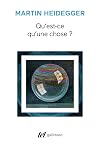
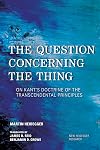
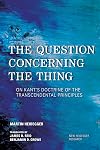
The Question Concerning the Thing presents a full English translation of a lecture course first delivered by Heidegger at Freiburg University during the Winter Semester of 1935-36 (originally published in German as volume 41 of the Gesamtausgabe). The text presents with particular clarity Heidegger's distinctive approach to issues of general philosophical interest. Heidegger shows how a litany of classical metaphysical problems flow from the basic question 'what is a thing?', revealing the show more historicity of these problems and, thus, the ways in which they implicate further issues of cultural significance. He examines issues regarding the history and philosophy of science, philosophy of language, and logic that are still debated today. Moreover, the lecture course as a whole is framed by questions regarding the nature of philosophy itself. Along the way, Heidegger provides sensitive and often provocative discussions of historically significant figures, in particular Kant. show lessTags
Recommendations


















Member Reviews
Members
- Recently Added By
Lists

Filosofía - Clásicos
217 works; 1 member
Author Information

462+ Works 23,569 Members
Martin Heidegger was born in Messkirch, Baden, Germany on September 22, 1889. He studied Roman Catholic theology and philosophy at the University of Frieburg before joining the faculty at Frieburg as a teacher in 1915. Eight years later Heidegger took a teaching position at Marburg. He taught there until 1928 and then went back to Frieburg as a show more professor of philosophy. As a philosopher, Heidegger developed existential phenomenology. He is still widely regarded as one of the most original philosophers of the 20th century. Influenced by other philosophers of his time, Heidegger wrote the book, Being in Time, in 1927. In this work, which is considered one of the most important philosophical works of our time, Heidegger asks and answers the question "What is it, to be?" Other books written by Heidegger include Basic Writings, a collection of Heidegger's most popular writings; Nietzsche, an inquiry into the central issues of Friedrich Nietzsche's philosophy; On the Way to Language, Heidegger's central ideas on the origin, nature and significance of language; and What is Called Thinking, a systematic presentation of Heidegger's later philosophy. Since the 1960s, Heidegger's influence has spread beyond continental Europe and into a number of English-speaking countries. Heidegger died in Messkirch on May 26, 1976. (Bowker Author Biography) show less
Series
Belongs to Publisher Series
Classifications
Statistics
- Members
- 151
- Popularity
- 217,425
- Reviews
- 1
- Rating
- (3.67)
- Languages
- 6 — English, French, German, Italian, Portuguese, Spanish
- Media
- Paper, Ebook
- ISBNs
- 14
- ASINs
- 5