On This Page
Description
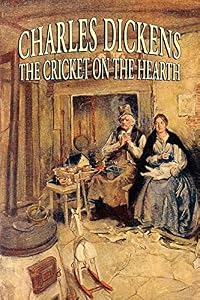
In the 1840s Charles Dickens wrote 5 short stories with strong social and moral messages. The Cricket on the Hearth: A Fairy Tale of Home, is the third of these stories. Following the home life of John Peerybingle, the story introduces the many people in John's family and life along with a cricket that acts as the guardian angel of the family. Like its predecessors, this story also contains heavy social and moral implications. However it differs from A Christmas Carol and The Chimes, in that show more its main theme focuses on actions that affect the family rather than action affecting society as a whole. show lessTags
Recommendations













Member Reviews
In his third Christmas novella, Dickens moves away from the moral instruction of a Christmas Carol and the strong (too strong, in my opinion) social commentary of The Chimes into a pleasant domestic drama.
Mr. and Mrs. Peerybingle have a happy home and a young baby, looked after by their comic nursemaid Tilly Slowboy. John is much older than his wife of one year, Dot, but they have a sweet and loving relationship, accompanied by the happy sound of a cricket on their hearth. Their neighbor, the Scroogey Tackleton (who everyone calls "Gruff and Tackleton" after his toy shop, which includes the name of his dead partner) is also looking to marry a much younger woman, Dot's school chum May, and he enlists John and Dot to help convince May show more that this is a good idea (May's mother is already sold on the idea because of Tackleton's money).
They gather at the home of Tackleton's poorly-treated toymaker, Caleb, and his blind daughter Bertha for a Sunday dinner, and things go awry when a strange old man who hitched a ride on John Peerbingle's cart joins the group. Tackleton sees only the bad in everything (and swears that he always smashes any crickets on HIS hearth!) and sows seeds of doubt in John's mind about Dot's faithfulness. After a long night wrestling with his feelings and being swayed by that sweet cricket and his fairies, John faces the new day with a clear mind. In the end, Dot explains everything, things turn out quite well, and even old Gruff and Tackleton sees the error of his ways. There is a big happy dance and things seem wonderful until we hit the last paragraph: "But what is this! Even as I listen to them, blithely, and turn towards Dot, for one last glimpse of a little figure very pleasant to me, she and the rest have vanished into air, and I am left alone. A Cricket sings upon the Hearth; a broken child’s-toy lies upon the ground; and nothing else remains."
Dickens! You rascal! Despite his attempt at a downer of an ending, this is a fun and engaging read. Sentimental, but perked up with humor and love for his characters, even their sweet dog. It is easy to see why this was a huge hit in its day and spawned multiple stage versions -- it has a romping Shakespearean comedy feel to it with disguised lovers, misunderstandings, and everything being put right by the end. Highly recommended for any Dickens / Victorian story lovers. show less
Mr. and Mrs. Peerybingle have a happy home and a young baby, looked after by their comic nursemaid Tilly Slowboy. John is much older than his wife of one year, Dot, but they have a sweet and loving relationship, accompanied by the happy sound of a cricket on their hearth. Their neighbor, the Scroogey Tackleton (who everyone calls "Gruff and Tackleton" after his toy shop, which includes the name of his dead partner) is also looking to marry a much younger woman, Dot's school chum May, and he enlists John and Dot to help convince May show more that this is a good idea (May's mother is already sold on the idea because of Tackleton's money).
They gather at the home of Tackleton's poorly-treated toymaker, Caleb, and his blind daughter Bertha for a Sunday dinner, and things go awry when a strange old man who hitched a ride on John Peerbingle's cart joins the group. Tackleton sees only the bad in everything (and swears that he always smashes any crickets on HIS hearth!) and sows seeds of doubt in John's mind about Dot's faithfulness. After a long night wrestling with his feelings and being swayed by that sweet cricket and his fairies, John faces the new day with a clear mind. In the end, Dot explains everything, things turn out quite well, and even old Gruff and Tackleton sees the error of his ways. There is a big happy dance and things seem wonderful until we hit the last paragraph: "But what is this! Even as I listen to them, blithely, and turn towards Dot, for one last glimpse of a little figure very pleasant to me, she and the rest have vanished into air, and I am left alone. A Cricket sings upon the Hearth; a broken child’s-toy lies upon the ground; and nothing else remains."
Dickens! You rascal! Despite his attempt at a downer of an ending, this is a fun and engaging read. Sentimental, but perked up with humor and love for his characters, even their sweet dog. It is easy to see why this was a huge hit in its day and spawned multiple stage versions -- it has a romping Shakespearean comedy feel to it with disguised lovers, misunderstandings, and everything being put right by the end. Highly recommended for any Dickens / Victorian story lovers. show less
When all is well in John and Dot Peerybingle's happy home, the cricket chirps away. When something's amiss, the cricket goes silent. Now this sudden silence in the Peerybingles' lives signals a staggering turn of events coming to them and to a few of their neighbors in The Cricket on the Hearth by author Charles Dickens.
Well! I realize this classic novella has been treated as a Christmas tale since its original publication. While the story itself doesn't really have anything to do with Christmas, I ate up this warm and whimsical Fairy Tale of Home as I would a holiday read.
It's clever and fussy in style, abundantly old-fashioned, and peppered with caricatural characters. There's a jaunty bounce to much of it (for instance, is not the show more surname "Peerybingle" as jolly and over-the-top as "Fezziwig," that jolly good surname in A Christmas Carol?) and the humor is plenty chuckle-worthy.
It took some time before I caught on to the plot, but I was all right with waiting—what with a personified kettle and the adorable Boxer bounding and barking about and all. But I became more interested as the plot really kicked in, along with the fantastical/magical aspects of this homey story that speaks on family and friends, truth and trust.
Oh, it isn't on the same level as the renowned Carol, but this tale is worth a read for fans of Dickens. show less
Well! I realize this classic novella has been treated as a Christmas tale since its original publication. While the story itself doesn't really have anything to do with Christmas, I ate up this warm and whimsical Fairy Tale of Home as I would a holiday read.
It's clever and fussy in style, abundantly old-fashioned, and peppered with caricatural characters. There's a jaunty bounce to much of it (for instance, is not the show more surname "Peerybingle" as jolly and over-the-top as "Fezziwig," that jolly good surname in A Christmas Carol?) and the humor is plenty chuckle-worthy.
It took some time before I caught on to the plot, but I was all right with waiting—what with a personified kettle and the adorable Boxer bounding and barking about and all. But I became more interested as the plot really kicked in, along with the fantastical/magical aspects of this homey story that speaks on family and friends, truth and trust.
Oh, it isn't on the same level as the renowned Carol, but this tale is worth a read for fans of Dickens. show less
Audible.com distributed a free audio version by the peerless reader, Jim Dale, as a Christmas gift. This is a wonderful, classic-Dickens novella. It offers great characterizations, some romantic peril triumphantly averted, and a well-wrought literary conceit in the form of the cricket. As for the stilted, rigid notion of male/female relations and roles -- well, it was the nineteenth century after all. Dickens was a great genius / craftsman, though not one able to rise above his times in this regard.
Probably more of a 2.5 stars, but I have to let it sit a bit…
This is Dickens’ third Christmas novella, published December 1845 and just as saccharine, homey, and Dickensian as you can imagine.
It’s a decent story, and fascinating when you think about how popular this was for its time. It serves it purpose well: it’s a delightful and heartwarming story to read over the Christmas days with your family by the fire, but like any sweet, you can only handle a little bit at a time.
The Wikipedia page for this novel has a sentence on how Lenin walked out of a performance because of how maudlin it was. Hilarious.
This is Dickens’ third Christmas novella, published December 1845 and just as saccharine, homey, and Dickensian as you can imagine.
It’s a decent story, and fascinating when you think about how popular this was for its time. It serves it purpose well: it’s a delightful and heartwarming story to read over the Christmas days with your family by the fire, but like any sweet, you can only handle a little bit at a time.
The Wikipedia page for this novel has a sentence on how Lenin walked out of a performance because of how maudlin it was. Hilarious.
What could project Gutenberg be thinking to put that constipated cricket cover on this book. 3 old men, 3 young women, one married to one of old men, one the daughter, one the fiance. This depiction of domesticity in a May-October relationship shadowed by the obvious blight in the coming May-December marriage is really not of our time, and not to my taste.
This was Charles Dickens's third Christmas book, published in 1845. I have re-read all of them in fairly recent years and re-evaluated them, finding more than I had done previously in them. I am fairly sure this one is my least favourite of the five, but I still found worth in it: it is very amusing, with the sort of humorous and rather pathetic (in the original sense) characters that Dickens does so well, and the great majority of other authors cannot. I particularly like the toymaker Caleb Plummer and his blind daughter Bertha. The Carrier and Dot I also liked. The villain of the piece Tackleton is a comic one and experiences his Scrooge-like redemption in a much more trivial way in the end.
The third of Mr Dickens' Christmas Books and much less gloomy than The Chimes. A gentle story about marriage, love and fidelity; Dickens left social criticism to one side for this one. He wanted The Cricket to be '... a vein of glowing, hearty, generous, mirthful, beaming references in everything to Home, and Fireside.'
It's Christmas and John Peerybingle has been married to his much younger wife Dot, for almost a year when he is led to believe by the grisly toymaker, Mr Tackleton, that she is having an affair. Tackleton himself is due to be married to another younger woman and the toymaker's assistant, Caleb Plummer, realises that by pretending to his blind daughter that Tackleton has been generous and loving to them their whole lives show more (when of course he has been the exact opposite) that Caleb has caused his daughter to fall in love with Tackleton and she is distraught that Tackleton is getting married to someone else.
But the cricket on the hearth sings to Peerybingle and helps him to remember the love he has for his young wife and there is almost a fairy tale happy ending with Tackleton's reform being so rapid as to be slightly startling. As usual for Dickens, his characterisations are brilliant and even if the rapid reform of Tackleton is a little too rapid to be truly realistic, the Christmas Books were intended to be fables rather than gritty, realistic dramas and the ending is truly heartwarming. show less
It's Christmas and John Peerybingle has been married to his much younger wife Dot, for almost a year when he is led to believe by the grisly toymaker, Mr Tackleton, that she is having an affair. Tackleton himself is due to be married to another younger woman and the toymaker's assistant, Caleb Plummer, realises that by pretending to his blind daughter that Tackleton has been generous and loving to them their whole lives show more (when of course he has been the exact opposite) that Caleb has caused his daughter to fall in love with Tackleton and she is distraught that Tackleton is getting married to someone else.
But the cricket on the hearth sings to Peerybingle and helps him to remember the love he has for his young wife and there is almost a fairy tale happy ending with Tackleton's reform being so rapid as to be slightly startling. As usual for Dickens, his characterisations are brilliant and even if the rapid reform of Tackleton is a little too rapid to be truly realistic, the Christmas Books were intended to be fables rather than gritty, realistic dramas and the ending is truly heartwarming. show less
Members
- Recently Added By
Lists

Christmas Books
370 works; 40 members

Books Read in 2017
4,249 works; 130 members

Ambleside Books
459 works; 18 members

CCE 1000 Good Books List
1,033 works; 12 members

Books Read in 2013
1,629 works; 51 members

Favorite Fairy Tales
269 works; 103 members
Author Information

2,578+ Works 313,139 Members
Charles Dickens, perhaps the best British novelist of the Victorian era, was born in Portsmouth, Hampshire, England on February 7, 1812. His happy early childhood was interrupted when his father was sent to debtors' prison, and young Dickens had to go to work in a factory at age twelve. Later, he took jobs as an office boy and journalist before show more publishing essays and stories in the 1830s. His first novel, The Pickwick Papers, made him a famous and popular author at the age of twenty-five. Subsequent works were published serially in periodicals and cemented his reputation as a master of colorful characterization, and as a harsh critic of social evils and corrupt institutions. His many books include Oliver Twist, David Copperfield, Bleak House, Great Expectations, Little Dorrit, A Christmas Carol, and A Tale of Two Cities. Dickens married Catherine Hogarth in 1836, and the couple had nine children before separating in 1858 when he began a long affair with Ellen Ternan, a young actress. Despite the scandal, Dickens remained a public figure, appearing often to read his fiction. He died in 1870, leaving his final novel, The Mystery of Edwin Drood, unfinished. (Bowker Author Biography) show less
Some Editions
Awards and Honors
Series

Belongs to Publisher Series
Centopaginemillelire (122)
Work Relationships
Is contained in
Has the adaptation
Is abridged in
Common Knowledge
- Canonical title
- The Cricket on the Hearth [novella]
- Original title
- The Cricket on the Hearth: A Fairy Tale of Home
- Alternate titles*
- Kotisirkka
- Original publication date
- 1845
- People/Characters
- John Peerybingle; Mary Peerybingle ("Dot"); Caleb Plummer; Edward Plummer; Bertha Plummer; Tackleton (show all 10); Mrs. Fielding; May Fielding; Tilly Slowboy; Cricket on the Hearth
- Important places
- London, England, UK; England, UK
- Important events
- Christmas; Victorian Era; 19th century
- Dedication
- To Lord Jeffrey this little story is inscribed with the affection and attachment of his friend the author.
- First words
- "The kettle began it!
- Quotations
- "To find a cricket on the hearth is the luckiest thing of all."
- Last words
- (Click to show. Warning: May contain spoilers.)"A cricket sings upon the hearth; a broken child's-toy lies upon the ground; and nothing else remains."
- Original language
- English
- Disambiguation notice
- This edition contains The Cricket on the Hearth only. Please do not combine with editions which contain The Cricket on the Hearth and other Christmas stories by Dickens.
*Some information comes from Common Knowledge in other languages. Click "Edit" for more information.
Classifications
Statistics
- Members
- 1,016
- Popularity
- 25,442
- Reviews
- 45
- Rating
- (3.30)
- Languages
- 12 — Catalan, Czech, Dutch, English, Finnish, French, German, Italian, Polish, Russian, Serbian, Spanish
- Media
- Paper, Audiobook, Ebook
- ISBNs
- 171
- ASINs
- 76