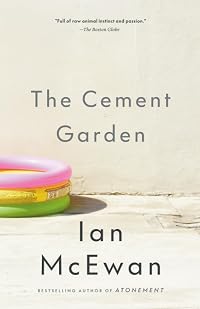
The Cement Garden
by Ian McEwan
On This Page
Description
Ian McEwan is known to skirt the edge with his writing; the fringes of society, to test the limits of what we can handle perhaps in our worlds as we bring his writing home with us and allow a whole new being to enter. So it is with The Cement Garden, the story of dying family who live in a dying part of the city. The father of four children decides, in an effort to make his garden easier to control, to pave it over. In the process, he has a heart attack and dies, leaving the cement garden show more unfinished and the children to the care of their mother. Soon after, the mother too dies and the children, fearful of being separated by social services, decide to cover up their parents' deaths: they bury their mother in the cement garden. ll of the children are free thinking independent-minded teenagers. The story is told from the point of view of Jack, one of the sons, the narrator who is entering adolescence with all of its curiosity and appetites that he must contend with (along with the sure confusion of what the children have done). Julie, the eldest, is almost a grown woman. Sue is rather bookish and observes all that goes on around her. And Tom is the youngest and the baby of the lot. The children seem to manage in this perverse setting rather well until Julie brings home a boyfriend who threatens their secret by asking too many questions (like what is buried beneath the cement pile, etc), surely threatening the status quo (however morbid) that the children have come to accept as _x201C_normal_x201D_ and as _x201C_home_x201D_. We understand through McEwan that home is not to be defined by anyone else but it is, instead, what you know and have known that makes you feel safe, even if it is rather dangerous and macabre. show lessTags
Recommendations
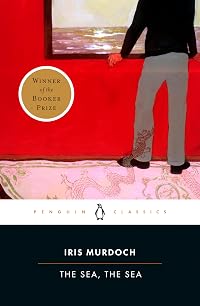
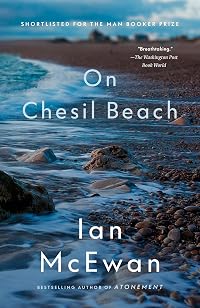
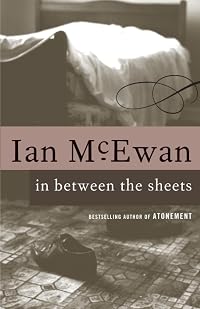
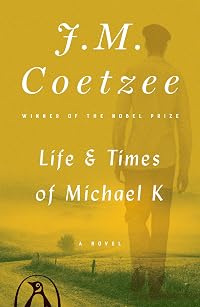


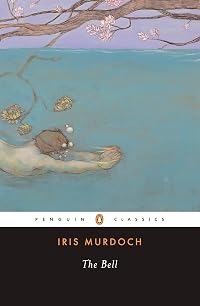
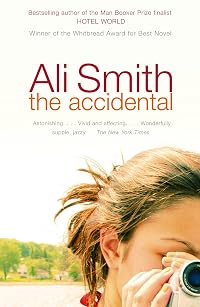
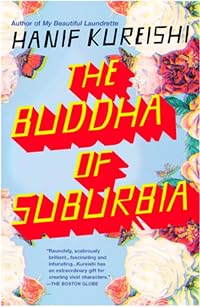
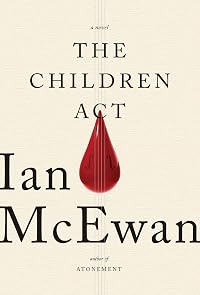
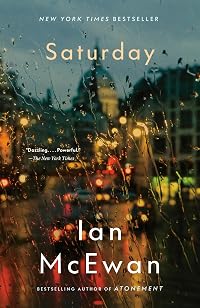
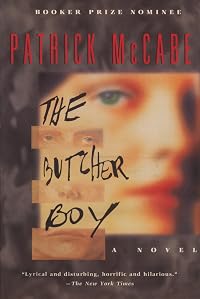
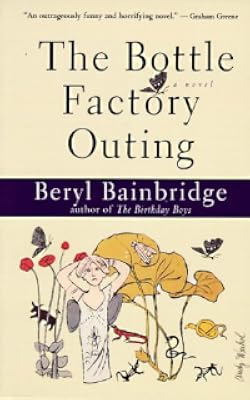

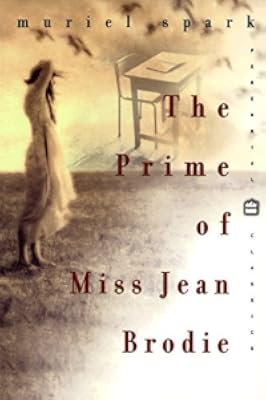
Member Recommendations
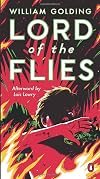
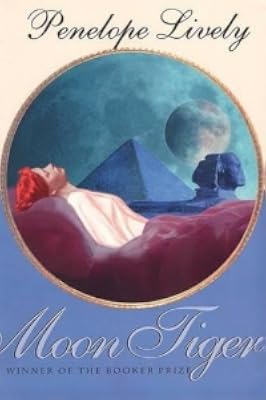
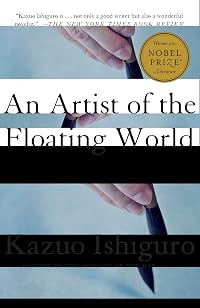
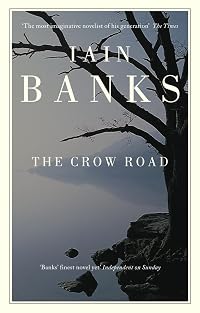
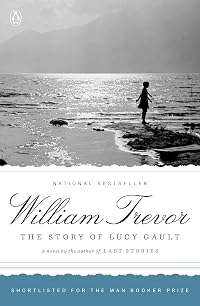
KayCliff Both books show children suddenly left without controllers.
71

anonymous user Another story of a disintegrating family with incestuous overtones.

FemmeNoiresque The Cement Garden follows the same basic plot as Our Mother's House, with situations (children communing w/ hidden mother, a charming rogue male enters their lives & entrances one of the sisters, the neglected younger children suffer subverted into Ian McEwan's style. Our Mother's House is of a more heightened and gothic style. Like The Cement Garden, Our Mother's House was adapted into an underrated and unusual film with Dirk Bogarde, Pamela Franklin, Yootha Joyce and babies Phoebe Nicholls and Mark Lester.
Also recommended by SomeGuyInVirginia

anonymous user Kinderen, alleen in huis, nemen actie op een vergelijkbare manier

SomeGuyInVirginia Orphans alone in a house.
SomeGuyInVirginia Orphans home alone.

SomeGuyInVirginia Orphans home alone.
Member Reviews
Pop quiz: you're a kid with three siblings whose Dad is already dead and now Mum has kicked the bucket as well - what do you do? Ian McEwan's answer to this morbid question reads like a more literate version of Flowers In The Attic, complete with incest and cross-dressing. The book is dark, grotty and mercifully brief. I'm not sure I'd want to meet the person who would call McEwan's debut his best work.
McEwan's first novel, published when he was only 30. (It was preceded by an even more shocking collection of short stories, "First Love, Last Rights", https://www.goodreads.com/review/show/31647778.)
A profoundly disturbing, but very well written book. Had I realised the true nature of it, I doubt I would have read it, and somehow the fact it is told in such an unjudgemental way almost makes it worse.
"I did not kill my father, but I sometimes think I helped him on his way", is the opening sentence. It is set in a hot summer in late '70s England. Four children live a rather isolated life in a very insular and not entirely happy family. Their father dies, and not long after, so does their mother (this much is mentioned in the blurb), show more leaving them to fend for themselves and each other. Tom is 5 or 6, Sue 12, Jack (the narrator) turns 15 and Julie about 16 or 17.
Bereaved, fearful, lonely, unprepared, bored (school holidays), directionless, coupled with puberty and sibling squabbles. Each tries different coping strategies, none of which really work: shy Julie (previously with a reputation for "disruptive, intimidating quietness") takes charge, Sue reads and also writes a diary, Tom regresses (a cot delivers "an enveloping pleasure in being tenderly imprisoned"), and Jack... retreats and masturbates. But those behaviours are trivial in comparison to other actions.
They lose sense of time, self and not just right and wrong, but what the rest of the world would judge as right and wrong: "Nor could I think whether what we had done was an ordinary thing to do, understandable even if it had been a mistake, or something so strange that if it was ever found out it would be the headline of every newspaper in the country... every thought I had dissolved into nothing."
I found the story gripping and oddly credible, and yet I was appalled by it too - a little like Lolita. show less
A profoundly disturbing, but very well written book. Had I realised the true nature of it, I doubt I would have read it, and somehow the fact it is told in such an unjudgemental way almost makes it worse.
"I did not kill my father, but I sometimes think I helped him on his way", is the opening sentence. It is set in a hot summer in late '70s England. Four children live a rather isolated life in a very insular and not entirely happy family. Their father dies, and not long after, so does their mother (this much is mentioned in the blurb), show more leaving them to fend for themselves and each other. Tom is 5 or 6, Sue 12, Jack (the narrator) turns 15 and Julie about 16 or 17.
Bereaved, fearful, lonely, unprepared, bored (school holidays), directionless, coupled with puberty and sibling squabbles. Each tries different coping strategies, none of which really work: shy Julie (previously with a reputation for "disruptive, intimidating quietness") takes charge, Sue reads and also writes a diary, Tom regresses (a cot delivers "an enveloping pleasure in being tenderly imprisoned"), and Jack... retreats and masturbates. But those behaviours are trivial in comparison to other actions.
They lose sense of time, self and not just right and wrong, but what the rest of the world would judge as right and wrong: "Nor could I think whether what we had done was an ordinary thing to do, understandable even if it had been a mistake, or something so strange that if it was ever found out it would be the headline of every newspaper in the country... every thought I had dissolved into nothing."
I found the story gripping and oddly credible, and yet I was appalled by it too - a little like Lolita. show less
I looked at this book as a bit of a curiosity. I'd heard of it mainly from Charlotte Gainsbourg's having starred in the film adaptation and also as one of the earlier novels of Ian Mcewan. I read it in one sitting (in terms of length it feels more like a novella than a full fledged novel, but that's not to its detriment) after completing a final for my master's program and found its macabre darkness a nice leveling out from the incredible positiveness I had been feeling from the class (yes, such things in my mind need to be equalized).
In terms of plot it's very basic and couched very comfortably in the gothic and the bizarre. Almost Faulknerian, it begins with incest and goes from there. Death, grime, psychological and emotional unease show more manifesting in mood swings and ambiguous gender confusion, and a superficial nihilism hiding just behind the entropy and decay of this collapsing family all add to the proceedings making it a masterful portrait of declination and eroding misery.
I'd say there was a dark kind of beauty to the text but there really isn't. This is an unabashedly gross and lurid story that, though not quite reveling in its grossness and taboo shattering it's at ease enough with it to treat it in an almost flip manner. For many as I understand it this created an even more acute sense of unease but for me, really, after reading the likes of Faulkner, Ellis, Cooper, I was honestly taken in and felt I was made a witness to the fascinatingly depraved and filthily dark corner of Mcewan's words. There's no 'condoning' or 'condemning' here but rather a frank description of the kinds of things many if not most would prefer to pretend don't exist.
If this were just poorly written schlock, exploitative and lurid garbage, it wouldn't have received four stars from me (plus I'd be wondering how the hell a renowned writer like Mcewan would write something like that) but it did and there's a simple reason. Mcewan, based solely on this book (this is my first sampling his literature and I very much look forward to his later works) seems to me one of the greatest prose stylists in the English canon. I mean, god damn, his word choice and power of description (filling out details with never a wrong word choice) is second only to Phillip Roth...even possessing a coolness and level of control that Mr. Roth lacks (though, again, not to the latter's detriment, just a bit of difference).
So, if you can surmount the content, read this based on the verbiage and the purity of its prose...made somehow purer when juxtaposed with the macabre decay described so elegantly. show less
In terms of plot it's very basic and couched very comfortably in the gothic and the bizarre. Almost Faulknerian, it begins with incest and goes from there. Death, grime, psychological and emotional unease show more manifesting in mood swings and ambiguous gender confusion, and a superficial nihilism hiding just behind the entropy and decay of this collapsing family all add to the proceedings making it a masterful portrait of declination and eroding misery.
I'd say there was a dark kind of beauty to the text but there really isn't. This is an unabashedly gross and lurid story that, though not quite reveling in its grossness and taboo shattering it's at ease enough with it to treat it in an almost flip manner. For many as I understand it this created an even more acute sense of unease but for me, really, after reading the likes of Faulkner, Ellis, Cooper, I was honestly taken in and felt I was made a witness to the fascinatingly depraved and filthily dark corner of Mcewan's words. There's no 'condoning' or 'condemning' here but rather a frank description of the kinds of things many if not most would prefer to pretend don't exist.
If this were just poorly written schlock, exploitative and lurid garbage, it wouldn't have received four stars from me (plus I'd be wondering how the hell a renowned writer like Mcewan would write something like that) but it did and there's a simple reason. Mcewan, based solely on this book (this is my first sampling his literature and I very much look forward to his later works) seems to me one of the greatest prose stylists in the English canon. I mean, god damn, his word choice and power of description (filling out details with never a wrong word choice) is second only to Phillip Roth...even possessing a coolness and level of control that Mr. Roth lacks (though, again, not to the latter's detriment, just a bit of difference).
So, if you can surmount the content, read this based on the verbiage and the purity of its prose...made somehow purer when juxtaposed with the macabre decay described so elegantly. show less
The back cover of my paperback copy of this book features a quote from the Washington Post asserting this book has the "chilling impact of Lord of the Flies". This got my attention. Could McEwan go there? I had my doubts. Yes he is challenging, yes he goes to difficult places but Lord of the Flies goes to the darkest of places. It makes us question the goodness of man. That doesn't sound like McEwan. I was wrong.
Like Lord of the Flies, this one sneaks up on you. It doesn't undermine faith in man but it does make us question how does things can go awry. The focus here is more narrow, a family unit. In this case a father, a mother, an oldest daughter, a son, another daughter and a very young son. Importantly they have virtually no show more connections to the rest of the world other than the kids going to school. There is bleakness around them. Their neighborhood has deteriorated. The houses around them have been knocked down in preparation for a development which never develops. Closest to them are tower blocks which I believe is the British equivalent of what we in the U.S. would call public projects. Institutions of questionable value and likely deteriorating visibly. Hardly an ennobling environment.
The father is detached, authoritarian and often issuing edicts which his wife resists but he persists. He has had heart problems and is focused on surrounding the house with a cement ring and a garden area. In the process of building this he dies of a heart attack. Not much of a loss. His wife carries on and the kids are somewhat protective of her. She assigns them roles. They all need to take care of the youngest brother. The oldest daughter is made her deputy but she wants the oldest son to know he shares the role but while she lets her son know that's her expectation it's not clear she has explained that to the oldest daughter. Mother gets increasingly ill and the kids are left to take care of themselves. She prepares them to be ready to take care of themselves while she goes to the hospital but she dies in her sleep before she ever goes to the hospital.
How the kids react to this is central to this story. Earlier we had a hint of how they interact when the parents were away at a funeral. The older sister and brother played doctor with the younger daughter. Playing doctor seemed just to be a quite normal rite of passage but the sexual tension with the older siblings seemed to be just under the surface. But with their mother's death the kids seem to have a reasonable reaction to being parentless. They wondered who should they tell? They realized that authorities might split them up and even take the youngest away from them and put him in to foster care of some sort. If the kids were taken away what would happen to the house? If no one lived there they feared it would succumb to the fate of the rest of the abandoned structures in the neighborhood, even being burned to the ground. They decide it's too dangerous to tell anyone. Their mother had prepared them to rely on themselves and that's what they need to do to prevent things getting even worse. Sounds reasonable. Isn't that what you would want?
But the downsides quickly appear. What should be done with mother? The body begins to smell and locking her in her room does not address the real problem. They decide they have to bury her but if they do it outside people will see what's happening. They decide to bury her in a chest in the basement covered with the cement that father had purchased to make his garden. That buys some time, But no one takes responsibility for keeping everything clean. Personal hygiene suffers. Eventually that is addressed. The young boy wants to dress as a girl. Not that disturbing in today's world but it goes further. He wants to play dress up with his friend. Soon he wants to be babied and have the older sister act as his mother. The older brother wonders whether this was the young kid's idea or was the result of the eldest sister encouraging this.
What bursts this bubble is when an outsider enters this world. The oldest daughter attracts a young man. Somehow he learns about the secret in the basement. He wants to go along but he is uncomfortable with them not trusting him. Cracks appear and the basement begins to smell. He's ready to take a sledge hammer to the chest. But what sends him over the edge is when he catches the older daughter sexualizing her relationship with her brother, something she has denied him. The circus ends with him blowing the whistle. We never learn exactly how but it's clear the game is up. McEwan leaves it up to the reader to decide what happens next. Fascinating. show less
Like Lord of the Flies, this one sneaks up on you. It doesn't undermine faith in man but it does make us question how does things can go awry. The focus here is more narrow, a family unit. In this case a father, a mother, an oldest daughter, a son, another daughter and a very young son. Importantly they have virtually no show more connections to the rest of the world other than the kids going to school. There is bleakness around them. Their neighborhood has deteriorated. The houses around them have been knocked down in preparation for a development which never develops. Closest to them are tower blocks which I believe is the British equivalent of what we in the U.S. would call public projects. Institutions of questionable value and likely deteriorating visibly. Hardly an ennobling environment.
The father is detached, authoritarian and often issuing edicts which his wife resists but he persists. He has had heart problems and is focused on surrounding the house with a cement ring and a garden area. In the process of building this he dies of a heart attack. Not much of a loss. His wife carries on and the kids are somewhat protective of her. She assigns them roles. They all need to take care of the youngest brother. The oldest daughter is made her deputy but she wants the oldest son to know he shares the role but while she lets her son know that's her expectation it's not clear she has explained that to the oldest daughter. Mother gets increasingly ill and the kids are left to take care of themselves. She prepares them to be ready to take care of themselves while she goes to the hospital but she dies in her sleep before she ever goes to the hospital.
How the kids react to this is central to this story. Earlier we had a hint of how they interact when the parents were away at a funeral. The older sister and brother played doctor with the younger daughter. Playing doctor seemed just to be a quite normal rite of passage but the sexual tension with the older siblings seemed to be just under the surface. But with their mother's death the kids seem to have a reasonable reaction to being parentless. They wondered who should they tell? They realized that authorities might split them up and even take the youngest away from them and put him in to foster care of some sort. If the kids were taken away what would happen to the house? If no one lived there they feared it would succumb to the fate of the rest of the abandoned structures in the neighborhood, even being burned to the ground. They decide it's too dangerous to tell anyone. Their mother had prepared them to rely on themselves and that's what they need to do to prevent things getting even worse. Sounds reasonable. Isn't that what you would want?
But the downsides quickly appear. What should be done with mother? The body begins to smell and locking her in her room does not address the real problem. They decide they have to bury her but if they do it outside people will see what's happening. They decide to bury her in a chest in the basement covered with the cement that father had purchased to make his garden. That buys some time, But no one takes responsibility for keeping everything clean. Personal hygiene suffers. Eventually that is addressed. The young boy wants to dress as a girl. Not that disturbing in today's world but it goes further. He wants to play dress up with his friend. Soon he wants to be babied and have the older sister act as his mother. The older brother wonders whether this was the young kid's idea or was the result of the eldest sister encouraging this.
What bursts this bubble is when an outsider enters this world. The oldest daughter attracts a young man. Somehow he learns about the secret in the basement. He wants to go along but he is uncomfortable with them not trusting him. Cracks appear and the basement begins to smell. He's ready to take a sledge hammer to the chest. But what sends him over the edge is when he catches the older daughter sexualizing her relationship with her brother, something she has denied him. The circus ends with him blowing the whistle. We never learn exactly how but it's clear the game is up. McEwan leaves it up to the reader to decide what happens next. Fascinating. show less
The Psychological Meaning of Social Normalcy
The Cement Garden is the gripping story of a small family, artificially isolated from society, and struggling with events others would consider normal, and which the rest of us in society maintain strict rules. It is a well-crafted reflection on society and normalcy. It is technically well-written, poetic and confident in tone, a superb psychological portrait.
Four children, who previously lost their father, now tend their ailing mother, whom they will soon lose as well. Two boys and two girls (two young and two teenaged), they attend school as normal, but the family has always been isolated.
The mother hardly let them leave the house when she was alive, so they have no clue how to handle her show more body now that she's died, and take it to the basement. As a subplot, the older boy and girl explore sexuality with each other, in a candid scene, handled very deftly given its nature.
Suprisingly, we are not bothered by these activities as such. McEwan's psychological portraits are convincing, and his characters seem entirely normal. His writing skill is evident when one realizes the sympathy with which these four characters are drawn.
The novel's tension comes unexpectedly from a banal source: The older girl has a boyfriend, a conventional person, but McEwan has convinced us the family is normal, so to us, the boyfriend is an outsider. How will the boyfriend act? Will he discover the secret? If so, will he reveal it?
Will he become an insider, clean up the mess and help the four become legitimate, will he blackmail them, or will he tell society and let them be punished as normal? If the latter, will society punish them harshly?
At the end, one wonders how horrible the youth could really have been, even if they lived outside social norms. What is the line between innocently mistaken and socially unacceptable? The novel is an excellent exploration of this question. Inquisitive readers will be able judge for themselves.
P.S. One minor complaint: I have heard the movie omits the book's last paragraph, which I think was wise. The author might have withheld the explicit conclusion, forcing the reader to guess what might happen.
This does not detract from the book's quality in any way, nor the reader's ability to consider the matter on their own. I just think that, as a matter of style, it might have been left a bit unfinished. We're only talking about one paragraph, anyway. show less
The Cement Garden is the gripping story of a small family, artificially isolated from society, and struggling with events others would consider normal, and which the rest of us in society maintain strict rules. It is a well-crafted reflection on society and normalcy. It is technically well-written, poetic and confident in tone, a superb psychological portrait.
Four children, who previously lost their father, now tend their ailing mother, whom they will soon lose as well. Two boys and two girls (two young and two teenaged), they attend school as normal, but the family has always been isolated.
The mother hardly let them leave the house when she was alive, so they have no clue how to handle her show more body now that she's died, and take it to the basement. As a subplot, the older boy and girl explore sexuality with each other, in a candid scene, handled very deftly given its nature.
Suprisingly, we are not bothered by these activities as such. McEwan's psychological portraits are convincing, and his characters seem entirely normal. His writing skill is evident when one realizes the sympathy with which these four characters are drawn.
The novel's tension comes unexpectedly from a banal source: The older girl has a boyfriend, a conventional person, but McEwan has convinced us the family is normal, so to us, the boyfriend is an outsider. How will the boyfriend act? Will he discover the secret? If so, will he reveal it?
Will he become an insider, clean up the mess and help the four become legitimate, will he blackmail them, or will he tell society and let them be punished as normal? If the latter, will society punish them harshly?
At the end, one wonders how horrible the youth could really have been, even if they lived outside social norms. What is the line between innocently mistaken and socially unacceptable? The novel is an excellent exploration of this question. Inquisitive readers will be able judge for themselves.
P.S. One minor complaint: I have heard the movie omits the book's last paragraph, which I think was wise. The author might have withheld the explicit conclusion, forcing the reader to guess what might happen.
This does not detract from the book's quality in any way, nor the reader's ability to consider the matter on their own. I just think that, as a matter of style, it might have been left a bit unfinished. We're only talking about one paragraph, anyway. show less
This is the story of a family with four children in which the narrator is a boy with an older sister and two younger siblings. The father, who uses concrete to fashion a garden around their rundown and isolated home, suddenly dies of a heart attack. The mom remains in bed most of the time because she is very sickly. After the mother dies following a prolonged illness, and the four children make a startling decision.
What a wonderful and bizarre novel! It reminds me of other movies and books I have seen in which children are left to fend for themselves (e.g. The Glass Castle by Jeanette Walls, “Nobody Knows” directed by Kore-eda Hirokazu). The narrator does a great job in showing how children adapt to their own situations with show more flexibility unknown in adults. They simply do what they have to do. I’d read Enduring Love by McEwan previously and am happy that this author is continuing to write in the same vein of strange human behavior. Both books make for fascinating reading. show less
What a wonderful and bizarre novel! It reminds me of other movies and books I have seen in which children are left to fend for themselves (e.g. The Glass Castle by Jeanette Walls, “Nobody Knows” directed by Kore-eda Hirokazu). The narrator does a great job in showing how children adapt to their own situations with show more flexibility unknown in adults. They simply do what they have to do. I’d read Enduring Love by McEwan previously and am happy that this author is continuing to write in the same vein of strange human behavior. Both books make for fascinating reading. show less
This packs a lot into its short length. Its pretty dark and disturbing, but also weirdly all seems inevitable. The objectively horrible things that happen are dealt with in such a matter of fact way that you sympathise with the children. Its really powerfully written, but understated.
Members
- Recently Added By
Published Reviews
ThingScore 50
The Cement Garden is in many ways a shocking book, morbid, full of repellent imagery—and irresistibly readable. It is also the work of a writer in full control of his materials.
added by jburlinson
Lists

1001 Books You Must Read Before You Die
1,448 works; 1,134 members

1970s
657 works; 23 members

Dark Books for Winter Reading
71 works; 11 members

Most Disturbing Books
124 works; 27 members

TML 200 Best Books 1950-1999
202 works; 10 members
Stephen King's 'Danse Macabre' reading list
111 works; 25 members

Dysfunctional Families
133 works; 7 members

1,001 BYMRBYD Concensus
723 works; 27 members

Young and dangerous!
8 works; 1 member

Books Read in 2015
3,299 works; 126 members
First Novels
373 works; 17 members
Books Read in 2016
4,666 works; 197 members

Enfants sans
14 works; 1 member

Best Horror Mega-List
342 works; 6 members
Stephen King Danse Macabre Appendix Starred List
53 works; 1 member
Stephen King's Danse Macabre Full Appendix List
110 works; 2 members

Books Read in 2021
5,361 works; 114 members

Books We Discovered On LibraryThing
530 works; 130 members
Stephen King's 'On Writing' reading list
95 works; 4 members

Jones and Newman's Horror: Another 100 Best Books
100 works; 7 members

The Modern Library (The Two Hundred Best Novels....
202 works; 1 member
Author Information

77+ Works 100,062 Members
Ian McEwan was born in Aldershot, England on June 21, 1948. He received a B.A. in English Literature from the University of Sussex and an M.A. in English Literature from the University of East Anglia. He writes novels, plays, and collections of short stories including In Between the Sheets, The Cement Garden, The Comfort of Strangers, The show more Innocent, Black Dogs, The Daydreamer, Enduring Love, Sweet Tooth, The Children Act and Nutshell. He has won numerous awards including the 1976 Somerset Maugham Award for First Love, Last Rites; the 1987 Whitbread Novel Award and the 1993 Prix Fémina Etranger for The Child in Time; the 1998 Booker Prize for Fiction for Amserdam; the 2002 W. H. Smith Literary Award, the 2003 National Book Critics' Circle Fiction Award, the 2003 Los Angeles Times Prize for Fiction, and the 2004 Santiago Prize for the European Novel for Atonement; and the 2006 James Tait Black Memorial Prize for Saturday. (Bowker Author Biography) show less
Some Editions
Awards and Honors
Notable Lists
Series
Belongs to Publisher Series
ET Scrittori [Einaudi] (211)
Rainbow essentials (30)
Andanzas (4)
Points Point-Virgule (V6)
Blackbirds (1993.2)
Rainbow pocketboeken (137)
detebe (20648)
Otavan kirjasto (205)
Reclams Universal-Bibliothek (9069)
Work Relationships
Common Knowledge
- Canonical title
- The Cement Garden
- Original title
- The Cement Garden
- Original publication date
- 1978
- People/Characters
- Jack; Julie; Sue; Tom; Mother; Father (show all 7); Derek
- Important places
- England, UK
- Related movies
- The Cement Garden (1993 | IMDb)
- Dedication
- For Penny
- First words
- I did not kill my father, but I sometimes felt I had helped him on his way.
- Last words
- (Click to show. Warning: May contain spoilers.)'There!' she said, 'wasn't that a lovely sleep.'
- Blurbers
- Paulin, Tom; Fowles, John
- Original language
- English
Classifications
Statistics
- Members
- 3,900
- Popularity
- 4,053
- Reviews
- 109
- Rating
- (3.59)
- Languages
- 18 — Czech, Danish, Dutch, English, Estonian, Finnish, French, German, Italian, Norwegian (Bokmål), Polish, Romanian, Russian, Slovenian, Spanish, Swedish, Turkish, Portuguese (Portugal)
- Media
- Paper, Audiobook, Ebook
- ISBNs
- 78
- ASINs
- 19