On This Page
Description
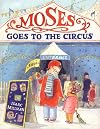
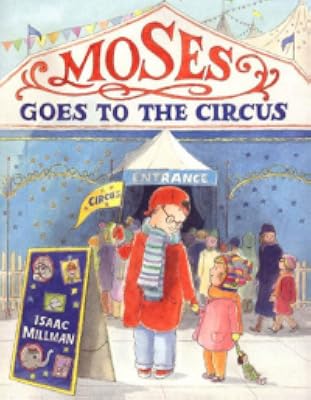
Moses, who is deaf, has a good time with his family at the circus, where they communicate using sign language. Includes illustrations of some of the signs they use.Tags
Recommendations

Member Reviews
I absolutely loved this book, for previously stated reasons (See Moses Goes to a Concert) concerning how well Millman portrays Deaf children and culture. This is one of four books that Millman wrote about Moses and in this story; Moses attends a circus with his family. He is Deaf, but his parents and his younger sister, Renee, are not. Each character is well developed, especially Moses. By reading the book, the text explains different components of Deaf culture that pertain to attending a circus, but also life in general. The illustrations are central in this book, just as they are in the other Moses books. On each page Moses is pictured in the bottom demonstrating a pertinent English word or phrase in American Sign Language (ASL). show more Also, at the end of the book Moses shows the signs for a few sentences, summarizing what he liked about the circus. The author also uses clear and concise language to accurately portray this story. In the background, even though they are at a circus in New York, sometimes other people are shown signing. It is a special addition of the circus for Deaf people, and many hearing people still attend. I just love how Millman really grasped everything to do with Deaf culture and how important some of these things are; yet so often can be overlooked. This book pushes readers to again take a different perspective towards people who they may initially think are handicap or have a disability. It is not the same in every physical difference, but this book encourages readers to just think about how they perceive certain people. I also really liked how Millman pointed out that not all members of the family are Deaf. This is important because sometimes people might think that a hearing individual will have various difficulties communicating with a Deaf person. But this is not the case. Renee is simultaneously learning ASL and English; Moses’ parents sign with him and I think it is important for people to see all perspectives. The main message of this book is that just because someone has different physical features, they can enjoy many facets of life. Also, it is important to note that Moses interacts with his hearing family in ASL. It is definitely possible to do so, although some think it is too hard. I just loved this book and I think that it is so important to give various perspectives on different things. show less
Love does not begin to describe how I felt about this book! The illustrations, the story, the sign language guide, all of it combined makes a beautiful children's book. Moses is deaf with hearing parents and little sister. They take a trip to the circus but not just any circus because it is specifically for those who are hard of hearing. An interpreter is there to tell what is going on and Moses is even able to take part in the circus. What I liked most about this book is that there were sign languages guides on every page to show readers how to say different things in sign language. A great book to show children that were are ways to communicate besides talking.
Moses and his family are going to the Big Apple Circus’ Circus of the Senses, a special circus for kids who are hearing or vision impaired. Moses is deaf, the rest of his family is not. But all of them, even his little sister Renee, who is just learning to talk, both in English and ASL, sign their way through a day filled with animals, performers and food. The inherent excitement of the circus makes for a visually exciting story and the appealing illustrations capitalize on this hearkening cozily back to an older New York. Insets show Moses signing simple phrases, so the reader can sign along. Now I know how to sign “Two dogs on a seesaw”!
Even libraries with good collections about sign language may have few or no books featuring show more characters who use ASL. As Brenda Jo Brueggerman writes in “The Coming out of Deaf Culture and American Sign Language: An Exploration into Visual Rhetoric and Literacy.”
“In large part what has kept deaf people from a strong sense of their own culture is the very "isolating" status of their unique visual language: until just recently ASL was not recognized as a "real" language by the hearing world. Now, however, ASL for the most part is considered a legitimate language, and now, subsequently, Deaf culture, Deaf communities, and deaf individuals everywhere share a new sense of worth as the hearing world grows increasingly aware of the not-so-silent Deaf minority.”
It is important that kids see themselves reflected in the books we read to them and share with them at school. It is also important that hearing children gain a more than superficial awareness of deafness.
Fortunately for librarians and teachers interested in teaching about American Sign Language, almost all kids love to learn signs. This could easily be used at story times with older children since it provides many opportunities to learn and practice signs. Often sign language is presented to kids with an explanation of who uses the language. But Deaf culture may be something new to kids, who can learn from this book that not everyone who signs is Deaf and that families with a Deaf member may all learn to sign. The frame of the Circus of the Senses could cause kids to think about why there would be a special circus for the sight or hearing impaired and how that might be different or necessary. Given that this title is of high quality and the lack of books with young Deaf protagonists this should be purchased widely by school and public libraries.
Brueggemann, Brenda Jo. “The Coming out of Deaf Culture and American Sign Language: An Exploration into Visual Rhetoric and Literacy.” Rhetoric Review, Vol. 13, No. 2 (Spring, 1995), pp. 409-420. Taylor & Francis, Ltd. Web. Mar 28, 2010.
Millman, Isaac. Moses Goes to the Circus. New York: Farrar Straus and Giroux, 2003. Print. show less
Even libraries with good collections about sign language may have few or no books featuring show more characters who use ASL. As Brenda Jo Brueggerman writes in “The Coming out of Deaf Culture and American Sign Language: An Exploration into Visual Rhetoric and Literacy.”
“In large part what has kept deaf people from a strong sense of their own culture is the very "isolating" status of their unique visual language: until just recently ASL was not recognized as a "real" language by the hearing world. Now, however, ASL for the most part is considered a legitimate language, and now, subsequently, Deaf culture, Deaf communities, and deaf individuals everywhere share a new sense of worth as the hearing world grows increasingly aware of the not-so-silent Deaf minority.”
It is important that kids see themselves reflected in the books we read to them and share with them at school. It is also important that hearing children gain a more than superficial awareness of deafness.
Fortunately for librarians and teachers interested in teaching about American Sign Language, almost all kids love to learn signs. This could easily be used at story times with older children since it provides many opportunities to learn and practice signs. Often sign language is presented to kids with an explanation of who uses the language. But Deaf culture may be something new to kids, who can learn from this book that not everyone who signs is Deaf and that families with a Deaf member may all learn to sign. The frame of the Circus of the Senses could cause kids to think about why there would be a special circus for the sight or hearing impaired and how that might be different or necessary. Given that this title is of high quality and the lack of books with young Deaf protagonists this should be purchased widely by school and public libraries.
Brueggemann, Brenda Jo. “The Coming out of Deaf Culture and American Sign Language: An Exploration into Visual Rhetoric and Literacy.” Rhetoric Review, Vol. 13, No. 2 (Spring, 1995), pp. 409-420. Taylor & Francis, Ltd. Web. Mar 28, 2010.
Millman, Isaac. Moses Goes to the Circus. New York: Farrar Straus and Giroux, 2003. Print. show less
I am a fan of the Moses series. In this book we see Moses and his family go to the sense's Circus, a circus for the visual and hearing impaired. I love this series because we don't see often children like Moses in our books. This book Portrays Moses as a smart, funny and friendly boy and his disability has nothing to do with who he is as a person.
I also love learning new wrds in ASL through this book
I also love learning new wrds in ASL through this book
Moses and his family are going to the circus. Before the show, Moses and his family sees many fake animals in a store window including a seal, bear, and giraffe. Since he is deaf, he uses sign language as a form of communication. His younger sister, Renee, even knows how to communicate with him in sign language. Moses needs an interpreter to translate what is going at the circus. At the circus, they see many great acts and he even gets to go on stage as a clown. I'd say that they all had a fun time at the circus. On almost every page there is something in sign language that refers to the text. This can teach students how to use sign language by just reading an interesting story. By reading this book, children get a look at what it is show more like to be deaf and how Moses deals with it. He can do ordinary things like going to the circus. I love reading books about Moses and I think that it accurately depicts what its like to be deaf. show less
Isaac Millman does it again in "Moses Goes to the Circus". Such a lovely book that revisits the theme of children with disabilities enjoying ordinary events. In this book we read about Moses enjoying a circus geared towards children with hearing deficiencies. This book, like the other "Moses goes to..." books has ASL on each page for children to learn signs as they read. I have enjoyed this series and loved sharing them with a classroom of children.
Moses Goes to the Circus is a story about a young boy who is deaf who goes to the circus. He tries to teach his sister certain words and watches the show while an interpreter speaks to them. He even gets to be a clown during the show!
This book is adorable and very good for teaching young children that people who are deaf can enjoy the same things that they do. It also provides a chance for children to learn easy sign language words and sentences.
This book is adorable and very good for teaching young children that people who are deaf can enjoy the same things that they do. It also provides a chance for children to learn easy sign language words and sentences.
Members
- Recently Added By
Author Information
7+ Works 900 Members
Series

Classifications
Statistics
- Members
- 84
- Popularity
- 381,653
- Reviews
- 17
- Rating
- (4.14)
- Languages
- English
- Media
- Paper
- ISBNs
- 2
- ASINs
- 1