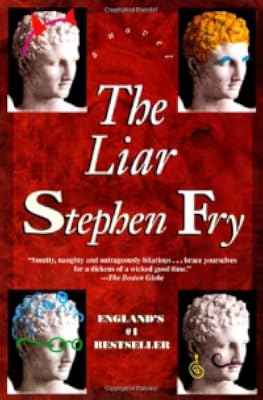
The Liar
by Stephen Fry
On This Page
Description
"Stephen Fry's breathtakingly outrageous debut novel is by turns eccentric, shocking, brilliantly comic and achingly romantic. Adrian Healey is magnificently unprepared for the long littleness of life; unprepared too for the afternoon in Salzburg when he will witness the savage murder of a Hungarian violinist; unprepared to learn about the Mendax device; unprepared for more murders and wholly unprepared for the truth. The Liar is a thrilling, sophisticated and laugh-out-loud hilarious show more novel from a brilliantly talented writer"-- show lessTags
Recommendations

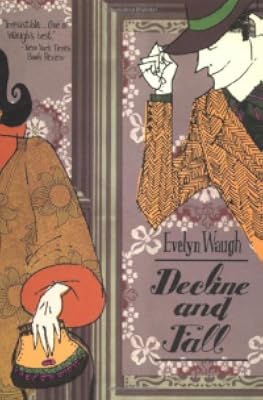



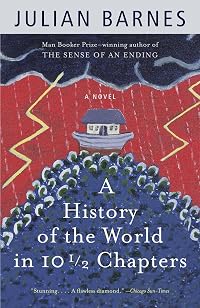
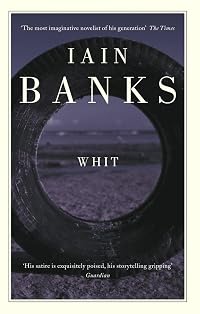
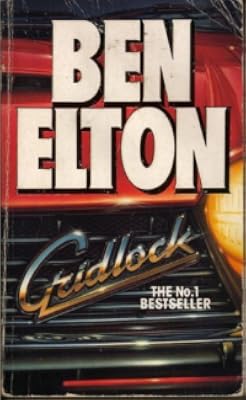
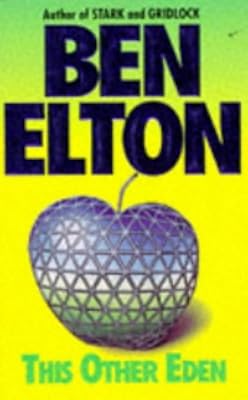
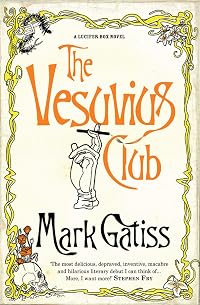
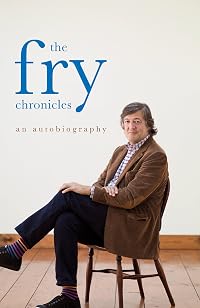
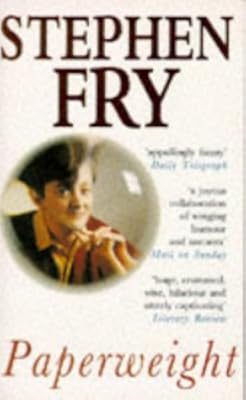
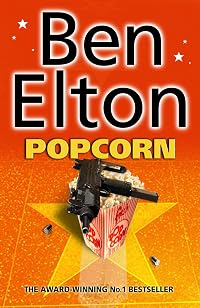
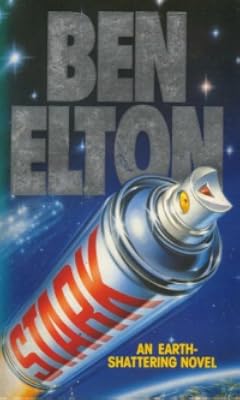
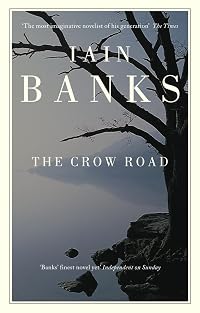
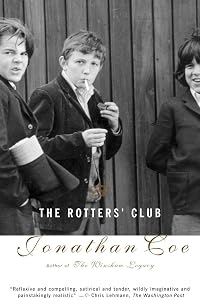
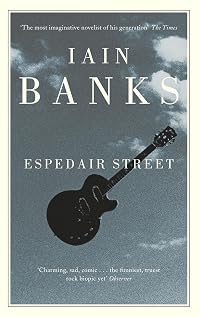
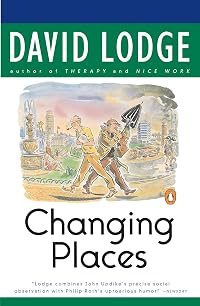
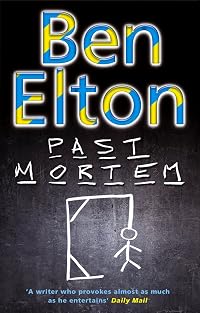
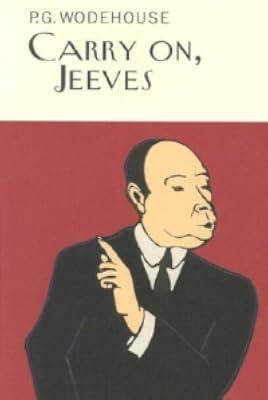

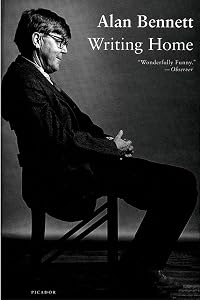
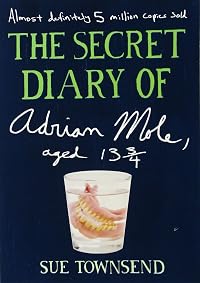
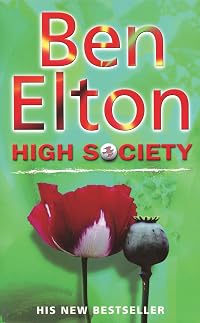
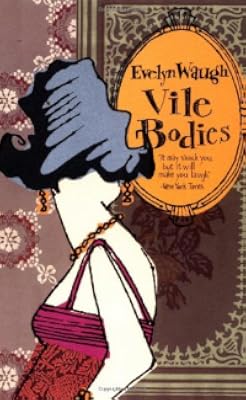

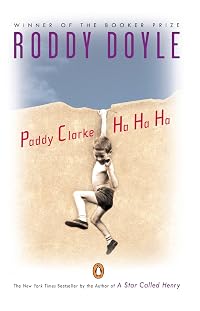
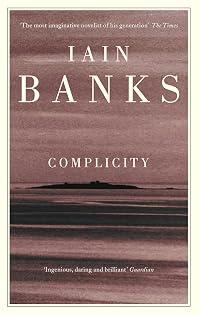
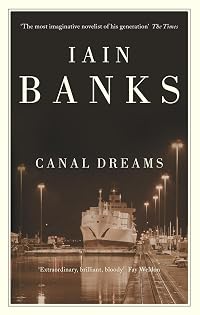
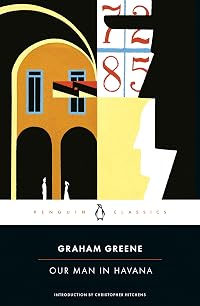
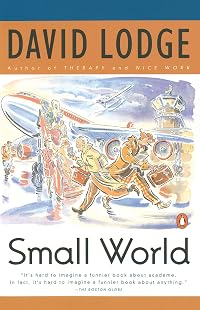


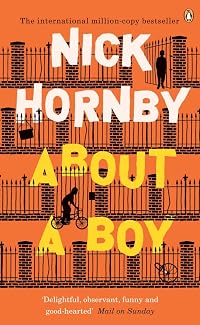
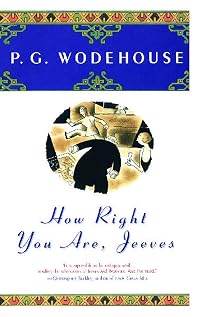
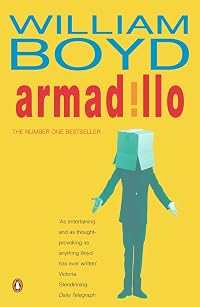
Member Recommendations
Member Reviews
Perhaps Stephen Fry, who wrote this novel 'The Liar', has unknowingly added a new literary genre that could be called wishful autobiography. Knowing a little bit about the author's background creates a very different experience with this book than if taken just at face value. We have here a novel describing the exploits and dandy adventures of a young English Oscar Wilde-incarnated prep school boy. Adrian, a persuasive and very intelligent student can not tell the truth, not even under great duress or pressure. This talent or perhaps handicap creates an assortment of entertaining situations in the school he attends and gets him into of course a lot of trouble, although not as much as you might expect. Then again he is a skillful liar show more and we're told the entire book is a lie. The Liar takes place in an environment most of us can't quite relate to. The halls of the privileged public schools of England have their own jargon, history and common understanding. It takes quite a bit of that knowledge to understand certain passages of the novel even though Fry takes care to explain. Throughout the work this internal language generates a distance where as a reader you get the sensation that you're always just missing the point. For example, you have to be quite well read to get some of the finer points of the interaction between Adrian and his chums. Frequently names of characters in Roman literature are used as stereotypes, which, works well, if you've read works like the Satyricon for example.
We can clearly hear Wilde's language and ideas combined with the events Evelyn Waugh might have conjured. At the same time Stephen Fry takes the piss out of the entire genre as well. He clearly shows the self absorbed narrow world of English private academia. However, this isn't just a pastiche novel, it isn't a copy or weak derivative. Through the familiar Victorian and Edwardian language we can clearly here Fry's own voice and one as clever as you might expect. In some parts and phrases we can even hear Chuck Palahniuk's voice.
It is rather strange however to see the means by which Fry evangelizes the gay persuasion. I don't mean that he tries to persuade anyone in converting but there is a definite sense of trying to normalize queerness (his word not mine). The way in which this is done in my view anyway is rather counterproductive. Instead of showing the elegance, the refined nature of most gay men, Fry shows and describes all those things we think they're up to in great detail. After having read Portnoy's Complaint it did not bother me too much but then again I can see how the novel can turn people away.
There is another interesting link to Portnoy's Complaint. Philip Roth who wrote Portnoy has always denied his book was autobiographical. Unlike Fry who I believe clearly admitted in various interviews that the materials for The Liar were snatched from his own experiences in the English public school system and other parts of his early life. Comparing Portnoy to the Liar becomes even more interesting when we look at how the protagonists in either novel address us, the reader. Whereas in Portnoy the author essentially screams at the reader about his problems, Fry hides behind his protagonist. A protagonist who we are told from the very first sentence will lie to us. The protagonist is arrested for possession of cocaine, but as we find out later that was all a lie. In reality Fry was arrested for possession of cocaine and sent to prison. Bits of knowledge like these add a completely new layer to the novel and a rather interesting one because we now have a novel in which we can ask: what exactly is an unreliable narrator when the narrator speaks of both the protagonist and the author? show less
We can clearly hear Wilde's language and ideas combined with the events Evelyn Waugh might have conjured. At the same time Stephen Fry takes the piss out of the entire genre as well. He clearly shows the self absorbed narrow world of English private academia. However, this isn't just a pastiche novel, it isn't a copy or weak derivative. Through the familiar Victorian and Edwardian language we can clearly here Fry's own voice and one as clever as you might expect. In some parts and phrases we can even hear Chuck Palahniuk's voice.
It is rather strange however to see the means by which Fry evangelizes the gay persuasion. I don't mean that he tries to persuade anyone in converting but there is a definite sense of trying to normalize queerness (his word not mine). The way in which this is done in my view anyway is rather counterproductive. Instead of showing the elegance, the refined nature of most gay men, Fry shows and describes all those things we think they're up to in great detail. After having read Portnoy's Complaint it did not bother me too much but then again I can see how the novel can turn people away.
There is another interesting link to Portnoy's Complaint. Philip Roth who wrote Portnoy has always denied his book was autobiographical. Unlike Fry who I believe clearly admitted in various interviews that the materials for The Liar were snatched from his own experiences in the English public school system and other parts of his early life. Comparing Portnoy to the Liar becomes even more interesting when we look at how the protagonists in either novel address us, the reader. Whereas in Portnoy the author essentially screams at the reader about his problems, Fry hides behind his protagonist. A protagonist who we are told from the very first sentence will lie to us. The protagonist is arrested for possession of cocaine, but as we find out later that was all a lie. In reality Fry was arrested for possession of cocaine and sent to prison. Bits of knowledge like these add a completely new layer to the novel and a rather interesting one because we now have a novel in which we can ask: what exactly is an unreliable narrator when the narrator speaks of both the protagonist and the author? show less
Entertaining language. Alternates between being a pedantic sort of clever, and brown humor obscene. Did not bother keeping up with the codenames in the italicized interludes but turns out it did not matter in the end because it was all an elaborate game. The chronology jumps around a bit, had to get used to that. Skipped the cricket sections without guilt. Basically it's not something you should trouble yourself about understanding completely, just let it wash over you. Flowerbuck the best joke in the book.
Of course this was witty and knee-slappingly funny and terribly pink and all the marvelous things that one would expect from the inimitable Stephen Fry, but ... well, I found something terribly affecting and sad about it as well, and went through much of it with a clenched heart. I have this problem with comedy writing sometimes of perhaps not being disaffected enough. Still, I loved the book.
A light parlour-game of a book: inconsequential and the extent to which you will enjoy it depends on your tolerance for that kind of thing. For my part, a large chunk of the book revolves around things which I have no interest in – public school, cricket and homosexuality – even if it is redeemed to some extent by two things I am interested in – brevity and wordplay. Fry can write, but the book is a strange one, with weird, meandering plots and characters who don't transcend their function. And a lot of it is misdirection (hence the 'Liar' of the title), meaning the reader's endeavour is often pointless. The whole thing makes sense at the end, but the end is a long time to wait when you don't like what's going on, or even know show more what is going on. show less
This is a very twisted story - make sure you are paying attention or you will have no idea what is going on. I loved it!
My first meeting with you only confirmed what I first suspected. You are a fraud, a charlatan and a shyster. My favourite kind of person, in fact.
"The Liar" follows Adrian Healey from public school to Cambridge (with some unfortunate digressions along the way). At Cambridge his slippery morals and deceitful nature bring him to the attention of philology professor Donald Trefusis, who drags him into some strange and possibly dangerous goings-on in Central Europe during the summer holidays. Stephen Fry's first novel is at least as exceedingly clever, witty and uproariously amusing as you would expect, given the author's show more reputation.
I first read this book back in 1992 when it first came out in paperback, and was glad to have an opportunity to re-read it. Strangely I remembered the spy story as taking up far more of the book than it actually did, although I had forgotten the way the characters in the spy story were referred to by their clothes rather than their names.
Adrian noticed that the permanent puddle in the passageway between King's and St Catharine's had iced over. Spring was having to make a fight of it. He wrapped Miroslav, his cashmere scarf, closer round him as he stepped out into the icy gale that blasted along King's Parade. They used to say that Cambridge was the first stopping place for the wind that swept down from the Urals: in the 1930s that was as true of the politics as the weather.
Standing at the bus stop on my way to work early in April, I happened to read this passage on a very appropriate morning. Shivering, I wished that I had a Miroslav of my own to snuggle round my neck, but unfortunately it was meant to be spring and my hat, gloves and scarf were all back in my chest of drawers. show less
My first meeting with you only confirmed what I first suspected. You are a fraud, a charlatan and a shyster. My favourite kind of person, in fact.
"The Liar" follows Adrian Healey from public school to Cambridge (with some unfortunate digressions along the way). At Cambridge his slippery morals and deceitful nature bring him to the attention of philology professor Donald Trefusis, who drags him into some strange and possibly dangerous goings-on in Central Europe during the summer holidays. Stephen Fry's first novel is at least as exceedingly clever, witty and uproariously amusing as you would expect, given the author's show more reputation.
I first read this book back in 1992 when it first came out in paperback, and was glad to have an opportunity to re-read it. Strangely I remembered the spy story as taking up far more of the book than it actually did, although I had forgotten the way the characters in the spy story were referred to by their clothes rather than their names.
Adrian noticed that the permanent puddle in the passageway between King's and St Catharine's had iced over. Spring was having to make a fight of it. He wrapped Miroslav, his cashmere scarf, closer round him as he stepped out into the icy gale that blasted along King's Parade. They used to say that Cambridge was the first stopping place for the wind that swept down from the Urals: in the 1930s that was as true of the politics as the weather.
Standing at the bus stop on my way to work early in April, I happened to read this passage on a very appropriate morning. Shivering, I wished that I had a Miroslav of my own to snuggle round my neck, but unfortunately it was meant to be spring and my hat, gloves and scarf were all back in my chest of drawers. show less
A rather confusing tale- short passages of mysterious spy stuff interspersed with the career of 'hero' Adrian Healey, as he makes his way (intelligent, witty and full of youithful lust for his fellow schoolboys) through boarding school and on to uni. But how much of the colourful account is even true?
Generally well-written and entertaining; the spy stuff (and the cricket scene) seemed to go on forever, but it did have a clever ending...
Generally well-written and entertaining; the spy stuff (and the cricket scene) seemed to go on forever, but it did have a clever ending...
Stephen Fry is one of my favorite writers/actors/presenters/people. There isn't much he's done professionally that I don't enjoy, and with regards to his books, I'm saving them so I can read a new one now and then. So, with my new resolve to read more books from my shelf (and stop buying so many new ones), it was time to read 'The Liar'.
The Liar is and follows Adrian, from his days in a public boarding school to his days at Cambridge and after. He has always seen himself as very different from everyone else, and while he portrays himself to others as being very confident and independent, inside he is extremely insecure and alone. He gets caught up in an espionage plot by his professor at Cambridge which leads to an exciting time during show more the summer holidays in Europe.
The story is told in chronological disorder, with chapters bouncing from Adrian's time at Cambridge back to public school and vice versa. The book is of course filled with Stephen Fry's wonderful language, and I can hear him reading it to me. He makes me love the English language. Like another reviewer, I can see the similarities between his biography 'Moab is my Washpot' and this story, which makes me wonder if this story is his wishful thinking about his own life's history. It made the book a bit less enjoyable to me, because that was always nagging me. The espionage part of the story didn't do much for me. All in all, it was nice to read something by Fry, but it wasn't as brilliant as I had hoped, so I give it three out of five stars. show less
The Liar is and follows Adrian, from his days in a public boarding school to his days at Cambridge and after. He has always seen himself as very different from everyone else, and while he portrays himself to others as being very confident and independent, inside he is extremely insecure and alone. He gets caught up in an espionage plot by his professor at Cambridge which leads to an exciting time during show more the summer holidays in Europe.
The story is told in chronological disorder, with chapters bouncing from Adrian's time at Cambridge back to public school and vice versa. The book is of course filled with Stephen Fry's wonderful language, and I can hear him reading it to me. He makes me love the English language. Like another reviewer, I can see the similarities between his biography 'Moab is my Washpot' and this story, which makes me wonder if this story is his wishful thinking about his own life's history. It made the book a bit less enjoyable to me, because that was always nagging me. The espionage part of the story didn't do much for me. All in all, it was nice to read something by Fry, but it wasn't as brilliant as I had hoped, so I give it three out of five stars. show less
Members
- Recently Added By
Lists

Best Satire
188 works; 29 members

Best LGBT Fiction
144 works; 25 members

United Kingdom
82 works; 5 members

A Good Read (Radio 4)
287 works; 1 member

KayStJ's to-read list
1,616 works; 11 members
Author Information

110+ Works 32,531 Members
Stephen Fry is an award-winning comedian, actor, presenter, and director. He is also the bestselling author of four novels - The Stars' Tennis Balls, Making History, The Hippopotamus, and The Liar-as well as two previous memoirs- Moab Is My Washpot and The Fry Chronicles, the latter of which is available from The Overlook Press.
Some Editions
Awards and Honors
Series
Belongs to Publisher Series
Aufbau Taschenbuch (1950)
Heyne Allgemeine Reihe (9762)
Work Relationships
Is contained in
Common Knowledge
- Canonical title*
- Der Lügner
- Original title
- The Liar
- Original publication date
- 1991
- People/Characters
- Adrian Healey; Jenny de Woolf; Gary; Donald Trefusis
- Important places
- University of Cambridge, Cambridge, Cambridgeshire, England, UK; Cambridge, Cambridgeshire, England, UK
- Important events
- England beat Australia at Cricket (1981)
- Related movies
- The Liar (post-production | IMDb)
- Dedication
- To .........................................
(insert full name here) - First words
- A Fame T-shirt stopped outside the house where Mozart was born.
- Last words
- (Click to show. Warning: May contain spoilers.)Adrian laughed and turned back into the room.
- Blurbers
- Joe Keenan; Rita Rudner
- Original language
- English
*Some information comes from Common Knowledge in other languages. Click "Edit" for more information.
Classifications
Statistics
- Members
- 3,371
- Popularity
- 5,003
- Reviews
- 41
- Rating
- (3.60)
- Languages
- 11 — Czech, Dutch, English, French, German, Hungarian, Italian, Polish, Russian, Spanish, Swedish
- Media
- Paper, Audiobook, Ebook
- ISBNs
- 39
- ASINs
- 19