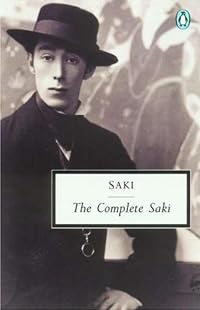
The Complete Saki
by H. H. Munro
On This Page
Description
All the stories, the three novels, and the three plays of the popular English writer, who delighted in the elegant and inelegant, the mannered and ill-mannered, the trivial and privileged denizens of pre-war England and Empire.Tags
Recommendations



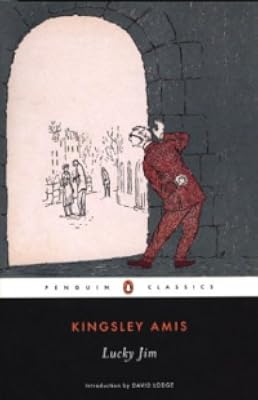


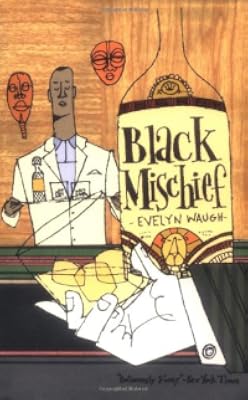


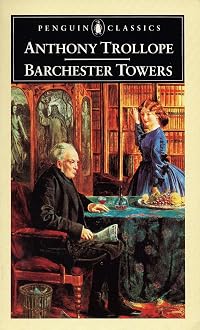
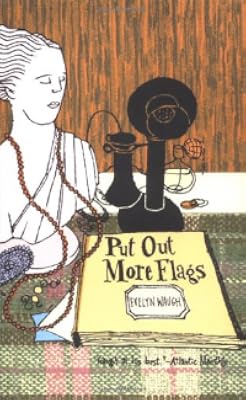







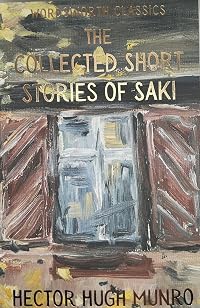


Member Recommendations
Member Reviews
Saki is one of those authors (like most, I believe) who are better taken in moderation. The Complete Works become wearing, though not entirely devoid of charm. One becomes steadily more aware of his woman-problem, however, whether it’s his opposition to Suffrage or his portrayal of women as shrill harpies or pure killjoys. I’m rather good at putting things like that aside, however: the man is dead, so he can’t profit from it, so I can put on my blinders and enjoy the brilliant, if rather empty, dialogue.
Saki (H.H. Munro) wrote genteel - but cutting - English satire in the years before World War I, a war he did not survive. He easily stands comparison with his peer in the next generation, P.G. Wodehouse.
This is a compendium of his entire works (though there is a biography in circulation which claims to have four previously uncollected stories). Perhaps he is best known for the short story 'Sredni Vashtar', all about a boy and his ferret, which turns from an Edwardian parlour piece into horror without batting an eyelid. This is one of Saki's trademarks; the unexpected turn occurs in many of his stories, making them all the more delicious. I have other favourites; perhaps my top one is 'Filboid Studge'; a struggling breakfast-food show more entrepreneur engages an equally struggling artist who wants to marry his daughter to promote his disgusting cereal, and he makes such a good job that a) the cereal becomes a best-seller, and b) his daughter is now too good for the artist. The cereal is described with relish, as it were: "In small kitchens, solemn pig-tailed daughters helped depressed mothers perform the primitive ritual of its preparation." God, it sounds awful!
The collection includes three plays and three novels, including his future-war contribution, "When William came", all about London under the occupation of the Kaiser's army. show less
This is a compendium of his entire works (though there is a biography in circulation which claims to have four previously uncollected stories). Perhaps he is best known for the short story 'Sredni Vashtar', all about a boy and his ferret, which turns from an Edwardian parlour piece into horror without batting an eyelid. This is one of Saki's trademarks; the unexpected turn occurs in many of his stories, making them all the more delicious. I have other favourites; perhaps my top one is 'Filboid Studge'; a struggling breakfast-food show more entrepreneur engages an equally struggling artist who wants to marry his daughter to promote his disgusting cereal, and he makes such a good job that a) the cereal becomes a best-seller, and b) his daughter is now too good for the artist. The cereal is described with relish, as it were: "In small kitchens, solemn pig-tailed daughters helped depressed mothers perform the primitive ritual of its preparation." God, it sounds awful!
The collection includes three plays and three novels, including his future-war contribution, "When William came", all about London under the occupation of the Kaiser's army. show less
There was a time when I thought this was pretty cool. Now that I'm older it dawns on me that HH Munro must have hated the human race. His stories are funny in the sense that you get an occasional clever quip, but his protagonists are terrible people you would never want to meet. Reginald, Clovis, and Comus are leeches, freeloading off society while somehow convincing themselves they are superior to everyone else. His antagonists are essentially guilty of nothing worse than being pompous. Pomposity may be bad, but it is not deserving the cruel mean-spirited viciousness they are subjected to. A single example would be 'Laura,' about a worthless bitch who deliberately destroys a man's hard work on his flower gardens and prize hens, all for show more spite, then is reincarnated so she can come back and do it again. Only in Saki's darker horror stories, of which there are few, does he show any evidence of sympathy for his characters. Not recommended unless you like smart-ass punk characters who deserve a good whacking. show less
Saki was the pen-name of an Edwardian writer, best known for these brilliant short stories.
They are all very short, and although quite varied in some ways, there are recurring themes and characters. In any story, you are guaranteed a unique and exquisitely crafted mix of many of the following:
• Beautiful writing.
• Satire exposing Victorian/Edwardian hypocrisy, beneath the veneer of respectability.
• Irrational authoritarian adults.
• Clever, sometimes evil children, who outwit them.
• Animals triumphing over the adults if children can’t or aren’t present.
• Dry wit and amorality.
• Subtle homo-eroticism (not often).
• Characters with delightfully odd names.
• Pontificating Reginald or slippery, scheming, supercilious show more Clovis.
• Magical-realism or a dash of paganism and the supernatural.
• A balance between humour and horror.
• A twist at the end - read carefully.
Wilde, Wodehouse, and others
You can see the influence of Wilde’s waspish wit in lines like this, in Reginald:
“The young have aspirations that never come to pass, the old have reminiscences of what never happened.”
And
“To be clever in the afternoon argues that one is dining nowhere in the evening.”
Other times, you see how Saki influenced Wodehouse, in his convoluted, elegant, and original analogies, though certainly not mood or plot. For example, in The Lull:
“Latimer Springfield was a rather cheerless, oldish young man, who went into politics somewhat in the spirit in which other people might go into half-mourning.”
And this from The Match-Maker:
“The grill-room clock struck eleven with the respectful unobtrusiveness of one whose mission in life is to be ignored.”
Elizabeth Taylor (novelist, not the actress) wrote an excellent short story, featuring a boy who could just as easily have been penned by Saki. See Poor Girl, which I reviewed HERE.
The clever, manipulative children surely influenced Roald Dahl, and the types of twist at the end could sometimes be mistaken for one of his Tales of the Unexpected.
Saki, the Man
Images: Two faces of Saki
There are many minor autobiographical aspects to the stories, so it’s worth knowing a little of the man. Hector Hugh Munro was born in the British Raj, but when he was two and his mother died, he was sent to England with his siblings to be raised by strict a grandmother and aunts. He was initially tutored at home, then sent off to boarding school - still secluded and subject to a stringent regime.
After a brief stint in the Indian Police, he returned to England to be a journalist and writer. He was gay, but covertly so, as homosexuality was a crime then - look what happened to Oscar Wilde. He volunteered for WW1, in which he died, aged 45.
Saki, My Father, and Me
As autumn 2018 approached, I started dipping into Saki stories for the first time in years - decades, even - interspersed with other books. Saki was a big part of my older childhood (my father read the stories aloud) and early adulthood (I reread them to myself).
This season, I read them in no particular order, and posted reviews (links below) of individual stories as the mood took me, over several weeks. Chatting to my father about them, he mentioned his favourite was one I’d overlooked, The Reticence of Lady Anne. I read it and loved it and moved on, as I’d posted so many Saki reviews in a relatively short space of time. Days later, he was dead. My review of that is a grieving tribute to him. The others were written in happier times.
My Individual Reviews
* The Reticence of Lady Anne 5*
* The Open Window 5*
* Sredni Vashtar 5*
* Esmé 4*
* The Toys of Peace 5*
* Clovis on Parental Responsibilities 4*
* Gabriel-Ernest 4*
* Tobermory 4*
* The Lumber Room 5*
* Laura 3*
* Christmas with Dull People 4* comprising four stories:
Reginald's Christmas Revel 3*
Reginald on Christmas Presents 4*
Bertie's Christmas Eve 4*
Down Pens 5*
More Saki
You can find his stories, free, on Gutenberg. For example, HERE. Most are very short.
Images: My father with me as a baby, and my father reading (not Saki) at Christmas, a few years ago show less
They are all very short, and although quite varied in some ways, there are recurring themes and characters. In any story, you are guaranteed a unique and exquisitely crafted mix of many of the following:
• Beautiful writing.
• Satire exposing Victorian/Edwardian hypocrisy, beneath the veneer of respectability.
• Irrational authoritarian adults.
• Clever, sometimes evil children, who outwit them.
• Animals triumphing over the adults if children can’t or aren’t present.
• Dry wit and amorality.
• Subtle homo-eroticism (not often).
• Characters with delightfully odd names.
• Pontificating Reginald or slippery, scheming, supercilious show more Clovis.
• Magical-realism or a dash of paganism and the supernatural.
• A balance between humour and horror.
• A twist at the end - read carefully.
Wilde, Wodehouse, and others
You can see the influence of Wilde’s waspish wit in lines like this, in Reginald:
“The young have aspirations that never come to pass, the old have reminiscences of what never happened.”
And
“To be clever in the afternoon argues that one is dining nowhere in the evening.”
Other times, you see how Saki influenced Wodehouse, in his convoluted, elegant, and original analogies, though certainly not mood or plot. For example, in The Lull:
“Latimer Springfield was a rather cheerless, oldish young man, who went into politics somewhat in the spirit in which other people might go into half-mourning.”
And this from The Match-Maker:
“The grill-room clock struck eleven with the respectful unobtrusiveness of one whose mission in life is to be ignored.”
Elizabeth Taylor (novelist, not the actress) wrote an excellent short story, featuring a boy who could just as easily have been penned by Saki. See Poor Girl, which I reviewed HERE.
The clever, manipulative children surely influenced Roald Dahl, and the types of twist at the end could sometimes be mistaken for one of his Tales of the Unexpected.
Saki, the Man
Images: Two faces of Saki
There are many minor autobiographical aspects to the stories, so it’s worth knowing a little of the man. Hector Hugh Munro was born in the British Raj, but when he was two and his mother died, he was sent to England with his siblings to be raised by strict a grandmother and aunts. He was initially tutored at home, then sent off to boarding school - still secluded and subject to a stringent regime.
After a brief stint in the Indian Police, he returned to England to be a journalist and writer. He was gay, but covertly so, as homosexuality was a crime then - look what happened to Oscar Wilde. He volunteered for WW1, in which he died, aged 45.
Saki, My Father, and Me
As autumn 2018 approached, I started dipping into Saki stories for the first time in years - decades, even - interspersed with other books. Saki was a big part of my older childhood (my father read the stories aloud) and early adulthood (I reread them to myself).
This season, I read them in no particular order, and posted reviews (links below) of individual stories as the mood took me, over several weeks. Chatting to my father about them, he mentioned his favourite was one I’d overlooked, The Reticence of Lady Anne. I read it and loved it and moved on, as I’d posted so many Saki reviews in a relatively short space of time. Days later, he was dead. My review of that is a grieving tribute to him. The others were written in happier times.
My Individual Reviews
* The Reticence of Lady Anne 5*
* The Open Window 5*
* Sredni Vashtar 5*
* Esmé 4*
* The Toys of Peace 5*
* Clovis on Parental Responsibilities 4*
* Gabriel-Ernest 4*
* Tobermory 4*
* The Lumber Room 5*
* Laura 3*
* Christmas with Dull People 4* comprising four stories:
Reginald's Christmas Revel 3*
Reginald on Christmas Presents 4*
Bertie's Christmas Eve 4*
Down Pens 5*
More Saki
You can find his stories, free, on Gutenberg. For example, HERE. Most are very short.
Images: My father with me as a baby, and my father reading (not Saki) at Christmas, a few years ago show less
Some seriously wonderful short stories, snappily satirical and great fun (at least some of them) to read out loud). Great for dipping in and out of. I probably tried to read too much too fast, though; by the time I got to the novels I didn't really want any more at the moment, and will come back for those sometime later.
Saki, whose true name was Hector Hugh Munro, lived from 1870-1916. He took his pen name from The Ruba’iyat of Omar Khayyam. The Scot was killed in action in WWI. In this collection of short stories, plays and short novels Saki writes about the British upper class and its frivolities. His heroes are Edwardian bad boys that defy convention. Saki targets pretension and plain foolishness. This is an enjoyable and comprehensive collection.
Saki (H.H. Munro) writes with a facility and style that guides the reader unerringly to the surprise denouement in which propriety is set on its head. His bitingly clever turns of phrase are made bearable by his eagerness to challenge and thwart the norms of society.
Members
- Recently Added By
Lists

Jones & Newman: Best Horror Books Further Recommended Reading
577 works; 4 members

Our Favorite Comfort Reads
334 works; 200 members
Author Information

390+ Works 7,981 Members
Some Editions
Awards and Honors
Notable Lists
Series
Belongs to Publisher Series
Work Relationships
Contains
Common Knowledge
- Canonical title
- The Complete Saki
- Alternate titles
- The Penguin Complete Saki
- Original publication date
- 1933
- Important places
- London, England, UK
- First words
- Introduction: Now, in the year 1967, I have been asked to write an introductory preface for a reissue of the works of Hector Munro, "Saki."
- Last words
- (Click to show. Warning: May contain spoilers.)Play, "The Watched Pot": Clare. How much did you win on the sweepstake? (William turns and flies in confusion.) Curtain
Classifications
Statistics
- Members
- 1,410
- Popularity
- 16,820
- Reviews
- 15
- Rating
- (4.45)
- Languages
- English, French, Slovenian
- Media
- Paper, Audiobook, Ebook
- ISBNs
- 19
- ASINs
- 22