
Noël Coward (1899–1973)
Author of Blithe Spirit, Hay Fever, Private Lives: Three Plays
About the Author
In 1964, when Hay Fever (1925) was placed in the repertory of the newly organized National Theatre, Noel Coward professed to be grateful: "Bless you for admitting that I'm a classic." A week-long series of Coward played on BBC television in 1969; there have been major revivals in London and New show more York; plays long out of print have been republished in popular collections. At the start of the 1960s, though, Coward's reputation had been at an ebb, as he skirmished with the angry new drama. Coward had enjoyed no big success since Blithe Spirit of 1941. There have been attempts to assimilate the rehabilitated Coward to contemporary drama. Coward himself profited from the new freedom when, in 1965, his Song at Twilight discussed homosexuality, a subject that he had evaded throughout his career. A juvenile prodigy, Coward was by turns actor, director, composer, lyricist, autobiographer, and author of nearly 60 theater pieces. He even wrote screenplays, notably for In Which We Serve (1942) and Brief Encounter (1946). Although he specialized in light comedy, the so-called comedy of manners, he worked in many forms including patriotic spectacle, revue, musical, farce, even the problem play. Hay Fever, Blithe Spirit, and Private Lives (1930) have proved to be the most durable of his comedies, along with nine short plays presented as Tonight at 8:30. In each, characters demonstrate the combination of perpetual role playing, cool hedonism, and energizing self-absorption. (Bowker Author Biography) show less
Image credit: Pirie MacDonald, from the Library of Congress
Series
Works by Noël Coward
Coward Plays: 3: Design for Living; Cavalcade; Conversation Piece; Tonight at 8.30 (i); Still Life (1979) 76 copies
Coward Plays: 4: Blithe Spirit; Present Laughter; This Happy Breed; Tonight at 8.30 (ii) (1979) 66 copies, 1 review
David Lean Directs Noël Coward: In Which We Serve / This Happy Breed / Blithe Spirit / Brief Encounter (2012) 36 copies, 1 review
Masterworks of the British Cinema: Brief Encounter / Henry V / The Lady Vanishes (1974) — Screenplay — 19 copies
The Noël Coward BBC Radio Drama Collection: Seven BBC Radio Full-Cast Productions (2018) 7 copies, 1 review
The Battle of the River Plate / In Which We Serve / We Dive at Dawn — Director — 5 copies
I'll See you Again 5 copies
Noël Coward in New York 4 copies
The Astonished Heart — Play — 3 copies
Three plays: The rat trap, The vortex, Fallen angels, by Noel Coward: with the author's reply to his critics (1965) 3 copies
La primavera di San Martino 3 copies
Commedie 3 copies
The Compact Coward 2 copies
I'll See You Again ; From "Bitter Sweet" ; Harms Choral Library ; Three Part Women's Voices ; S.S.A. (1985) 2 copies
Bitter sweet, and other plays 2 copies
PLAY PARADE VI. Point Valaine, South Sea Bubble, Ace of Clubs, Nude with violin, Waiting in the Wings (1962) 2 copies
The Noel Coward Song Book 2 copies
The Plays of Noël Coward: First Series (Sirocco, Home Chat, The Queen Was in the Parlour) (1928) 2 copies
Sutherland sings Coward. Songs from Bitter Sweet, After the Ball and more - featuring Noël Coward 2 copies
A Richer Dust 2 copies
The Rat Trap 2 copies
Legends of the 20th Century 1 copy
"Bitter Sweet" Overture 1 copy
Tonight at 8.30 (Volume III) 1 copy
Noel Coward Collected Plays: THREE (Design for Living, Cavalcade, Conversation Piece, Tonight at 8.30) (2008) 1 copy
Design For Rehearsing 1 copy
The Queen Was in the Parlour 1 copy
Pacific 1860 1 copy
Short Stories 1 copy
Words and Music 1 copy
Age Cannot Wither 1 copy
The Plays of Noel Coward : First Series : Sirocco, Home Chat, and The Queen was in the Parlour 1 copy
Mild Oats 1 copy
Three plays 1 copy
Private Lives. Illustrated 1 copy
Bezoek uit de Tropen 1 copy
At Las Vegas (1955) (CD) 1 copy
Seven stories 1 copy
Chelsea Buns 1 copy
Zigeuner, etc. [Song.] 1 copy
Jij en hij, ik en zij 1 copy
Teatro Inglés Contemporáneo 1 copy
Customs House, Dover 1 copy
Cheap Excursion 1 copy
Glamorous Nights 1 copy
The Wooden Madonna 1 copy
Traveler's Joy 1 copy
Aunt Tittie 1 copy
Nature Study 1 copy
Mr. And Mrs. Edgehill 1 copy
Stop Me If You've Heard It 1 copy
Ashes Of Roses 1 copy
Mrs. Capper's Birthday 1 copy
Solali 1 copy
Mrs. Ebony 1 copy
Penny Dreadful 1 copy
Eskapade og andre noveller 1 copy
Shop-Girls 1 copy
Some Other Private Lives 1 copy
Woman and Whisky 1 copy
What Next 1 copy
Pageant [Sigh No More] 1 copy
Noel Coward, the Great Shows 1 copy
La encantadora familia Bliss 1 copy
Weatherwise 1 copy
Min egen Cavalcade 1 copy
Koninklijk bezoek 1 copy
The Songs of Noël Coward 1 copy
Noel Coward Medley 1 copy
Noel Coward, 1899-1973 1 copy
Sail Away, broadway cast 1 copy
Ballet Music of Noël Coward 1 copy
Class [On with the Dance] 1 copy
Noel Coward 1 copy
La dolce intimità 1 copy
Intermezzo 1 copy
Eloquence 1 copy
Noel Coward 1 copy
Tonight at 8.30, Volume I 1 copy
Associated Works
The Assassin's Cloak: An Anthology of the World's Greatest Diarists (2000) — Contributor, some editions — 623 copies, 9 reviews
Cavalcade of comedy; 21 brilliant comedies from Jonson and Wycherley to Thurber and Coward (1953) — Contributor — 100 copies
Twenty One-Act Plays: An Anthology for Amateur Performing Groups (1978) — Contributor — 40 copies, 1 review
Grace and Favour: The Memoirs of Loelia, Duchess of Westminster (1961) — Foreword — 32 copies, 1 review
Matty — Introduction — 2 copies
Tagged
Common Knowledge
- Canonical name
- Coward, Noël
- Legal name
- Coward, Noël Peirce
- Birthdate
- 1899-12-16
- Date of death
- 1973-03-26
- Gender
- male
- Occupations
- actor
playwright
composer
lyricist - Organizations
- Cineguild Productions (cofounder)
- Awards and honors
- Honorary Academy Award (1943)
Knight Bachelor (1970)
Royal Society of Literature (Fellow)
Tony Award for Lifetime Achievement (1970)
Songwriters Hall of Fame (1988) - Relationships
- Payn, Graham (partner)
Lesley, Cole (friend)
de Casalis, Jeanne (friend) - Cause of death
- heart failure
- Nationality
- UK
- Birthplace
- Teddington-on-Thames, Middlesex, England, UK
- Places of residence
- Middlesex, England
Jamaica - Place of death
- Firefly, Jamaica
- Burial location
- Firefly Estate Grounds Montego Bay, Saint James, Jamaica
Members
Reviews
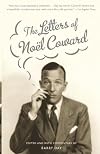
I have a crush on Noel Coward. It's hard to encapsulate why and it's also hard to review a tome that runs 750 pages and contains letters from 1913 to 1971. Editor Day argues that the letters reveal more about the man, simply because they were not written, (as his diaries and two published autobiographies were), with an eye to posterity. The art and practice of letter writing has disappeared, which means that this opportunity of getting a glimpse of the true quirks and personality of a famous show more person is also lost. What a shame.
Coward was a child actor with a pushy mother to whom he was devoted and who was his weekly correspondent until her death in 1953. By his early twenties he was England's most celebrated actor, playwright and composer. He befriended actors, writers, politicians, the aristocracy and royalty. Many confided in him and their letters are also included in this book which is an amazing history of life in the fast lane in the 20th century. While others drowned in the headiness of their own success, Coward was made of different stuff. He collected a staff whom he called his family and who remained with him all his life. They called him "Master", a title he accepted in a tongue-in-cheek way, but it obviously tickled his understandably large ego. (He was, after all, a completely self-made star.) Until the mid-forties, every song and play he wrote was a hit. After World War II, when he found that his particular brand of sophisticated humor and song was suddenly out of date, he re-made himself as a cabaret performer, continued to write, and ultimately directed revivals of his earlier works. Unlike his childhood friend and frequent muse, Gertrude Lawrence, he refused to bend to despair.
There are surprises here that reveal as much about his correspondents as they do about Coward. His dear friend Marlene Dietrich wrote reams about her disastrous love affair with Yul Brynner, sounding like a love-sick school girl ("As long as I don't know what he feels I will have no rest.") to which he responded with great patience and sympathy. Mary Martin's complaints while rehearsing an ill-fated play ("I have never been permitted to say so little or express myself so little"), resulted in a caustic reprimand to the young woman, reminding her that while it was her fifth professional production, it was his 47th: "It seems to me, dear Mary, that you are placing too much emphasis on the word 'star' and too little on the famous theatrical word 'trouper' ".
If Coward's work was derided and considered hopelessly old fashioned after the war, it has earned a permanent place in British and American theater since. The witty dialogue goes perfectly with the costumes and art nouveau settings of "Private Lives", "Hay Fever", and "Present Laughter", which are endlessly produced by professional companies. "Design for Living" closed in London's West End a couple of months ago and a production of "Blithe Spirit" opens there in March. His film "Brief Encounter" has been re-imagined in an innovative stage version that moved recently from London to Broadway and garnered rave reviews. More than thirty-five years after his death, the Master still has the Touch.
His accomplishments have been chronicled elsewhere, most often by Noel himself who was an ardent self promoter. His letters show something more important and personal: how highly he valued friendship.
He was not always a nice man, but he was a generous one. After the Mary Martin debacle, he made sure their friendship survived, and appeared with her a decade later in an American TV special. He was fond of sending rhymes to friends to cheer them up and he was quick to commiserate. His humanity and his wit are summed up in this ditty he sent to his friend, writer Clement Dane (real name: Winifred Ashton) when he heard that the old lady had fallen in the street. I have to copy it here because it is so delightful and perfectly captures the famous charm of its author:
Why did you fall, Winnie?
Why did you fall?
Were you just drunk, dear,
Or not drunk at all?
Were you preoccupied?
Were you in doubt?
Or were you merely
Just bashing about?
Were you too early,
Or were you too late?
Were you in full
Conversational Spate?
Where was dear Olwen (Davies, her secretary),
And what was she at?
Letting you hiccup
And stumble like that!
What were you thinking of,
Was it a plot?
Was it a painting,
A sculpture, or what?
Was that which caused you
To fall in the street
Something unpleasant
Or charming or sweet?
What was the cause of this fall down the drain?
Was it some quirk
In your functional brain?
Was it your strange
Intellectual strength
Leading you sadly
To measure your length?
Once and for all, darling,
Once and for all
Why did you fall, Winnie?
Why did you fall?
(My guess is that Winnie had a pretty big crush on him too.) show less
Coward was a child actor with a pushy mother to whom he was devoted and who was his weekly correspondent until her death in 1953. By his early twenties he was England's most celebrated actor, playwright and composer. He befriended actors, writers, politicians, the aristocracy and royalty. Many confided in him and their letters are also included in this book which is an amazing history of life in the fast lane in the 20th century. While others drowned in the headiness of their own success, Coward was made of different stuff. He collected a staff whom he called his family and who remained with him all his life. They called him "Master", a title he accepted in a tongue-in-cheek way, but it obviously tickled his understandably large ego. (He was, after all, a completely self-made star.) Until the mid-forties, every song and play he wrote was a hit. After World War II, when he found that his particular brand of sophisticated humor and song was suddenly out of date, he re-made himself as a cabaret performer, continued to write, and ultimately directed revivals of his earlier works. Unlike his childhood friend and frequent muse, Gertrude Lawrence, he refused to bend to despair.
There are surprises here that reveal as much about his correspondents as they do about Coward. His dear friend Marlene Dietrich wrote reams about her disastrous love affair with Yul Brynner, sounding like a love-sick school girl ("As long as I don't know what he feels I will have no rest.") to which he responded with great patience and sympathy. Mary Martin's complaints while rehearsing an ill-fated play ("I have never been permitted to say so little or express myself so little"), resulted in a caustic reprimand to the young woman, reminding her that while it was her fifth professional production, it was his 47th: "It seems to me, dear Mary, that you are placing too much emphasis on the word 'star' and too little on the famous theatrical word 'trouper' ".
If Coward's work was derided and considered hopelessly old fashioned after the war, it has earned a permanent place in British and American theater since. The witty dialogue goes perfectly with the costumes and art nouveau settings of "Private Lives", "Hay Fever", and "Present Laughter", which are endlessly produced by professional companies. "Design for Living" closed in London's West End a couple of months ago and a production of "Blithe Spirit" opens there in March. His film "Brief Encounter" has been re-imagined in an innovative stage version that moved recently from London to Broadway and garnered rave reviews. More than thirty-five years after his death, the Master still has the Touch.
His accomplishments have been chronicled elsewhere, most often by Noel himself who was an ardent self promoter. His letters show something more important and personal: how highly he valued friendship.
He was not always a nice man, but he was a generous one. After the Mary Martin debacle, he made sure their friendship survived, and appeared with her a decade later in an American TV special. He was fond of sending rhymes to friends to cheer them up and he was quick to commiserate. His humanity and his wit are summed up in this ditty he sent to his friend, writer Clement Dane (real name: Winifred Ashton) when he heard that the old lady had fallen in the street. I have to copy it here because it is so delightful and perfectly captures the famous charm of its author:
Why did you fall, Winnie?
Why did you fall?
Were you just drunk, dear,
Or not drunk at all?
Were you preoccupied?
Were you in doubt?
Or were you merely
Just bashing about?
Were you too early,
Or were you too late?
Were you in full
Conversational Spate?
Where was dear Olwen (Davies, her secretary),
And what was she at?
Letting you hiccup
And stumble like that!
What were you thinking of,
Was it a plot?
Was it a painting,
A sculpture, or what?
Was that which caused you
To fall in the street
Something unpleasant
Or charming or sweet?
What was the cause of this fall down the drain?
Was it some quirk
In your functional brain?
Was it your strange
Intellectual strength
Leading you sadly
To measure your length?
Once and for all, darling,
Once and for all
Why did you fall, Winnie?
Why did you fall?
(My guess is that Winnie had a pretty big crush on him too.) show less

Charles Condomine is a novelist whose latest book will be about séances. As a form of research, he arranges for a local spiritualist, Madame Arcati, to perform a séance for them. However, in the process he accidentally summons up the spirit of his first wife, Elvira… and his second wife, Ruth, is not happy about this development. Hilarity ensues for the audience, though, as the two wives battle for supremacy and Charles battles for a bit of peace.
As befits a Noël Coward play, this show more contains a great deal of dialogue with wit as dry as the classic Martinis that the characters drink throughout the proceedings. Madame Arcati is hilarious, with her good cheer and plucky, can-do attitude toward all matters spiritual (a refreshing contrast to the usual ethereal and super-serious psychics on offer). I found the Bradmans annoying during the initial séance because they kept sassing Madame Arcati; interrupting people is so rude! Fortunately, they did not appear too much after that.
This is the sort of play you'll want to read out loud at home to yourself, or maybe gather a group together to act out. It's just too fun, darling. show less
As befits a Noël Coward play, this show more contains a great deal of dialogue with wit as dry as the classic Martinis that the characters drink throughout the proceedings. Madame Arcati is hilarious, with her good cheer and plucky, can-do attitude toward all matters spiritual (a refreshing contrast to the usual ethereal and super-serious psychics on offer). I found the Bradmans annoying during the initial séance because they kept sassing Madame Arcati; interrupting people is so rude! Fortunately, they did not appear too much after that.
This is the sort of play you'll want to read out loud at home to yourself, or maybe gather a group together to act out. It's just too fun, darling. show less
The actual facts are so simple. I love you. You love me. You love Otto. I love Otto. Otto loves you. Otto loves me. There now! Start to unravel from there.
Noël Coward’s Design for Living opened on Broadway in 1933 because it was too risqué for London’s West End. Even today, you probably wouldn’t find it on broadcast television before 10 o’clock. Painter Otto Sylvus and playwright Leo Mercuré were fast friends and destitute unknowns in Paris’ Latin Quarter when they both met show more and later fell in love with fellow bohemian Gilda. Eventually, Otto wins Gilda into becoming his lover, but the threesome each love each other whole-heartedly — until the day that Gilda falls into Leo’s arms.
Fast-forward two years, and Leo has become a very successful playwright. Gilda, still bohemian to the core, chafes at the publicity and what she fears is the commercialization of his art. The play explores monogamy, the many facets of love, and the temptation of conventional life. The nature of Leo’s and Otto’s relationship with each other remains ambiguous, providing additional food for thought. With very little revision, Design for Living could be set in fin de siècle Paris, 1950s Greenwich Village, 1960s San Francisco, or present-day Brooklyn. For bohemian intellectuals, the quandaries remain the same. Kudos to L.A. Theatre Works for bringing back this thought-provoking play.
Lastly, the fact that Noël Coward himself played the playwright Leo while Alfred Lunt and Joan Fontaine played Otto and Gilda have made folks wonder for decades; I too found myself wondering how much that threesome’s real-life relationship made it into the play. show less

https://nwhyte.livejournal.com/2914781.html
The original play (it says in my book) cost thirty thousand pre-war pounds and kept a cast and back-stage crew of three hundred employed at Drury Lane for over a year - a spectacular in the line of the more modern West End musical. It's particularly impressive when you remember that these were the first years of the Great Depression. The play opened just before the 1931 election which saw former Labour leader Ramsay MacDonald returned to power at show more the head of a mostly Conservative coalition. It was received as a patriotic, nationalist piece in tune with the needs of the times, much to Coward's dismay; he thought he was just writing a piece about the impact of the times on an ordinary (read upper-middle-class) family, and to my eye he was attempting to portray the inevitability of the dissolution of old social structures, and to challenge the audience to get to grips with how the world was changing.
I think he was right to be dismayed. The play is more cynical than the film. The theatrical Diana Wynyard repeatedly makes anti-war comments, and is repeatedly proved right. A couple of grim scenes from the play did not make it to the film - an early fake bucolic musical number, and a scene where the teenage Marryot sons engage in dissolute behaviour with their friends. And the ending is truly chilling. The two final scenes were flipped in the film. In the original, the Marryots see in 1930, much diminished in health and happiness. Jane’s final words are:
“Now, then, let’s couple the Future of England with the past of England. The glories and victories and triumphs that are over, and the sorrows that are over, too. Let’s drink to our sons who made part of the pattern and to our hearts that died with them. Let’s drink to the spirit of gallantry and courage that made a strange Heaven out of unbelievable Hell, and let’s drink to the hope that one day this country of ours, which we love so much, will find dignity and greatness and peace again.”
It’s a bleak end to her role in the play. In the film, the pessimistic impact is deadened by Robert repeating “Dignity, greatness and peace” back to her, and a crowed scene of revellers singing “Auld Lang Syne” before the final titles. In the orignal play, the final song, “Twentieth Century Blues”, comes after rather than before the Marryots’ New Year scenem with some difficult but bloodcurdling stage directions:
“SCENE: A Night Club.
TIME: Evening –1930.
This Scene begins with a night club in which FANNY is singing, seated on a piano. The decoration is angular and strange, and the song she is singing is oddly discordant.
TWENTIETH CENTURY BLUES
VERSE
Why is it that civilised humanity
Must make the world so wrong?
In this hurly burly of insanity
Your dreams cannot last long.
We’ve reached a headline —
The Press headline –every sorrow,
Blues value is News value tomorrow.
REFRAIN
Blues, Twentieth Century Blues, are getting me down.
Who’s escaped those weary Twentieth Century Blues.
Why, if there’s a God in the sky, why shouldn’t¹ he grin?
High above this dreary Twentieth Century din,
In this strange illusion,
Chaos and confusion,
People seem to lose their way.
What is there to strive for,
Love or keep alive for? Say —
Hey, hey, call it a day.
Blues, nothing to win or to lose.
It’s getting me down.
Blues, I’ve got those weary² Twentieth Century Blues.
When the song is finished, people rise from table and dance without apparently any particular enjoyment; it is the dull dancing of habit. The lights fade away from everything but the dancers, who appear to be rising in the air. They disappear and down stage left, six ‘incurables’ in blue hospital uniform are sitting making baskets. They disappear and FANNY is seen singing her song for a moment, then far away up stage a jazz band is seen playing wildly. Then down stage JANE and ROBERT standing with glasses of champagne held aloft, then ELLEN sitting in front of a Radio loud speaker; then MARGARET dancing with a young man. The visions are repeated quicker and quicker, while across the darkness runs a Riley light sign spelling out news. Noise grows louder and louder. Steam rivets, loud speakers, jazz bands, aeroplane propellers, etc., until the general effect is complete chaos.
Suddenly it all fades into darkness and silence and away at the back a Union Jack glows through the blackness.
The lights slowly come up and the whole stage is composed of massive tiers, upon which stand the entire Company. The Union Jack flies over their heads as they sing ‘God Save the King’.
THE END”
¹ The film version has “didn’t” rather than “shouldn’t”.
² The film version ends “escape those dreary Twentieth Century Blues“ rather than “I’ve got those weary Twentieth Century Blues”.
Given the necessary scale of the theatre production (drawing-room, crowds, music-halls and the Titanic), it has been staged only a handful of times since the original 1931 West End production (including the two film adaptations). It's an ambitious and vicious piece which would reward a determined and talented director. I'd pay money to see it on stage. show less
The original play (it says in my book) cost thirty thousand pre-war pounds and kept a cast and back-stage crew of three hundred employed at Drury Lane for over a year - a spectacular in the line of the more modern West End musical. It's particularly impressive when you remember that these were the first years of the Great Depression. The play opened just before the 1931 election which saw former Labour leader Ramsay MacDonald returned to power at show more the head of a mostly Conservative coalition. It was received as a patriotic, nationalist piece in tune with the needs of the times, much to Coward's dismay; he thought he was just writing a piece about the impact of the times on an ordinary (read upper-middle-class) family, and to my eye he was attempting to portray the inevitability of the dissolution of old social structures, and to challenge the audience to get to grips with how the world was changing.
I think he was right to be dismayed. The play is more cynical than the film. The theatrical Diana Wynyard repeatedly makes anti-war comments, and is repeatedly proved right. A couple of grim scenes from the play did not make it to the film - an early fake bucolic musical number, and a scene where the teenage Marryot sons engage in dissolute behaviour with their friends. And the ending is truly chilling. The two final scenes were flipped in the film. In the original, the Marryots see in 1930, much diminished in health and happiness. Jane’s final words are:
“Now, then, let’s couple the Future of England with the past of England. The glories and victories and triumphs that are over, and the sorrows that are over, too. Let’s drink to our sons who made part of the pattern and to our hearts that died with them. Let’s drink to the spirit of gallantry and courage that made a strange Heaven out of unbelievable Hell, and let’s drink to the hope that one day this country of ours, which we love so much, will find dignity and greatness and peace again.”
It’s a bleak end to her role in the play. In the film, the pessimistic impact is deadened by Robert repeating “Dignity, greatness and peace” back to her, and a crowed scene of revellers singing “Auld Lang Syne” before the final titles. In the orignal play, the final song, “Twentieth Century Blues”, comes after rather than before the Marryots’ New Year scenem with some difficult but bloodcurdling stage directions:
“SCENE: A Night Club.
TIME: Evening –1930.
This Scene begins with a night club in which FANNY is singing, seated on a piano. The decoration is angular and strange, and the song she is singing is oddly discordant.
TWENTIETH CENTURY BLUES
VERSE
Why is it that civilised humanity
Must make the world so wrong?
In this hurly burly of insanity
Your dreams cannot last long.
We’ve reached a headline —
The Press headline –every sorrow,
Blues value is News value tomorrow.
REFRAIN
Blues, Twentieth Century Blues, are getting me down.
Who’s escaped those weary Twentieth Century Blues.
Why, if there’s a God in the sky, why shouldn’t¹ he grin?
High above this dreary Twentieth Century din,
In this strange illusion,
Chaos and confusion,
People seem to lose their way.
What is there to strive for,
Love or keep alive for? Say —
Hey, hey, call it a day.
Blues, nothing to win or to lose.
It’s getting me down.
Blues, I’ve got those weary² Twentieth Century Blues.
When the song is finished, people rise from table and dance without apparently any particular enjoyment; it is the dull dancing of habit. The lights fade away from everything but the dancers, who appear to be rising in the air. They disappear and down stage left, six ‘incurables’ in blue hospital uniform are sitting making baskets. They disappear and FANNY is seen singing her song for a moment, then far away up stage a jazz band is seen playing wildly. Then down stage JANE and ROBERT standing with glasses of champagne held aloft, then ELLEN sitting in front of a Radio loud speaker; then MARGARET dancing with a young man. The visions are repeated quicker and quicker, while across the darkness runs a Riley light sign spelling out news. Noise grows louder and louder. Steam rivets, loud speakers, jazz bands, aeroplane propellers, etc., until the general effect is complete chaos.
Suddenly it all fades into darkness and silence and away at the back a Union Jack glows through the blackness.
The lights slowly come up and the whole stage is composed of massive tiers, upon which stand the entire Company. The Union Jack flies over their heads as they sing ‘God Save the King’.
THE END”
¹ The film version has “didn’t” rather than “shouldn’t”.
² The film version ends “escape those dreary Twentieth Century Blues“ rather than “I’ve got those weary Twentieth Century Blues”.
Given the necessary scale of the theatre production (drawing-room, crowds, music-halls and the Titanic), it has been staged only a handful of times since the original 1931 West End production (including the two film adaptations). It's an ambitious and vicious piece which would reward a determined and talented director. I'd pay money to see it on stage. show less
Lists
Entertainment (1)
1930s (1)
Awards


You May Also Like


Associated Authors
Statistics
- Works
- 298
- Also by
- 42
- Members
- 5,589
- Popularity
- #4,443
- Rating
- 4.0
- Reviews
- 83
- ISBNs
- 382
- Languages
- 5
- Favorited
- 21


