On This Page
Description
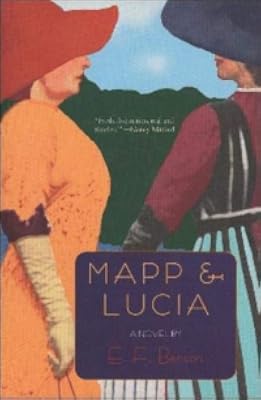
Meet Mapp and Lucia-two of the most unpleasant, disgraceful women you're ever likely to encounter, in E.F. Benson's carefully observed tale of 1930s village life and social rankingEmmeline Lucas (known as Lucia to her friends) is emerging from mourning following the death of her husband. Pretentious, snobbish, and down-right devious, she feels her hometown of Riseholme offers no challenges and decides to vacation in the town of Tilling. She rents "Mallards" from Miss Mapp. The two women show more clash immediately. Miss Mapp is used to being top of the social ranking in Tilling, and there is no way she is going to let a vulgar outsider claim her position. So begins a battle of one-upmanship, peppered with queenly airs, ghastly tea parties, and unnerving bridge evenings as the two combatants attempt to out-do each other to win social supremacy. The pompous Lucia and malignant Mapp are characters you will love to hate, wonderfully penned by E.F. Benson. Darkly comic and witty, it is soon to be a new BBC series written by Steve Pemberton. show lessTags
Recommendations























Member Recommendations

Quaint1 A continuation of the Tilling series

Member Reviews
Like reading a camp, bitchy version of Wodehouse in which every single character is a frightful, parochial snob. Delightful.
Delightful; amusing; gentle comedy of manners: while accurate descriptors of Mapp and Lucia, these words also make it sound twee and, perhaps, dated, which is far from the truth. Gossipy, waspish and, at times, malignant are also accurate, and go more to the heart of the humour.
Elizabeth Mapp hates Emmeline "Lucia" Lucas with a passion; Lucia despises and pities Mapp in equal measure. Each scheming and plotting to be the centre of their social circle, their machinations against each other must always be concealed (barely and, usually, ineffectually) by the appropriate observances of the middle and upper-middle class conventions of a "between-the-wars" England at its most parochially self-absorbed.
The other villagers are by turns allies, show more pawns and antagonists in the war between Mapp and Lucia. Loyalties shift and turn as first one, then the other appears to have the upper hand. However, Mapp's malevolence usually causes her to overplay her hand and, just when she seems about to trump her opponent, she makes some awful gaff that Lucia turns to her advantage.
There is a well-observed cast of satellite characters, notably Lucia's best friend and companion, the effeminate and endearing Georgie Pilling, the only person of steadfast and unwavering loyalty amongst the two main combatants' followers.
I absolutely loved this book and cannot recommend it too highly. show less
Elizabeth Mapp hates Emmeline "Lucia" Lucas with a passion; Lucia despises and pities Mapp in equal measure. Each scheming and plotting to be the centre of their social circle, their machinations against each other must always be concealed (barely and, usually, ineffectually) by the appropriate observances of the middle and upper-middle class conventions of a "between-the-wars" England at its most parochially self-absorbed.
The other villagers are by turns allies, show more pawns and antagonists in the war between Mapp and Lucia. Loyalties shift and turn as first one, then the other appears to have the upper hand. However, Mapp's malevolence usually causes her to overplay her hand and, just when she seems about to trump her opponent, she makes some awful gaff that Lucia turns to her advantage.
There is a well-observed cast of satellite characters, notably Lucia's best friend and companion, the effeminate and endearing Georgie Pilling, the only person of steadfast and unwavering loyalty amongst the two main combatants' followers.
I absolutely loved this book and cannot recommend it too highly. show less
Delightful; amusing; gentle comedy of manners: while accurate descriptors of Mapp and Lucia, these words also make it sound twee and, perhaps, dated, which is far from the truth. Gossipy, waspish and, at times, malignant are also accurate, and go more to the heart of the humour.
Elizabeth Mapp hates Emmeline "Lucia" Lucas with a passion; Lucia despises and pities Mapp in equal measure. Each scheming and plotting to be the centre of their social circle, their machinations against each other must always be concealed (barely and, usually, ineffectually) by the appropriate observances of the middle and upper-middle class conventions of a "between-the-wars" England at its most parochially self-absorbed.
The other villagers are by turns allies, show more pawns and antagonists in the war between Mapp and Lucia. Loyalties shift and turn as first one, then the other appears to have the upper hand. However, Mapp's malevolence usually causes her to overplay her hand and, just when she seems about to trump her opponent, she makes some awful gaff that Lucia turns to her advantage.
There is a well-observed cast of satellite characters, notably Lucia's best friend and companion, the effeminate and endearing Georgie Pilling, the only person of steadfast and unwavering loyalty amongst the two main combatants' followers.
I absolutely loved this book and cannot recommend it too highly. show less
Elizabeth Mapp hates Emmeline "Lucia" Lucas with a passion; Lucia despises and pities Mapp in equal measure. Each scheming and plotting to be the centre of their social circle, their machinations against each other must always be concealed (barely and, usually, ineffectually) by the appropriate observances of the middle and upper-middle class conventions of a "between-the-wars" England at its most parochially self-absorbed.
The other villagers are by turns allies, show more pawns and antagonists in the war between Mapp and Lucia. Loyalties shift and turn as first one, then the other appears to have the upper hand. However, Mapp's malevolence usually causes her to overplay her hand and, just when she seems about to trump her opponent, she makes some awful gaff that Lucia turns to her advantage.
There is a well-observed cast of satellite characters, notably Lucia's best friend and companion, the effeminate and endearing Georgie Pilling, the only person of steadfast and unwavering loyalty amongst the two main combatants' followers.
I absolutely loved this book and cannot recommend it too highly. show less
When I began reading the Mapp and Lucia series, which focuses first on Lucia, friends said "just wait until she meets Miss Mapp!" And oh boy, were they right about that. In this fourth installment, the social queen bees of their respective towns create quite a storm. On a visit to Tilling, Elizabeth Mapp's domain, Lucia finds a house available to let for the summer, and decides a change of scenery would do her good. She convinces her good friend Georgie to rent another house in town, and they prepare to vacate Riseholme and descend on Tilling. It happens that Lucia has rented Mapp's house, and it's all part of an elaborate annual ritual in which the residents of Tilling rent their dwellings to one another (aside: the ease with which show more these people pack up all their worldly goods is rather astounding...).
So the stage is set for a social rivalry of epic proportions, and considerable amusement can be derived from Mapp and Lucia repeatedly attempting to one-up the other, with variable results. The climax results in a completely absurd caper, which some might call "jumping the shark," but by this time any reader worth their salt would have suspended disbelief. Just "take two hen lobsters" ... and hang on for the ride. show less
So the stage is set for a social rivalry of epic proportions, and considerable amusement can be derived from Mapp and Lucia repeatedly attempting to one-up the other, with variable results. The climax results in a completely absurd caper, which some might call "jumping the shark," but by this time any reader worth their salt would have suspended disbelief. Just "take two hen lobsters" ... and hang on for the ride. show less
"Scrumptious" is a word I've probably never used in my life, but it seems rather apt for this series. E.F. Benson's delectable light comedy is a cross between Austen and Wodehouse, somehow more savage than either and yet more fond of the characters at the same time.
Queen Lucia introduces us to the immortal Emmeline Lucas, renowned for her dinner parties in which she will play the First Movement of the Moonlight Sonata, but will then beg off playing the second and third movements on the grounds that they are more "morning and afternoon" (*cough* she can't quite play them yet *cough). Lucia dominates life, along with her effete best friend Georgie, in their idyllic town of Riseholme, while Lucia in London takes the characters on the road show more for some urban satire. Miss Mapp, originally a separate novel entirely, shows us the life of the doughty, determined Elizabeth Mapp in the quirky, rather insular town of Tilling. Finally, in Mapp and Lucia, the two women are brought together, two generals in the field, each determined to have complete control of their terrain. Benson would eventually carry on this story in Trouble for Lucia and Lucia's Progress.
This joyous series is light and sparkling, but remains a fantastic break from reality 100 years after the first book was published. The last three novels were famously adapted in the 1980s with Prunella Scales, Nigel Hawthorne, and a career-best Geraldine McEwan in the lead roles. This led to McEwan and Scales releasing the books on tape, which are a real gem if you can find them. (Like Wodehouse, Benson's novels lend themselves to being read aloud.) The books were adapted again for a far shorter miniseries in the 2010s which was well cast but a little over-zealous in my opinion.
Since the 1980s adaptation brought the books back into the culture, several novelists have tried their hand at sequels. Tom Holt's two volumes are well worth reading, but the more recent trilogy by Guy Fraser-Sampson were, to my mind, a complete failure, utterly at odds with Benson's approach.
I was so glad to find this six-volume Folio Society edition from the 1990s, with the original six novels in beautiful cloth-bound hardcover, and elegant illustrations.
A lifelong treat for lovers of this sort of humour. show less
Queen Lucia introduces us to the immortal Emmeline Lucas, renowned for her dinner parties in which she will play the First Movement of the Moonlight Sonata, but will then beg off playing the second and third movements on the grounds that they are more "morning and afternoon" (*cough* she can't quite play them yet *cough). Lucia dominates life, along with her effete best friend Georgie, in their idyllic town of Riseholme, while Lucia in London takes the characters on the road show more for some urban satire. Miss Mapp, originally a separate novel entirely, shows us the life of the doughty, determined Elizabeth Mapp in the quirky, rather insular town of Tilling. Finally, in Mapp and Lucia, the two women are brought together, two generals in the field, each determined to have complete control of their terrain. Benson would eventually carry on this story in Trouble for Lucia and Lucia's Progress.
This joyous series is light and sparkling, but remains a fantastic break from reality 100 years after the first book was published. The last three novels were famously adapted in the 1980s with Prunella Scales, Nigel Hawthorne, and a career-best Geraldine McEwan in the lead roles. This led to McEwan and Scales releasing the books on tape, which are a real gem if you can find them. (Like Wodehouse, Benson's novels lend themselves to being read aloud.) The books were adapted again for a far shorter miniseries in the 2010s which was well cast but a little over-zealous in my opinion.
Since the 1980s adaptation brought the books back into the culture, several novelists have tried their hand at sequels. Tom Holt's two volumes are well worth reading, but the more recent trilogy by Guy Fraser-Sampson were, to my mind, a complete failure, utterly at odds with Benson's approach.
I was so glad to find this six-volume Folio Society edition from the 1990s, with the original six novels in beautiful cloth-bound hardcover, and elegant illustrations.
A lifelong treat for lovers of this sort of humour. show less
Now, That was fun.
When I started reading the Lucia series, I promised myself that I would not read the books one after the other. However, after finishing Miss Mapp, I decided that I had to find out what happened when the two divas meet for the first time. I was not disappointed. Sparks and fireworks.
Benson's series is a commentary on upper middle class society in England during the period of time between WWI and WWII. The people filling the pages of these books do not need to work. Their lives consist of gossip, art, music, tea parties, bridge and golf, and of course, one-upmanship. There is no internet or texting or email, so notes are sent delivering invitations to tea, to dinner, and to bridge games. Cars are a luxury, and big show more motorcars on tiny streets make for amusing situations. Morning marketing allows ample time for gossip.
In the previous book, we are introduced to Miss Elizabeth Mapp. Miss Mapp considers herself to be the head of Tilling society. She is underhanded and vindictive in her efforts to out maneuver everyone else. In the fourth book, Mapp & Lucia, Emmeline Lucas (Lucia to her friends) moves from the town of Riseholme to the seaside town of Tilling, much to the chagrin of Miss Mapp. She quickly becomes a favorite of the townsfolk, and Miss Mapp is not happy. She resolves to keep Lucia in her place, and constantly plots to outwit the newcomer. Lucia is up to the task however, being a bit devious herself. The result leads to many comical scenes. The supporting characters are just as entertaining. Lucia's best friend Georgie Pillson is one of my favorite characters. Georgie is the only character who truly remains faithful to Lucia through every misunderstanding, while the other characters continually change their support from Miss Mapp to Lucia at the drop of a hat.
All of this is very tongue in cheek, and very silly in a most delightful way. I think a fan of Wodehouse would definitely enjoy this series.
Read July 2013 show less
When I started reading the Lucia series, I promised myself that I would not read the books one after the other. However, after finishing Miss Mapp, I decided that I had to find out what happened when the two divas meet for the first time. I was not disappointed. Sparks and fireworks.
Benson's series is a commentary on upper middle class society in England during the period of time between WWI and WWII. The people filling the pages of these books do not need to work. Their lives consist of gossip, art, music, tea parties, bridge and golf, and of course, one-upmanship. There is no internet or texting or email, so notes are sent delivering invitations to tea, to dinner, and to bridge games. Cars are a luxury, and big show more motorcars on tiny streets make for amusing situations. Morning marketing allows ample time for gossip.
In the previous book, we are introduced to Miss Elizabeth Mapp. Miss Mapp considers herself to be the head of Tilling society. She is underhanded and vindictive in her efforts to out maneuver everyone else. In the fourth book, Mapp & Lucia, Emmeline Lucas (Lucia to her friends) moves from the town of Riseholme to the seaside town of Tilling, much to the chagrin of Miss Mapp. She quickly becomes a favorite of the townsfolk, and Miss Mapp is not happy. She resolves to keep Lucia in her place, and constantly plots to outwit the newcomer. Lucia is up to the task however, being a bit devious herself. The result leads to many comical scenes. The supporting characters are just as entertaining. Lucia's best friend Georgie Pillson is one of my favorite characters. Georgie is the only character who truly remains faithful to Lucia through every misunderstanding, while the other characters continually change their support from Miss Mapp to Lucia at the drop of a hat.
All of this is very tongue in cheek, and very silly in a most delightful way. I think a fan of Wodehouse would definitely enjoy this series.
Read July 2013 show less
NOTE: This review applies to the entire Mapp and Lucia series.
This appears to be one of those series that people either love or hate. Set in the early decades of the 20th century, E.F. Benson skewers the frivolous lives of the elite in rural English villages. The heroine is Mrs. Emmeline Lucas, known to all as Lucia (the Italian pronunciation, if you please). Lucia rules the village of Riseholme with an iron fist in a velvet glove, ruthlessly running the social lives of the others in her social class. Despite their occasional resentment and attempts to break free of Lucia's influence, the village invariably finds life gray and boring without their benevolent dictator in residence.
The second book in the series, Miss Mapp, at first show more appears to be a completely unrelated book, as Lucia does not appear and instead the main character is Elizabeth Mapp, a never-married woman "of a certain age" in the village of Tilling. Like Lucia, she rules her social class with a strong will, although with somewhat less grace than her counterpart in Riseholme. The third book, Lucia in London, leaves Mapp and Tilling behind and returns to focus on Lucia, this time on her adventures during the social season in London.
Finally, in Book Four (Mapp and Lucia), the irresistible force (Lucia) meets the immovable object (Mapp) when Lucia decides to move to Tilling. This town is not big enough for both of them to rule, and the schemes and shenanigans that ensue are delightfully sharp and witty. Their tussles continue in the final two books in the series, Lucia's Progress and Trouble for Lucia.
The lives of the people spotlighted in Riseholme and in Tilling are spectacularly shallow. The biggest intrigues involve who is paired with who at the evening bridge games, and gossip is traded freely during the morning marketing, when anyone who is anyone gathers on the High Street with their baskets and their cutting observations. Scarcely a reference is ever made to world wars or depressions, even though both raged throughout the time period of these books. To read such accounts written in a serious manner would be intolerably smug, but Benson's writing is slyly cutting, as he appears to take all of the plotting with the utmost sincerity even while winking at the reader with his asides.
Readers who prefer their heroes and heroines to be a bit less shallow and a bit more kind will find the Lucia series less than enjoyable, as will those readers neither old enough to remember the early 20th century nor with any interest in life among the middle class (being, in those days and in that country, truly in the middle between the poor and working classes on one end and the aristocracy on the other). Those who, like me, enjoy a sharp bite to their fiction will find themselves alternately rooting for the downfall of Mapp and Lucia and cheering their subsequent rise back to prominence. show less
This appears to be one of those series that people either love or hate. Set in the early decades of the 20th century, E.F. Benson skewers the frivolous lives of the elite in rural English villages. The heroine is Mrs. Emmeline Lucas, known to all as Lucia (the Italian pronunciation, if you please). Lucia rules the village of Riseholme with an iron fist in a velvet glove, ruthlessly running the social lives of the others in her social class. Despite their occasional resentment and attempts to break free of Lucia's influence, the village invariably finds life gray and boring without their benevolent dictator in residence.
The second book in the series, Miss Mapp, at first show more appears to be a completely unrelated book, as Lucia does not appear and instead the main character is Elizabeth Mapp, a never-married woman "of a certain age" in the village of Tilling. Like Lucia, she rules her social class with a strong will, although with somewhat less grace than her counterpart in Riseholme. The third book, Lucia in London, leaves Mapp and Tilling behind and returns to focus on Lucia, this time on her adventures during the social season in London.
Finally, in Book Four (Mapp and Lucia), the irresistible force (Lucia) meets the immovable object (Mapp) when Lucia decides to move to Tilling. This town is not big enough for both of them to rule, and the schemes and shenanigans that ensue are delightfully sharp and witty. Their tussles continue in the final two books in the series, Lucia's Progress and Trouble for Lucia.
The lives of the people spotlighted in Riseholme and in Tilling are spectacularly shallow. The biggest intrigues involve who is paired with who at the evening bridge games, and gossip is traded freely during the morning marketing, when anyone who is anyone gathers on the High Street with their baskets and their cutting observations. Scarcely a reference is ever made to world wars or depressions, even though both raged throughout the time period of these books. To read such accounts written in a serious manner would be intolerably smug, but Benson's writing is slyly cutting, as he appears to take all of the plotting with the utmost sincerity even while winking at the reader with his asides.
Readers who prefer their heroes and heroines to be a bit less shallow and a bit more kind will find the Lucia series less than enjoyable, as will those readers neither old enough to remember the early 20th century nor with any interest in life among the middle class (being, in those days and in that country, truly in the middle between the poor and working classes on one end and the aristocracy on the other). Those who, like me, enjoy a sharp bite to their fiction will find themselves alternately rooting for the downfall of Mapp and Lucia and cheering their subsequent rise back to prominence. show less
Members
- Recently Added By
Lists

wilfully eccentric little england (cosy read novels, england)
45 works; 15 members

Classic British Humor
41 works; 8 members

Fiction with Women's Names in the Title
378 works; 15 members

Books Set in Small Towns and Villages
278 works; 16 members
Folio Society
831 works; 53 members

Books Read in 2021
5,361 works; 113 members

Queen Camilla's Reading Room
65 works; 6 members

Fiction With Familiar Settings
280 works; 93 members

Michael Dirda's 100 Best Comic Novels
100 works; 1 member
Author Information

256+ Works 9,851 Members
Some Editions
Awards and Honors
Series

Belongs to Publisher Series
Work Relationships
Is contained in
Common Knowledge
- Original publication date
- 1931
- People/Characters
- Emmeline Lucas (Lucia); Elizabeth Mapp; Georgie Pillson; Benjamin Flint (Major Benjy); Godiva Plaistow (Diva); Algernon Wyse (show all 16); Susan Wyse; Foljambe (Georgie's parlourmaid); Irene Coles (Quaint Irene); Amelia Faraglione (Contessa); Daisy Quantock; Kenneth Bartlett (the Padre); Grosvenor (Lucia's parlourmaid); Cadman (Lucia's chauffeur); Isabel Poppit; Withers (Miss Mapp's parlourmaid)
- Important places
- Tilling, Hampshire, England, UK; Riseholme, Worcestershire, England, UK; The Hurst, Riseholme, Worcestershire, England, UK; Mallards, Tilling, Hampshire, England, UK; Mallards Cottage, Tilling, Hampshire, England, UK; Wasters, Tilling, Hampshire, England, UK (show all 11); Taormina, Tilling, Hampshire, England, UK; Grebe, Tilling, Hampshire, England, UK; Starlings Cottage, Porpoise Street, Tilling, Hampshire, England, UK; English Channel; North Atlantic Ocean (Gallagher Banks)
- Important events
- Boxing Day; Tilling flood (1930)
- Dedication
- Cordially dedicated to the
Marquess of Carisbrooke.
To
H.V.M - First words
- Though it was nearly a year since her husband's death, Emmeline Lucas (universally known to her friends as Lucia) still wore the deepest and most uncompromising mourning.
It is a sad comment on the English nation, no doubt, that it persists in regarding many narratives of humiliation, shame and cruelty as delightful and amusing entertainments, suitable to be given to children. (Introduction) - Last words
- (Click to show. Warning: May contain spoilers.)Then everybody began to talk in a great hurry.
- Disambiguation notice
- "Mapp and Lucia" is one of the works making up Benson's Mapp and Lucia novels. Please do not combine this single work with any of the multi-work (omnibus) editions, such as "The Mapp and Lucia Novels".
Classifications
Statistics
- Members
- 1,040
- Popularity
- 24,942
- Reviews
- 31
- Rating
- (4.20)
- Languages
- 5 — English, French, German, Italian, Spanish
- Media
- Paper, Audiobook, Ebook
- ISBNs
- 41
- ASINs
- 18