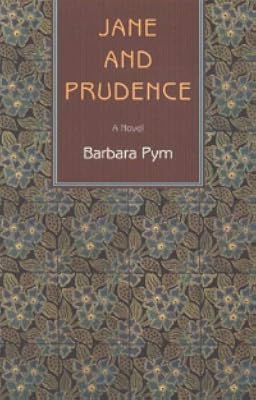
Jane and Prudence
by Barbara Pym 
On This Page
Description
The author of Excellent Women explores female friendship and the quiet yearnings of British middle-class life-a literary delight for fans of Jane Austen. Jane Cleveland and Prudence Bates were close friends at Oxford University, but now live very different lives. Forty-one-year-old Jane lives in the country, is married to a vicar, has a daughter she adores, and lives a very proper life in a very proper English parish. Prudence, a year shy of thirty, lives in London, has an office job, and is show more self-sufficient and fiercely independent-until Jane decides her friend should be married. Jane has the perfect husband in mind for her former pupil: a widower named Fabian Driver. But there are other women vying for Fabian's attention. And Pru is nursing her own highly inappropriate desire for her older, married, and seemingly oblivious employer, Dr. Grampian. What follows is a witty, delightful, trenchant story of manners, morals, family, and female bonding that redefines the social novel for a new generation. show lessTags
Recommendations














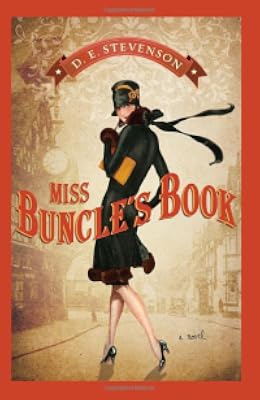


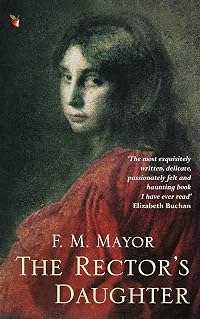




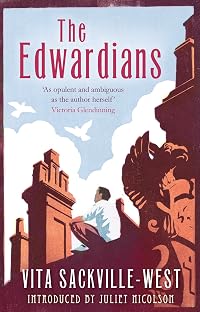
Member Recommendations
by anonymous user


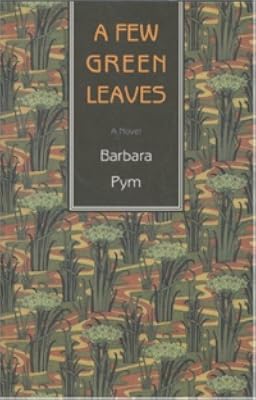
KayCliff Also about two friends who were at Oxford together, in later life.

Member Reviews
In 1950s England, Jane and Prudence are both quietly unhappy and neither fully aware of it. Jane, in her early 40s, is a bored vicar's wife who performs a kind of learned helplessness whenever the prospect of having to actually do something appears. Prudence, her more glamorous, unmarried younger friend, is teetering on the brink of 30 and thus the social oblivion of confirmed spinsterhood. Some events happen, but this is not the kind of book to have either much by way of plot or of lessons learned.
The best part of Barbara Pym's writing is her eye for the precise and telling detail, for the ridiculousness and awkwardness of much social ritual. Jane, Prudence, and her circle are entertaining to observe in an anthropological way, though show more I didn't like any of them as people. How the various characters are paired off (or not) at the end is predictable, but there's just enough narrative awareness of the bleakness beneath the conventional to leaven it. Marriage will not liberate any of these people. I've seen descriptions of this book as being charming and gentle, but while there are definitely amusing moments (e.g. Jane's comments on the absolute impossibility of a Church of England clergyman consuming a salad with garlic in it), my overall impression was one of disquiet. show less
The best part of Barbara Pym's writing is her eye for the precise and telling detail, for the ridiculousness and awkwardness of much social ritual. Jane, Prudence, and her circle are entertaining to observe in an anthropological way, though show more I didn't like any of them as people. How the various characters are paired off (or not) at the end is predictable, but there's just enough narrative awareness of the bleakness beneath the conventional to leaven it. Marriage will not liberate any of these people. I've seen descriptions of this book as being charming and gentle, but while there are definitely amusing moments (e.g. Jane's comments on the absolute impossibility of a Church of England clergyman consuming a salad with garlic in it), my overall impression was one of disquiet. show less
Endless cups of tea, and jumble sales, and speculations about eligible bachelors and in-fighting among the members of the church council (with the odd defection to the High side, or even *gasp* to ROME) all making for a delightful glimpse of parish life, this time from the perspective of poor Jane Cleveland, who tries with very little success to be a proper vicar's wife though her talents are terribly unequal to the job. Once or twice she sent me into a complete fit of giggles. Pym can seem so mild and harmless at first, and then she sticks the dagger in.
2013
2013
After my recent stack of depressing non-fiction and novels about genocide, I decided it was time to read something not relentlessly downbeat. Several people recommended Barbara Pym’s novels as cheering, so I scoured the library for them and read ‘Jane and Prudence’ on the train. It was indeed charming and hilarious. Pym has an excellent ear for social awkwardness - inviting strangers to tea, the dynamics of office tea-making, etc. The titular main characters are appealingly real and reminded me of people I know. Indeed, I found Prudence quite personally relatable, albeit not in her love life. Although the plot is largely concerned with love lives, all discussion of men has a scrupulously polite yet subversively damning tone. For show more instance:
I loved that this was no fairytale, rather it was an astute and deadpan comedy of manners centring on two intelligent women lacking intellectual challenges. The meticulously observed moments of farce are delightful, especially Jane’s absence of domestic skills:
The clothing descriptions are another highlight. Prudence has a red velvet dressing gown/house coat that I covet to lounge around my own flat in. I will definitely be reading more of Pym’s novels, as the library has a selection. They will break up the Stalinism and dystopias nicely. show less
Indeed, it was obvious that at times she found him both boring and irritating. But wasn’t that what so many marriages were - finding a person boring and irritating yet loving him? Who could imagine a man who was never boring or irritating?
I loved that this was no fairytale, rather it was an astute and deadpan comedy of manners centring on two intelligent women lacking intellectual challenges. The meticulously observed moments of farce are delightful, especially Jane’s absence of domestic skills:
”Have you some garlic?” Prudence asked.
“Garlic?” echoed Jane in astonishment. “Certainly not! Imagine a clergyman and his wife going through the parish smelling of garlic!”
“But it does improve a salad.”
“Let the lettice be well washed,” Jane said airily; “that’s the main thing.”
The clothing descriptions are another highlight. Prudence has a red velvet dressing gown/house coat that I covet to lounge around my own flat in. I will definitely be reading more of Pym’s novels, as the library has a selection. They will break up the Stalinism and dystopias nicely. show less
Jane and Prudence begins:
Jane and Prudence were walking in the college garden before dinner. Their conversation came in excited little bursts, for Oxford is very lovely in midsummer, and the glimpses of grey towers through the trees and the river at their side moved them to reminiscences of earlier days.
My first reaction was: How, oh how, had I not discovered this book sooner?
On the other hand, I wonder if this is a book I needed to encounter now. It is charming but it is also unromantic and sometimes uncomfortably astute.
Jane and Prudence are two friends who met years earlier at Oxford as a tutor and a student respectively. Jane is a vicar’s wife, adjusting to life in a new parish, while Prudence is twenty-nine and unmarried and show more works in a London office. Jane invites Prudence to stay, with visions of being like an Anthony Trollope character and engaging in a spot of match-making, and life refuses to unfold as expected.
I appreciated the way Jane is not particularly good at some things, like running an efficient household or wearing the right clothes or keeping her thoughts to herself, and that those closest to her, and she herself, are not particularly bothered by this. There’s a realistic acceptance of Jane as she is that I found refreshing. Jane and Prudence’s friendship is also realistic and refreshing - they don’t always understand each other, but their friendship has persisted despite the differences in their ages and places in life.
Jane and Prudence has stuck in my head. I’m definitely going to be reading more Barbara Pym.
Husbands took friends away, [Prudence] thought, though Jane had retained her independence more than most of her married friends. And yet even she seemed to have missed something in life; her research, her studies of obscure seventeenth-century poets, had all come to nothing, and here she was, trying, though not very hard, to be an efficient clergyman’s wife, and with only very moderate success. Compared with Jane’s life, Prudence’s seemed rich and full of promise. She had her work, her independence, her life in London and her love for Arthur Grampian. But to-morrow, if she wanted to, she could give it all up and fall in love with somebody else. Lines of eligible and delightful men seemed to stretch before her, and with this pleasant prospect in mind she fell into a light sleep.
Later, however, she awoke with the realisation that married people did not understand the importance of the full hot-water bottle. show less
Jane and Prudence were walking in the college garden before dinner. Their conversation came in excited little bursts, for Oxford is very lovely in midsummer, and the glimpses of grey towers through the trees and the river at their side moved them to reminiscences of earlier days.
My first reaction was: How, oh how, had I not discovered this book sooner?
On the other hand, I wonder if this is a book I needed to encounter now. It is charming but it is also unromantic and sometimes uncomfortably astute.
Jane and Prudence are two friends who met years earlier at Oxford as a tutor and a student respectively. Jane is a vicar’s wife, adjusting to life in a new parish, while Prudence is twenty-nine and unmarried and show more works in a London office. Jane invites Prudence to stay, with visions of being like an Anthony Trollope character and engaging in a spot of match-making, and life refuses to unfold as expected.
I appreciated the way Jane is not particularly good at some things, like running an efficient household or wearing the right clothes or keeping her thoughts to herself, and that those closest to her, and she herself, are not particularly bothered by this. There’s a realistic acceptance of Jane as she is that I found refreshing. Jane and Prudence’s friendship is also realistic and refreshing - they don’t always understand each other, but their friendship has persisted despite the differences in their ages and places in life.
Jane and Prudence has stuck in my head. I’m definitely going to be reading more Barbara Pym.
Husbands took friends away, [Prudence] thought, though Jane had retained her independence more than most of her married friends. And yet even she seemed to have missed something in life; her research, her studies of obscure seventeenth-century poets, had all come to nothing, and here she was, trying, though not very hard, to be an efficient clergyman’s wife, and with only very moderate success. Compared with Jane’s life, Prudence’s seemed rich and full of promise. She had her work, her independence, her life in London and her love for Arthur Grampian. But to-morrow, if she wanted to, she could give it all up and fall in love with somebody else. Lines of eligible and delightful men seemed to stretch before her, and with this pleasant prospect in mind she fell into a light sleep.
Later, however, she awoke with the realisation that married people did not understand the importance of the full hot-water bottle. show less
ane is a clergyman's wife who has found that life isn't quite what she was expecting and tends to say what's on her mind without really thinking about who she's talking to. Her younger friend Prudence falls in and out of love, and currently has a crush on her boss, but there is an eligible bachelor in the village Jane and her husband have just moved to.
As with Jane Austen's novels, a brief summary of the plot really doesn't give you any idea of the richness of the characters and their everyday lives. It has laugh out loud moments that I'd forgotten about and some that I will never forget like the visit from Canon and Mrs. Pritchard.
"She had been feeling that things were pretty desperate if one found oneself talking about and almost show more quoting Matthew Arnold to comparative strangers, though anything was better than having to pretend you had winter and summer curtains when you had just curtains." show less
As with Jane Austen's novels, a brief summary of the plot really doesn't give you any idea of the richness of the characters and their everyday lives. It has laugh out loud moments that I'd forgotten about and some that I will never forget like the visit from Canon and Mrs. Pritchard.
"She had been feeling that things were pretty desperate if one found oneself talking about and almost show more quoting Matthew Arnold to comparative strangers, though anything was better than having to pretend you had winter and summer curtains when you had just curtains." show less
"They say that men only want one thing - that's the truth of the matter". Miss Doggett again looked puzzled; it was as if she had heard that men only wanted one thing, but had forgotten for the moment what it was."
Barbara Pym's third published novel is a slightly strange one. She was once famously reviewed as a novelist of "much incident and little wit", but I feel that - at least in this instance - the situation is rather the reverse! In the early 1950s, Jane, a vicar's wife, has just moved from London to a country parish, where her comparative uselessness (she can neither cook nor offer the kind of stern leadership over the church women's circle) sees her at odds with the town's expectations. Meanwhile, her friend and former student show more Prudence - 29 and thus rapidly becoming an old maid - visits from London and is drawn to a handsome but arrogant widower in town. Only Prudence has no idea she has a rival from most unexpected quarters.
Jane and Prudence takes the key concerns from the author's first two novels - spinsters, small town gossip, the relationship of people to the Church of England, love, academia, and "our greater English poets" - and reshuffles the deck. The same cards are deployed but this time with a markedly different effect. Critics have noted that where Pym's first, Some Tame Gazelle, is clearly a young writer's work, her second, Excellent Women, written in the first person, attempts to convey a more ironic, detached tone. I think at first Pym felt she needed to write in the first person to achieve this anthropological view of her characters. By the time of this novel, she was comfortable to write in the "free indirect discourse" style that will dominate her writing henceforth. Now, she gleefully moves from character to character, allowing us to view everyone from multiple perspectives; all are raised up, and all are subsequently deflated. One gets the sense that the novel could just as easily have been told from any character's point-of-view.
‘I suppose old atheists seem less wicked and dangerous than young ones,’ said Jane. 'One feels that there is something of the ancient Greeks in them.’
Jane and Prudence is the favourite Pym novel of Jilly Cooper, and the novelist Elizabeth Taylor wrote a profuse note of thanks to the author on publication. For me, it is certainly delightful, but the sheer plotlessness of the material is rather maddening. Prudence's relationship with Fabian Driver takes place mostly "offscreen", as it were, leaving the novel to fall on Jane's shoulders. And her biggest concern is a doubt when her vicar husband unexpectedly purchases some small cakes of soap in the shape of animals - to the consternation of guests! Perhaps my slight dissatisfaction is that Pym feels more comfortable when writing the quote-unquote spinster Prudence rather than the comfortably married Jane, and her decision to spend more time with the latter makes me feel deprived. Or it could be that - seven decades removed - the boorishness of every single male character frustrates, as they are fawned over by highly-capable women. (Around this time Pym notes in her diary, "With the years men get more bumbling and vague, but women get sharper" )
Still, this is often a very amusing novel. Jane is one of the author's university educated characters and prone to bursting out in her love for the great seventeenth- and eighteenth-century poets; the domineering Miss Doggett and her dowdy companion Miss Morrow are a hoot; and the determination with which small-town etiquette and politics play out is truly funny. (Who should be selected by the host to pour out tea? Is it ever appropriate to serve tinned salmon? What is the appropriate thing to do downstairs while ladies upstairs sort through the possessions of one's dead wife?) And in her dissection of the office workers in Prudence's city life, Pym paves the way for the editorial assistants and humdrum clerks who will play such poignant and/or wry roles in her future works.
A rather pleasing read, but I'm grateful that this marks the end of Pym's early "spinsters and tea" phase. show less
Barbara Pym's third published novel is a slightly strange one. She was once famously reviewed as a novelist of "much incident and little wit", but I feel that - at least in this instance - the situation is rather the reverse! In the early 1950s, Jane, a vicar's wife, has just moved from London to a country parish, where her comparative uselessness (she can neither cook nor offer the kind of stern leadership over the church women's circle) sees her at odds with the town's expectations. Meanwhile, her friend and former student show more Prudence - 29 and thus rapidly becoming an old maid - visits from London and is drawn to a handsome but arrogant widower in town. Only Prudence has no idea she has a rival from most unexpected quarters.
Jane and Prudence takes the key concerns from the author's first two novels - spinsters, small town gossip, the relationship of people to the Church of England, love, academia, and "our greater English poets" - and reshuffles the deck. The same cards are deployed but this time with a markedly different effect. Critics have noted that where Pym's first, Some Tame Gazelle, is clearly a young writer's work, her second, Excellent Women, written in the first person, attempts to convey a more ironic, detached tone. I think at first Pym felt she needed to write in the first person to achieve this anthropological view of her characters. By the time of this novel, she was comfortable to write in the "free indirect discourse" style that will dominate her writing henceforth. Now, she gleefully moves from character to character, allowing us to view everyone from multiple perspectives; all are raised up, and all are subsequently deflated. One gets the sense that the novel could just as easily have been told from any character's point-of-view.
‘I suppose old atheists seem less wicked and dangerous than young ones,’ said Jane. 'One feels that there is something of the ancient Greeks in them.’
Jane and Prudence is the favourite Pym novel of Jilly Cooper, and the novelist Elizabeth Taylor wrote a profuse note of thanks to the author on publication. For me, it is certainly delightful, but the sheer plotlessness of the material is rather maddening. Prudence's relationship with Fabian Driver takes place mostly "offscreen", as it were, leaving the novel to fall on Jane's shoulders. And her biggest concern is a doubt when her vicar husband unexpectedly purchases some small cakes of soap in the shape of animals - to the consternation of guests! Perhaps my slight dissatisfaction is that Pym feels more comfortable when writing the quote-unquote spinster Prudence rather than the comfortably married Jane, and her decision to spend more time with the latter makes me feel deprived. Or it could be that - seven decades removed - the boorishness of every single male character frustrates, as they are fawned over by highly-capable women. (Around this time Pym notes in her diary, "With the years men get more bumbling and vague, but women get sharper" )
Still, this is often a very amusing novel. Jane is one of the author's university educated characters and prone to bursting out in her love for the great seventeenth- and eighteenth-century poets; the domineering Miss Doggett and her dowdy companion Miss Morrow are a hoot; and the determination with which small-town etiquette and politics play out is truly funny. (Who should be selected by the host to pour out tea? Is it ever appropriate to serve tinned salmon? What is the appropriate thing to do downstairs while ladies upstairs sort through the possessions of one's dead wife?) And in her dissection of the office workers in Prudence's city life, Pym paves the way for the editorial assistants and humdrum clerks who will play such poignant and/or wry roles in her future works.
A rather pleasing read, but I'm grateful that this marks the end of Pym's early "spinsters and tea" phase. show less
The bio of Pym on the back of my copy of Jane and Prudence accuses her of writing primarily about "Anglican spinsters." The phrase itself seems like it's from another age, and so does Pym's novel about middle class British women making their way through the immediate postwar years.
Pym's women are intelligent and educated, and ambitious in their own way, but they never quite break free of their nineteen-fifties views of what women are meant to occupy themselves with--mainly, the occupation of finding a man to marry. Prudence might rebel against that fate, but she doesn't rebel in a very serious way. Even if she doesn't seem particularly attracted to marriage, her ambition goes no further than a series of romantic attachments with men, show more and she can't imagine a life beyond the meaning these men give to her life.
Pym's publisher dropped her abruptly in 1961 and she was out of print for fifteen years, which seems just about right, because her novels had no place in the decade of The Feminine Mystique. But going back to the novels after that turbulent era also seems right, because they capture a post-WWII mood so perfectly, and they are testaments to that time, and that world.
Many Pym readers are reminded of Jane Austen. I also felt that affinity, especially for the deft use of free indirect style, and the subtle bombs Pym crams into each paragraph, critiquing of the middle class and its values. But it's a darker vision than Jane Austen, because these women know how silly their lives are, and how wasted their talents are, in a world that affords them so few choices. So where Austen's novels are comedy-of-manners, Pym's novels are tragedy-of-manners. You feel the loss of what these women might have become, in other circumstances.
Pym is a new and unexpected favorite author for me. show less
Pym's women are intelligent and educated, and ambitious in their own way, but they never quite break free of their nineteen-fifties views of what women are meant to occupy themselves with--mainly, the occupation of finding a man to marry. Prudence might rebel against that fate, but she doesn't rebel in a very serious way. Even if she doesn't seem particularly attracted to marriage, her ambition goes no further than a series of romantic attachments with men, show more and she can't imagine a life beyond the meaning these men give to her life.
Pym's publisher dropped her abruptly in 1961 and she was out of print for fifteen years, which seems just about right, because her novels had no place in the decade of The Feminine Mystique. But going back to the novels after that turbulent era also seems right, because they capture a post-WWII mood so perfectly, and they are testaments to that time, and that world.
Many Pym readers are reminded of Jane Austen. I also felt that affinity, especially for the deft use of free indirect style, and the subtle bombs Pym crams into each paragraph, critiquing of the middle class and its values. But it's a darker vision than Jane Austen, because these women know how silly their lives are, and how wasted their talents are, in a world that affords them so few choices. So where Austen's novels are comedy-of-manners, Pym's novels are tragedy-of-manners. You feel the loss of what these women might have become, in other circumstances.
Pym is a new and unexpected favorite author for me. show less
Members
- Recently Added By
Lists

Favourite Virago Modern Classics
183 works; 38 members

Women's Stories
88 works; 13 members

1950s
340 works; 22 members

Fiction with Women's Names in the Title
378 works; 15 members

A Novel Cure
742 works; 23 members

things to read next
23 works; 1 member

Books Read in 2021
5,361 works; 114 members
Talk Discussions
Past Discussions
Barbara Pym centenary: Jane and Prudence in Virago Modern Classics (March 2013)
Jane and Prudence (with spoliers) in Barbara Pym (October 2009)
Author Information

27+ Works 14,730 Members
Novelist Barbara Pym was born in Shropshire and educated at Oxford University. An editor of Africa, an anthropological review, for many years, she published her first novel, Some Tame Gazelle, in 1950. Since then, a number of popular works have been published. Often compared with the works of Jane Austen in both manner and subject, Pym's novels show more are apparently guileless evocations of the foibles of aging and isolated characters. She has a sure, if understated, sense of her characters' psychology and of their unintentionally comic revelations about themselves and their futile lives. After the publication of No Fond Return of Love (1961), all her books were out of print until she was cited, coincidentally by both David Cecil and Philip Larkin, as among the most underestimated novelists of the 20th century. She subsequently completed two successful novels, The Sweet Dove Died (1978) and Quartet in Autumn (1978), the latter a comic-pathetic study of two men and two women in their sixties who work in the same office but lead separate, lonely lives outside. Many of her earlier books have since been reprinted, including Excellent Women (1952) and A Glass of Blessings (1958), both perceptive psychological studies of aging women taken advantage of by others. A posthumous novel, A Few Green Leaves (1980), is a superb comedy of provincial village life. (Bowker Author Biography) show less
Barbara Pym has a Legacy Library. Legacy libraries are the personal libraries of famous readers, entered by LibraryThing members from the Legacy Libraries group.
Some Editions
Series
Belongs to Publisher Series
Virago Modern Classics (531)
Work Relationships
Is contained in
Has as a reference guide/companion
Common Knowledge
- Canonical title
- Jane and Prudence
- Original publication date
- 1953
- People/Characters
- Jane Cleveland; Nicholas Cleveland; Prudence Bates; Flora Mowbray Cleveland; Dr. Arthur Grampian; Father Lomax (show all 15); Cannon Pritchard; Edward Lyall MP; Fabian Driver; Francis Oliver; Jessie Morrow; Miss Doggett; Geoffrey Manifold; Barbara Bird; William Caldicote
- Important places
- University of Oxford, Oxford, Oxfordshire, England, UK; Oxford, Oxfordshire, England, UK; Oxfordshire, England, UK; London, England, UK
- First words
- Jane and Prudence were walking in the college garden before dinner.
My grandfather was a clergyman so loved by his parishioners that he was known as 'St Richard'. (Introduction) - Quotations
- 'I was going to be such a splendid clergyman's wife when I married you, but somehow it hasn't turned out like The Daisy Chain or The Last Chronicles of Barset.'
- Last words
- (Click to show. Warning: May contain spoilers.)We have many more evenings before us if we want them.
(Click to show. Warning: May contain spoilers.)Barbara tragically died the following year from cancer, but her books will be read for ever. (Introduction) - Blurbers
- Cooper, Jilly
- Original language
- English
Classifications
Statistics
- Members
- 1,285
- Popularity
- 18,937
- Reviews
- 63
- Rating
- (3.91)
- Languages
- 5 — English, French, Hungarian, Italian, Spanish
- Media
- Paper, Audiobook, Ebook
- ISBNs
- 36
- ASINs
- 11