On This Page
Description
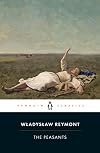
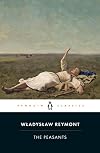
One of Poland's most engrossing twentieth-century epics, by the 1924 winner of the Nobel Prize for Literature In the village of Lipce, scandal, romance and drama crackle in every hearth. Boryna, a widower and the village's wealthiest farmer, has taken the young and beautiful Jagusia as his bride - but she only has eyes for his impetuous son Antek. Over the course of four seasons - Autumn to Summer - the tangled skein of their story unravels, watched eagerly by the other peasants: the gossip show more Jagustynka, pious Roch, hot-blooded Mateusz, gentle Witek ... Richly lyrical and thrillingly realist, at turns comic, tragic and reflective, Wladyslaw Reymont's magnum opus is a love song to a lasting dream of rural Poland, and to the eternal, timeless matters of the heart. show lessTags
Recommendations







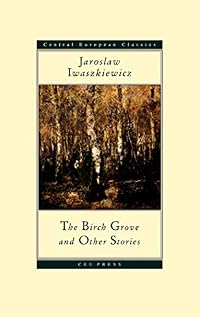
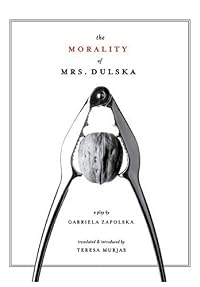
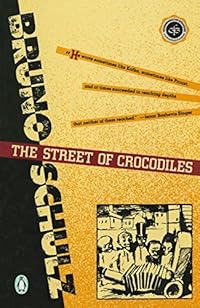


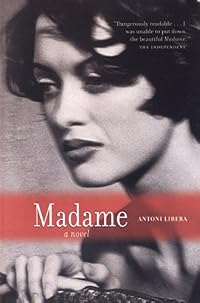





Member Reviews
I think your reaction to Reymont will depend largely on your willingness to be pleased with storytelling. Or, more precisely, storytelling alone. That he received the Nobel Prize (in 1924) for this work over Thomas Mann and Thomas Hardy strikes me as peculiar (to put it mildly). My problem with Reymont is precisely that: he is content to describe and, as good as he is at description, as good as he is at evoking a time and place, 900 pages later, there is not much more than that. Indeed, even his most fully realized characters lack much psychological depth; Reymont describes their behavior exhaustively but probes their motivations only marginally. There is very little in this work of four novels that provokes much thought notwithstanding show more his quite evident political sympathies. This may, however, be a matter of taste. I much prefer Marcel Pagnol’s masterwork, L’eau des collines (The Water of the Hills, comprising Jean de Florette and Manon des sources). Pagnol is likewise strong on the natural world…the color and texture of village life and landscape. Both writers each create worlds rich in the traditions and rhythms of life that is inextricably bound to the seasons. These works are as much about the land and everything in it they are about the lives of people. But where Pagnol uses this to fashion a masterful Greek tragedy, Reymont is content to tell a story. And although he is an excellent storyteller, I came away disappointed because I had hoped for more. I expected to come away with more to think about than I did. It may be unfair to blame Reymont for not writing the book I expected to read, but I will do so nonetheless. I enjoyed the world he created and I thought his characters, major and minor alike, were well-drawn. But I also thought that Reymont too often indulged himself; too often, for example, he gets caught up in his own lyricism and spends far too many pages on a scene, becoming repetitive and wearying. In addition, Reymont is overly fond of contrast. There are often lengthy romanticized paeans to nature and peasant life inevitably followed by long sections devoted to the destructive power of nature and the crushing weight of poverty. The first five times, the juxtapositions are impressive and convincing. By the tenth or fifteenth time, the effect is simply tiresome. Peasant life is idyllic but the poverty is cruel; rural nature is transcendent but the weather is atrocious. Over and over and over. Things are either black or white in Reymont’s world and too frequently both. Nine hundred pages of this constant back-and-forth plus scenes that drag on too long detract from otherwise excellent writing. I have no doubt that both extremes existed but Reymont never ceases to make the comparisons.* I am glad I read the work and some of the characters will stay with me. But in the end I think The Peasants is (only) enjoyable and occasionally quite satisfying—my way of damning the work with faint praise (an English idiom meaning to criticize while appearing to praise). It is well-written and easy to read; after reading the first volume in the century old first English translation, I read the rest in the new Zaranko [2022] translation which is extremely well annotated, although the translator’s very peculiar choice to cast some of the dialect in the vocabulary and syntax of the Pennines of northern England—no, I’m (sadly) not kidding—is regularly and predictably more than a little jarring. You will enjoy the books…but I predict that not much will stay with you.
(*This raises a point that I think is fascinating although it is tangential here: the impact of editors on literary fiction. They haven’t been around all that long. The fact that some of the world’s greatest writers wrote and published what they did without the benefit (and I use that word with caution) of a good editor makes their work that much more impressive. I can’t help wonder what our estimation of Hemingway or Fitzgerald or Wolfe would be if Max Perkins had not been their editor. Or Faulkner or Eugene O’Neill without Saxe Commins.) show less
(*This raises a point that I think is fascinating although it is tangential here: the impact of editors on literary fiction. They haven’t been around all that long. The fact that some of the world’s greatest writers wrote and published what they did without the benefit (and I use that word with caution) of a good editor makes their work that much more impressive. I can’t help wonder what our estimation of Hemingway or Fitzgerald or Wolfe would be if Max Perkins had not been their editor. Or Faulkner or Eugene O’Neill without Saxe Commins.) show less
Ratings
Members
- Recently Added By
Lists

Nobel Price Winners
222 works; 20 members

Lamont's Hundred Best Novels (1947)
100 works; 4 members

Trinity College Booklist (1951): Class Nine, Foreign Literatures
161 works; 3 members

For Further Reading: A List of 160 Novels from 15 Literatures
160 works; 4 members

Books Read in 2025
4,090 works; 97 members
Author Information

153+ Works 586 Members
Born into a lower middle-class Catholic family, the novelist Reymont had little formal education, but his eventful life as a theater hand and railroad worker provided him with plentiful material for his writing. Although a straightforward realist, he wrote with a lyrical perfection of style. This, combined with sharp psychological insight, placed show more him in the forefront of Polish fiction until his death. Reymont wrote short stories as well, but he is best known for his novels about Polish life in both rural and urban societies. His magnum opus, The Peasants (1902--09), leading to the Nobel Prize in 1924, is a broad panorama of a village caught in internal conflicts of the magnitude of those in classical Greek tragedy. It is characterized, in the words of Per Hallstrom, "by an art so grand, so sure, so powerful, that we may predict a lasting value and rank for it, not only within Polish literature but also within the whole of that branch of imaginative writing which has here been given a distinctive and monumental shape." (Bowker Author Biography) show less
Awards and Honors
Series

Belongs to Publisher Series
Common Knowledge
Classifications
- Genres
- Fiction and Literature, General Fiction
- DDC/MDS
- 891.85 — Literature & rhetoric Literatures of other languages East Indo-European and Celtic literatures West and South Slavic languages (Bulgarian, Slovene, Polish, Czech, Slovak, Serbo-Croatian, and Macedonian) Polish
- LCC
- PG7158 .R4 .C5 — Language and Literature Slavic languages and literatures. Baltic languages. Albanian language Slavic. Baltic. Albanian Slavic Polish
- BISAC
Statistics
- Members
- 188
- Popularity
- 173,284
- Reviews
- 2
- Rating
- (3.98)
- Languages
- 11 — Dutch, English, Finnish, French, German, Hungarian, Italian, Polish, Russian, Slovenian, Spanish
- Media
- Paper, Ebook
- ISBNs
- 29
- ASINs
- 11