On This Page
Description
I was born in 1939. The other big event of that year was the outbreak of the Second World War, but for the moment that did not affect me. In the first instalment of Clive James's memoirs we follow the young Clive on his journey from boyhood to the cusp of manhood, when his days of wearing short trousers are finally behind him. Battling with school, girls, various relatives and an overwhelming desire to be a superhero, Clive's adventures growing up in the suburbs of post-war Sydney are show more hair-raising, uproarious and almost too good to be true ...Told with James's unassailable sense of humour and self-effacing charm, Unreliable Memoirs is a hilarious and touching introduction to the story of a national treasure. A million-copy bestseller, this classic memoir is a celebration of life in all its unpredictable glory. show lessTags
Recommendations
















Member Recommendations
Member Reviews
At the start of this memoir of his childhood through to early adulthood, Clive James warns us not to trust him: ‘Most first novels are disguised autobiographies. This autobiography is a disguised novel….So really the whole affair is a figment got up to sound like the truth’. It might sound like unusual honesty from a memoirist, but I suspect it’s more in the way of an ingenious double bluff: James preparing to reveal all in sometimes embarrassing detail while simultaneously creating a convenient face-saving smokescreen. The Cretan who said all Cretans are liars springs to mind. We know the biographical outline is true, James is raised in a suburb of Sydney by his war widow mother, and his detailing of his inner life also has the show more unmistakable ring of authenticity. The book is, I think, emotionally truthful without being slavishly faithful to the facts. Later on he relates how he gained popularity with his schoolmates by telling tall tales - of his ‘close personal acquaintance with Rommel’, for instance. Such comedic exaggeration formed the basis of much of what James did, this autobiography being a notable example. He continually inflates the facts to render them funny. Like his playground audience, however, the reader is in on the joke, and exaggerating the objective facts of our lives does not necessarily distort the subjective truth of them: it might well amplify it. Although the term autofiction was still in its infancy when the book was published in 1980, that’s undoubtedly what it is.
James goes out of his way to portray himself as an obnoxious little shit. Perhaps he goes too far, the endless litany of his misdemeanours and inadequacies eventually reading like an inverted form of boasting. Clever Clive is typically ahead of the reader, pre-empting this very criticism by observing: ‘I am also well aware that all attempts to put oneself in a bad light are doomed to be frustrated. The ego arranges the bad light to its own satisfaction’. He also acknowledges that candour about one’s faults doesn’t preclude ignorance of them. Towards the end, writing about a relationship, he observes: ‘I rather liked the idea of being thought of as a shit - a common conceit among those who don’t realise just how shitty they really are’. Nonetheless, his regret over his often insensitive, thoughtless and ungrateful behaviour towards his widowed mother is communicated with patent sincerity.
He provides some useful life tips, not least how to fart on cue to maximum effect in the classroom: ‘The whole secret of raising a laugh with a fart in class is to make it sound as if it is punctuating, or commenting upon, what the teacher is saying. Timing, not ripeness, is all’. Unreliable Memoirs scores high on the scatology-ometer. In addition to noxious bodily gases we are treated to generous helpings of poo, mucus and semen, all served up in his characteristically elegantly witty sentences; a combination of the crowd-pleasing and the erudite being another Jamesian hallmark. It’s also sexually candid, possibly more so than such a memoir would be nowadays, with graphic recollections of his early sexual experiences. The numerous idiocies and largely self-inflicted torments of male adolescence are chronicled with self-lacerating acuity, as the teenage Clive frets about the size of his dick and other lamentable physical imperfections. This book isn’t for the squeamish or easily shocked, but then neither are childhood and adolescence.
I first read it when it came out and recently came across a copy in a charity bookshop. It’s still just as funny as I remembered, reason enough to read it as truly funny books are thin on the shelves, but it’s more substantial than that might suggest. Despite the title this is a genuinely confessional memoir full of regret over bad behaviour mixed with unmistakable longing for Housman’s ‘blue remembered hills’ of childhood. It’s a mea culpa and a love letter to ‘the land of lost content’; that land, in this case, being both childhood and Australia. James, writing as a self-exile in rainy England, evokes his homeland so vividly that it is less a setting and more a central character, bringing both it and the past to life in prose which is pure poetry-:
‘Hunting for cicadas in the peppercorns and the willows, you were always in search of the legendary black prince, but invariably he turned out to be a redeye. The ordinary cicada was called a pisser because he squirted mud at you. The most beautiful cicada was the yellow Monday. He was as yellow as a canary and transparent as crystal. When he lifted his wings in the sunlight the membranes were like the deltas of little rivers. The sun shone straight through him. It shone straight through all of us’. show less
James goes out of his way to portray himself as an obnoxious little shit. Perhaps he goes too far, the endless litany of his misdemeanours and inadequacies eventually reading like an inverted form of boasting. Clever Clive is typically ahead of the reader, pre-empting this very criticism by observing: ‘I am also well aware that all attempts to put oneself in a bad light are doomed to be frustrated. The ego arranges the bad light to its own satisfaction’. He also acknowledges that candour about one’s faults doesn’t preclude ignorance of them. Towards the end, writing about a relationship, he observes: ‘I rather liked the idea of being thought of as a shit - a common conceit among those who don’t realise just how shitty they really are’. Nonetheless, his regret over his often insensitive, thoughtless and ungrateful behaviour towards his widowed mother is communicated with patent sincerity.
He provides some useful life tips, not least how to fart on cue to maximum effect in the classroom: ‘The whole secret of raising a laugh with a fart in class is to make it sound as if it is punctuating, or commenting upon, what the teacher is saying. Timing, not ripeness, is all’. Unreliable Memoirs scores high on the scatology-ometer. In addition to noxious bodily gases we are treated to generous helpings of poo, mucus and semen, all served up in his characteristically elegantly witty sentences; a combination of the crowd-pleasing and the erudite being another Jamesian hallmark. It’s also sexually candid, possibly more so than such a memoir would be nowadays, with graphic recollections of his early sexual experiences. The numerous idiocies and largely self-inflicted torments of male adolescence are chronicled with self-lacerating acuity, as the teenage Clive frets about the size of his dick and other lamentable physical imperfections. This book isn’t for the squeamish or easily shocked, but then neither are childhood and adolescence.
I first read it when it came out and recently came across a copy in a charity bookshop. It’s still just as funny as I remembered, reason enough to read it as truly funny books are thin on the shelves, but it’s more substantial than that might suggest. Despite the title this is a genuinely confessional memoir full of regret over bad behaviour mixed with unmistakable longing for Housman’s ‘blue remembered hills’ of childhood. It’s a mea culpa and a love letter to ‘the land of lost content’; that land, in this case, being both childhood and Australia. James, writing as a self-exile in rainy England, evokes his homeland so vividly that it is less a setting and more a central character, bringing both it and the past to life in prose which is pure poetry-:
‘Hunting for cicadas in the peppercorns and the willows, you were always in search of the legendary black prince, but invariably he turned out to be a redeye. The ordinary cicada was called a pisser because he squirted mud at you. The most beautiful cicada was the yellow Monday. He was as yellow as a canary and transparent as crystal. When he lifted his wings in the sunlight the membranes were like the deltas of little rivers. The sun shone straight through him. It shone straight through all of us’. show less
To me, this book is an absolute classic. There were parts where I was unable to read any further because of the tears of laughter in my eyes, but that probably prevented the more serious damage that could have resulted from reading on and laughing even more. However a great book needs more than humour, it needs to mean something, and this book addresses profound themes concerning family, love, confidence, life choices, regret and self-acceptance. I have read this book before, but I was astonished to find so much that I hadn't noticed on any previous reading. The author struggles with feelings of regret and frustration about how he acted as a child and young man, but he also tries to forgive himself for those transgressions. This makes show more it a very compelling read and it is well served by Clive James' clear prose and perfect comic timing. show less
In 2015 I wrote a short review of UNRELIABLE MEMOIRS:
It's one thing to know that a favourite commentator, reviewer and poet is going to die, the announcement of Clive James' illness coming many years ago now, and yet another to get the news that the inevitable has happened. We lost an intelligent, wry, acerbic, deeply thoughtful person from this earth when he died, in what seems inevitable timing for these things - just when you felt we needed him most.
But it was the ultimate reminder I needed that a good re-read was required, so I went back to UNRELIABLE MEMOIRS and I've been moving slowly through the group of memoir novels, interspersed with dips into some of his poetry, all the while returning to listen to his reading of JAPANESE MAPLE (https://www.youtube.com/watch?v=op8Rbtqx_Rg). Such a poignant poem, sad and reflective, all the while tempered with the knowledge that James did, indeed
And I can't help but think how much he would have reflected on living past the end moment of the tree itself, but I digress.
Re-reading UNRELIABLE MEMOIRS five years on from the beauty of sparsity comments above, what struck me this time was the manner in which James writes audibly. Every scene, every moment of his life is described beautifully, but in a particularly aural manner. From the sound of the click of the lid of the nightsoil man's tin, to those little moments as a kid in the Australian summer, digging a network of tunnels in the backyard, everything about this man's writing is indeed dry, sparse, littered with moments where reflection is invited, peppered with observations that make you cry with laughter. There are quotes aplenty from these books available to those that search. My advice would be to read the books. Read every single one of his books. Re-read them.
show more
Many years ago I remember being given this book for my birthday with the comment "thought you might like this, he's the sort of droll smart-arse commentator that should appeal to you". The presenter of this present knew me well, although I think that they did a massive disservice to Clive James.
The first of a series of books he's subsequently written as memoir there is nobody in these books that James picks on more than himself. He has a wonderful, dry way of commenting on the obvious, of drawing out the reality of the comedy of life.
Everytime I read anything written by Clive James I'm reminded of the beauty of sparsity, of the power of the gaps between the lines. I'm also reminded
that this is the first of a series of novels and James could be seen to be holding back a little. Really looking forward to reading the next of the series now.
It's one thing to know that a favourite commentator, reviewer and poet is going to die, the announcement of Clive James' illness coming many years ago now, and yet another to get the news that the inevitable has happened. We lost an intelligent, wry, acerbic, deeply thoughtful person from this earth when he died, in what seems inevitable timing for these things - just when you felt we needed him most.
But it was the ultimate reminder I needed that a good re-read was required, so I went back to UNRELIABLE MEMOIRS and I've been moving slowly through the group of memoir novels, interspersed with dips into some of his poetry, all the while returning to listen to his reading of JAPANESE MAPLE (https://www.youtube.com/watch?v=op8Rbtqx_Rg). Such a poignant poem, sad and reflective, all the while tempered with the knowledge that James did, indeed
Come autumn and its leaves will turn to flame.
What I must do
Is live to see that.That will end the game
For me, though life continues all the same:
And I can't help but think how much he would have reflected on living past the end moment of the tree itself, but I digress.
Re-reading UNRELIABLE MEMOIRS five years on from the beauty of sparsity comments above, what struck me this time was the manner in which James writes audibly. Every scene, every moment of his life is described beautifully, but in a particularly aural manner. From the sound of the click of the lid of the nightsoil man's tin, to those little moments as a kid in the Australian summer, digging a network of tunnels in the backyard, everything about this man's writing is indeed dry, sparse, littered with moments where reflection is invited, peppered with observations that make you cry with laughter. There are quotes aplenty from these books available to those that search. My advice would be to read the books. Read every single one of his books. Re-read them.
show less
Rilke used to say that no poet would mind going to gaol, since he would at least have time to explore the treasure house of his memory. In many respects Rilke was a prick.
Dear Clive James,
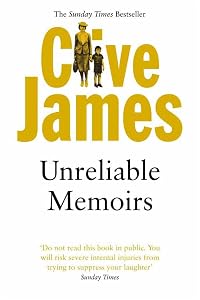
Thank you for writing this book which achieves exactly what it promises upon the cover. There, in bold letters my paperback version of this work promises that I will 'risk severe internal injuries from trying to suppress (your) laughter'. I did, on several occasions, laugh uncontrollably.
Whilst I am writing, may I request that you take on the task of producing my biography in the same half fact, half fiction style that you used for your reminiscences. I was impressed by the way that this left you entirely free to make up any bits that you wished so to do. Should anyone who was around at the time complain that this was not the way that they remembered the incident, you could simply point to the 'fiction get out show more clause'.
I would also like to congratulate you upon the subtle method utilised to tell the reader what an all out good guy you are. It is a masterpiece of English autobiography: rather than writing, "I am a really sensitive chap who is supremely intelligent", you tell us the exact opposite. This, in itself, makes it difficult for the reader to do other than mentally argue your case but, just to be sure, you berate yourself in a manner that makes clear that you now see the errors of your previous manner and have corrected every one of them. Add a sprinkling of words that sent me scurrying to the dictionary and a few literary allusions that required the perusal of the Oxford Guide to Literature, and your status as one of the very best wits of the English language is assured.
Yours Sincerely,
Ken Petersen.
P.S. If this encomium has left you feeling a little big headed, then I am about to bring you back down to earth: you didn't need to work so hard - I already knew that you were brilliant. show less
Thank you for writing this book which achieves exactly what it promises upon the cover. There, in bold letters my paperback version of this work promises that I will 'risk severe internal injuries from trying to suppress (your) laughter'. I did, on several occasions, laugh uncontrollably.
Whilst I am writing, may I request that you take on the task of producing my biography in the same half fact, half fiction style that you used for your reminiscences. I was impressed by the way that this left you entirely free to make up any bits that you wished so to do. Should anyone who was around at the time complain that this was not the way that they remembered the incident, you could simply point to the 'fiction get out show more clause'.
I would also like to congratulate you upon the subtle method utilised to tell the reader what an all out good guy you are. It is a masterpiece of English autobiography: rather than writing, "I am a really sensitive chap who is supremely intelligent", you tell us the exact opposite. This, in itself, makes it difficult for the reader to do other than mentally argue your case but, just to be sure, you berate yourself in a manner that makes clear that you now see the errors of your previous manner and have corrected every one of them. Add a sprinkling of words that sent me scurrying to the dictionary and a few literary allusions that required the perusal of the Oxford Guide to Literature, and your status as one of the very best wits of the English language is assured.
Yours Sincerely,
Ken Petersen.
P.S. If this encomium has left you feeling a little big headed, then I am about to bring you back down to earth: you didn't need to work so hard - I already knew that you were brilliant. show less
When I read, I usually have my voice inside my head. No matter how hard I try, the voice is always the same - there's no escaping it. Or so I thought. As soon as I started reading Clive James' memoirs of his childhood and adolesence growing up in Australia, my voice disappeared, and James's unmistakeable Australian brogue took its place.
'Unreliable Memoirs' is certainly well-written, with its own idiosyncratic style that works best when one reads slowly; however, I would dispute the assertion that this is an hilarious work, since it is only occasionally as funny as James himself. It is often poignant and insightful, always sincere and never too serious, but I only 'laughed out loud' once. Still, that's more often than usual for a book.
'Unreliable Memoirs' is certainly well-written, with its own idiosyncratic style that works best when one reads slowly; however, I would dispute the assertion that this is an hilarious work, since it is only occasionally as funny as James himself. It is often poignant and insightful, always sincere and never too serious, but I only 'laughed out loud' once. Still, that's more often than usual for a book.
Acerbic nostalgia? Is there such a thing? If so I think this "autobiography disguised as a novel" fits the description. Yes as the cover says it's laugh out loud funny but under the laughter is the poignant story of a boy who lost his father to WWII growing up insecure in post war Sydney. Read in one sitting. Beautiful, erudite, coarse, elegant a mass of contradictions which I still have to assimilate...
I remembered this book as being much funnier when I first read it 40 years ago. This time round it did make me smile a lot but I could easily have read it on a train or any other form of public transport.
Forty years on the kid from Kogarah recounts growing up in Australia before embarking on a new life in England. I loved grandfather and the Heimlich manoeuvre, the dunny can disaster and the billy-cart train.
“Despite the temperature being 100 degrees Fahrenheit in the shade, there had been the full panoply of ragingly hot food, topped off with a volcanic plum pudding smothered in scalding custard.”
“Suddenly there was the noise of … well, it was mainly the noise of a dunny man running full tilt into a bicycle. The uproar was made show more especially ominous by the additional noise – tiny but significant in context – of a clipped lid springing off”.
“First gradually, then with stunning finality, the monster lashed its enormous tail. The air was full of flying ball-bearings, bits of wood, big kids, little kids, koalas and dummies. Most disastrously of all, it was also full of poppy petals. Not a bloom escaped the scythe.”
However, the incessant willy wanging became rather trying, Milo the Magnificent and his garage antics were far from magnificent and the plethora of highbrow literary references started to get me down.
I could imagine Clive James narrating his self-deprecating and at times poignant Unreliable Memoirs in his distinctive, antipodean twang with a sardonic smile on his face. Gone but never forgotten. show less
Forty years on the kid from Kogarah recounts growing up in Australia before embarking on a new life in England. I loved grandfather and the Heimlich manoeuvre, the dunny can disaster and the billy-cart train.
“Despite the temperature being 100 degrees Fahrenheit in the shade, there had been the full panoply of ragingly hot food, topped off with a volcanic plum pudding smothered in scalding custard.”
“Suddenly there was the noise of … well, it was mainly the noise of a dunny man running full tilt into a bicycle. The uproar was made show more especially ominous by the additional noise – tiny but significant in context – of a clipped lid springing off”.
“First gradually, then with stunning finality, the monster lashed its enormous tail. The air was full of flying ball-bearings, bits of wood, big kids, little kids, koalas and dummies. Most disastrously of all, it was also full of poppy petals. Not a bloom escaped the scythe.”
However, the incessant willy wanging became rather trying, Milo the Magnificent and his garage antics were far from magnificent and the plethora of highbrow literary references started to get me down.
I could imagine Clive James narrating his self-deprecating and at times poignant Unreliable Memoirs in his distinctive, antipodean twang with a sardonic smile on his face. Gone but never forgotten. show less
Members
- Recently Added By
Published Reviews
ThingScore 100
What accounts for Unreliable Memoirs being the best memoir in the world? And by that I mean no backhand compliment. The memoir genre has suffered an over-grown pullulating decadence of bloom in the 35 years since Clive's work was published. One need only be bitten by a shark or fondled by a stepdad to unload one's history upon the reading public. Nowadays to say "best memoir in the world" is show more almost to say "best fart in an elevator"...
Clive exaggerates to wonderfully honest effect. He sets to work with singular material, a combination of an exceptional young mind, an upbringing in the exotically named town of Kogarah, a pained childhood with his father, a Japanese prisoner of war, surviving only to die in a repatriation plane crash and his mother worn by worry and toil and, finally, tragedy. Then Clive, by a wild act of exaggeration, makes all this universal. He takes the yeast of his memory and plants it in the bread dough of ours. show less
Clive exaggerates to wonderfully honest effect. He sets to work with singular material, a combination of an exceptional young mind, an upbringing in the exotically named town of Kogarah, a pained childhood with his father, a Japanese prisoner of war, surviving only to die in a repatriation plane crash and his mother worn by worry and toil and, finally, tragedy. Then Clive, by a wild act of exaggeration, makes all this universal. He takes the yeast of his memory and plants it in the bread dough of ours. show less
added by SnootyBaronet
Lists

Best Autobiographies and Memoirs
370 works; 67 members

BBC Radio 4 Bookclub
341 works; 13 members

20 books to cheer you up now.
20 works; 2 members

Clues about Australia
38 works; 1 member
Author Information

75+ Works 7,315 Members
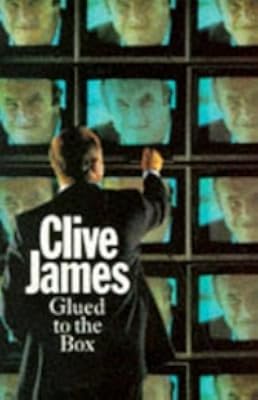
Vivian Leopold James was born on Oct. 7, 1939, in Kogarah, a suburb of Sydney, Australia. His father was taken prisoner by the Japanese at the beginning of World War II and died when the American transport plane carrying him back to Australia crashed into Manila Bay.He changed his first name to Clive after Vivian Leigh became famous for starring show more in Gone With the Wind. After graduating from the University of Sydney and working briefly as an assistant editor on The Sydney Morning Herald, Mr. James set sail for London in 1962. The first volume of his autobiography, "Unreliable Memoirs", which was published in 1980 and rose to the top of the best-seller list in Britain, described his childhood in Australia. Its sequel, "Falling Towards England", covered, in often painful detail, his mostly unsuccessful attempts to gain traction in London, where he shared a flat with the future filmmaker Bruce Beresford. Pembroke College, Cambridge, came to the rescue, offering him a place. Mr. James did manage to earn a degree and even embarked on a doctoral dissertation. Eric Idle, the future Monty Python star, welcomed him into Footlights, the student theatrical troupe; he became its president. He pressed his poems on every journal available and parlayed his enthusiasm for Hollywood. A scrambling career in literary journalism followed, recounted in "North Face of Soho". His essays were first collected in "The Metropolitan Critic" (1974). Later collections included "At the Pillars of Hercules" (1977) and "From the Land of Shadows" (1982). His television criticism, issued in book form in "Visions Before Midnight" (1977), "The Crystal Bucket" (1981) and "Glued to the Box" (1983), was gathered in a single volume, "On Television," in 1991. Clive Leopold James passed away on Sunday 12/01/2019 in Cambridge, England at the age of 80. show less
Series

Common Knowledge
- Canonical title
- Unreliable Memoirs
- Original title
- Unreliable Memoirs
- Original publication date
- 1980
- People/Characters
- Clive James
- Important places
- Jannali, New South Wales, Australia; Kogarah, New South Wales, Australia; University of Sydney, Sydney, New South Wales, Australia
- Epigraph
- Andromache led lamentation of the women, while she held in her hands the head of Hector, her great warrior.
'Husband, you are gone so young from life, and leave me in your home a widow. Our child is still but a little fell... (show all)ow, child of ill-fated parents, you and me. How can he grow up to manhood? Before that, this city shall be overthrown. For you are gone, you who kept watch over it, and kept safe its wives and their little ones...
'And you have left woe unutterable and mourning to your parents, Hector; but in my heart above all others bitter anguish shall abide. Your hands were not stretched out to me as you lay dying. You spoke to me no living word that I might have pondered as my tears fell night and day.' - Iliad, xxiv, translated by S.E.Winbolt, from the Iliad Pocket Book, Constable, 1911. - Dedication
- To Rhoisin and Bruce Beresford
and the getting of wisdom - First words
- Most first novels are disguised autobiographies.
- Quotations
- Gradually even the most scornful among my listeners came to accept that what Jamesie said wasn't meant to be true - only entertaining.
'Toni: A Case Study' was my first attempt at a full-length fictional work. (This book is the second.)
Perhaps because I am not even yet sufficiently at peace with myself, I have not been able to meet those standards of honesty. Nothing I have said is factual except the bits that sound like fiction.
Rilke used to say that no poet would mind going to gaol, since he would at least have time to explore the treasure house of his memory. In many respects Rilke was a prick. - Last words
- (Click to show. Warning: May contain spoilers.)It always has and it always will, until even the last of us come home.
- Original language
- English
Classifications
- Genres
- Biography & Memoir, Nonfiction, General Nonfiction
- DDC/MDS
- 070.92 — Computer science, information & general works News media, journalism & publishing Documentary media, educational media, news media; journalism; publishing Biography And History Biographies
- LCC
- PR9619.3 .J27 — Language and Literature English English Literature English literature: Provincial, local, etc.
- BISAC
Statistics
- Members
- 1,059
- Popularity
- 24,402
- Reviews
- 14
- Rating
- (3.87)
- Languages
- English
- Media
- Paper, Audiobook, Ebook
- ISBNs
- 13
- ASINs
- 18