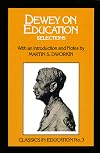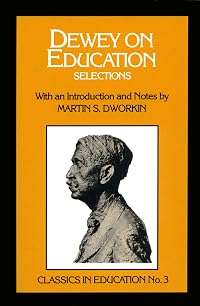
Dewey on Education (Classics in Education Series)
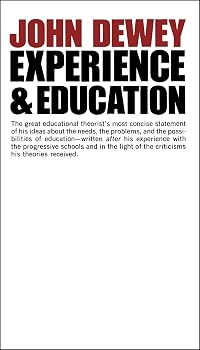
by John Dewey
78 Members (3.67)
On This Page
Description
Dworkin has gathered some of Dewey's clearest and most characteristic statements on education and set them in the stream of American social and intellectual history. In addition, he has indicated some of the rich literaature available to those who would probe more deeply into Dewey's ideas and the context in which they matured.Tags
Recommendations















Member Reviews
Members
- Recently Added By
Author Information

244+ Works 9,983 Members
John Dewey was born in 1859 in Burlington, Vermont. He founded the Laboratory School at the University of Chicago in 1896 to apply his original theories of learning based on pragmatism and "directed living." This combination of learning with concrete activities and practical experience helped earn him the title, "father of progressive education." show more After leaving Chicago he went to Columbia University as a professor of philosophy from 1904 to 1930, bringing his educational philosophy to the Teachers College there. Dewey was known and consulted internationally for his opinions on a wide variety of social, educational and political issues. His many books on these topics began with Psychology (1887), and include The School and Society (1899), Experience and Nature (1925), and Freedom and Culture (1939).Dewey died of pneumonia in 1952. (Bowker Author Biography) show less
Classifications
Statistics
- Members
- 78
- Popularity
- 407,053
- Rating
- (3.67)
- Languages
- English
- Media
- Paper, Ebook
- ISBNs
- 1
- ASINs
- 4