On This Page
Description
The sensationalizing sixties are coming to an end, and even writing a novel can make you a star. The writer Nathan Zuckerman publishes his fourth book, an aggressive, abrasive, and comically erotic novel entitled Carnovsky, and all at once he is on the cover of Life, one of the decade's most notorious celebrities.This is the same Nathan Zuckerman who in Philip Roth's much praised The Ghost Writer was the dedicated young apprentice drawing sustenance from the great books and the integrity of show more their authors. Now in his mid-thirties, Zuckerman, a would-be recluse despite his fame, ventures out on the streets of Manhattan, and not only is he assumed to be his own fictional satyr, Gilbert Carnovsky ("Hey, you do all that stuff in that book?"), but he also finds himself the target of admirers, admonishers, advisers, and would-be literary critics. The recent murders of Robert Kennedy and Martin Luther King, Jr., lead an unsettled Nathan Zuckerman to wonder if "target" may be more than a figure of speech.
Yet, streetcorner recognition and media notoriety are the least disturbing consequences of writing Carnovsky. Against his best interests, the newly renowned novelist retreats from his oldest friends, breaks his marriage to a virtuous woman, and damages, perhaps irreparably, his affectionate connection to his younger brother and his family. Even when finally he lives out the fantasies of his fans and enjoys an exhilarating night with the beautiful and worldly film star Caesara O'Shea (a rather more capable celebrity), he is dismayed the following morning by the caliber of the competition up in the erotic big leagues.
In some of the novel's funniest episodes Zuckerman endures the blandishments of another New Jersey boy who has briefly achieved his own moment of stardom. He is the broken and resentful fan Alvin Pepler, in the fifties a national celebrity on the TV quiz show "Smart Money." Thrust back into obscurity when headlined scandals forced the quiz show off the air, Pepler now attaches himself to Zuckerman and won't let go—an "Angel of Manic Delights" to the amused novelist (who momentarily sees him as his "pop self"), and yet also the likely source of a demonic threat.
But the surprise that fate finally delivers is more devilish than any cooked up by Alvin Pepler, or even by Zuckerman's imagination. In the coronary-care unit of a Miami Hospital, Nathan's father bestows upon his older son not a blessing but what seems to be a curse. And, in an astonishingly bitter final turn, a confrontation with his brother opens the way for the novelist's deep and painful understanding of the deathblow that Carnovsky has dealt to his own past.
. show less
Tags
Recommendations















Member Reviews
I'm inclined to be tougher on Roth than almost every other author. My qualm with him is the inevitable loss of control that mars a section or chapter; a tirade that goes on too long, or an overweaning obsession with sex and self-described physical illness, for instances. That was was the case in this book too. And yet, there are sections and passages in Zuckerman Unbound that are fantastic, marvelous, laugh out loud funny, or strike a satisfying chord in the reader. I suspect I'll feel miserly in retrospect for not giving him a full five-star assessment.
I'm glad this was much better than The Ghost Writer, if only because it somewhat justified my having read The Ghost Writer. Zuckerman came off a little too good in GW, and here he's much fuller, the good and the bad. Still I have no idea why Roth is the Great American Novelist. Perhaps it's there in the books I haven't read, perhaps I'm just too sensitive to the whiny self-righteousness of The Human Stain and that's clouding my judgment. Or perhaps he's over-rated.
I clearly have little to say about this book, except that the second half is much better than the first half, the clever clever bits are cleverer than they were in GW, and that still doesn't excuse shallow clever cleverness.
I clearly have little to say about this book, except that the second half is much better than the first half, the clever clever bits are cleverer than they were in GW, and that still doesn't excuse shallow clever cleverness.
Nathan Zuckerman is a Jewish novelist who has finally struck it big with "Carnovsky", a satiric comedy which is widely assumed to be based on his own family growing up. The book follows Zuckerman's struggles to deal with his new-found fame and fortune, and the problems it has caused for his relations with his family, particularly his dying father and younger brother. Well-written and intriguing, although it is sometimes difficult to feel much empathy for as fragile a persona as Nathan Zuckerman seems to be. I would assume this to be based on Philip Roth's own experiences, except he makes such an obvious point that Zuckerman's own readers are mistaken in so doing, that it seems to be one of the messages of the book.
Zuckerman bound is a four-volume trilogy plus epilogue comprising The ghost writer, Zuckerman unbound, The anatomy lesson and epilogue The Prague Orgy. It is a series of novels describing the rise of a Jewish novelist who resembles Philip Roth. Identity, particularly Jewish identity is one of the main themes in Roth's work.
I did not care much for The ghost writer which I read in 1996, and then abandoned the trilogy, but picking it up last November and reading Zuckerman unbound, I was gripped again as with many of his great novels.
While The ghost writer describes the struggles of the young, beginning writer, both the struggles with identity and carving out a place as a writer, in Zuckerman unbound the main character Nathan Zuckerman show more achieves celebrity status. At this stage the theme of identity gains a new dimensions broadening into exploring private and public appearance, and shaping a new identity as a successful, rich author. show less
I did not care much for The ghost writer which I read in 1996, and then abandoned the trilogy, but picking it up last November and reading Zuckerman unbound, I was gripped again as with many of his great novels.
While The ghost writer describes the struggles of the young, beginning writer, both the struggles with identity and carving out a place as a writer, in Zuckerman unbound the main character Nathan Zuckerman show more achieves celebrity status. At this stage the theme of identity gains a new dimensions broadening into exploring private and public appearance, and shaping a new identity as a successful, rich author. show less
This book is basically a fictionalized version of Roth's life after he published the widely praised and popular book, Portnoy's Complaint. In Zuckerman Unbound, his alter ego, Nathan Zuckerman, has just published a similar book. Zuckerman, like Roth, was completely unprepared for the celebrity and wealth he came into. He deals with the Jewish community's reaction to a book about a Jewish misanthrope, he gets death threats, his wife has left him and he can't go anywhere without being recognized -- and usually spat on.
It was interesting to me because I know that all of these things actually happened to Roth. I liked getting some perspective into how the publication of Portony's Complaint changed his life and his writing.
That said, it show more isn't the best of Roth's books and it felt more like something he felt he needed to write to make sense of what happened to him, as opposed to writing it for an audience. I would not recommend it to anyone who isn't already a Roth fan. show less
It was interesting to me because I know that all of these things actually happened to Roth. I liked getting some perspective into how the publication of Portony's Complaint changed his life and his writing.
That said, it show more isn't the best of Roth's books and it felt more like something he felt he needed to write to make sense of what happened to him, as opposed to writing it for an audience. I would not recommend it to anyone who isn't already a Roth fan. show less
(Reprinted from the Chicago Center for Literature and Photography [cclapcenter.com]. I am the original author of this essay, as well as the owner of CCLaP; it is not being reprinted illegally.)
As regular readers know, for a long time I've carried a pretty big chip on my shoulder when it comes to the Postmodernist era of literature, which I'm defining here as the period between Kennedy's death in 1963 and September 11th; I suppose it's a natural reaction for any underground artist, in fact, to rebel against the conventional wisdom they were raised on, to yearn for something new and almost diametrically opposite in the arts than what has become the safe status quo. But now that I'm a critic instead of a creative, and especially now that show more I'm writing the CCLaP 100 essay series (which is as much about examining the grand tapestry of literary history as it is about the individual books themselves), I now find it important to try to understand Postmodernism in a more complex way, to acknowledge not just its limitations but also its strengths, and what led its precepts into becoming the basis for a major movement in the first place. And there's not much of a better way to do this, I thought, than to read the remarkable nine-book series that Philip Roth has written over the decades on this subject, all of them featuring his fictional alter-ego Nathan Zuckerman; because not only is Roth considered one of the greatest writers of the Postmodernist period, but his Zuckerman books are an autobiographical look at his life during the Postmodernist years, from his college days right at the start of the era to his elderly years of our current times, a rare opportunity to examine an entire period of history through the related three-act narrative stories of someone who lived through it all, and who wrote most of the tales in nearly real time to when they were actually happening.
Last year I got a chance to review the first Zuckerman book, 1979's The Ghost Writer, which I encourage you to read first if you haven't already; taking place exactly twenty years previously, it is like I said a look at Roth's early twenties, when he was first breaking into the east-coast literary scene (i.e. getting his first stories published in magazines like The New Yorker), told through the filter of a dinner one night with a Bernard-Malamud- or Saul-Bellow-type mentor, a fellow Jew but a little older and a lot more famous, and who has a complicated relationship with his public reputation as a groundbreaking author of contemporary Jewish literature. (And in fact, now that I've read Bellow's Pulitzer-winning Humboldt's Gift, published just four years before The Ghost Writer, I've come to understand just what an homage Roth's book is to his, both of them laid-back looks at American intellectualism in the post-war period, and what exact role Jews had in it.) Today's book, then, Zuckerman Unbound, although written only two years after The Ghost Writer, skips ahead an entire decade in its setting: it's now 1971, just a year or two since Zuckerman's novel Carnovsky has become a national sensation, a naughty but witty "smart person's sex romp" published at the exact right moment of the countercultural revolution, and which has thrust Zuckerman into the role of spokesman for an entire generation of young, with-it Jews.
And for those who don't know, this is indeed exactly what happened in Roth's real life too -- that after establishing himself at the tail-end of Modernism with a series of stories written in the formal style of such Realists as Henry James, his filthy but funny Portnoy's Complaint from 1969 became a true highlight of the entire countercultural movement, and helped re-define young urban Jews into nebbish yet undeniable sex symbols of a new age (and this in the same years that Woody Allen was doing the same thing in the movie industry). It's something I talk about in detail during my write-up of the first Zuckerman book, but bears repeating, of just how successful such '60s and '70s figures as Roth, Allen, Lenny Bruce, Mel Brooks and others were at "normalizing" the ins-and-outs of Jewish life in the eyes of their mostly Christian mainstream audiences, so much so that we often forget now just how controversial such a thing was back then. As Roth so expertly reminds us in these books, for a long time after World War Two, Jews were of profoundly different minds regarding just how they should present themselves to society in the first place; after all, before the Holocaust, anti-Semitism was a semi-accepted part of life nearly across the planet, with it only being the pure brutality of the concentration camps that finally snapped so many Westerners out of their own anti-Jewish attitudes. Many Jews during the Mid-Century Modernist period thought that they should take advantage of this newfound collective goodwill, that they should as much as possible simply not remind people that Jews even exist, and the few times they do to make sure it's some example of noble selflessness like Anne Frank, the dead diary-writing teen who single-handedly had more to do with defining Judaism in the '50s and '60s than any other individual on the planet.
It was Roth and other young hip Jews of the countercultural period who changed all this, who dared to commit the unspeakable sin of portraying their fellow Jews as actual complex human beings, flaws and tics and all, who dared to talk about such exclusively Jewish subjects in their work as seder and sitting shiva, demanding that mainstream America get caught up to them, instead of them constantly having to dumb down their lives to a lily-white Christian audience. And like I said, although these artists of the Postmodernist period did such a good job at this that we barely even question such a thing anymore, to the generation of Jews who survived the Holocaust this was seen as the ultimate in self-hating behavior, to air their community's dirty laundry to a group of misunderstanding Caucasians who just thirty years ago had been slaughtering their people by the millions, and in these older Jews' minds were just itching for an excuse to start doing so again.
Or to cite an excellent example from the book itself, look at the consternation that is caused by including a spindly loser Jew as a character (based believe it or not on tainted quiz-show fallen hero Herb Stempel, who for a time in the '50s was the most famous living Jew in the entire United States), personally repulsive to most and always with an anti-Semitic conspiracy theory whenever something doesn't go his way...or in other words, Uncle Leo from Seinfeld. ("HELLLLOOO, Jerry!") It's remarkable, I think, that the mention of a character type that now elicits fond and knowing laughter was just forty years ago seen by most Jews as the height of race-sabotaging behavior; and that is the power of Postmodernism, that writers like Roth and others really were able to bring about a world where Seinfeld is now one of the most beloved television shows in history, a world where Yiddish terms now pepper the everyday vernacular of most Christians, and where nearly every suburban grocery store now has an entire aisle just for various ethnic speciality foods from around the world. And that like I said is the whole reason I'm reading the Zuckerman books in the first place, to understand all the remarkable things that the Postmodernists actually accomplished, instead of just always concentrating on the endless snotty irony and pop-culture worship that became unfortunate side-effects of the age.
Ultimately I can give this book no better of a compliment than to state the following, that reading this slyly funny, slow-moving character-based story made me understand what it must've been like to be a middle-aged intellectual in the early '80s -- you know, living in a rehabbed attic loft in Minneapolis or Denver, watching The Big Chill and thirtysomething, reading insightful novels about the human condition whose covers are rendered in big looping script typefaces, having debates at dinner parties over the continued relevance of Norman Mailer. Reading Zuckerman Unbound felt exactly like this, like getting literally transported back to this era, and it's easy to see why it's arguably the best and certainly one of the most popular of all the books in the entire Zuckerman series. It makes me glad that I took on this project in the first place, and I'm now looking highly forward to tackling the next book in the series, 1983's The Anatomy Lesson. show less
As regular readers know, for a long time I've carried a pretty big chip on my shoulder when it comes to the Postmodernist era of literature, which I'm defining here as the period between Kennedy's death in 1963 and September 11th; I suppose it's a natural reaction for any underground artist, in fact, to rebel against the conventional wisdom they were raised on, to yearn for something new and almost diametrically opposite in the arts than what has become the safe status quo. But now that I'm a critic instead of a creative, and especially now that show more I'm writing the CCLaP 100 essay series (which is as much about examining the grand tapestry of literary history as it is about the individual books themselves), I now find it important to try to understand Postmodernism in a more complex way, to acknowledge not just its limitations but also its strengths, and what led its precepts into becoming the basis for a major movement in the first place. And there's not much of a better way to do this, I thought, than to read the remarkable nine-book series that Philip Roth has written over the decades on this subject, all of them featuring his fictional alter-ego Nathan Zuckerman; because not only is Roth considered one of the greatest writers of the Postmodernist period, but his Zuckerman books are an autobiographical look at his life during the Postmodernist years, from his college days right at the start of the era to his elderly years of our current times, a rare opportunity to examine an entire period of history through the related three-act narrative stories of someone who lived through it all, and who wrote most of the tales in nearly real time to when they were actually happening.
Last year I got a chance to review the first Zuckerman book, 1979's The Ghost Writer, which I encourage you to read first if you haven't already; taking place exactly twenty years previously, it is like I said a look at Roth's early twenties, when he was first breaking into the east-coast literary scene (i.e. getting his first stories published in magazines like The New Yorker), told through the filter of a dinner one night with a Bernard-Malamud- or Saul-Bellow-type mentor, a fellow Jew but a little older and a lot more famous, and who has a complicated relationship with his public reputation as a groundbreaking author of contemporary Jewish literature. (And in fact, now that I've read Bellow's Pulitzer-winning Humboldt's Gift, published just four years before The Ghost Writer, I've come to understand just what an homage Roth's book is to his, both of them laid-back looks at American intellectualism in the post-war period, and what exact role Jews had in it.) Today's book, then, Zuckerman Unbound, although written only two years after The Ghost Writer, skips ahead an entire decade in its setting: it's now 1971, just a year or two since Zuckerman's novel Carnovsky has become a national sensation, a naughty but witty "smart person's sex romp" published at the exact right moment of the countercultural revolution, and which has thrust Zuckerman into the role of spokesman for an entire generation of young, with-it Jews.
And for those who don't know, this is indeed exactly what happened in Roth's real life too -- that after establishing himself at the tail-end of Modernism with a series of stories written in the formal style of such Realists as Henry James, his filthy but funny Portnoy's Complaint from 1969 became a true highlight of the entire countercultural movement, and helped re-define young urban Jews into nebbish yet undeniable sex symbols of a new age (and this in the same years that Woody Allen was doing the same thing in the movie industry). It's something I talk about in detail during my write-up of the first Zuckerman book, but bears repeating, of just how successful such '60s and '70s figures as Roth, Allen, Lenny Bruce, Mel Brooks and others were at "normalizing" the ins-and-outs of Jewish life in the eyes of their mostly Christian mainstream audiences, so much so that we often forget now just how controversial such a thing was back then. As Roth so expertly reminds us in these books, for a long time after World War Two, Jews were of profoundly different minds regarding just how they should present themselves to society in the first place; after all, before the Holocaust, anti-Semitism was a semi-accepted part of life nearly across the planet, with it only being the pure brutality of the concentration camps that finally snapped so many Westerners out of their own anti-Jewish attitudes. Many Jews during the Mid-Century Modernist period thought that they should take advantage of this newfound collective goodwill, that they should as much as possible simply not remind people that Jews even exist, and the few times they do to make sure it's some example of noble selflessness like Anne Frank, the dead diary-writing teen who single-handedly had more to do with defining Judaism in the '50s and '60s than any other individual on the planet.
It was Roth and other young hip Jews of the countercultural period who changed all this, who dared to commit the unspeakable sin of portraying their fellow Jews as actual complex human beings, flaws and tics and all, who dared to talk about such exclusively Jewish subjects in their work as seder and sitting shiva, demanding that mainstream America get caught up to them, instead of them constantly having to dumb down their lives to a lily-white Christian audience. And like I said, although these artists of the Postmodernist period did such a good job at this that we barely even question such a thing anymore, to the generation of Jews who survived the Holocaust this was seen as the ultimate in self-hating behavior, to air their community's dirty laundry to a group of misunderstanding Caucasians who just thirty years ago had been slaughtering their people by the millions, and in these older Jews' minds were just itching for an excuse to start doing so again.
Or to cite an excellent example from the book itself, look at the consternation that is caused by including a spindly loser Jew as a character (based believe it or not on tainted quiz-show fallen hero Herb Stempel, who for a time in the '50s was the most famous living Jew in the entire United States), personally repulsive to most and always with an anti-Semitic conspiracy theory whenever something doesn't go his way...or in other words, Uncle Leo from Seinfeld. ("HELLLLOOO, Jerry!") It's remarkable, I think, that the mention of a character type that now elicits fond and knowing laughter was just forty years ago seen by most Jews as the height of race-sabotaging behavior; and that is the power of Postmodernism, that writers like Roth and others really were able to bring about a world where Seinfeld is now one of the most beloved television shows in history, a world where Yiddish terms now pepper the everyday vernacular of most Christians, and where nearly every suburban grocery store now has an entire aisle just for various ethnic speciality foods from around the world. And that like I said is the whole reason I'm reading the Zuckerman books in the first place, to understand all the remarkable things that the Postmodernists actually accomplished, instead of just always concentrating on the endless snotty irony and pop-culture worship that became unfortunate side-effects of the age.
Ultimately I can give this book no better of a compliment than to state the following, that reading this slyly funny, slow-moving character-based story made me understand what it must've been like to be a middle-aged intellectual in the early '80s -- you know, living in a rehabbed attic loft in Minneapolis or Denver, watching The Big Chill and thirtysomething, reading insightful novels about the human condition whose covers are rendered in big looping script typefaces, having debates at dinner parties over the continued relevance of Norman Mailer. Reading Zuckerman Unbound felt exactly like this, like getting literally transported back to this era, and it's easy to see why it's arguably the best and certainly one of the most popular of all the books in the entire Zuckerman series. It makes me glad that I took on this project in the first place, and I'm now looking highly forward to tackling the next book in the series, 1983's The Anatomy Lesson. show less
Zuckerman tackles the fame and criticism of his successful novel. The problems he faces are portrayed with humor and insight.
This series is much better than other series of the time, for instance the Rabbit series written by Updike (which I hated) and the Bascombe series written by Ford (which I find depressing). All three of these series trace the same character during the twentieth century, exploring their lives in modern cities; similar themes are touched upon... relationships, marriage, sex, family life, work. Roth does the best job by far.
This series is much better than other series of the time, for instance the Rabbit series written by Updike (which I hated) and the Bascombe series written by Ford (which I find depressing). All three of these series trace the same character during the twentieth century, exploring their lives in modern cities; similar themes are touched upon... relationships, marriage, sex, family life, work. Roth does the best job by far.
Members
- Recently Added By
Author Information

114+ Works 74,689 Members
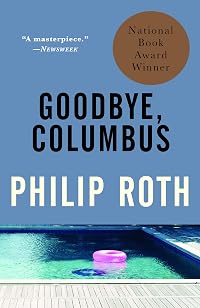
Philip Milton Roth was born in Newark, New Jersey on March 19, 1933. He attended Rutgers University for one year before transferring to Bucknell University where he completed a B.A. in English with highest honors in 1954. He received an M.A. from the University of Chicago in 1955. His first book, Goodbye, Columbus, received the National Book Award show more in 1960. His other books include Letting Go, When She Was Good, Portnoy's Complaint, My Life as a Man, The Ghostwriter, Zuckerman Unbound, I Married a Communist, The Plot Against America, The Facts, The Anatomy Lesson, Exit Ghost, Deception, Nemesis, Everyman, Indignation, and The Humbling. He won the National Book Critic Circle Awards in 1987 for his novel The Counterlife and in 1992 for his memoir Patrimony: A True Story. He won the PEN/Faulkner Award for Fiction in 1993 for Operation Shylock: A Confession and in 2001 for The Human Stain, the National Book Award in 1995 for Sabbath's Theater, and the Pulitzer Prize in 1998 for American Pastoral. He stopped writing in 2010. He died from congestive heart failure on May 22, 2018 at the age of 85. (Bowker Author Biography) show less
Some Editions
Awards and Honors
Awards
Distinctions
Series

Belongs to Publisher Series
Volk und Welt Spektrum (181)
Work Relationships
Common Knowledge
- Canonical title*
- De eenzaamheid van Zuckerman
- Original title
- Zuckerman Unbound
- Alternate titles*
- Der entfesselte Zuckerman
- Original publication date
- 1981
- People/Characters
- Nathan Zuckerman
- Epigraph*
- "Soll Nathan mal sehen, was es bedeutet, wenn man aus der Obskurität herausgeholt wird. Er soll bloß nicht bei uns anklopfen und behaupten, wir hätten ihn vorher nicht gewarnt." E . I. Lonoff zu seiner Frau am ... (show all)10. Dezember 1956
- Dedication*
- Für Philip Guston 1913 – 1980
- First words*
- "Was zum Teufel tun Sie denn in einem Bus, Sie mit Ihrem Zaster?"
- Last words*
- (Click to show. Warning: May contain spoilers.)It was now an African Methodist Episcopal Church.
- Original language*
- Inglese
*Some information comes from Common Knowledge in other languages. Click "Edit" for more information.
Classifications
Statistics
- Members
- 932
- Popularity
- 28,588
- Reviews
- 15
- Rating
- (3.72)
- Languages
- 13 — Chinese, Danish, Dutch, English, Finnish, French, German, Hebrew, Hungarian, Italian, Croatian, Spanish, Swedish
- Media
- Paper, Audiobook, Ebook
- ISBNs
- 41
- ASINs
- 18