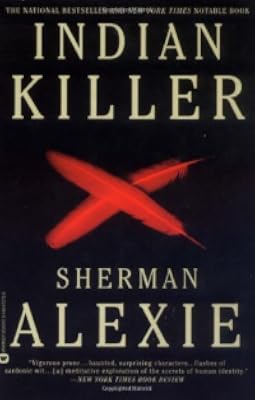
Indian Killer
by Sherman Alexie
On This Page
Description
A New York Times Notable Book: A series of brutal racially charged murders sets a city on edge in this thriller by a National Book Award–winning author.A serial murderer dubbed "the Indian Killer" has Seattle living in fear. As he scalps his victims and adorns their bodies with owl feathers, the city consumes itself in a nightmare frenzy of racial tension. Then a possible suspect emerges: John Smith. An Indian raised by whites, John is lost between cultures. He fights for a sense of show more belonging that may never be his—but has his alienation made him angry enough to kill?
The New York Times–bestselling author of You Don't Have to Say You Love Me and many other acclaimed works, Sherman Alexie traces John Smith's rage with scathing wit and masterly suspense, delivering both a scintillating thriller and a searing parable of race, identity, and violence.
This ebook features an illustrated biography including rare photos from the author's personal collection.
. show less
Tags
Recommendations

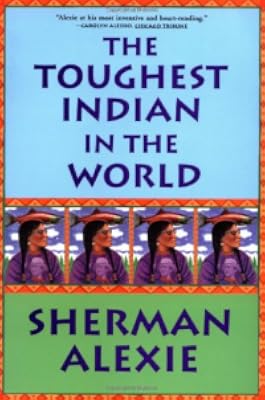
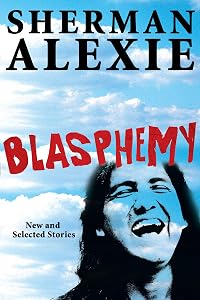
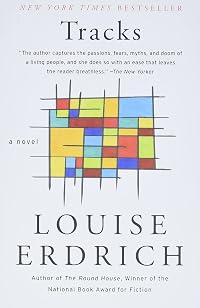

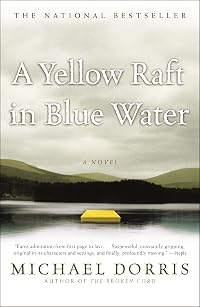



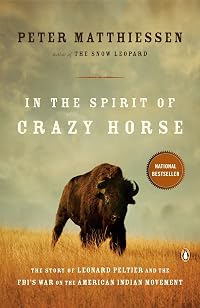
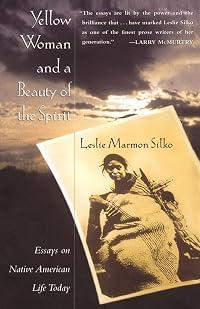
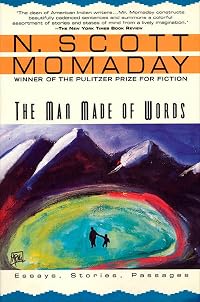
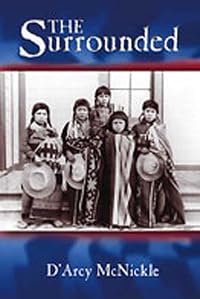

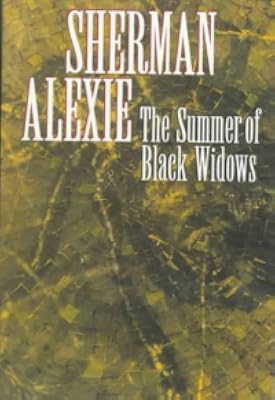
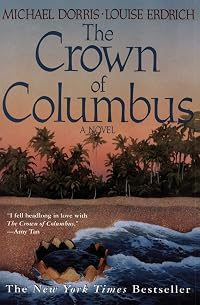


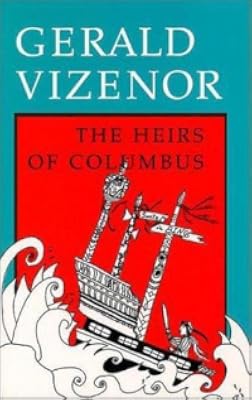
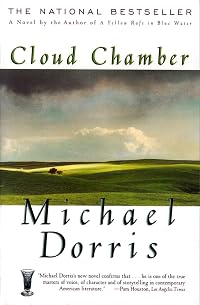
Member Recommendations
Member Reviews
Indian Killer is very violent and is much less a "mystery" (as many have billed it, and some have tagged it here on LT) than a catharsis. It feels like it was cathartic for Alexie to work through these issues of race and anger and identity, and it is interesting for that reason. The novel grapples with this question of small-scale interpersonal violence in response to the institutionalized violence of an oppressive government and society without coming to resolution, but it really grapples, over and over, with every incidence of violence that occurs. You can see it in the nonviolent plotlines as well: Marie's conflict with the literature professor (who seems like a caricature of a supercilious but out-of-touch academic, thinking that show more the white man can be the best Indian, namely himself -- but I have experienced this person so sadly I know he exists) clearly represents a sort of wish fulfillment fantasy that all of us who have hated the condescending "expert" on a topic we know intimately can relate to.
After reading the novel, I read an interview with Sherman Alexie in the Guardian (link: http://www.theguardian.com/books/2008/may/03/featuresreviews.guardianreview13)
Interestingly, in this interview, which was conducted ten years after Indian Killer was released, Alexie backs away from the novel's violence and almost throws his own novel on the pyre by saying he sees the violence in it with disgust now and thinks the entire thing was childish. At first I found this strange, because the violence in Indian Killer isn't gratuitous. It's reflecting a real feeling among certain people and populations and grapples with a real question of what to do in an unfair system and what justice means. But I think what he must be expressing is that this embarrasses him because he wasn't expressing a viewpoint but expressing his viewpoint, and his viewpoint has changed -- he'd say matured -- now. I think there's value in a viewpoint even if it isn't your own in fiction, so he could still own that the novel explores a viewpoint that exists elsewhere, external to himself. But it may still feel too fresh for him.
Anyway, the juxtaposition of political opinions in the novel versus the interview gave me a lot to think about.
(Readers of The Absolutely True Diary of a Part-Time Indian may also find the interview interesting, as it reveals how autobiographical that novel is, down to specific details. I didn't realize this when reading it.) show less
After reading the novel, I read an interview with Sherman Alexie in the Guardian (link: http://www.theguardian.com/books/2008/may/03/featuresreviews.guardianreview13)
Interestingly, in this interview, which was conducted ten years after Indian Killer was released, Alexie backs away from the novel's violence and almost throws his own novel on the pyre by saying he sees the violence in it with disgust now and thinks the entire thing was childish. At first I found this strange, because the violence in Indian Killer isn't gratuitous. It's reflecting a real feeling among certain people and populations and grapples with a real question of what to do in an unfair system and what justice means. But I think what he must be expressing is that this embarrasses him because he wasn't expressing a viewpoint but expressing his viewpoint, and his viewpoint has changed -- he'd say matured -- now. I think there's value in a viewpoint even if it isn't your own in fiction, so he could still own that the novel explores a viewpoint that exists elsewhere, external to himself. But it may still feel too fresh for him.
Anyway, the juxtaposition of political opinions in the novel versus the interview gave me a lot to think about.
(Readers of The Absolutely True Diary of a Part-Time Indian may also find the interview interesting, as it reveals how autobiographical that novel is, down to specific details. I didn't realize this when reading it.) show less
Understanding Sherman Alexie is a little complicated, a little conflicting. Listen to him speak and he'll stress that he's just a typical guy, that there's nothing really that mystical about being a Spokane Indian, or American Indian in general. Read one of his works, though, and you'll find his magic oozing between each page. Magic that's woven with tenderness, rage, and humor that's distinctly and unabashedly Indian. Magically real and real magic.
Such was my hunch after reading Indian Killer. Much more than a mystery, Indian Killer is an epic construct of the alienated and isolated American Indian, perhaps even just the American experience. Alexie interweaves the interconnectedness of a disparate set of characters, Indian and show more otherwise, within the mist and cold of Seattle.
The main theme of the story deals with the advancement of John Smith, adopted Spokane Indian by a young non-native couple from Seattle into adulthood. Smith is the symbol, the representation of alienation and marginalization, his actions set around a series of violent murders unhinging the city. The greater story, however, concerns itself more around the other archetypes Alexie so often seems conflicted with: the whites who are Indians of the "Wannabe Tribe", the academics who hijack Indian stories, the perpetually exploited and oppressed Indians, and the rednecks who take advantage when the right moment arises.
Alexie artfully interweaves each of these elements, while simultaneously providing beautifully rich detail of the setting. His description of Seattle, though not forced, is intensely deliberate. The distinctive neighborhoods, the dank roadways, the huddled yet resilient groups of homeless, the bookstores, and the water that envelops, isolates each.
In short, Indian Killer is a masterpiece. Sherman Alexie brings the Indian, but leaves the human imprint on the reader. It's a tragedy that belongs within the realm of magical realism, though savoring the magic within his writing is supremely uplifting. show less
Such was my hunch after reading Indian Killer. Much more than a mystery, Indian Killer is an epic construct of the alienated and isolated American Indian, perhaps even just the American experience. Alexie interweaves the interconnectedness of a disparate set of characters, Indian and show more otherwise, within the mist and cold of Seattle.
The main theme of the story deals with the advancement of John Smith, adopted Spokane Indian by a young non-native couple from Seattle into adulthood. Smith is the symbol, the representation of alienation and marginalization, his actions set around a series of violent murders unhinging the city. The greater story, however, concerns itself more around the other archetypes Alexie so often seems conflicted with: the whites who are Indians of the "Wannabe Tribe", the academics who hijack Indian stories, the perpetually exploited and oppressed Indians, and the rednecks who take advantage when the right moment arises.
Alexie artfully interweaves each of these elements, while simultaneously providing beautifully rich detail of the setting. His description of Seattle, though not forced, is intensely deliberate. The distinctive neighborhoods, the dank roadways, the huddled yet resilient groups of homeless, the bookstores, and the water that envelops, isolates each.
In short, Indian Killer is a masterpiece. Sherman Alexie brings the Indian, but leaves the human imprint on the reader. It's a tragedy that belongs within the realm of magical realism, though savoring the magic within his writing is supremely uplifting. show less
In this challenging but beautiful book, Sherman deals with personal identity, and in particular Native American identity, through the lens of a murder mystery. A plot summary simply does not do justice to this rich and complex novel, as it is "about" far more than the sequence of events that it contains. This is beautifully written, with powerful, deeply flawed characters and particularly potent descriptions of the Seattle setting. Darker than much of Alexie's other work, this novel will linger long after you read the last page.
"Dr. Mather, if the Ghost Dance worked, there would be no exceptions. All you white people would disappear. All of you. If those dead Indians came back to life, they wouldn't crawl into a sweathouse with you. They wouldn't smoke the pipe with you. They wouldn't go to the movies and munch popcorn with you. They'd kill you. They'd gut you and eat your heart out."
This was a reread for me and it was nothing like I recalled. John Smith, born to a 14-year-old Indian girl and given up for adoption to a white upper-middle-class couple, grows up without any real knowledge of his tribal heritage. As apparent schizophrenia develops for John, its tentacles of delusion, hallucination, and paranoia intertwine themselves with his reasonably-evolving show more roots of rage and isolation. John moves to Seattle and begins working construction. He also seeks belonging and safety in a world that is simply incomprehensible to him. His rage is murderous and, as he works to find his way in this city, a rash of violence emerges: white men are being killed, apparently by an Indian who leaves a "calling card" indicating his Native American identity. The violence escalates; Native American homeless people are particularly targeted for horrific battering.
This novel, surely not Alexie's best, is peopled with angry Native American students, angry white guys, a sad white Wannabe novelist who claims expertise in all things Indian, and some very sympathetic people who are just trying to get along. Its violence is real and I know that, years after the novel's publication, Alexie himself questioned his own writing and the commanding, unflinching presence of the violence. And yet. Here, in 2017, as we watch the national dialogue deteriorate inexorably into deep incivility, and as we witness ascendent, apparently incurable racist divisions and the spread of violence as a "solution," Alexie's novel is timely and astute. He may retroactively feel sheepish about his rage. But this is exactly the rage we are seeing in our society today. show less
This was a reread for me and it was nothing like I recalled. John Smith, born to a 14-year-old Indian girl and given up for adoption to a white upper-middle-class couple, grows up without any real knowledge of his tribal heritage. As apparent schizophrenia develops for John, its tentacles of delusion, hallucination, and paranoia intertwine themselves with his reasonably-evolving show more roots of rage and isolation. John moves to Seattle and begins working construction. He also seeks belonging and safety in a world that is simply incomprehensible to him. His rage is murderous and, as he works to find his way in this city, a rash of violence emerges: white men are being killed, apparently by an Indian who leaves a "calling card" indicating his Native American identity. The violence escalates; Native American homeless people are particularly targeted for horrific battering.
This novel, surely not Alexie's best, is peopled with angry Native American students, angry white guys, a sad white Wannabe novelist who claims expertise in all things Indian, and some very sympathetic people who are just trying to get along. Its violence is real and I know that, years after the novel's publication, Alexie himself questioned his own writing and the commanding, unflinching presence of the violence. And yet. Here, in 2017, as we watch the national dialogue deteriorate inexorably into deep incivility, and as we witness ascendent, apparently incurable racist divisions and the spread of violence as a "solution," Alexie's novel is timely and astute. He may retroactively feel sheepish about his rage. But this is exactly the rage we are seeing in our society today. show less
Seattle is brought to the brink of a race war as a killer kidnaps and murders white men, scalping them and leaving behind owl feathers. As racial tension is stoked, we see events unfolding through the eyes of a number of characters, including but not limited to: John, a man of Native American descent but adopted into a Caucasian family and now suffering badly from mental illness; Marie, a Native American college student who is happy to have left the reservation but is still fighting for indigenous rights and causes; Jack, a Caucasian ex-cop who claims to have Native American roots and now writes mystery novels featuring a Native detective; and Truck, a Caucasian talkshow host who spews hatred and racism to get more listeners.
With this show more novel, I thought Alexie wrote a compelling book with interesting characters. The characters are believable; none are perfect and indeed there are very few clear-cut "good guys" and "bad guys." Seeing from many perspectives allowed that point to sink in ever further. You might despise a character for their violence in one chapter, but in another you have some sympathy for their grief. Understandably given the gist of the book, Alexie brings up a lot about race, including identity and stereotyping. There are no easy answers here either, and again, no one comes out looking good.
I very much enjoyed this book as a thought-provoking yet entertaining read. The prose is beautiful and accessible. The only reason I didn't rate it higher is because I wasn't a huge fan of how open-ended the conclusion was. After 400+ pages, I wanted a little more closure than I got. Still, it was an interesting enough book that I would recommend it. show less
With this show more novel, I thought Alexie wrote a compelling book with interesting characters. The characters are believable; none are perfect and indeed there are very few clear-cut "good guys" and "bad guys." Seeing from many perspectives allowed that point to sink in ever further. You might despise a character for their violence in one chapter, but in another you have some sympathy for their grief. Understandably given the gist of the book, Alexie brings up a lot about race, including identity and stereotyping. There are no easy answers here either, and again, no one comes out looking good.
I very much enjoyed this book as a thought-provoking yet entertaining read. The prose is beautiful and accessible. The only reason I didn't rate it higher is because I wasn't a huge fan of how open-ended the conclusion was. After 400+ pages, I wanted a little more closure than I got. Still, it was an interesting enough book that I would recommend it. show less
Sherman Alexi’s 1996 novel, Indian Killer, is a first rate serial killer novel that is almost certain to intrigue any fan of that crime fiction subgenre. But it is so much more than that.
First, the book’s title is, at first glance, a little misleading. From its title, most readers would assume that Sherman Alexi has written a book about someone who is choosing Native Americans as his crime spree victims (as in the sense that Custer was an “Indian killer”), but exactly the opposite is true here. Instead, this is a story about a Native American, an Indian-killer, who is terrifying Seattle by randomly murdering and scalping his white victims.
Second, author Sherman Alexi is himself a Native American who grew up on the Spokane show more Indian Reservation in Washington. Alexi’s insight into what could motivate a main character such as this particular one to become the coldblooded killer he turns out to be makes the story all the more terrifying because it is all so logically crazy (if logical craziness is even possible).
Third, using primarily his secondary characters, Alexi shares a frank look with his readers about how many, if not most, Native Americans still feel today about what happened to their ancestors and the people responsible for the genocide they all too often suffered over the centuries. What Alexi’s characters have to say about all the Indian “wannabes” out there, those people who want so desperately to claim that they carry Indian blood for reasons of their own, is particularly damning. It is reminiscent, although it predates it by more than two decades, of Senator Elizabeth Warren’s embarrassing exposure as a shameless fraud who claimed to be a Native American entirely for her own personal gain.
So, there is already a lot packed into Indian Killer that readers will want to consider. And that’s even before the realization that an Indian is stalking white men sparks an all-out race war in Seattle. As the search for the killer goes on and on, tensions are high on both sides. Seattle’s Native Americans are nervous about leaving the reservation, and those who live in and around the city are mostly keeping their heads down. White hotheads, possibly as much to disguise their own nervousness and fear as much as anything else, are starting to mouth-off at any Indians they see on the streets. Seattle’s homeless Indian population is in particular danger from the nasty retaliation that occurs after each white victim is discovered.
Throw into the mix a novelist who badly wants people to believe his claim that he is an Indian; a bigoted radio talk show host who keeps his listeners on the verge of anti-Indian violence at all times; and a young Indian college student who leads campus protests about the bigotry she believes is directed at Indian students like her, and the city is sitting on a powder keg.
Bottom Line: Indian Killer is a memorable novel that only a Native American would have had the real credibility to write. There is almost as much in between the lines of this one as there is in the plot itself. It is a well written, fast-paced thriller with a message, a book that I recommend for all the reasons I’ve mentioned. show less
First, the book’s title is, at first glance, a little misleading. From its title, most readers would assume that Sherman Alexi has written a book about someone who is choosing Native Americans as his crime spree victims (as in the sense that Custer was an “Indian killer”), but exactly the opposite is true here. Instead, this is a story about a Native American, an Indian-killer, who is terrifying Seattle by randomly murdering and scalping his white victims.
Second, author Sherman Alexi is himself a Native American who grew up on the Spokane show more Indian Reservation in Washington. Alexi’s insight into what could motivate a main character such as this particular one to become the coldblooded killer he turns out to be makes the story all the more terrifying because it is all so logically crazy (if logical craziness is even possible).
Third, using primarily his secondary characters, Alexi shares a frank look with his readers about how many, if not most, Native Americans still feel today about what happened to their ancestors and the people responsible for the genocide they all too often suffered over the centuries. What Alexi’s characters have to say about all the Indian “wannabes” out there, those people who want so desperately to claim that they carry Indian blood for reasons of their own, is particularly damning. It is reminiscent, although it predates it by more than two decades, of Senator Elizabeth Warren’s embarrassing exposure as a shameless fraud who claimed to be a Native American entirely for her own personal gain.
So, there is already a lot packed into Indian Killer that readers will want to consider. And that’s even before the realization that an Indian is stalking white men sparks an all-out race war in Seattle. As the search for the killer goes on and on, tensions are high on both sides. Seattle’s Native Americans are nervous about leaving the reservation, and those who live in and around the city are mostly keeping their heads down. White hotheads, possibly as much to disguise their own nervousness and fear as much as anything else, are starting to mouth-off at any Indians they see on the streets. Seattle’s homeless Indian population is in particular danger from the nasty retaliation that occurs after each white victim is discovered.
Throw into the mix a novelist who badly wants people to believe his claim that he is an Indian; a bigoted radio talk show host who keeps his listeners on the verge of anti-Indian violence at all times; and a young Indian college student who leads campus protests about the bigotry she believes is directed at Indian students like her, and the city is sitting on a powder keg.
Bottom Line: Indian Killer is a memorable novel that only a Native American would have had the real credibility to write. There is almost as much in between the lines of this one as there is in the plot itself. It is a well written, fast-paced thriller with a message, a book that I recommend for all the reasons I’ve mentioned. show less
“Indian Killer” reads like a murder mystery only with much higher ambition. We,the reader, know who is the murderer, an orphaned Indian raised by a white couple, early on and that in a ritual crazed way he kills selected whites. We get to know his victims. So the interest,suspense and concern is on the why and how it will be resolved for the killer, his fellow Indians, and white Americans. There are many acts of violence along with our killer. Sherman skillfully plays with a mix of crystal clear clarity and overwhelming confusion and ambiguity. To some Indians the killer would be known as a hero but the way he chooses to leave the story precludes this. Sherman Alexie, an Indian, has given us a lot to contemplate, especially about show more the urban Indian, and to Alexie, thanks.
Quotes: (page 38) “Marie saw sadness in John's eyes. She had approached him because she thought he was a fellow student, another urban Indian, but now she felt his confusion and loss. He didn't know how to dance, didn't seem to recognize anybody at the powwow. Nobody shouted ot his name in an effort to embarrass him as he danced. He was a stranger here, and Marie understood that isolation. Though she had blossomed in college and would be graduating with honors, her work for the Native American Students Alliance and her job at a downtown homeless shelter had led Marie to so many Indians who were, as John was, as she was, outcasts from their tribes. They were forced to create their own urban tribe. Some had been forced to leave their reservations because they were different, like Fawn, the Crow who would not talk about what happened to her in Montana. Some had never lived on their reservations and had very little connection with their tribes. Nick, the son of a Ute doctor and Cheyenne nurse, had grown up upper-middle class in St. Louis.
But somehow, most every urban Indian still held closely to his or her tribe.”
(page 185) “...but Reggie remained quiet. He new that Wilson was probably trying to write some book about the scalping. And he'd get it wrong. Wilson didn't understand anything about Indians. Ty, with his voice, and Harley, with his hands, told other Indians about the scalping. The word spread quickly. Within a few hours, nearly every Indian in Seattle knew about the scalping. Most Indians believed it was all just racist paranoia, but a few felt a strange combination of relief and fear, as if an apocalyptic prophesy was just beginning to come true.”
(pages 362-363) “' He's singing church songs.'
The crowd laughed. Officer Peone looked at John and wondered which mental illness he had. The Seattle streets were filled with the mostly crazy, half-crazy, nearly crazy, and soon-to-be crazy. Indian, white, Chicano, Asian, men, women, children. The social workers did not have anywhere near enough money, training, or time to help them. The city government hated the crazies because they were a threat to the public image of the urban core. Private citizens ignored them at all times of the year except for the few charitable days leading up to and following Christmas. In the end, the police had to do most of the work. Police did crisis counseling, transporting them howling to detox, the dangerous to jail, racing the sick to hospitals, to a safer place. At the Academy, Officer Peone figured he would be fighting bad guys. He did not imagine he would spend most of his time taking care of the refuse of the world.”
(pages 417=418) “'John never hurt anybody. And it isn't over.'
'What makes you say that?'
'I just know.'
'What else do you know?'
' I know that John Smith didn't kill anybody except himself. And if some Indian is killing white guys, then it's a credit to us that it took over five hundred years for it to happen. And there's more.'
'Yes?'
'Indians are dancing now, and I don't think they are going to stop.'” show less
Quotes: (page 38) “Marie saw sadness in John's eyes. She had approached him because she thought he was a fellow student, another urban Indian, but now she felt his confusion and loss. He didn't know how to dance, didn't seem to recognize anybody at the powwow. Nobody shouted ot his name in an effort to embarrass him as he danced. He was a stranger here, and Marie understood that isolation. Though she had blossomed in college and would be graduating with honors, her work for the Native American Students Alliance and her job at a downtown homeless shelter had led Marie to so many Indians who were, as John was, as she was, outcasts from their tribes. They were forced to create their own urban tribe. Some had been forced to leave their reservations because they were different, like Fawn, the Crow who would not talk about what happened to her in Montana. Some had never lived on their reservations and had very little connection with their tribes. Nick, the son of a Ute doctor and Cheyenne nurse, had grown up upper-middle class in St. Louis.
But somehow, most every urban Indian still held closely to his or her tribe.”
(page 185) “...but Reggie remained quiet. He new that Wilson was probably trying to write some book about the scalping. And he'd get it wrong. Wilson didn't understand anything about Indians. Ty, with his voice, and Harley, with his hands, told other Indians about the scalping. The word spread quickly. Within a few hours, nearly every Indian in Seattle knew about the scalping. Most Indians believed it was all just racist paranoia, but a few felt a strange combination of relief and fear, as if an apocalyptic prophesy was just beginning to come true.”
(pages 362-363) “' He's singing church songs.'
The crowd laughed. Officer Peone looked at John and wondered which mental illness he had. The Seattle streets were filled with the mostly crazy, half-crazy, nearly crazy, and soon-to-be crazy. Indian, white, Chicano, Asian, men, women, children. The social workers did not have anywhere near enough money, training, or time to help them. The city government hated the crazies because they were a threat to the public image of the urban core. Private citizens ignored them at all times of the year except for the few charitable days leading up to and following Christmas. In the end, the police had to do most of the work. Police did crisis counseling, transporting them howling to detox, the dangerous to jail, racing the sick to hospitals, to a safer place. At the Academy, Officer Peone figured he would be fighting bad guys. He did not imagine he would spend most of his time taking care of the refuse of the world.”
(pages 417=418) “'John never hurt anybody. And it isn't over.'
'What makes you say that?'
'I just know.'
'What else do you know?'
' I know that John Smith didn't kill anybody except himself. And if some Indian is killing white guys, then it's a credit to us that it took over five hundred years for it to happen. And there's more.'
'Yes?'
'Indians are dancing now, and I don't think they are going to stop.'” show less
Members
- Recently Added By
Author Information

60+ Works 31,057 Members
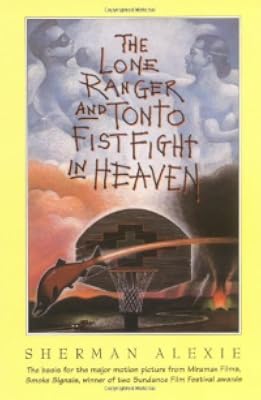
Sherman J. Alexie Jr. was born on October 7, 1966. His mother was Spokane Indian and his father was Coeur d'Alene Indian. Alexie grew up on the Spokane Indian Reservation in Wellpinit, Washington. He decided to attend high school off the reservation where he knew he would get a better education. He was the only Indian at the school, and excelled show more academically as well as in sports. After high school, he attended Gonzaga University for two years before transferring to Washington State University, where he graduated with a degree in American studies. He received the Washington State Arts Commission Poetry Fellowship in 1991 and the National Endowment for the Arts Poetry Fellowship in 1992. His collections of poetry included The Business of Fancydancing, First Indian on the Moon, The Summer of Black Widows, One Stick Song, and Face. His first collection of short stories, The Lone Ranger and Tonto Fistfight in Heaven, received a PEN/Hemingway Award for Best First Book of Fiction and a Lila Wallace-Reader's Digest Writers' Award. His other short story collections included The Toughest Indian in the World, Ten Little Indians, and War Dances. His first novel, Reservation Blues, received the Before Columbus Foundation's American Book Award and the Murray Morgan Prize. His other novels included Indian Killer, The Absolutely True Diary of a Part-Time Indian, and Flight. He won the Andrew Carnegie Medal for Excellence in Nonfiction in 2018 for You Don't Have to Say You Love Me: A Memoir. Alexie and Jim Boyd, a Colville Indian, collaborated on the album Reservation Blues, which contains the songs from the book of the same name. In 1997, Alexie collaborated with Chris Eyre, a Cheyenne/Arapaho Indian, on a film project inspired by Alexie's work, This is What it Means to Say Phoenix, Arizona, from the short story collection The Lone Ranger and Tonto Fistfight in Heaven. Smoke Signals debuted at the Sundance Film Festival in January 1998, winning two awards: the Audience Award and the Filmmakers Trophy. In 1999 the film received a Christopher Award. (Bowker Author Biography) show less
Awards and Honors
Awards
Series
Belongs to Publisher Series
Work Relationships
Is contained in
Common Knowledge
- Canonical title
- Indian Killer
- Original title
- Indian Killer
- Original publication date
- 1996
- People/Characters
- John Smith; Olivia Smith; Daniel Smith; Marie Polatkin; Jack Wilson
- Important places
- Seattle, Washington, USA
- Epigraph
- We are what
we have lost.
--Alex Kuo - Dedication
- to my mother and father, for staying
to Diane, for arriving - First words
- The sheets are dirty.
- Last words
- (Click to show. Warning: May contain spoilers.)The trees grow heavy with owls.
- Original language
- English
Classifications
Statistics
- Members
- 1,515
- Popularity
- 15,248
- Reviews
- 27
- Rating
- (3.79)
- Languages
- 6 — Dutch, English, French, German, Italian, Spanish
- Media
- Paper, Audiobook, Ebook
- ISBNs
- 21
- UPCs
- 1
- ASINs
- 9