Beasts, Men and Gods
by Ferdinand Ossendowski
On This Page
Description
One morning- when I had gone out to see a friend- I suddenly received the news that twenty Red soldiers had surrounded my house to arrest me and that I must escape.' (Excerpt from Chapter 1)Tags
Recommendations


















Member Recommendations
dropshot A much earlier wandering across revolutionary Russia, ending in Asia.
Member Reviews
Lately I've been interested in reading a book about Baron Roman von Ungern Sternberg, the esoteric Buddhist White Russian general who, during the Civil War, conquered Mongolia with cavalry and intended to reestablish both the Mongolian and the Russian empires and was believed by some to be an incarnation of the Tibetan Buddhist God of War. A Facebook group I follow devoted to him, the grammatically tragic (yet forgivably so, since so many of its members are not native English speakers) Realm of the Living Buddha Whom is Death Incarnate, recommended Beasts, Men, and Gods, by the Polish author Ferdinand Ossendowski. I was delighted to acquire very cheaply (because I was the only bidder on eBay) a beaten-up 1923 Literary Guild reprint, show more hardcover with cotton pages, that saw much use while it was in the Los Angeles Public Library system, many years ago.
Given how it came into my possession, you can imagine my surprise that Ungern isn't even mentioned until page 83, and then only in passing. The first part of the book is the adventure of how its author escaped eastern Russia in 1922. It was a brutal time. General Kolchak had already been captured and executed, his body slipped beneath the ice of the Angara River along with the bodies of so many others. The Whites had lost Russia, and the Reds were hunting men like dogs. Ossendowski intended to flee east, through China to freedom. And so much of the book is a telling of his escape from Russia and his initial failures at fleeing further east. Along the way, he tells a few strange stories of lamas he met, and the miracles they worked.
Ultimately he arrives in Baron Ungern's capital, Urga, where Ungern ruled alongside the living Buddha, the blind Bogd Khan, the Jebtsundamba Khutughtu, then the third most important figure in Tibetan Buddhism. Ossendowski reports long conversations with Ungern and documents reported oracles from the Bogd Khan, when he retreated into his inner temple to talk with the gods. The book closes with a section on Agharti and the King of the World. One wonders how accurate all of this is, whether Ossendowski would really have such access and whether members of Bogd Khan's court would really translate for a wandering Pole. I don't know how any of it compares to authentic Buddhist teaching, although in these days, when anyone who can afford to can hear the Dali Lama speak in a college amphitheater, one could probably find out. But it made for interesting and enjoyable reading that influenced twentieth century thinking in the west, even if it was false.
Throughout the work Ungern is aware of his impending death. Not long after Ossendowski finally fled Urga, Ungern was betrayed to the Reds and shot.
Ossendowski has much to say about the awakening east. He was right in a way. The east did awaken, but it did not unite under the old leaders. Instead, Mongolia created its own Soviet Socialist Republic. After another few decades China fell to Mao. Rather than unite behind a mysterious local religious leader the east adopted a weird foreign millennialist cult, Communism.
The Bogd Khan was allowed to live out his reign, which lasted only two more years. I wondered if the Jebtsundamba Khutughtu reincarnated because, unlike the Dali Lama and the drama surrounding the abduction of the Panchen Lama, I hadn't heard of this office. As it turns out, the Jebtsundamba Khutughtu secretly reincarnated in 1933, but his existence was kept secret until 1990, when, after the collapse of the USSR, the Dali Lama considered it safe to reveal him. The ninth Jebtsundamba Khutughtu passed away in 2012, and the Dali Lama reportedly began searching for his reincarnation in Mongolia in 2016.
In short, not the book I went out looking for, but enjoyable nonetheless. I might read more Ossendowski, but will keep looking for a book on Ungern. show less
Given how it came into my possession, you can imagine my surprise that Ungern isn't even mentioned until page 83, and then only in passing. The first part of the book is the adventure of how its author escaped eastern Russia in 1922. It was a brutal time. General Kolchak had already been captured and executed, his body slipped beneath the ice of the Angara River along with the bodies of so many others. The Whites had lost Russia, and the Reds were hunting men like dogs. Ossendowski intended to flee east, through China to freedom. And so much of the book is a telling of his escape from Russia and his initial failures at fleeing further east. Along the way, he tells a few strange stories of lamas he met, and the miracles they worked.
Ultimately he arrives in Baron Ungern's capital, Urga, where Ungern ruled alongside the living Buddha, the blind Bogd Khan, the Jebtsundamba Khutughtu, then the third most important figure in Tibetan Buddhism. Ossendowski reports long conversations with Ungern and documents reported oracles from the Bogd Khan, when he retreated into his inner temple to talk with the gods. The book closes with a section on Agharti and the King of the World. One wonders how accurate all of this is, whether Ossendowski would really have such access and whether members of Bogd Khan's court would really translate for a wandering Pole. I don't know how any of it compares to authentic Buddhist teaching, although in these days, when anyone who can afford to can hear the Dali Lama speak in a college amphitheater, one could probably find out. But it made for interesting and enjoyable reading that influenced twentieth century thinking in the west, even if it was false.
Throughout the work Ungern is aware of his impending death. Not long after Ossendowski finally fled Urga, Ungern was betrayed to the Reds and shot.
Ossendowski has much to say about the awakening east. He was right in a way. The east did awaken, but it did not unite under the old leaders. Instead, Mongolia created its own Soviet Socialist Republic. After another few decades China fell to Mao. Rather than unite behind a mysterious local religious leader the east adopted a weird foreign millennialist cult, Communism.
The Bogd Khan was allowed to live out his reign, which lasted only two more years. I wondered if the Jebtsundamba Khutughtu reincarnated because, unlike the Dali Lama and the drama surrounding the abduction of the Panchen Lama, I hadn't heard of this office. As it turns out, the Jebtsundamba Khutughtu secretly reincarnated in 1933, but his existence was kept secret until 1990, when, after the collapse of the USSR, the Dali Lama considered it safe to reveal him. The ninth Jebtsundamba Khutughtu passed away in 2012, and the Dali Lama reportedly began searching for his reincarnation in Mongolia in 2016.
In short, not the book I went out looking for, but enjoyable nonetheless. I might read more Ossendowski, but will keep looking for a book on Ungern. show less
Cinematic super-hero and Western-pulp combine with Eastern mysticism made for a best-seller in 1923. Not sure I believe most of it, but as an archetype of events, it's believable. Anything is possible. I couldn't get past the American Western pulp-fiction tropes which makes it seem insincere. And some obvious BS like the Lama who cuts a man open and lives. At least it doesn't lack adventure. One contemporary reviewer called it "ingenuous" which is a tricky word depending on the meaning it could be a compliment (obs: honorable) or a pejorative (lacking craft or subtlety), perhaps some of both.
Incuriosita dalla citazione che ne fa Terzani, mi sono procurata questo libro semisconosciuto che invece dovrebbe occupare un posto di primo piano tra i libri di viaggio e non solo.
Scritto in un inglese abbastanza semplice, più efficace che letterario dato che non era la lingua madre dell'autore, riesce a rappresentare le avventure, i pericoli e gli incredibili incontri di questo altrettanto incredibile personaggio, a cavallo tra Russia, Mongolia e Cina e a cavallo di una rivoluzione.
Davvero un libro da leggere.
Scritto in un inglese abbastanza semplice, più efficace che letterario dato che non era la lingua madre dell'autore, riesce a rappresentare le avventure, i pericoli e gli incredibili incontri di questo altrettanto incredibile personaggio, a cavallo tra Russia, Mongolia e Cina e a cavallo di una rivoluzione.
Davvero un libro da leggere.
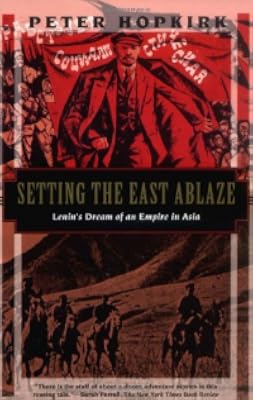
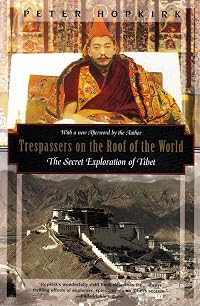
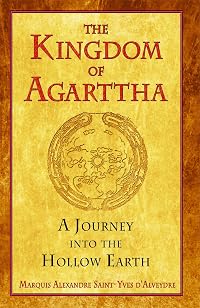
A fast-paced adventure, with fragments of curious detail, as FO flees across Siberia and into Central Asia to escape the Red Army... along the way meeting up with a furious bear, the truly nasty Baron von Ungern Sternberg and vicious Tibetan lamas, amongst whom he hears mention of Agartha and the King of the World, whose marvelous and potent domain is, in an instance of doubtful feng-shui, miles below the surface of the earth. This curiosity is referenced in Umberto Eco's Foucault's Pendulum and in Peter Hopkirk's Trespassers on the Roof of the World (or was it Setting the East Ablaze?).
I began reading with great anticipation; I found it different, exotic and exciting. Then, the more I read, the more redundant it seemed to be. Soon I felt I had been reading about the same strange, angry adventures time after time. I did finish, but it was a chore. Too bizarre for me; perhaps a series of maps would have helped. I still gave it three stars, maybe a half star too much, for effort.
Pretty intense story. So many people died during this time of unrest in Russia. Very sad.
Members
- Recently Added By
Published Reviews
Ovaj kultni avanturistički, istorijski, putopisni, autobiografski i etnološki roman vodi nas kroz krvavu vejavicu ruske revolucije i mongolske oslobodilačke borbe, sve do srži tajnog i tajanstvenog budističkog učenja o „Kralju Sveta” i „Agarti”, njegovom podzemnom kraljevstvu. U haosu propasti jednog carstva, pred našim očima izranja najčudesnija galerija zveri, ljudi i bogova show more i njihovih sudbina. Izbeglice i vojnici, kukavice i ratnici, boljševici i caristi, ubice i heroji, demoni i monasi, razbojnici i bogovi… Džingis-kan, Temerlan, Dalaj Lama, admiral Kolčak, „krvavi baron” Ungern-Šternberg… Rusi, Kinezi, Mongoli, Tibetanci, Sojoti, Kalmici, Turguti, Burjati, Tatari, kozaci, Poljaci… U RATU SVIH PROTIV SVIH. show less
added by Sensei-CRS
Lists

Best 20th Century Books as of 1924
100 works; 6 members
Author Information

44 Works 357 Members
Some Editions
Series
Belongs to Publisher Series
Crisol (172)
Common Knowledge
- Canonical title
- Beasts, Men and Gods
- Original title
- Beasts, men and gods
- Alternate titles
- Dieren, menschen en goden; Zwierzęta, ludzie, bogowie; Zveri, ljudi i Bogovi
- Original publication date
- 1923
- Important places*
- Mongolië
- Dedication*
- Tej, którą spotkałem niegdyś na brzegu
"wielkiej lazurowej słonej wody",
u stóp piętrzących się czerwonych skał,
a dla której przechowałem wierną miłość do dnia,
gdy stała się moją Eleer - B... (show all)ałasyr,
owianą legendami prastarego Erdene Dzu,
poświęcam tę opowieść o mojej
męczeńskiej włóczędze
przez serce tajemniczej, obudzonej Azji.
F.A. Ossendowski
Warszawa, 1923.
*Some information comes from Common Knowledge in other languages. Click "Edit" for more information.
Classifications
Statistics
- Members
- 210
- Popularity
- 155,999
- Reviews
- 10
- Rating
- (3.97)
- Languages
- 11 — Dutch, English, Finnish, French, German, Hungarian, Italian, Polish, Serbian, Spanish, Swedish
- Media
- Paper, Audiobook, Ebook
- ISBNs
- 50
- ASINs
- 20