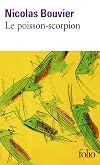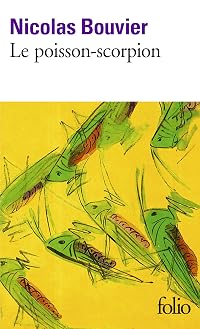
Le poisson-scorpion
by Nicolas Bouvier
On This Page
Description
The narrator arrives in his 117th rented room at the end of an epic journey, abandoned by his lover, almost broke and certainly feverish. His obsession with the insects he shares the room with and his beautifully articulated observations of himself on the edge of physical and mental collapse extend out to include the insect-like habitues of the local cafe - the charlatans, the indolent landowners, and even a levitating priest who has been dead for six years. This razor-sharp chronicle of show more experience, which grew out of Bouvier's seven-month stay on the island of Ceylon (now Sri Lanka), shows that if you travel, you must be prepared to discover not only delights but also the worst as well. show lessTags
Recommendations















































Member Reviews
After the epic drive from Switzerland to India in a Fiat Topolino, described in L’usage du monde, Bouvier continued to Sri Lanka, where his travels ground to a halt for some seven months of 1955 while he lived in a small hotel in the fort-town of Galle, then something of a backwater, writing and watching the ants going up and down his walls. He seems to have had something of a crisis of motivation, which he blames on the climate and the general air of lethargy, but loneliness and the news that a girlfriend left behind in Europe was about to marry someone else clearly played their part as well.
He didn‘t publish this short account of what he saw during his time on the island until some 25 years later, but it is as fresh and ironic as show more the earlier book, if a little more claustrophobic, full of detailed and slightly absurd observations of his neighbours in the Galle backstreet where he was staying, the insect life in and around his room, and his own mental state, culminating in a bizarre encounter with a cigar-smoking deceased Jesuit who was very helpful in correcting the prose of articles he was writing in English for a paper in Colombo.
Definitely not helpful travel-advice, but beautiful writing and quite a moving account of what it is like to be young and cut off for a lengthy period from contact with your peers. show less
He didn‘t publish this short account of what he saw during his time on the island until some 25 years later, but it is as fresh and ironic as show more the earlier book, if a little more claustrophobic, full of detailed and slightly absurd observations of his neighbours in the Galle backstreet where he was staying, the insect life in and around his room, and his own mental state, culminating in a bizarre encounter with a cigar-smoking deceased Jesuit who was very helpful in correcting the prose of articles he was writing in English for a paper in Colombo.
Definitely not helpful travel-advice, but beautiful writing and quite a moving account of what it is like to be young and cut off for a lengthy period from contact with your peers. show less
A mixture of reality and fiction, a mixture of being surrounded by friends and being all alone.
The language is beautiful, although a little difficult to follow sometimes, the descriptions are extremely rich.
The language is beautiful, although a little difficult to follow sometimes, the descriptions are extremely rich.
Le plus sombre des récits de Bouvier.
L’usage du monde m’avait laissé une telle impression que j’ai exigé de famille et amis la suite des périples de Nicolas Bouvier pour les diverses fêtes. La suite en question s’appelle Le poisson-scorpion et est à la fois très semblable et très différente de son prédécesseur.
Semblable, car il s’agit bel et bien de la suite des carnets de voyage de Nicolas Bouvier, parti de sa Genève natale à la fin des années 1950 vers l’Orient Mystérieux. L’usage du monde s’arrêtait aux portes de l’Inde, Le poisson-scorpion reprend à la pointe sud du sous-continent, peu avant l’embarquement de l’auteur vers Ceylan; je ne sais d’ailleurs pas s’il existe un ouvrage qui couvre le périple indien.
Différent, car show more celui que l’on retrouve est malade, fiévreux. Et, à l’image de son auteur, Le poisson-scorpion est une sorte de rêve de fièvre, un mélange poisseux et malsain de malaria mal soignée et de tropiques mal supportés. En conclusion, comme un envoi, une citation de Louis-Ferdinand Céline marque comme à titre posthume l’ouvrage: c’est le Voyage au bout de la nuit de Nicolas Bouvier.
C’est un livre qui se lit vite. La plume de Bouvier est toujours aussi agile, avec ses descriptions évocatrices et emplies d’humanité – et, dans ce cas, plus encore, en se faufilant dans une dimension onirique et fantastique. Au fur et à mesure que l’auteur sombre dans une sorte de démence, ses descriptions glissent imperceptiblement vers un monde peuplé d’insectes en guerre, de sorciers et de fantômes, mais toujours avec une façade de rationalité. Un surnaturel somme toute très naturel, en quelque sorte.
Le poisson-scorpion, c’est un double dépaysement: géographique et psychique. C’est aussi un carnet de voyage, mais intérieur. Et toujours passionnant. show less
Semblable, car il s’agit bel et bien de la suite des carnets de voyage de Nicolas Bouvier, parti de sa Genève natale à la fin des années 1950 vers l’Orient Mystérieux. L’usage du monde s’arrêtait aux portes de l’Inde, Le poisson-scorpion reprend à la pointe sud du sous-continent, peu avant l’embarquement de l’auteur vers Ceylan; je ne sais d’ailleurs pas s’il existe un ouvrage qui couvre le périple indien.
Différent, car show more celui que l’on retrouve est malade, fiévreux. Et, à l’image de son auteur, Le poisson-scorpion est une sorte de rêve de fièvre, un mélange poisseux et malsain de malaria mal soignée et de tropiques mal supportés. En conclusion, comme un envoi, une citation de Louis-Ferdinand Céline marque comme à titre posthume l’ouvrage: c’est le Voyage au bout de la nuit de Nicolas Bouvier.
C’est un livre qui se lit vite. La plume de Bouvier est toujours aussi agile, avec ses descriptions évocatrices et emplies d’humanité – et, dans ce cas, plus encore, en se faufilant dans une dimension onirique et fantastique. Au fur et à mesure que l’auteur sombre dans une sorte de démence, ses descriptions glissent imperceptiblement vers un monde peuplé d’insectes en guerre, de sorciers et de fantômes, mais toujours avec une façade de rationalité. Un surnaturel somme toute très naturel, en quelque sorte.
Le poisson-scorpion, c’est un double dépaysement: géographique et psychique. C’est aussi un carnet de voyage, mais intérieur. Et toujours passionnant. show less
Dec 1, 2010French
2
> Babelio : https://www.babelio.com/livres/Bouvier-Le-poisson-scorpion/19327
> BAnQ (Gironnay S., La presse, 7 juil. 2002) : https://diffusion.banq.qc.ca/pdfjs-1.6.210-dist_banq/web/pdf.php/mqZivl-yD21G3Qn...
> Critiques Libres : http://www.critiqueslibres.com/i.php/vcrit/2903
> LE POISSON-SCORPION, de Nicolas Bouvier. — Nicolas Bouvier est un grand voyageur, qui a trouvé dans son expérience des cinq continents l’inspiration de ses ouvrages. Avec Le Poisson-Scorpion, d’abord sorti en 1982, il nous amène à Ceylan, où le narrateur échoue pour sombrer dans la maladie et la folie. Dépaysement garanti avec ce livre deux fois primé, qui se termine par une phrase de Céline: « La pire défaite en tout c’est d’oublier et surtout show more ce qui vous a fait crever. » Gallimard, Folio, Paris, 1996, 177pages. (Marcel JEAN)
—Le devoir, 31 août 1996, Cahier D … ; (Source),
URL : https://collections.banq.qc.ca/ark:/52327/2767196
> Fin septembre ça vous prendra un pull de laine pour monter là-haut. Et peut-être bien, un autre livre de voyage. Connaissez-vous Nicolas Bouvier ? Un jour que vous serez en peine d'amour en haut d'une montagne, que vous serez seul, et un peu triste, et que vous aurez peur de mourir, essayez Le Poisson-Scorpion (Payot), de Nicola Bouvier. C'est rien que de la littérature, rien que des mots. On ne sait pas trop de quoi il parle. Mais on s'en fout, tellement c'est beau...
—La presse, 20 août 1991, Cahier A
> Le livre de Nicolas Bouvier, préfacé par Jacques Chesseix, se lit comme un journal de voyage dont le coeur se situe au Sri Lanka, et qui n'est pas sans rappeler Valery Larbaud ou “Le barbare en Asie” de Henri Michaux. “Le poisson-scorpion” est le troisième livre de Nicolas Bouvier, après ‘L'usage du monde” (1965) et ‘Chronique japonaise” (1967).
—Le quotidien, 15 juin 1982 show less
> BAnQ (Gironnay S., La presse, 7 juil. 2002) : https://diffusion.banq.qc.ca/pdfjs-1.6.210-dist_banq/web/pdf.php/mqZivl-yD21G3Qn...
> Critiques Libres : http://www.critiqueslibres.com/i.php/vcrit/2903
> LE POISSON-SCORPION, de Nicolas Bouvier. — Nicolas Bouvier est un grand voyageur, qui a trouvé dans son expérience des cinq continents l’inspiration de ses ouvrages. Avec Le Poisson-Scorpion, d’abord sorti en 1982, il nous amène à Ceylan, où le narrateur échoue pour sombrer dans la maladie et la folie. Dépaysement garanti avec ce livre deux fois primé, qui se termine par une phrase de Céline: « La pire défaite en tout c’est d’oublier et surtout show more ce qui vous a fait crever. » Gallimard, Folio, Paris, 1996, 177pages. (Marcel JEAN)
—Le devoir, 31 août 1996, Cahier D … ; (Source),
URL : https://collections.banq.qc.ca/ark:/52327/2767196
> Fin septembre ça vous prendra un pull de laine pour monter là-haut. Et peut-être bien, un autre livre de voyage. Connaissez-vous Nicolas Bouvier ? Un jour que vous serez en peine d'amour en haut d'une montagne, que vous serez seul, et un peu triste, et que vous aurez peur de mourir, essayez Le Poisson-Scorpion (Payot), de Nicola Bouvier. C'est rien que de la littérature, rien que des mots. On ne sait pas trop de quoi il parle. Mais on s'en fout, tellement c'est beau...
—La presse, 20 août 1991, Cahier A
> Le livre de Nicolas Bouvier, préfacé par Jacques Chesseix, se lit comme un journal de voyage dont le coeur se situe au Sri Lanka, et qui n'est pas sans rappeler Valery Larbaud ou “Le barbare en Asie” de Henri Michaux. “Le poisson-scorpion” est le troisième livre de Nicolas Bouvier, après ‘L'usage du monde” (1965) et ‘Chronique japonaise” (1967).
—Le quotidien, 15 juin 1982 show less
Jul 22, 2021 (Edited)French
Ratings
Members
- Recently Added By
Lists

Fish Out of Water: The Perils of Abroad
25 works; 5 members

CH-Autoren (Swiss Authors)
265 works; 9 members

Les 50 meilleurs livres de langue française de 1900 à aujourd’hui
69 works; 2 members
Author Information

58+ Works 1,415 Members
Some Editions
Awards and Honors
Series
Belongs to Publisher Series
Gallimard, Folio (2842)
Work Relationships
Has as a reference guide/companion
Common Knowledge
- Canonical title*
- Le poisson-scorpion
- Original title
- Le poisson-scorpion
- Alternate titles
- Skorpionfisch
- Original publication date
- 1982
- Epigraph
- All the same, you can't just come and go
without breathing a word
- Kenneth White
The worst defeat of all is to forget,
especially what has crushed you.
- Louis-Ferdinand Céline - Dedication
- To Eliane
Thomas
Manuel
and to Claude Debussy
this old, old story - First words
- The sun and I had been up a long time when I remembered that it was my birthday, and that in the last of the bazaars I'd come upon the previous evening, I'd bought a melon.
- Last words
- (Click to show. Warning: May contain spoilers.)I left on a table the money I owed the landlord, and for the last time looked round this blue attic where I'd been a prisoner so long. It was vibrating with ineffable music.
- Original language
- French
*Some information comes from Common Knowledge in other languages. Click "Edit" for more information.
Classifications
- Genres
- Travel, Fiction and Literature, General Fiction
- DDC/MDS
- 843.914 — Literature & rhetoric French Literature French fiction 1900- 20th Century 1945-1999
- LCC
- PQ2662 .O85 .P6513 — Language and Literature French, Italian, Spanish and Portuguese literatures French literature Modern literature 1961-2000
- BISAC
Statistics
- Members
- 153
- Popularity
- 212,164
- Reviews
- 6
- Rating
- (3.79)
- Languages
- 7 — Czech, Dutch, English, French, German, Italian, Spanish
- Media
- Paper, Ebook
- ISBNs
- 16
- ASINs
- 1