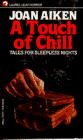
A Touch of Chill
by Joan Aiken
On This Page
Description
Blending the homely with the exotic, this collection of fifteen macabre tales includes an eerie story about a six-year-old girl whose scalp is inhabited by DruidsTags
Recommendations




















Member Reviews
I first encountered this short story collection when I was nine or ten; it blew my mind, and I think I was lucky to run into it before I read any other Aiken, because it represents so many of her strengths—crystal-clear evocative prose, dry humor, and a fondness for both morbid black comedy and real dread—while also having plenty of surface appeal for a pre-teen genre fiend in terms of young characters and magic shenanigans. When I finally found another volume of her Gothics, A Bundle of Nerves, I was kind of disappointed that so much of it focused on various British grownups just committing ordinary murders(*).
It's no surprise that a lot of stuff reads differently to me as an adult, but the one that surprised me the most was show more "Lodgers"—an amazing gem of a small-scale horror story, which relies so heavily on the point of view of a single parent dealing with mundane problems (based much more closely on Aiken's own experience than I knew), and on letting the reader piece together what's really happening from separate hints, that the strong impact it still had on me as a kid, even when a lot of that stuff went over my head, just goes to show how good she was at atmosphere and at picking a few frightening images.
(* A Bundle of Nerves does have some high points and some wilder fantasy content, I recommend it, but I don't think a kid would have patience for it. Whether it's really a good idea for a kid to be reading A Touch of Chill either, I can't say... it sure is incredibly dark, but I was into that.) show less
It's no surprise that a lot of stuff reads differently to me as an adult, but the one that surprised me the most was show more "Lodgers"—an amazing gem of a small-scale horror story, which relies so heavily on the point of view of a single parent dealing with mundane problems (based much more closely on Aiken's own experience than I knew), and on letting the reader piece together what's really happening from separate hints, that the strong impact it still had on me as a kid, even when a lot of that stuff went over my head, just goes to show how good she was at atmosphere and at picking a few frightening images.
(* A Bundle of Nerves does have some high points and some wilder fantasy content, I recommend it, but I don't think a kid would have patience for it. Whether it's really a good idea for a kid to be reading A Touch of Chill either, I can't say... it sure is incredibly dark, but I was into that.) show less
My previous acquaintance with the work of this author was with her children's novels set in an alternate version of British history. This collection of short stories published in 1979 is described as 'stories of horror, suspense and fantasy' but rather than outright horror, the effect is more of creepiness. Quite a few are inconclusive and fizzle out at the end with no definitive notion of what happened. The one which makes the closest approach to horror is the first in the collection, 'The Lodgers', about some decidedly nasty characters who move in when a mother is overworked and harried by both her boss at work and the simultaneous infectious illnesses of her two children. Rather ahead of its time in its foregrounding of a single show more parent.
Some stories are predictable such as 'The Sewanne Glide', where the interest is in the execution and characterisation, or 'Jugged Hare' where a woman with a violent husband tempts fate by having an affair. Some are downright odd, for example, 'Listening', seemingly a disconnected series of events where the teacher protagonist has to sit in on another teacher's lesson to assess her after witnessing an animal's upsetting death enroute - then sees her crumble under a devastating personal tragedy, and then sees himself portrayed rather oddly in a museum. Unsettling, but you are left wondering what it was all about. 'A Game of Black and White' about a boy's misadventures in a world that suddenly turns into a nightmare under the influence of a total solar eclipse is similar in effect.
Others are in the style of fairy tales - 'The Rented Swan' for example, or are more or less traditional ghost stories - 'The Companion'. 'He' is a cautionary folktale about the personal penalties for taking revenge. In 'The Story about Caruso' a woman is driven to take extreme action by the stress of caring for an impossible relative. 'Mrs Considine' is an inconsequential tale of the friendship between an old lady and a young girl who has prophetic dreams, almost a 'tell it by numbers' - the denoument is spelled out in advance although we don't get to actually see it, but it left a feeling of "So what?"
Two stories, 'Power Cut' and 'A Train Full of War-Lords', feature blind protagonists at the mercy of others in their environment, even members of their own families who don't intend their malicious effects - luckily averted quite by chance in the second of the two stories. 'Who Goes Down this Dark Road' and 'The Helper' are downright weird - in the first, we don't really know the reason for the tragedy that has ruined the protagonist's life or its connection with a malicious young woman, daughter of a French Professor, or why he should still intend to help them by registering the Professor's invention of a mechanical companion at the UK Patent Office where he works, and it is unclear whether we are dealing with a haunting or the psychological effects of guilt by the end. The second is a short tale based on a very peculiar "What if?" question posed and answered.
Probably the most effective tale in the collection is 'Time to Laugh', the story of what happens to a boy with criminal tendencies who decides to explore the local - not exactly haunted - house with creepy consequences. Overall a 3-star rating. show less
Some stories are predictable such as 'The Sewanne Glide', where the interest is in the execution and characterisation, or 'Jugged Hare' where a woman with a violent husband tempts fate by having an affair. Some are downright odd, for example, 'Listening', seemingly a disconnected series of events where the teacher protagonist has to sit in on another teacher's lesson to assess her after witnessing an animal's upsetting death enroute - then sees her crumble under a devastating personal tragedy, and then sees himself portrayed rather oddly in a museum. Unsettling, but you are left wondering what it was all about. 'A Game of Black and White' about a boy's misadventures in a world that suddenly turns into a nightmare under the influence of a total solar eclipse is similar in effect.
Others are in the style of fairy tales - 'The Rented Swan' for example, or are more or less traditional ghost stories - 'The Companion'. 'He' is a cautionary folktale about the personal penalties for taking revenge. In 'The Story about Caruso' a woman is driven to take extreme action by the stress of caring for an impossible relative. 'Mrs Considine' is an inconsequential tale of the friendship between an old lady and a young girl who has prophetic dreams, almost a 'tell it by numbers' - the denoument is spelled out in advance although we don't get to actually see it, but it left a feeling of "So what?"
Two stories, 'Power Cut' and 'A Train Full of War-Lords', feature blind protagonists at the mercy of others in their environment, even members of their own families who don't intend their malicious effects - luckily averted quite by chance in the second of the two stories. 'Who Goes Down this Dark Road' and 'The Helper' are downright weird - in the first, we don't really know the reason for the tragedy that has ruined the protagonist's life or its connection with a malicious young woman, daughter of a French Professor, or why he should still intend to help them by registering the Professor's invention of a mechanical companion at the UK Patent Office where he works, and it is unclear whether we are dealing with a haunting or the psychological effects of guilt by the end. The second is a short tale based on a very peculiar "What if?" question posed and answered.
Probably the most effective tale in the collection is 'Time to Laugh', the story of what happens to a boy with criminal tendencies who decides to explore the local - not exactly haunted - house with creepy consequences. Overall a 3-star rating. show less
Kinda weird. I don't 'get' most of the stories; it seems as if they're mysteries missing the last page. And it's marketed to a juvenile audience, but, I'm sorry, if I'm having trouble, how would kids get more out of it? And most of the characters are adults.
The writing is atmospheric, though; it's a spooky sort of a book and worth a try.
The writing is atmospheric, though; it's a spooky sort of a book and worth a try.
The homely and the exotic mix in fifteen unique tales. The macabre and witty stories are a melange of horror guaranteed to send chills up the spine of any sleepless reader.
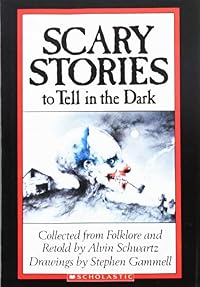
It's been a few years since I read this book of short, somewhat creepy, stories, but I just remember that most of them were very entertaining with really interesting characters. The one I remember most was the story titled "He" and even to this day I still think about it. The book almost feels like "Scary Stories to Tell in the Dark", but directed for a teenage or adult audience in the form of short stories.
Ratings
Members
- Recently Added By
Author Information

215+ Works 19,786 Members
Joan Delano Aiken was born in Rye, Sussex, England, on September 4, 1924, the daughter of the Pulitzer Prize winner, writer Conrad Aiken. She was raised in a rural area and home schooled by her mother until the age 12. She then attended Wychwood School, a boarding school in Oxford. Her work first appeared in 1941 when the British Broadcasting show more Corporation, where she worked as a librarian, broadcast some of her short stories on their Children's Hour program. Aiken also worked at St. Thomas's Hospital, and in 1943 she moved to the reference department of the London office of the United Nations, where she collected information about resistance movements. She worked for the UN until 1949, all the while continuing to write stories. In 1953 a collection of short fiction called All You've Ever Wanted and Other Stories was published. While writing The Wolves of Willoughby Chase, begun in 1952, her husband became ill and died of lung cancer in 1955. After working for five years as a copy editor at Argosy Magazine, and at the J. Walter Thompson Advertising Firm, she returned and finished the book in 1963. The Wolves of Willoughby Chase won the Lewis Carroll Shelf Award and was made into a successful film in 1988. In 1969 The Whispering Mountain won the Guardian Children's Book Award, and in 1972, Night Fall won America's Edgar Allen Poe Award for juvenile mystery. Aiken is best known for her adult "fantasy" stories. She has received awards for children's fiction and for mystery fiction, and has also written ''sequels'' to Jane Austen books. She collaborated with her daughter to write many episodes of her Arabel and Mortimer the raven series for the BBC. In all, Aiken wrote 92 novels - including 27 for adults - as well as plays, poems and short stories, although she was best known as a writer of children's stories. Joan Aiken died in January of 2004 at the age of 79. (Bowker Author Biography) show less
Work Relationships
Contains
Common Knowledge
- Canonical title
- A Touch of Chill
Classifications
Statistics
- Members
- 133
- Popularity
- 244,908
- Reviews
- 5
- Rating
- (3.69)
- Languages
- English, German
- Media
- Paper
- ISBNs
- 8
- ASINs
- 2