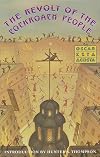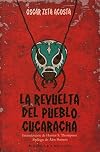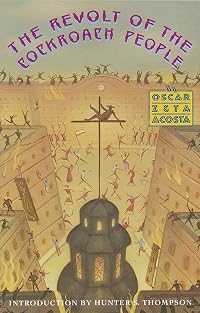
The Revolt of the Cockroach People
by Oscar Zeta Acosta
On This Page
Description
The further adventures of "Dr. Gonzo" as he defends the "cucarachas" -- the Chicanos of East Los Angeles. Before his mysterious disappearance and probable death in 1971, Oscar Zeta Acosta was famous as a Robin Hood Chicano lawyer and notorious as the real-life model for Hunter S. Thompson's "Dr. Gonzo" a fat, pugnacious attorney with a gargantuan appetite for food, drugs, and life on the edge. In this exhilarating sequel to The Autobiography of a Brown Buffalo, Acosta takes us behind the show more front lines of the militant Chicano movement of the late sixties and early seventies, a movement he served both in the courtroom and on the barricades. Here are the brazen games of "chicken" Acosta played against the Anglo legal establishment; battles fought with bombs as well as writs; and a reluctant hero who faces danger not only from the police but from the vatos locos he champions. What emerges is at once an important political document of a genuine popular uprising and a revealing, hilarious, and moving personal saga. show lessTags
Recommendations





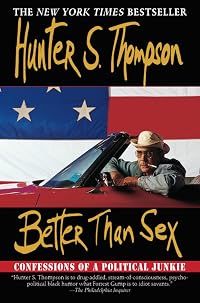
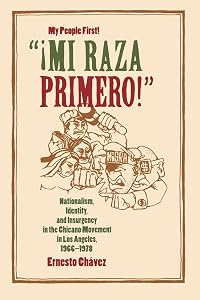
Member Reviews
In an odd way this book reminded me of the writings of Charles Bukowski (one of the all time greats as far as I'm concerned) in that it detailed the knife-edge lives of those on the cusp of oblivion in California, specifically, Los Angeles. Similar, again, to Bukowski (though maybe not Acosta's intent) the politics seemed irrelevant, almost incidental.
More than anything (and here, unlike Bukowski) this is a novel about a search for solidarity, identity, and essentially a sense of 'place' in the world. Bukowski didn't care, he was content in isolation. Acosta though, seemed greatly haunted by this lack, and seemed to do everything he could to fill it, or at the very least distract himself from it.
More than anything (and here, unlike Bukowski) this is a novel about a search for solidarity, identity, and essentially a sense of 'place' in the world. Bukowski didn't care, he was content in isolation. Acosta though, seemed greatly haunted by this lack, and seemed to do everything he could to fill it, or at the very least distract himself from it.
I really enjoyed this book! One of those rare times when the "sequel" is better! This book is all about Buffalo's time/work with the Chicano Liberation movement, mostly as a lawyer, but also as an active member. His writing really brings alive the struggle, and at times I wanted to jump into the pages and join them! I often wondered if the people who made the movie "My Cousin Vinny" based some of the lawyer character off of the Buffalo! I'm really glad that I read this, and I hope to learn more about Oscar Zeta Acosta!
Well, it was blurbed as by Hunter Thompson's lawyer. The tale is surreal, as the effects of taking part in the Chicano social movement quickly demonstrate the depth of the suppression of the people become apparent. It's not a fun read, but pushes the limits in its honesty about the difficulties of fighting the American Racialist system.
I read this back in 2003. Here is what I wrote in my journal at the time:
>>I just finished reading it. The book is a sequel to his previous The Autobiography of a Brown Buffalo, which based on my enjoyment of the one I just finished, I will most definitely try to find the previous book. The book was 262 pages long including an introduction by Hunter S. Thompson and afterword by Acosta's son. The book is set in 1960s Los Angeles during the height of the Chicano civil rights movement. The protagonist, Buffalo Zeta Brown, is a lawyer who at first seems to know little of the movement and wanted to write a story. He soon becomes involved with the movement, defending Chicanos in court as well as leading marches and protests. The pacing of show more the book is good; it was a fast and engaging read, written in first person point of view. It has humorous moments as well as moving moments. The little blurb on the back of the book calls Zeta a reluctant hero, and he was, but his strength is that when called upon, he did what had to be done, and in the process had a wild ride along the way. I strongly recommend this book. show less
>>I just finished reading it. The book is a sequel to his previous The Autobiography of a Brown Buffalo, which based on my enjoyment of the one I just finished, I will most definitely try to find the previous book. The book was 262 pages long including an introduction by Hunter S. Thompson and afterword by Acosta's son. The book is set in 1960s Los Angeles during the height of the Chicano civil rights movement. The protagonist, Buffalo Zeta Brown, is a lawyer who at first seems to know little of the movement and wanted to write a story. He soon becomes involved with the movement, defending Chicanos in court as well as leading marches and protests. The pacing of show more the book is good; it was a fast and engaging read, written in first person point of view. It has humorous moments as well as moving moments. The little blurb on the back of the book calls Zeta a reluctant hero, and he was, but his strength is that when called upon, he did what had to be done, and in the process had a wild ride along the way. I strongly recommend this book. show less
My first read of 2007...great period piece covering the Brown Power Movement of the late 60s / early 70s.
www.barnesandnoble.com
From the Publisher
The further adventures of "Dr. Gonzo" as he defends the "cucarachas" — the Chicanos of East Los Angeles.
Before his mysterious disappearance and probable death in 1971, Oscar Zeta Acosta was famous as a Robin Hood Chicano lawyer and notorious as the real-life model for Hunter S. Thompson's "Dr. Gonzo" a fat, pugnacious attorney with a gargantuan appetite for food, drugs, and life on the edge.
In this exhilarating sequel to The Autobiography of a Brown Buffalo, Acosta takes us behind the front lines of the militant Chicano movement of the late sixties and early seventies, a movement he served both in the courtroom and on the barricades. Here are the brazen games of "chicken" Acosta played against show more the Anglo legal establishment; battles fought with bombs as well as writs; and a reluctant hero who faces danger not only from the police but from the vatos locos he champions. What emerges is at once an important political document of a genuine popular uprising and a revealing, hilarious, and moving personal saga. show less
From the Publisher
The further adventures of "Dr. Gonzo" as he defends the "cucarachas" — the Chicanos of East Los Angeles.
Before his mysterious disappearance and probable death in 1971, Oscar Zeta Acosta was famous as a Robin Hood Chicano lawyer and notorious as the real-life model for Hunter S. Thompson's "Dr. Gonzo" a fat, pugnacious attorney with a gargantuan appetite for food, drugs, and life on the edge.
In this exhilarating sequel to The Autobiography of a Brown Buffalo, Acosta takes us behind the front lines of the militant Chicano movement of the late sixties and early seventies, a movement he served both in the courtroom and on the barricades. Here are the brazen games of "chicken" Acosta played against show more the Anglo legal establishment; battles fought with bombs as well as writs; and a reluctant hero who faces danger not only from the police but from the vatos locos he champions. What emerges is at once an important political document of a genuine popular uprising and a revealing, hilarious, and moving personal saga. show less
Ratings
Members
- Recently Added By
Lists

Blue Pyramid 1,276 Best Books of All Time
1,248 works; 32 members

Chicano/a Literature
10 works; 1 member

The Atlantic's The Great American Novel
136 works; 12 members
Author Information
5+ Works 715 Members
Some Editions
Awards and Honors
Notable Lists
Classifications
Statistics
- Members
- 353
- Popularity
- 89,293
- Reviews
- 6
- Rating
- (3.85)
- Languages
- English, Spanish
- Media
- Paper, Audiobook, Ebook
- ISBNs
- 8
- ASINs
- 5