On This Page
Description
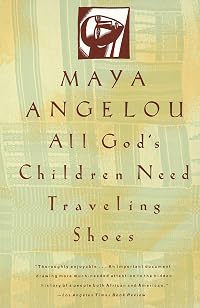
Biography & Autobiography. Multi-Cultural. Sociology. Nonfiction. HTML:In 1962 the poet, musician, and performer Maya Angelou claimed another piece of her identity by moving to Ghana, joining a community of "Revolutionist Returnees" inspired by the promise of pan-Africanism. All God's Children Need Walking Shoes is her lyrical and acutely perceptive exploration of what it means to be an African American on the mother continent, where color no longer matters but where American-ness keeps show more asserting itself in ways both puzzling and heartbreaking. As it builds on the personal narrative of I Know Why the Caged Bird Sings and Gather Together in My Name, this book confirms Maya Angelou’s stature as one of the most gifted autobiographers of our time. . show lessTags
Recommendations



Member Reviews
The penultimate volume of Maya Angelou's autobiography covers the years she spent living in Ghana while her son was at university there. I found her reflections how life in Ghana felt to the African-Americans there fascinating:
There are some really striking incidents, all recounted with Angelou's usual verve and compassion. Malcolm X's visit after going to Mecca, being treated as a distant relative on several occasions in Ghana, and a hideous breakfast party in Germany were especially memorable. show less
I lay on my bed drinking for myself and for all the nameless orphans of Africa who had been shunted around the world.show more
I drank and admitted to boundless envy of those who remained on the continent, out of fortune or perfidy. Their countries had been exploited and their cultures had been discredited by colonialism. Nonetheless, they could reflect through their priests and chiefs on centuries of continuity. The lowliest could call the name of ancestors who lived centuries earlier. The land upon which they lived had
been in their people's possession beyond remembered time. Despite political bondage and economic exploitation, they had retained an ineradicable innocence.
I doubted if I, or any black from the diaspora, could really return to Africa. We wore skeletons of old despair like necklaces, heralding our arrival, and we were branded with cynicism. In America we danced, laughed, procreated; we became lawyers, judges, legislators, teachers, doctors, and preachers, but as always, under our glorious costumes we carried the badge of a barbarous history sewn into our dark skins. It had often been said that black people were childish, but in America we had matured without ever experiencing the true abandon of adolescence. Those actions which appeared to be childish most often were exhibitions of bravado, not unlike humming a jazz tune while walking into a gathering of the Ku Klux Klan.
There are some really striking incidents, all recounted with Angelou's usual verve and compassion. Malcolm X's visit after going to Mecca, being treated as a distant relative on several occasions in Ghana, and a hideous breakfast party in Germany were especially memorable. show less
I read this book years ago but was discussing it again today with a friend. A book that becomes part of my life - what a gift! Maya Angelou is telling two stories at once - no,3 - layered so you might think you're reading just one.
Maya Angelou is teaching in Ghana and marveling in the feel of people-who-look-like-me, with this sense of having come home to Mother Africa. She slowly unpacks how the USA is her home, in fact, and she lets go of Mother Africa. At the same time her son accompanies her to Ghana - and he is letting go of his mother, too. Ms. Angelou lives both the coming and the going at the same time, the embracing and the letting go. And then there is the third story, which is that of an ex-patriate, a person of privilege, show more living in a country of cultural richness emerging from a colonial "mother". There's a probably a fourth story going on here simultaneously. I'm just amazed that this book is not part of the high school canon. It's accessible and complex at the same time. Thank you, Maya Angelou. show less
Maya Angelou is teaching in Ghana and marveling in the feel of people-who-look-like-me, with this sense of having come home to Mother Africa. She slowly unpacks how the USA is her home, in fact, and she lets go of Mother Africa. At the same time her son accompanies her to Ghana - and he is letting go of his mother, too. Ms. Angelou lives both the coming and the going at the same time, the embracing and the letting go. And then there is the third story, which is that of an ex-patriate, a person of privilege, show more living in a country of cultural richness emerging from a colonial "mother". There's a probably a fourth story going on here simultaneously. I'm just amazed that this book is not part of the high school canon. It's accessible and complex at the same time. Thank you, Maya Angelou. show less
What an honest account of her travels back to Africa and her struggles to make her way in her new homeland. She is honest in her recounting of learning the new languages, customs, and rules, both among the Ghanaian people and the ex-pats who were many of her first contacts there. The accident that changes her and her son's life is described in intense detail as taking both a physical and emotional toll on them. And it took me a while to realize she was talking about Malcolm X coming to Ghana but what an incredible event in her stay there. Ms. Angelou rubs shoulders with leaders of all layers of society, including royalty, and her incorporating these events in her life are honest. And her poetry of language is, as always, fantastic.
All God's Children Need Traveling Shoes is the fifth in a series of seven autobiographies by Maya Angelou. I have yet to read the last two, but this volume is the least compelling thus far. Angelou's storytelling seemed relatively flat. Not only that, there seemed to be an undercurrent of anger and dissatisfaction throughout. Covering her time as a Black-American living in Ghana, along with others who had hoped to escape negative American attitudes towards blacks, Angelou becomes disillusioned upon finding that native Ghanaians did not necessarily welcome these Americans with open arms. Not only that, Angelou was also dealing with an empty nest for the first time -- her son was off to college.
I certainly would not expect anyone to be show more Pollyannaish, especially Angelou, but reading this volume was tiring in a way that you have an unhappy friend whom you feel powerless to help.
"For me sleep was difficult that night. My bed was lumpy with anger and my pillow a rock of intemperate umbrage (p. 142)".
Although this volume was a bit of a letdown in comparison with the earlier ones, I still look forward to reading the next two autobiogrpahies in the series. show less
I certainly would not expect anyone to be show more Pollyannaish, especially Angelou, but reading this volume was tiring in a way that you have an unhappy friend whom you feel powerless to help.
"For me sleep was difficult that night. My bed was lumpy with anger and my pillow a rock of intemperate umbrage (p. 142)".
Although this volume was a bit of a letdown in comparison with the earlier ones, I still look forward to reading the next two autobiogrpahies in the series. show less
In 1962 the poet, musician, and performer Maya Angelou claimed another piece of her identity by moving to Ghana, joining a community of "Revolutionist Returnees" inspired by the promise of pan-Africanism. All God's Children Need Walking Shoes is her lyrical and acutely perceptive exploration of what it means to be an African American on the mother continent, where color no longer matters but where American-ness keeps asserting itself in ways both puzzling and heartbreaking. As it builds on the personal narrative of I Know Why the Caged Bird Sings and Gather Together in My Name, this book confirms Maya Angelou’s stature as one of the most gifted autobiographers of our time.
I've been reading through the autobiographies of Maya Angelou. This is the next for me - fifth in the series of seven written by this extraordinary woman. The title derives from a Negro Spiritual, and describes Angelou's years spent in Ghana in the early 1960s. She became part of the ex-pat community and felt both at home because of her ancestry and apart because she was immediately recognized as a Black American. Although she made many Ghanaian friends she was surprised at the attitudes of the people who wondered why she would leave America. Angelou felt they did not understand the conditions of race relations in America.
I enjoyed this book and the adventures she describes as she discovers Ghana. But I feel the best of the series so show more far was the first, "I Know Why the Caged Bird Sings." show less
I enjoyed this book and the adventures she describes as she discovers Ghana. But I feel the best of the series so show more far was the first, "I Know Why the Caged Bird Sings." show less
Angelou remembers (re)meeting Malcolm X during his visit to Ghana. Before he left, he said to her, "When you hear that the Urban League or the NAACP is giving a formal banquet at the Waldorf-Astoria, I know you won't go, but don't knock them. They give scholarships to poor Black children. One of those recipients might become a Julian Mayfield, or a Maya Angelou, or a Malcolm X."
Members
- Recently Added By
Lists

Recommended Reading : 600 Classics Reviewed, Editors of Salem Press, 2015
634 works; 6 members
Author Information

130+ Works 40,867 Members
Maya Angelou was born Marguerite Annie Johnson on April 4, 1928 in Saint Louis, Missouri. At the age of 16, she became not only the first black streetcar conductor in San Francisco but the first woman conductor. In the mid-1950s, she toured Europe with a production of the opera Porgy and Bess. In 1957, she recorded her first album, Calypso Lady. show more In 1958, she became a part of the Harlem Writers Guild in New York and played a queen in The Blacks, an off-Broadway production by French dramatist Jean Genet. In 1960, she moved to Cairo, where she edited The Arab Observer, an English-language weekly newspaper. The following year, she went to Ghana where she was features editor of The African Review and taught music and drama at the University of Ghana. In 1964, she moved back to the U.S. to become a civil rights activist by helping Malcolm X build his new coalition, the Organization of African American Unity, and became the northern coordinator of the Southern Christian Leadership Conference. Even though she never went to college, she taught American studies for years at Wake Forest University in Winston-Salem. In 1993, she became only the second poet in United States history to write and recite an original poem at a Presidential Inauguration when she read On the Pulse of Morning at President Bill Clinton's Inauguration Ceremony. She wrote numerous books during her lifetime including: I Know Why the Caged Bird Sings, Just Give Me a Cool Drink of Water 'Fore I Die, All God's Children Need Traveling Shoes, Wouldn't Take Nothing for My Journey Now, and Mom and Me and Mom. In 2011, President Barack Obama gave her the Medal of Freedom, the country's highest civilian honor, for her collected works of poetry, fiction and nonfiction. She appeared in the movie Roots and was nominated for Best Supporting Actress in 1977 for her role in the movie. She also played a part in the movie, How to Make an American Quilt and wrote and produced Afro-Americans in the Arts, a PBS special for which she received a Golden Eagle Award. She was a three-time Grammy winner. She died on May 28, 2014 at the age of 86. (Bowker Author Biography) show less
Some Editions
Awards and Honors
Distinctions
Series

Belongs to Publisher Series
Geuzenpocket (34)
Virago Modern Classics (734)
Work Relationships
Is contained in
Common Knowledge
- Original title
- All God’s Children Need Travelling Shoes
- Original publication date
- 1986
- People/Characters
- Maya Angelou
- Epigraph
- Swing Low, Sweet Chariot, Coming for to carry me home.
- Dedication
- This book is dedicated to Julian and Malcolm and all the fallen ones who were passionately and earnestly looking for a home.
- First words
- The breezes of the West African night were intimate and shy, licking the hair, sweeping through cotton dresses with unseemly intimacy, then disappearing into the utter blackness.
Classifications
Statistics
- Members
- 1,304
- Popularity
- 18,648
- Reviews
- 14
- Rating
- (3.85)
- Languages
- Dutch, English, French, German
- Media
- Paper, Audiobook, Ebook
- ISBNs
- 24
- ASINs
- 15