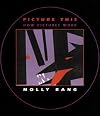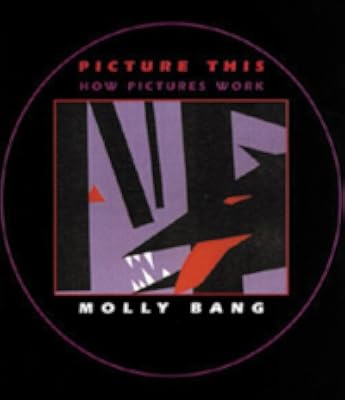
Picture This: How Pictures Work
by Molly Bang
On This Page
Description
Molly Bang's brilliant, insightful, and accessible treatise is now revised and expanded for its 25th anniversary. Bang's powerful ideas-about how the visual composition of images works to engage the emotions, and how the elements of an artwork can give it the power to tell a story-remain unparalleled in their simplicity and genius. Why are diagonals dramatic? Why are curves calming? Why does red feel hot and blue feel cold? First published in 1991, Picture This has changed the way artists, show more illustrators, reviewers, critics, and readers look at and understand art. show lessTags
Recommendations


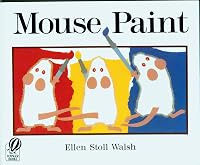
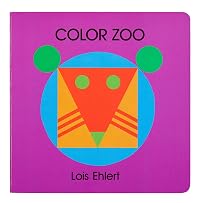



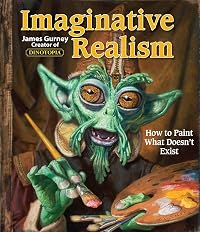
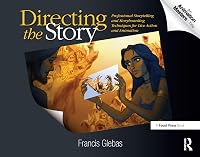

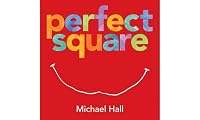

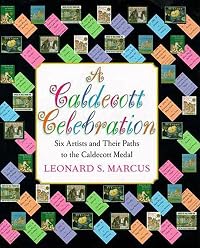
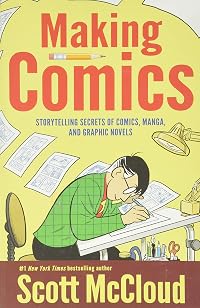
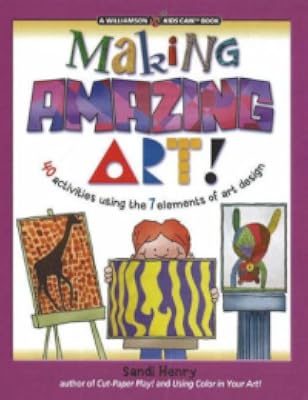
Member Recommendations
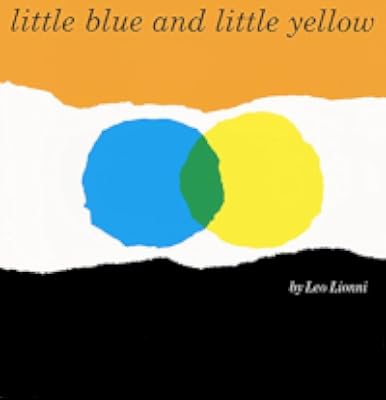
PlumPie See how Molly Bang's design principles work in Leo Lionni's classic storybook.
Member Reviews
20 April 2025
This is unutterably cool.
This is a focused and explicit lesson on pictures, and a very practical guide to creating and evaluating pictures using the example of Little Red Riding Hood. Besides the natural audience of book creators, librarians, and teachers it is just very interesting to have someone show a picture and say "here's what you're seeing and how you're interpreting it." Most of us probably (maybe? I am always learning of things that I think of as being nearly universal among humans and which are not, such as visual snow; or that I didn't know were nearly universal because I don't have them, such as a visual imagination) don't think about pictures being culturally specific not only in the choice of media and show more subject, but in terms of what information we get from it. Plus I always appreciate when someone gives me the unspoken rules of things.
***
My apologies for doing a very bad job of describing why this book is so cool to me because I read it 7 months ago, and whatever sort of comments I wrote at the time were not preserved, because I had chosen the turtleback edition of the book, which for some reason was marked as not an actual book, rather than just another format, so whatever I wrote vanished, along with my rating.
Gratitous digression:
For some reason, scheduling probably, I chose music to meet my requirement for a survey of an art class for my degree rather than visual art. Such a pity, because I am functionally tone deaf, so music is hard for me. Visual arts are much more my thing. I have no idea what else was offered, probably not any of these, but a history of publishing (as the physical process of recording and sharing information), world literature, theater, dance, textiles, furniture, and architecture all come to mind as things I would have been more engaged in and more likely to derive lasting value from. Point is, I have over the years filled in some of my knowledge gaps and I always enjoy it. Cross-cultural topics are fascinating, and, as in this book, really good at showing some of the many options available for [every aspect of every thing] and considering why, or how, those options were selected. Living in the mainstream culture of a society that up until quite recently exported it's culture worldwide, one does get exposed to as much difference between cultures as is routinely seen in many other places.
Library copy, which doesn't prevent it from being a real book show less
This is unutterably cool.
This is a focused and explicit lesson on pictures, and a very practical guide to creating and evaluating pictures using the example of Little Red Riding Hood. Besides the natural audience of book creators, librarians, and teachers it is just very interesting to have someone show a picture and say "here's what you're seeing and how you're interpreting it." Most of us probably (maybe? I am always learning of things that I think of as being nearly universal among humans and which are not, such as visual snow; or that I didn't know were nearly universal because I don't have them, such as a visual imagination) don't think about pictures being culturally specific not only in the choice of media and show more subject, but in terms of what information we get from it. Plus I always appreciate when someone gives me the unspoken rules of things.
***
My apologies for doing a very bad job of describing why this book is so cool to me because I read it 7 months ago, and whatever sort of comments I wrote at the time were not preserved, because I had chosen the turtleback edition of the book, which for some reason was marked as not an actual book, rather than just another format, so whatever I wrote vanished, along with my rating.
Gratitous digression:
For some reason, scheduling probably, I chose music to meet my requirement for a survey of an art class for my degree rather than visual art. Such a pity, because I am functionally tone deaf, so music is hard for me. Visual arts are much more my thing. I have no idea what else was offered, probably not any of these, but a history of publishing (as the physical process of recording and sharing information), world literature, theater, dance, textiles, furniture, and architecture all come to mind as things I would have been more engaged in and more likely to derive lasting value from. Point is, I have over the years filled in some of my knowledge gaps and I always enjoy it. Cross-cultural topics are fascinating, and, as in this book, really good at showing some of the many options available for [every aspect of every thing] and considering why, or how, those options were selected. Living in the mainstream culture of a society that up until quite recently exported it's culture worldwide, one does get exposed to as much difference between cultures as is routinely seen in many other places.
Library copy, which doesn't prevent it from being a real book show less
In this deceptively simple book, Molly Bang uses basic geometric shapes to show how pictures work: how simple principles of design can shape emotions and tell a story. Using cutout shapes to explain abstract statements such as "smooth, flat, horizontal shapes give us a sense of stability and calm" or "diagonal shapes are dynamic because they imply motion or tension," Ms. Bang walks the reader through the psychology of a picture. She shows how Little Red Riding Hood can be illustrated using these principles and simple shapes. She analyzes the emotional impacts of design elements such as composition, shapes, colors, contrast, and space. While much of this is intuitive, having it articulated in simple graphic form is invaluable to any show more visual artist. show less
This short treatise by famed children's book author/illustrator Molly Bang was a fascinating explanation, detailed but not didactic, of how and why the simple illustrations she devises work--how simple shapes and a limited color palette can produce powerful images, as well as how the illustrations enhance the story line and evoke reactions in readers.
Praised by the likes of David MacAulay, and used for students at the Rhode Island School of Design, this is an excellent book for anyone interested in art and illustration, and I highly recommend it.
4 stars
Praised by the likes of David MacAulay, and used for students at the Rhode Island School of Design, this is an excellent book for anyone interested in art and illustration, and I highly recommend it.
4 stars
Fascinating and illustrative (yeah I said it), useful for anything from photography to work graphics to general thoughts about story-telling. Definitely something I'd keep on the reference shelf in my imaginary grown-up house with a library large enough to curate a reference shelf.
this book shows you all the awesome effects that you can make while mixing different colors and shapes in children's books. It compares how certain shapes look in different colors and how if you put them closer or further back on the page, what effect will happen. You can do diffferent colors that are tied into human emotion, for example some colors are calm and relaxing while other colors and feel intense or angry. It shows you the basics of how children's book authors make certain decisions when illustating their work.
This is a very quick read, not just because it's interesting but also because it's pretty short. A significant part of the book is taken up by example pictures. Bang's writing is simple and to the point, and lets her enthusiasm for the material speak for itself.
I read this book on a whim based on some list I found of "how to think about design." I wanted to get an idea of how pictures work. This was a very quick read that has given me a way of more systematically understanding my own response to pictures. I have yet to do the exercises in the book. I expect some hands on experience would really help solidify my grasp of these principles.
Members
- Recently Added By
Lists

Top Five Books of 2016
795 works; 229 members

The Great Courses: Visual Literacy Skills
53 works; 1 member
Author Information

42+ Works 15,956 Members
Molly Bang was born in Princeton, New Jersey in 1943. After college, Bang taught English in Japan. She returned to the U.S and earned her graduate degree in East Asian Languages and Literatures, then worked in India, Bangladesh, and West Africa for Johns Hopkins, Unicef and Harvard. Her first books were translations of folktales, which she also show more illustrated. Bang has received many awards and honors, including the prestigious Caldecott Honor Book Award three times, for The Grey Lady and the Strawberry Snatcher, Ten, Nine, Eight and When Sophie Gets Angry - Really, Really Angry. She won the Giverny Award for Best Science Picture Book for Common Ground in 1998. Ten, Nine, Eight also won the ALA Notable Children's Book and When Sophie Gets Angry - Really, Really Angry, won the Charlotte Zolotow Award. It was also an ALA Notable Book and a Jane Addams Children's Honor Book Her titles include Nobody Particular: One Woman's Fight to Save the Bays, Tiger's Fall, Little Rat Sets Sail, My Light, and Picture This: Perception and Composition. (Bowker Author Biography) show less
Awards and Honors
Awards
Notable Lists
Common Knowledge
- Original publication date
- 1991
- Epigraph
- [None]
- Dedication
- To Leon and Monika, who both started it all,
to Jim and Penny, my constant superb critics and consultants,
to Melissa Manlove and David Macaulay, who filled me with amazed gratitude,
and with special thanks to Dic... (show all)k
(2016 ed.). - First words
- I was quite happily making my living as a writer and illustrator of children's books.
Preface.
We see shapes in context, and our reactions to them depend in large part on that context.
Building the emotional content of pictures. - Last words
- (Click to show. Warning: May contain spoilers.)Art is a way of communicating our feelings about the peculiar and awesome situation of being alive, and as various of those are, so are our ways of telling each story. And now it's your turn.
- Blurbers
- Chomsky, Noam; Selznick, Brian; Macaulay, David; Marcus, Leonard S.; Brinkerhoff, Robert; Robinson, Lolly
- Original language
- English
Classifications
Statistics
- Members
- 714
- Popularity
- 39,871
- Reviews
- 25
- Rating
- (4.13)
- Languages
- Chinese, English
- Media
- Paper, Ebook
- ISBNs
- 8
- UPCs
- 1
- ASINs
- 2