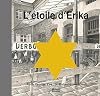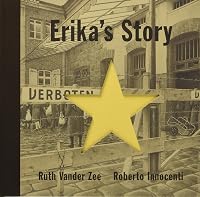
Erika's Story
by Ruth Vander Zee
On This Page
Description
A woman recalls how she was thrown from a train headed for a Nazi death camp in 1944, raised by someone who risked her own life to save the baby's, and finally found some peace through her own family.Tags
Recommendations
















Member Recommendations
Member Reviews
This is a true story told by the author when she met the woman in the book. She and her husband were in Rothenberg, German after a tornado ripped through this lovely village.
An elderly man noted the destruction reminded him of the last allied attack of the war. A woman sitting next to them noted her name as Erika and proceeded to tell her story. Here are the stark facts:
Erika was born sometime in 1944.
She does not know her birthdate, nor her birthname.
Continuing with the information that was lacking from her history is the fact that she does not know her birthplace.
She may have brothers or sisters, but does not know that is true.
She was rescued from the holocaust by parents who made a soul-wrenching decision to throw her from the train show more carrying the family to an unknown concentration camp.
Innocenti's stark black and white illustrations then graphically show the terror of deportment, people herded like cattle, a door locked, then opened as a small baby in a pink blanket is thrown from the train. The pink blanket is starkly colored against the brown-tones of the train track and a few people watching the train pass.
Here is another fact:
Someone bravely risked their life in saving hers.
She was fed, clothed, given a birthdate and a name.
She married at twenty-one
She had three children.
Starkly, the book ends with Erika's statement:
"It was once said that my people would be as many as the stars in the heavens. Six million of those stars fell from 1933-1945."
Noting that while every star represented a family torn apart, her life continued and now her children are the roots that grow.
Starkly dramatic both in fact and the way in which color is used to represent hope and life.
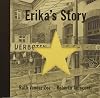
This is a book that will remain with me for a long time. The Star of David is a cut out on the first page, setting the tone accompanying the graphic image of people herded into a train, nameless people whose lives were cut short, but for one. show less
An elderly man noted the destruction reminded him of the last allied attack of the war. A woman sitting next to them noted her name as Erika and proceeded to tell her story. Here are the stark facts:
Erika was born sometime in 1944.
She does not know her birthdate, nor her birthname.
Continuing with the information that was lacking from her history is the fact that she does not know her birthplace.
She may have brothers or sisters, but does not know that is true.
She was rescued from the holocaust by parents who made a soul-wrenching decision to throw her from the train show more carrying the family to an unknown concentration camp.
Innocenti's stark black and white illustrations then graphically show the terror of deportment, people herded like cattle, a door locked, then opened as a small baby in a pink blanket is thrown from the train. The pink blanket is starkly colored against the brown-tones of the train track and a few people watching the train pass.
Here is another fact:
Someone bravely risked their life in saving hers.
She was fed, clothed, given a birthdate and a name.
She married at twenty-one
She had three children.
Starkly, the book ends with Erika's statement:
"It was once said that my people would be as many as the stars in the heavens. Six million of those stars fell from 1933-1945."
Noting that while every star represented a family torn apart, her life continued and now her children are the roots that grow.
Starkly dramatic both in fact and the way in which color is used to represent hope and life.
This is a book that will remain with me for a long time. The Star of David is a cut out on the first page, setting the tone accompanying the graphic image of people herded into a train, nameless people whose lives were cut short, but for one. show less
2.5 rounded down
In her introduction to this attractive picture book, a showcase for Roberto Innocenti’s stunning illustrations, Ruth Vander Zee explains that she met the real Erika in 1995 on a curb in Rothenburg, Germany. A tornado had ripped through the town the previous day, and the women looked on as buildings began to be repaired. They got to talking about the man-made tornado that had swept through Europe over fifty years before. The German-Jewish grandmother, who would become the subject of this picture book, told Vander Zee her story.
Honestly? There is very little to it. Erika’s Jewish mother threw her as an infant from a cattle car which was transporting Jews to an unnamed concentration camp. Someone picked up the pink show more bundle near the tracks and took the baby to a woman who risked her life to give the child a name, a birthday, a home, clothing, and an education. Readers (understandably) learn nothing of the identity of Erika’s birth parents. Nothing can be known. All we get is Erika’s speculations about them. We also get no information about Erika’s life with her adopted mother, which would certainly have been a matter of interest. Erika does explain that she married at 21 and had three children, who in turn had their own children. Erika’s tree once again has roots.
In the end, apart from Innocenti’s magnificent art, there’s nothing to recommend this book. It is blandly told and entirely lacking in all but the most basic details. The beige-brown font of the text is also off putting. There are so many better books about this subject out there. Not recommended. show less
In her introduction to this attractive picture book, a showcase for Roberto Innocenti’s stunning illustrations, Ruth Vander Zee explains that she met the real Erika in 1995 on a curb in Rothenburg, Germany. A tornado had ripped through the town the previous day, and the women looked on as buildings began to be repaired. They got to talking about the man-made tornado that had swept through Europe over fifty years before. The German-Jewish grandmother, who would become the subject of this picture book, told Vander Zee her story.
Honestly? There is very little to it. Erika’s Jewish mother threw her as an infant from a cattle car which was transporting Jews to an unnamed concentration camp. Someone picked up the pink show more bundle near the tracks and took the baby to a woman who risked her life to give the child a name, a birthday, a home, clothing, and an education. Readers (understandably) learn nothing of the identity of Erika’s birth parents. Nothing can be known. All we get is Erika’s speculations about them. We also get no information about Erika’s life with her adopted mother, which would certainly have been a matter of interest. Erika does explain that she married at 21 and had three children, who in turn had their own children. Erika’s tree once again has roots.
In the end, apart from Innocenti’s magnificent art, there’s nothing to recommend this book. It is blandly told and entirely lacking in all but the most basic details. The beige-brown font of the text is also off putting. There are so many better books about this subject out there. Not recommended. show less
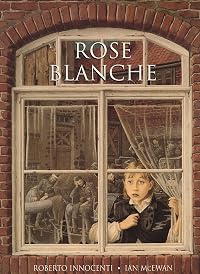
Powerful account of a Holocaust survivor who tells the story of how "on her way to death, my mother threw me to life." Using a limited palette style, Innocenti's superb illustrations are stark and foreboding, adding only a splash of pink to symbolize hope and Erika's opportunity for survival. A companion story to Innocenti's "Rose Blanche" which is equally heart wrenching.
I liked this very inspiring story. Erika’s story is a picture book about the life story a woman named Erika who the author met, who was thrown out of rail car as a small child by her mother as the rail car was full of Jewish people on their way to be executed by the Nazis. The book is about her life afterwards, about how she was able to find happiness, keep her faith, and overcome the atrocities to which she was exposed.
Ruth Vander Zee tells the story of a women Erika, she met on a trip in Europe. Erika was a new born when her and her Jewish parents were being sent to concentration camps. On the trian ride, Erika's mother wraps her tightly and throws her off the train. A woman picked her up and took her home and raised her. Because nothing was known about her, she was given a new name, birth date, etc. She has no clue of who she is and where she is from.
Incredibly courageous tale. A little gruesome for children, definitely for an older audience.
A woman recalls how she was thrown from a train headed for a Nazi death camp in 1944, raised by someone who risked her own life to save the baby's, and finally found some peace through her own family.
Members
- Recently Added By
Lists

Children's Books about World War II (1939-1945)
143 works; 12 members
Author Information
8 Works 496 Members
All Editions
Awards and Honors
Common Knowledge
- Canonical title
- Erika's Story
- Original publication date
- 2003
- People/Characters
- Erika
- Important places
- Germany
- Important events
- Holocaust
- Dedication
- To my children. Your stars brighten my life.
R. V. Z. - First words
- In 1995, the fiftieth anniversary of the end of World War II, I met the woman in this story. (Author's note)
From 1933 to 1945, six million of my people were killed. - Last words
- (Click to show. Warning: May contain spoilers.)My star still shines.
Classifications
Statistics
- Members
- 220
- Popularity
- 148,400
- Reviews
- 12
- Rating
- (4.37)
- Languages
- 9 — Catalan, Chinese, Dutch, English, French, German, Italian, Portuguese, Spanish
- Media
- Paper, Ebook
- ISBNs
- 17