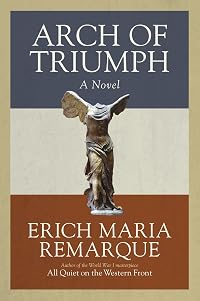
Arch of Triumph
by Erich Maria Remarque
On This Page
Description
Ravic is a German doctor and refugee living in Paris in 1939. Despite a law banning him from performing surgery, he has been treating some of the city's most elite citizens for two years on the behalf of two less-than-skillful French physicians. Forbidden to return to his own country and dodging the everyday dangers of jail and deportation, Ravic manages to hang on, all the while searching for the Nazi who tortured him back in Germany. And though he's given up on the possibility of love, show more life has a curious way of taking a turn for the romantic, even during the worst of times. show lessTags
Recommendations


















Member Reviews
Love in the shadow of war. This is the basic premise of Erich Maria Remarque’s tragic romance, Arch of Triumph, 1945, Appleton-Century Co; but if you pass over this remarkable work as just another in a long line of slobbering, pointless and uninspiring love stories you will only cheat yourself of a moving and compelling narrative that starts off slowly, imperceptibly envelops you; then, reaches out and sucks you in.
It is a story of two lost and lonely people, brought together by chance who unexpectedly find love. But while love can solidify, redeem and renew the soul; while love can give the affected the strength to combat the elements and achieve unparalleled heights of tenderness, sacrifice, bravery and accomplishment; love show more itself, can be fragile, and under the weight of the Nazi threat is their love strong enough to survive fate, war, circumstance and the emotional scars of their collective past?
Once a respected surgeon in Germany, Ravic, his alias, has become a man without a country; an illegal refugee, living on the fringe of society; reduced to living for the moment and earning a living by clandestinely performing complicated surgeries for lesser doctors in France. Ravic is also harboring a deep seated hatred and an unquenchable desire for revenge against a German officer who tortured him and drove his girlfriend to commit suicide.
One night he meets a woman, Joan Madou, a singer with a troubled past of her own.
Remarque’s account of Madou’s past is quite cryptic and vague. This skillful omission only enhances the story as it enables us discover whom Joan is as Ravic does.
While the story centers on the two main characters, it chronicles life in France the uneasiness of its inhabitants under the cloud of possible war and the plight of refugees fleeing German oppression and atrocities shortly before the start of WWII.
Remarque’s descriptive writing style brings pre-war France, from its gleaming hotels and exciting nightlife, to its lurid brothels, vividly to life. Even his description of the many operations Ravic performs throughout the story are described with such intricate eloquence that you feel as if you are actually watching them from the observation room.
Remarque, who’s earlier novel, All quite on the Western Front, would become a staple in the literary world and fodder for book burning parties throughout Nazi Germany, once again shared his passionate anti-war position with his readers. The Remarque philosophy of the senselessness and destructiveness of war; man’s inhumanity to man; the destructive nature of man’s unbridled lust for power and the catastrophic result of reckless ambition are all broached in this work; however, these timeless issues are never overdone or done heavy- handedly. Remarque does not preach, but skillfully incorporates these issues into a tight and engrossing fictional story that drips with a realism that grabs and holds your imagination, hopes and fears until the last page.
The author strips his narrative of romantic sentimentalism and in doing so give Ravic and Joan's relationship a genuine feel. One of the best aspects of this book is Remarque’s realistic description of the blissful highs devastating lows of love; especially love held hostage by world events and human frailty. Ravic knows that for a man living as he living, love is not an option, and has all but given up on love; but he is about to learn that love has never waited for an invitation. Joan is also in love. Joan has her own ideas about love, but they don't necessarily align with Ravic's.
While I would say that this book is primarily a love story, it is also a political, social and philosophical commentary. Arch of Triumph is simultaneously nostalgic and timely. The themes addressed in the story are still with us and just as relevant and important today as they were then. show less
It is a story of two lost and lonely people, brought together by chance who unexpectedly find love. But while love can solidify, redeem and renew the soul; while love can give the affected the strength to combat the elements and achieve unparalleled heights of tenderness, sacrifice, bravery and accomplishment; love show more itself, can be fragile, and under the weight of the Nazi threat is their love strong enough to survive fate, war, circumstance and the emotional scars of their collective past?
Once a respected surgeon in Germany, Ravic, his alias, has become a man without a country; an illegal refugee, living on the fringe of society; reduced to living for the moment and earning a living by clandestinely performing complicated surgeries for lesser doctors in France. Ravic is also harboring a deep seated hatred and an unquenchable desire for revenge against a German officer who tortured him and drove his girlfriend to commit suicide.
One night he meets a woman, Joan Madou, a singer with a troubled past of her own.
Remarque’s account of Madou’s past is quite cryptic and vague. This skillful omission only enhances the story as it enables us discover whom Joan is as Ravic does.
While the story centers on the two main characters, it chronicles life in France the uneasiness of its inhabitants under the cloud of possible war and the plight of refugees fleeing German oppression and atrocities shortly before the start of WWII.
Remarque’s descriptive writing style brings pre-war France, from its gleaming hotels and exciting nightlife, to its lurid brothels, vividly to life. Even his description of the many operations Ravic performs throughout the story are described with such intricate eloquence that you feel as if you are actually watching them from the observation room.
Remarque, who’s earlier novel, All quite on the Western Front, would become a staple in the literary world and fodder for book burning parties throughout Nazi Germany, once again shared his passionate anti-war position with his readers. The Remarque philosophy of the senselessness and destructiveness of war; man’s inhumanity to man; the destructive nature of man’s unbridled lust for power and the catastrophic result of reckless ambition are all broached in this work; however, these timeless issues are never overdone or done heavy- handedly. Remarque does not preach, but skillfully incorporates these issues into a tight and engrossing fictional story that drips with a realism that grabs and holds your imagination, hopes and fears until the last page.
The author strips his narrative of romantic sentimentalism and in doing so give Ravic and Joan's relationship a genuine feel. One of the best aspects of this book is Remarque’s realistic description of the blissful highs devastating lows of love; especially love held hostage by world events and human frailty. Ravic knows that for a man living as he living, love is not an option, and has all but given up on love; but he is about to learn that love has never waited for an invitation. Joan is also in love. Joan has her own ideas about love, but they don't necessarily align with Ravic's.
While I would say that this book is primarily a love story, it is also a political, social and philosophical commentary. Arch of Triumph is simultaneously nostalgic and timely. The themes addressed in the story are still with us and just as relevant and important today as they were then. show less
This is the second time I've read this marvelous novel and it was the first novel by [a:Erich Maria Remarque|4116|Erich Maria Remarque|https://d.gr-assets.com/authors/1207351165p2/4116.jpg] that I read. It is a great novel, with great characters and a great story. For those who haven't read it, I'll summarize the plot.
It is late 1938 and a German doctor who calls himself Ravic is living in Paris, France. He is living there illegally, without papers or passport. He earns money by performing surgeries for two French doctors who aren't as skilled at surgery as he is. His life changes when he meets a young woman named Joan.
I wouldn't give anymore of the plot away. I loved the main characters, Ravic & Joan. I also liked the other characters show more as well. The ending was, while it wasn't a happy ending, realistic. Though the novel ends without telling the fate of Ravic, I don't think it's necessary. show less
It is late 1938 and a German doctor who calls himself Ravic is living in Paris, France. He is living there illegally, without papers or passport. He earns money by performing surgeries for two French doctors who aren't as skilled at surgery as he is. His life changes when he meets a young woman named Joan.
I wouldn't give anymore of the plot away. I loved the main characters, Ravic & Joan. I also liked the other characters show more as well. The ending was, while it wasn't a happy ending, realistic. Though the novel ends without telling the fate of Ravic, I don't think it's necessary. show less
My favorite one. A great writer of the world war... E-MR built all his stories on the war, as he was part of the 'unfortunate' generation (born around 1900) that was old enough to be part of the first war... and then the second.
Still, all his books are as many love stories - sad though. In every book, at the very end - the woman dies somehow, leaving the man to face the war & crisis all by himself.
After reading this one - wishing to try calvados. Haven't tried it yet.
Still, all his books are as many love stories - sad though. In every book, at the very end - the woman dies somehow, leaving the man to face the war & crisis all by himself.
After reading this one - wishing to try calvados. Haven't tried it yet.
Very good condition. Dust jacket in very good condition. Bookplate inside front cover. Pages clean, binding tight.
E’ invecchiato male questo volume, che fu il secondo romanzo di successo dell’autore tedesco, trasposto poco dopo la sua uscita – nel 1946 - in un film con Charles Boyer e Ingrid Bergman. Non aiutata di certo da una traduzione anch’essa vintage, la storia del medico Ravic, clandestino in Francia dopo la fuga dalle torture della Germania hitleriana, procede a strappi, tra pagine in cui il dottore si esprime con secche frasi da duro hard-boiled e altre dove il melodramma la fa da padrone. Nell’anno che precede lo scoppio della Seconda Guerra Mondiale, il protagonista troverà l’amore e la vendetta, ma per assistervi il lettore è costretto a sorbirsi descrizioni e stati psicologici sovente espressi con sintassi complicata ed show more espressioni polverose. Remarque lavorò per molti anni al libro – praticamente tutti quelli del conflitto – e vi traspose la propria storia con Marlene Dietrich (tra i due aspetti sopra citati, la vendetta ha un ruolo secondario): forse, l’eccesso di elaborazione e la vicinanza al soggetto non hanno aiutato lo scrittore impedendogli di vedere dove una maggiore pulizia avrebbe giovato al racconto. L’integerrimo Ravic si trascina per troppe pagine tra sigarette e Calvados, amando l’ingrata Joan – in capitoli da letteratura rosa – o facendo interventi per conto terzi o impegnato in dialoghi qua stringatissimi e lì invece debordanti (specie con l’antipatico esule russo Morosow): poi, quando diventa necessario tirare le fila, la scrittura prende quota e gli ultimi capitoli si rivelano i migliori. La chiusura dei conti con il boia nazista Haake è spietata e gelida, mentre quella con Joan ha i toni fiammeggianti di un film di Raffaello Matarrazzo, di quelli da fazzoletto inzuppato di lacrime. Calmatesi le acque e chiusa un’altra pagina della propria esistenza, a Ravic non resta che riprendere il suo vero nome e condividere il destino degli altri profughi di guerra, la cui dolente rappresentazione è tra le cose migliori del libro. show less
Oct 6, 2016Italian
Nemecký lekár Ravic žije pod cudzími menami v Paríži, nemôže vykonávať lekársku prax a je rád, keď načierno, za slabú odmenu, pomáha v nemocnici slabším chirurgom. Za zvláštnych okolností sa stretáva s neznámou herečkou a speváčkou Joan Madou, s ktorou prežije ľúbostný vzťah plný rozporov, poznačený jeho neistou ľudskou situáciou.
Apr 2, 2022Slovak
בתוך הספר הארוך והבינוני הזה מתחבא ספר קטן ומצוין, רק צריך היה עורך שינקה אותו ממחציתו ומהעמודים הרבים של "פרוזה ארגמנית" שמקלקלים אותו. יש בו אבל סיפור מרתק, ומספר פרקים יוצאים מן הכלל
Apr 13, 2014Hebrew
Members
- Recently Added By
Lists

German Literature
518 works; 56 members

Publisher's Weekly Bestsellers - Part II - 1940 - 1979
355 works; 6 members

1930s
262 works; 5 members

Best Historical Fiction
620 works; 262 members
Author Information

115+ Works 29,417 Members
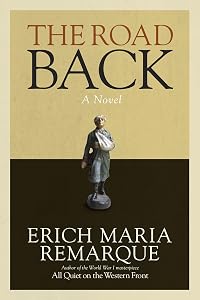
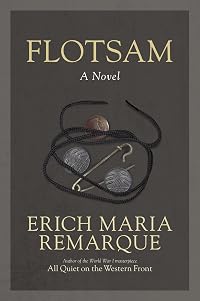
Erich Maria Remarque was born Erich Paul Remark on June 22, 1898 in Germany. He was drafted into the German Army at the age of 18. He was assigned to the Western Front and later moved to the 15th Reserve Infantry Regiment. He was wounded by shrapnel in the left leg, right arm and neck, and was moved to an army hospital in Germany where he spent show more the rest of the war. After the war, he continued his teacher training and became a primary school teacher. He also began pursuing his writing career. He started writing essays and poems and his first novel, The Dream Room. When he published All Quiet on the Western Front, Remarque changed his middle name in memory of his mother and reverted to the earlier spelling of the family name. The original family name, Remarque, had been changed to Remark by his grandfather in the 19th century. All Quiet on the Western Front was written in 1927, but Remarque was unable to find a publisher. The novel was published in 1929 and described the experiences of German soldiers during World War 1. His other works include: Station at the Horizon, The Road Back, Three Comrades, Flotsam, and Shadows in Paradise. Erich Remarque died in 1958 of heart collapse brought on byan aneurysm. (Bowker Author Biography) show less
Some Editions
Awards and Honors
Distinctions
Notable Lists
Series
Belongs to Publisher Series
Work Relationships
Common Knowledge
- Canonical title
- Arch of Triumph
- Original title
- Arc de Triomphe
- Alternate titles
- The Arch of Triumph
- Original publication date
- 1945
- People/Characters*
- Ravic; Joan
- Important places
- Paris, Île-de-France, France
- Related movies
- Arch of Triumph (1948 | IMDb); Arch of Triumph (1984 | IMDb)
- First words
- The woman veered towards Ravic.
Con passo rapido ma stranamente incerto, la donna ondeggiò verso Ravic. La notò solo quando gli fu vicina. - Last words*
- (Click to show. Warning: May contain spoilers.)La macchina percorse l'Avenue Wagram e voltò in Place de l'Etoile. Tutte le luci erano spente, e la piazza non era che tenebra. Una tenebra così fitta, che non si riusciva neppure a vedere l'Arc de Triomphe.
- Original language
- German
*Some information comes from Common Knowledge in other languages. Click "Edit" for more information.
Classifications
- Genres
- Fiction and Literature, General Fiction, Historical Fiction
- DDC/MDS
- 833.912 — Literature & rhetoric German & related literatures German fiction 1900- 1900-1990 1900-1945
- LCC
- PZ3 .R2818 .A — Language and Literature Fiction and juvenile belles lettres Fiction and juvenile belles lettres Fiction in English
- BISAC
Statistics
- Members
- 1,069
- Popularity
- 24,156
- Reviews
- 14
- Rating
- (4.20)
- Languages
- 23 — Albanian, Bulgarian, Czech, Danish, Dutch, English, Estonian, Finnish, French, German, Hebrew, Hungarian, Italian, Latvian, Lithuanian, Norwegian (Bokmål), Norwegian, Polish, Portuguese, Romanian, Russian, Spanish, Swedish
- Media
- Paper, Audiobook, Ebook
- ISBNs
- 78
- ASINs
- 39