On This Page
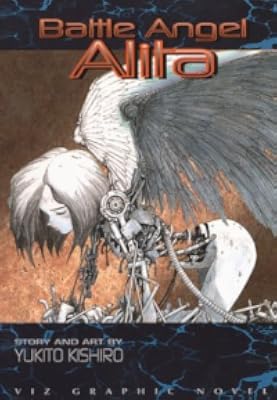
Description
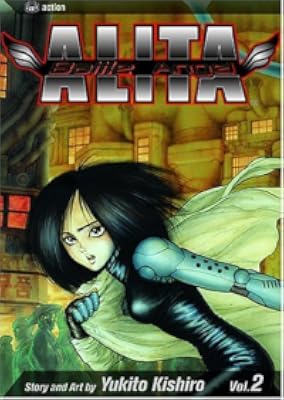
In a dump in the lawless settlement of Scrapyard, far beneath the mysterious space city of Zalem, disgraced cyber-doctor Daisuke Ido makes a strange find: the detached head of a cyborg woman who has lost all her memories. He names her Alita and equips her with a powerful new body, the Berserker. While Alita remembers no details of her former life, a moment of desperation reawakens in her nerves the legendary school of martial arts known as Panzer Kunst. In a place where there is no justice show more but what people make for themselves, Alita decides to become a hunter-killer, tracking down and taking out those who prey on the weak. But can she hold onto her humanity as she begins to revel in her own bloodlust? show lessTags
Recommendations

Member Reviews
I've become a very different creature. It's over ten years now since I discovered this brutal, wonderful creation in a Tower Records store in Berkeley, California. I was an undergraduate then, formless and pink and 1500 miles from my nuclear family. Now I'm a scientist and a husband. Everything's evolved, like Pachelbel's Canon; some themes have come to the fore, some have faded away. It would be disingenuous to say that this manga was the source of all, but it has been a seed crystal for me. It will be for you, too.
This, then, is the story of a female burned of everything: her name, her identity, her history, left only as a cybernetic head in a dystopian scrapyard. Her savior, a doctor named "Ido", gives her a name--"Alita"--a body and show more a home. But her identity comes to her through the "Panzer Kunst", a martial art she retains in her mind. Is it a clue? Merely a suggestion? Or Pandora's Box? Over the course of the saga, Alita must decide, and decide again, what Panzer Kunst means to her sense of self and vice versa.
Kishiro-sensei is a provocative artist and a strong--if occasionally didactic--storyteller. But it is the characters, again and again, that carry Battle Angel Alita. We learn about ourselves through our identification with them. If you grow as I have, then Kishiro--and with him, Alita--have succeded. Your winds rest on your shoulders now. Read and learn to fly. show less
This, then, is the story of a female burned of everything: her name, her identity, her history, left only as a cybernetic head in a dystopian scrapyard. Her savior, a doctor named "Ido", gives her a name--"Alita"--a body and show more a home. But her identity comes to her through the "Panzer Kunst", a martial art she retains in her mind. Is it a clue? Merely a suggestion? Or Pandora's Box? Over the course of the saga, Alita must decide, and decide again, what Panzer Kunst means to her sense of self and vice versa.
Kishiro-sensei is a provocative artist and a strong--if occasionally didactic--storyteller. But it is the characters, again and again, that carry Battle Angel Alita. We learn about ourselves through our identification with them. If you grow as I have, then Kishiro--and with him, Alita--have succeded. Your winds rest on your shoulders now. Read and learn to fly. show less
My first impression, re-reading this story years later, is that things move very fast. The extent of the story told in this could have been spread over at least twice the page count and three times the dialog. I'm not sure that would have made it any better, though.
I first encountered Battle Angel Alita in the early '90s, in both manga and anime forms, and it immediately captured my interest and imagination. I remember sitting down and creating an entire roleplaying game based on the concepts and contexts of the Alita story, called Tales from the Scrapyard, and while I lost the game I created years ago (and don't even remember anything about the game mechanics other than the fact I wrote them in obsessively neat letters on very show more small-grid graph paper) I'm tempted to start over and create a new game inspired by the story with the same name. I'll probably (re)read a couple more volumes before I decide whether to actually do so, though.
Re-reading did not disappoint me; only the fact I don't have the second volume handy, to continue re-reading what I read twenty years or so ago, disappoints me. I look forward to getting through everything I read back then, and the parts that were not yet published back then. show less
I first encountered Battle Angel Alita in the early '90s, in both manga and anime forms, and it immediately captured my interest and imagination. I remember sitting down and creating an entire roleplaying game based on the concepts and contexts of the Alita story, called Tales from the Scrapyard, and while I lost the game I created years ago (and don't even remember anything about the game mechanics other than the fact I wrote them in obsessively neat letters on very show more small-grid graph paper) I'm tempted to start over and create a new game inspired by the story with the same name. I'll probably (re)read a couple more volumes before I decide whether to actually do so, though.
Re-reading did not disappoint me; only the fact I don't have the second volume handy, to continue re-reading what I read twenty years or so ago, disappoints me. I look forward to getting through everything I read back then, and the parts that were not yet published back then. show less
I read the first three volumes of Battle Angel Alita back in high school, and I hung on to my second volume for almost 2 decades. Now, with the release of the movie (which is actually OK!), I was inspired to re-read the first volume.
This was pretty much everything I remember it being – cyber punky, gorgeously illustrated and with a headstrong female character unafraid to fight spectacularly gross and violent cyborgs in the sewer.
This was pretty much everything I remember it being – cyber punky, gorgeously illustrated and with a headstrong female character unafraid to fight spectacularly gross and violent cyborgs in the sewer.
What’s new is new
At the time of its publication this was not a cutting edge story. At least not in Japan, it was old hat over there. But elsewhere this was a crazy story. Cyborg found in junk yard turned bounty hunter was not anything on the market that anyone else was doing. This volume is a small part of a grander story which gets better with each successive volume. This is definitely worth starting on if you want something new but familiar in how it’s new.
At the time of its publication this was not a cutting edge story. At least not in Japan, it was old hat over there. But elsewhere this was a crazy story. Cyborg found in junk yard turned bounty hunter was not anything on the market that anyone else was doing. This volume is a small part of a grander story which gets better with each successive volume. This is definitely worth starting on if you want something new but familiar in how it’s new.
I read most of this series back when Viz first published it in the traditional western comic book form in the 1990s, and I've had these collected editions on my shelf for years, but I'm only just rereading it for the first time. (I figured I'd refresh my memory before the new movie comes out.) This has some very nice art, though it's a little hard to "read" at times in this reduced size. There isn't much to the story apart from Alita's revival and her ongoing battle with the notorious brain-eating cyborg Makaku, whose character is quite over-the-top. If I remember correctly, there's more character development to balance the action in subsequent volumes.
Interesting start to the series. I'd like to see more about where it goes though - as while it's got a unique look and style - the fact that James Cameron wants to make a movie out of this is kind of making me look for the "James Cameron" movie in this - and I haven't found it yet.
A cybernetician in a dystopian future finds a 300 year old cyborg head on the massive rubbish pile beneath the floating city of the elites. The brain is still alive and he reactivates the girl, cobbles together a new body for her and names her Alita (Gally in the Japanese) after a dead pet.
And Gally begins her journey to recover her memory and her identity. This plays out as the drama of adolescence: finding herself, first love, rebellion against parents: but hidden in her past and her memory are powerful battle techniques. What was she?
The story plays out over nine volumes, covers many additional plots including a mad scientist, rollerball-like sports, hyperviolent battes -- just about every manga trope you could ask for -- and show more finally, the shocking secret of the elites' city, and a mystical revelation. show less
And Gally begins her journey to recover her memory and her identity. This plays out as the drama of adolescence: finding herself, first love, rebellion against parents: but hidden in her past and her memory are powerful battle techniques. What was she?
The story plays out over nine volumes, covers many additional plots including a mad scientist, rollerball-like sports, hyperviolent battes -- just about every manga trope you could ask for -- and show more finally, the shocking secret of the elites' city, and a mystical revelation. show less
Members
- Recently Added By
Author Information

244+ Works 8,094 Members
Some Editions
Awards and Honors
Notable Lists
Series

Work Relationships
Common Knowledge
- Canonical title
- Battle Angel Alita, Volume 1: Rusty Angel
- Original title
- Gunnm 1; 銃夢 1
- Original publication date
- 1991
- People/Characters
- Alita; Daisuke Ido; Gonzu; Makaku; Koyomi; Duke Fang (show all 11); Barkeep; Zapan; Desty Nova (flashback); Zaariki; Kinuba
- Important places
- The Scrapyard; Kansas (bar)
- Related movies
- Gunnm (1993 | IMDb); Alita: Battle Angel (2018 | IMDb)
- First words*
- Der Schrottplatz... Heimat aller menschlichen und künstlichen Überreste von Zalem, der Himmelsstadt.
- Last words*
- (Click to show. Warning: May contain spoilers.)Meine Finger sind auch nicht ohne...!
*Some information comes from Common Knowledge in other languages. Click "Edit" for more information.
Classifications
- Genres
- Graphic Novels & Comics, Teen
- DDC/MDS
- 741.5952 — Arts & recreation Drawing & decorative arts Drawing Comic books, graphic novels, fotonovelas, cartoons, caricatures, comic strips History, geographic treatment, biography Asian Japanese
- LCC
- PN6790 .J33 .K5 — Language and Literature Literature (General) Literature (General) Collections of general literature Comic books, strips, etc.
- BISAC
Statistics
- Members
- 763
- Popularity
- 36,844
- Reviews
- 15
- Rating
- (3.91)
- Languages
- 8 — Dutch, English, Finnish, French, German, Japanese, Polish, Spanish
- Media
- Paper, Ebook
- ISBNs
- 27
- UPCs
- 4
- ASINs
- 1