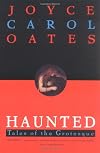
Haunted: Tales of the Grotesque
by Joyce Carol Oates
On This Page
Description
Novelist, poet, dramatist and author of many of the best American short stories of our time, Joyce Carol Oates shows yet another aspect of her unbounded creativity in these tales of the grotesque. Haunted, a collection of sixteen tales that range from classic ghost stories to portrayals of chilling psychological terror, raises the genre to the level of fine literature - complex, multi-layered, and gripping fiction that is very scary indeed. In the title story, "Haunted," the pubescent show more Melissa and her best friend, the sexually precocious Mary Lou, ignore "no trespassing" signs to explore forbidden houses. But the deserted Minton farm is one place where they should not have gone, and years later Melissa is tormented by her memories of its malevolence ... and the murder of Mary Lou. In the novella, "The Model," a sexual threat seems to underlie the interaction between young Sybil Blake and "Mr. Starr," who asks her to be his model, but the truth about her own identity, and his, shows that the danger is lurking in a different part of the heart. The "Accursed Inhabitants of the House of Bly," a macabre reworking of Henry James's "The Turn of the Screw," resurrects the evil of Miss Jessel and Quint, who are up to their old tricks with the children, Miles and Flora, but with new, perverse, and brilliant revelations. The tales in this collection plunge the reader into nightmare worlds where violence slips in unexpectedly, where reality turns into a funhouse mirror, and where American culture goes awry in shocking, provocative ways. Joyce Carol Oates is a master storyteller of the dark side. She writes with skillfully controlled prose, tightly woven plots, and deep psychological insight that make her fictional horror worthy to set alongside the stories of Edgar Allan Poe - and far above all the rest. show lessTags
Recommendations















Member Reviews
What is horrible to us, men and women, in all stages of life? It's not stupid college kids who always go where they shouldn't who face the most terrible stuff in these short stories. It's a young woman with an unwanted pregnancy and very little money to get rid of it. It's a boy and girl who find more love from a dead governess than a live one. It's a man whose wife's cat decides not to like him any more.
If the first stories don't seem to be very scary, stick with them. They get worse (or better depending on how you look at it).
If the first stories don't seem to be very scary, stick with them. They get worse (or better depending on how you look at it).
I was interested in reading something in the spirit of the season (Halloween) so I picked up this book of short stories, which ranged from creepy to downright disgusting. As an author, Joyce Carol Oates shows an uncanny ability to come up with strikingly different situations within which she weaves remarkable tales. With Oates, you never know what you're going to get because each story is completely different than the one before.
However, what is the same about each of the stories in this book is the underlying mood of confusion and panic. Whether it was the story about a successful university president surprised to find the exact replica of her childhood dollhouse on a street in Lancaster County or the one about the dead governess and show more valet haunting the children they loved and cared for in life, the reader never feels completely sure of the circumstances or clear about the story that is unfolding. The teacher in me couldn't help but think, as I was reading the book, that it would be a great one with which to teach the skill of making inferences (although it is most certainly not appropriate for kids of any age).
A few of my favorite stories were The White Cat and The Model. In The White Cat a man in his fifties develops an intense hatred for his (much younger) wife's white Persian cat. He makes multiple attempts to kill the cat yet somehow the cat continues to "haunt" him. In The Model a 17-year-old runner is approached by an artist in the park. He offers her a great deal of money to pose as his model for a picture. During these modeling sessions, the girl becomes convinced that this stranger is actually the father whom she has long believed to be dead. But, as the reader, you're never quite convinced that this is true...
There are sixteen stories in this book, but many of them were too distressing for me to consider enjoyable. While I admire Oates' writing abilities and these stories were definitely creepy, I found more of them upsetting than entertaining. In the end the final story, especially, turned my stomach enough to turn me off completely. show less
However, what is the same about each of the stories in this book is the underlying mood of confusion and panic. Whether it was the story about a successful university president surprised to find the exact replica of her childhood dollhouse on a street in Lancaster County or the one about the dead governess and show more valet haunting the children they loved and cared for in life, the reader never feels completely sure of the circumstances or clear about the story that is unfolding. The teacher in me couldn't help but think, as I was reading the book, that it would be a great one with which to teach the skill of making inferences (although it is most certainly not appropriate for kids of any age).
A few of my favorite stories were The White Cat and The Model. In The White Cat a man in his fifties develops an intense hatred for his (much younger) wife's white Persian cat. He makes multiple attempts to kill the cat yet somehow the cat continues to "haunt" him. In The Model a 17-year-old runner is approached by an artist in the park. He offers her a great deal of money to pose as his model for a picture. During these modeling sessions, the girl becomes convinced that this stranger is actually the father whom she has long believed to be dead. But, as the reader, you're never quite convinced that this is true...
There are sixteen stories in this book, but many of them were too distressing for me to consider enjoyable. While I admire Oates' writing abilities and these stories were definitely creepy, I found more of them upsetting than entertaining. In the end the final story, especially, turned my stomach enough to turn me off completely. show less
Joyce Carol Oates' Haunted is an excellent collection of stories that, for the lack of a better word, are "scary". However, these are not "scary" in the sense that Edgar Allan Poe or H.P Lovecraft are. These tales are much more like the plot of an episode of Twilight Zone with a twist at the end. As other reviewers have stated, her stories range from traditional scary stories that could to told on Halloween, to creepy tales with psychological implications, to horrific passages of violence.
The majority of the tales center around the relationship between a woman/girl and an abusive man. In most of the stories, the man and woman are related to each other though sometimes it takes a while to figure out their relationship. Though when show more reading these stories for the first time, the plots and characters may seem harmless. The terrifying elements lay just below the surface. Unlike in other scary story collections, Oates rarely shows the reader what is exactly to be feared. Instead, she describes and fear and panic surrounding the event and lets the reader infer. This technique makes the tales even more grotesque and horrific because there is no defined conclusion and it is up to the reader's imagination.
Oates also uses a variety of techniques that have become familiar to her readers. In one story, she begins each sentence with the word "because" which makes the tale almost seem like a free verse poem. Another story is segmented with each passage numbered as if the entire story is a list of some sort.
Though descriptions of the tales may sound interesting, the majority of the stories are incredibly upsetting. Instead of murderous hitchhikers or clawed murderers, these are stories that burrow deep into the reader's psyche and wreck havoc. These are not for readings around a campfire or for someone who wants chills on Halloween. The kinds of chills that these stories give are far deeper and are not easily ignored. show less
The majority of the tales center around the relationship between a woman/girl and an abusive man. In most of the stories, the man and woman are related to each other though sometimes it takes a while to figure out their relationship. Though when show more reading these stories for the first time, the plots and characters may seem harmless. The terrifying elements lay just below the surface. Unlike in other scary story collections, Oates rarely shows the reader what is exactly to be feared. Instead, she describes and fear and panic surrounding the event and lets the reader infer. This technique makes the tales even more grotesque and horrific because there is no defined conclusion and it is up to the reader's imagination.
Oates also uses a variety of techniques that have become familiar to her readers. In one story, she begins each sentence with the word "because" which makes the tale almost seem like a free verse poem. Another story is segmented with each passage numbered as if the entire story is a list of some sort.
Though descriptions of the tales may sound interesting, the majority of the stories are incredibly upsetting. Instead of murderous hitchhikers or clawed murderers, these are stories that burrow deep into the reader's psyche and wreck havoc. These are not for readings around a campfire or for someone who wants chills on Halloween. The kinds of chills that these stories give are far deeper and are not easily ignored. show less
Extremely well written stories that often had very disappointing endings. I often felt "let down" after each tale. Still, the 5 offerings that make up Part III were my favorites of the collection. And a quick heads up - "grotesque" has many meanings! I, mistakenly in this case, thought it meant "gross" or "disgusting". It has other meanings too!
Having enjoyed Oats work before and seeing as I enjoy horror of all varieties I found this short story collection to be a let down. The way in which the stories are "haunted" is more academic and there really isn't a grotesque about it (although you can feel it trying really hard at times to come across as 19 century gothic).
It wasn't poorly written I was just let down from what I was expecting by the blurb and title and for that reason I gave it only two stars.
It wasn't poorly written I was just let down from what I was expecting by the blurb and title and for that reason I gave it only two stars.
Joyce Carol Oates' own unique take on the modern horror story. There's a neat bunch of variety here. Some are pretty subtle, bordering on the obtuse, while others use their subtlety as a veil over an unsettling reality.
Haunted -- A story of a friendship between two girls and the doomed and haunted houses of their rural milleu. Spooky and ambiguous.
The Doll -- While on a trip, a woman spots a house which is the very image of her favorite childhood dollhouse. Another spooky one, which reminded thematically of Ligotti or Schulz.
The Bingo Master -- A woman's strange experience at the local bingo parlor with a man of a most questionable nature. Also ambiguous, but bordering on the surreal.
The White Cat -- In this homage to Poe's "The show more Black Cat" a man decides to murder his wife's pet Persian. But sometimes, cats come back. Nicely disturbing.
The Model -- A teenager becomes the model for an eccentric old man. But why does he seem to have such an interest in her?
Extenuating Circumstances -- A creepy story of a horrible act, in which the act itself is never named, only the justifications for it.
Don't You Trust Me? -- In a country where abortion has been outlawed, becoming pregnant can itself be a horror story.
The Guilty Party -- Disturbing account of a single mother's relationship with her son, who seems smart and angry beyond his years.
The Premonition -- A man worries his brother will hurt his family. After he rushes over, he sees everything seems to be okay, if perhaps a bit strange. Oates uses subtlety to make clear the horror that has taken place.
Phase Change -- A woman begins to fall prey to hideous nightmares, which have her questioning her sanity.
Poor Bibi -- Another story where Oates' indicates the horror by covering it up. (There might be something a bit sadistic in it, as if she's denying the reader the cathartic release of terrible relevation.)
Blind -- A woman is awoking in the middle of the night by a storm which has caused the power to fail. As she makes her way in the dark, she begins to suspect it is no ordinary storm, not any ordinary darkness.
The Radio Astronomer -- A rather subtle piece about a man crippled by a stroke, which contrasts whis slow disolution into cosmic fantasy with his caretaker's grounded cynicism.
The Accursed Inhabitants of the House of Bly -- Another homage, this time to Henry James' "The Turn of the Screw." Spooky and sad.
Martyrdom -- Disturbing and surreal. The life of a rat who is all rats and a strange woman seemingly bred for domesticity, and their eventual meeting. show less
Haunted -- A story of a friendship between two girls and the doomed and haunted houses of their rural milleu. Spooky and ambiguous.
The Doll -- While on a trip, a woman spots a house which is the very image of her favorite childhood dollhouse. Another spooky one, which reminded thematically of Ligotti or Schulz.
The Bingo Master -- A woman's strange experience at the local bingo parlor with a man of a most questionable nature. Also ambiguous, but bordering on the surreal.
The White Cat -- In this homage to Poe's "The show more Black Cat" a man decides to murder his wife's pet Persian. But sometimes, cats come back. Nicely disturbing.
The Model -- A teenager becomes the model for an eccentric old man. But why does he seem to have such an interest in her?
Extenuating Circumstances -- A creepy story of a horrible act, in which the act itself is never named, only the justifications for it.
Don't You Trust Me? -- In a country where abortion has been outlawed, becoming pregnant can itself be a horror story.
The Guilty Party -- Disturbing account of a single mother's relationship with her son, who seems smart and angry beyond his years.
The Premonition -- A man worries his brother will hurt his family. After he rushes over, he sees everything seems to be okay, if perhaps a bit strange. Oates uses subtlety to make clear the horror that has taken place.
Phase Change -- A woman begins to fall prey to hideous nightmares, which have her questioning her sanity.
Poor Bibi -- Another story where Oates' indicates the horror by covering it up. (There might be something a bit sadistic in it, as if she's denying the reader the cathartic release of terrible relevation.)
Blind -- A woman is awoking in the middle of the night by a storm which has caused the power to fail. As she makes her way in the dark, she begins to suspect it is no ordinary storm, not any ordinary darkness.
The Radio Astronomer -- A rather subtle piece about a man crippled by a stroke, which contrasts whis slow disolution into cosmic fantasy with his caretaker's grounded cynicism.
The Accursed Inhabitants of the House of Bly -- Another homage, this time to Henry James' "The Turn of the Screw." Spooky and sad.
Martyrdom -- Disturbing and surreal. The life of a rat who is all rats and a strange woman seemingly bred for domesticity, and their eventual meeting. show less
Contains:
Haunted --
The doll --
The bingo master --
The white cat --
The model --
Extenuating circumstances --
Don't you trust me --
The guilty party --
The premonition --
Phase change --
Poor Bibi --
Thanksgiving --
Blind --
The radio astronomer --
Accursed inhabitants of the House of Bly --
Martyrdom.
Haunted --
The doll --
The bingo master --
The white cat --
The model --
Extenuating circumstances --
Don't you trust me --
The guilty party --
The premonition --
Phase change --
Poor Bibi --
Thanksgiving --
Blind --
The radio astronomer --
Accursed inhabitants of the House of Bly --
Martyrdom.
Members
- Recently Added By
Lists

Recommended Horror and Dark Fiction by Women
81 works; 13 members

Ghosts
278 works; 16 members
Author Information

476+ Works 62,421 Members
Joyce Carol Oates was born on June 16, 1938 in Lockport, New York. She received a bachelor's degree in English from Syracuse University and a master's degree in English from the University of Wisconsin. She is the author of numerous novels and collections of short stories. Her works include We Were the Mulvaneys, Blonde, Bellefleur, You Must show more Remember This, Because It Is Bitter, Because It Is My Heart, Solstice, Marya : A Life, and Give Me Your Heart. She has received numerous awards including the National Book Award for Them, the PEN/Malamud Award for Excellence in Short Fiction, and the F. Scott Fitzgerald Award for Lifetime Achievement in American Literature. She was a finalist for the 2015 Pulitzer Prize for Fiction with her title Lovely, Dark, Deep. She also wrote a series of suspense novels under the pseudonym Rosamond Smith. In 2015, her novel The Accursed became listed as a bestseller on the iBooks chart. She worked as a professor of English at the University of Windsor, before becoming the Roger S. Berlind Distinguished Professor of Humanities at Princeton University. She and her late husband Raymond J. Smith operated a small press and published a literary magazine, The Ontario Review. (Bowker Author Biography) Joyce Carol Oates is one of the most eminent and prolific literary figures and social critics of our times. She has won the National Book Award and several O. Henry and Pushcart prizes. Among her other awards are an NEA grant, a Guggenheim fellowship, the PEN/Malamud Lifetime Achievement Award, and the F. Scott Fitzgerald Award for Lifetime Achievement in American Literature. (Publisher Provided) show less
Awards and Honors
Awards
Work Relationships
Common Knowledge
- Original publication date
- 1994
- Dedication
- To Ellen Datlow
- First words
- Haunted houses, forbidden houses.
- Last words
- (Click to show. Warning: May contain spoilers.)What the vision is we might guess, but, inhabiting a brightly populated, sociable, intensely engaging outer world, in which we are defined to one another as social beings with names, professions, roles, public identities, and in which, most of the time, we believe ourselves at home -- isn't it wisest not to?
- Canonical DDC/MDS
- 813.54
- Canonical LCC
- PS3565.A8
Classifications
Statistics
- Members
- 548
- Popularity
- 54,115
- Reviews
- 7
- Rating
- (3.62)
- Languages
- English, French, German, Turkish
- Media
- Paper
- ISBNs
- 7
- ASINs
- 3