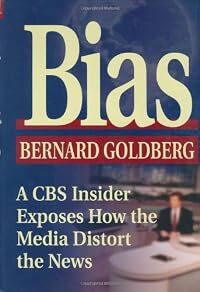
Bias: A CBS Insider Exposes How the Media Distort the News
by Bernard Goldberg
On This Page
Description
A veteran CBS reporter exposes how liberal bias pervades the mainstream media, arguing that fairness, balance, and integrity have disappeared from network television.Tags
Recommendations


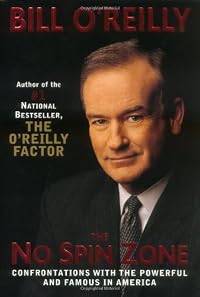
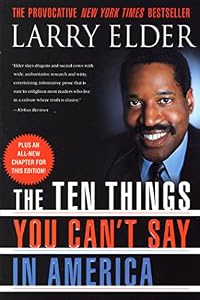
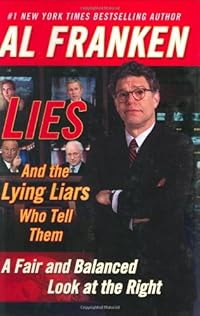
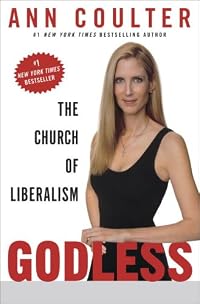

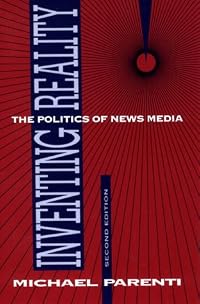
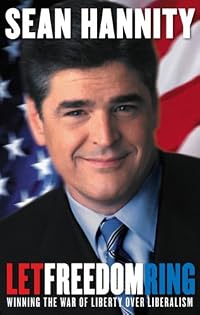
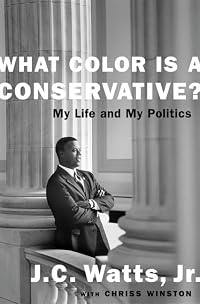

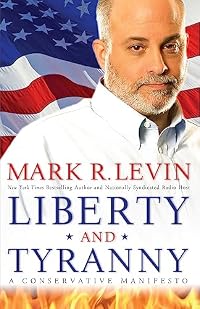

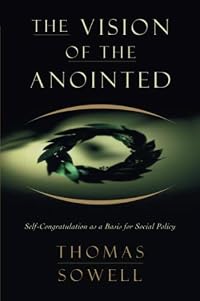
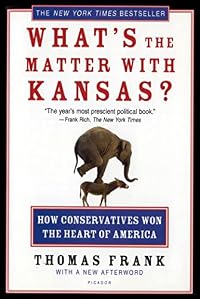

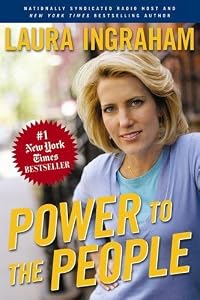
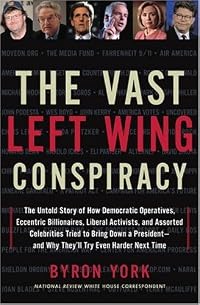
Member Recommendations
Member Reviews
Bernard Goldberg’s Bias starts with a harsh, over-the-top comparison of the major TV news outlets to the gangsters of the Godfather movies. He says that he was given a set of cement footwear for breaking their code of silence and talking publicly about inside secrets that many in the business are aware of, but simply agree not to discuss.
While this comparison is undoubtedly hyperbole (he has had, as far as I know, no attempts on his life) his treatment after he dared accuse his own colleagues of a clear and consistent liberal bias is completely out of proportion, especially considering the media’s pride in defending freedom of speech.
Continuing a stand that began with a Wall Street Journal editorial in February of 1996, Goldberg show more describes the pervasive and generally unconscious liberal bias in the major TV news networks, CBS, NBC, and ABC. The pernicious nature of this bias, he says, is largely due to the sheltered circles the media elites travel in; they rarely encounter people who don’t share their political views, and thus soon grow to think that their views are simply what all reasonable intelligent people believe.
Goldberg gives a detailed account of the results of this bias in several areas. The problem of homelessness was drastically exaggerated during the Reagan era, as well as being “prettified” for the consumption of the average viewer. If you rely unquestioningly accept the word of the Big Three, homelessness magically disappeared during Clinton’s presidency, only to suddenly reappear when the Bush was elected in 2000. AIDS in America never reached anything like the epidemic proportions the major networks would have had us believe. To those not in clearly defined high risk groups (hemophiliacs, IV drug users, gays) it simply was not a threat. But this was not the picture we were repeatedly presented with.
More intellectual dishonesty can be found in the media’s selection and presentation of valid targets. Men, and especially white men, can be demonized and persecuted with an unholy venom. Natlie Angier of the New York Times can even question whether we today even need men, whether the sex, as a whole, is “worth the trouble”, and instead of being regarded as a vicious lunatic is considered reasonable and intelligent. Is 50% of our species “necessary” and “worth the trouble”? If this kind of question were applied to any other group, the writer would instantly become a pariah in liberal circles.
Along similar lines, politicians, scholars, and other public figures are not given a balanced presentation, even in a simple introduction. Any Republican politician is consistently introduced as “conservative so-and-so from Ohio.” Any representative of a conservative think tank or activism group is clearly labeled as conservative when being introduced or even discussed. No such labeling appears necessary for liberals, though. It is as if those with liberal inclinations are simply people, while those with conservative views are some dangerous, alien creatures, and must be clearly labeled as such.
Regardless of the political inclinations, the reader should worry about the impact of such a clear and consistent liberal bias on the public debate. This narrowing of permissible viewpoints is, in the most meaningful sense, the direct opposite of liberalism, which, translated to common English, means simply “freedom”. show less
While this comparison is undoubtedly hyperbole (he has had, as far as I know, no attempts on his life) his treatment after he dared accuse his own colleagues of a clear and consistent liberal bias is completely out of proportion, especially considering the media’s pride in defending freedom of speech.
Continuing a stand that began with a Wall Street Journal editorial in February of 1996, Goldberg show more describes the pervasive and generally unconscious liberal bias in the major TV news networks, CBS, NBC, and ABC. The pernicious nature of this bias, he says, is largely due to the sheltered circles the media elites travel in; they rarely encounter people who don’t share their political views, and thus soon grow to think that their views are simply what all reasonable intelligent people believe.
Goldberg gives a detailed account of the results of this bias in several areas. The problem of homelessness was drastically exaggerated during the Reagan era, as well as being “prettified” for the consumption of the average viewer. If you rely unquestioningly accept the word of the Big Three, homelessness magically disappeared during Clinton’s presidency, only to suddenly reappear when the Bush was elected in 2000. AIDS in America never reached anything like the epidemic proportions the major networks would have had us believe. To those not in clearly defined high risk groups (hemophiliacs, IV drug users, gays) it simply was not a threat. But this was not the picture we were repeatedly presented with.
More intellectual dishonesty can be found in the media’s selection and presentation of valid targets. Men, and especially white men, can be demonized and persecuted with an unholy venom. Natlie Angier of the New York Times can even question whether we today even need men, whether the sex, as a whole, is “worth the trouble”, and instead of being regarded as a vicious lunatic is considered reasonable and intelligent. Is 50% of our species “necessary” and “worth the trouble”? If this kind of question were applied to any other group, the writer would instantly become a pariah in liberal circles.
Along similar lines, politicians, scholars, and other public figures are not given a balanced presentation, even in a simple introduction. Any Republican politician is consistently introduced as “conservative so-and-so from Ohio.” Any representative of a conservative think tank or activism group is clearly labeled as conservative when being introduced or even discussed. No such labeling appears necessary for liberals, though. It is as if those with liberal inclinations are simply people, while those with conservative views are some dangerous, alien creatures, and must be clearly labeled as such.
Regardless of the political inclinations, the reader should worry about the impact of such a clear and consistent liberal bias on the public debate. This narrowing of permissible viewpoints is, in the most meaningful sense, the direct opposite of liberalism, which, translated to common English, means simply “freedom”. show less
With humor tinged with indignation, Bernard Goldberg wrote 1CBias 1D after finally being let go by CBS News after 28 years in the employ of the broadcast network 19s news department. The slow decline of his star at the network began in early 1996 when, after years of unheeded complaints to his superiors about a liberal bias in the reportage of television news at CBS, Goldberg finally decided to submit an opinion piece on the subject to the editorial page of 1CThe Wall Street Journal. 1D
In his newspaper essay, Goldberg criticized bias at his network in general and in particular wrote about a recent news segment that he felt had been particularly skewed. Pretending to be factual, the segment had attacked a political candidate 19s tax show more proposal in an extremely one-sided way. Goldberg noted that if it was supposed to be factual, then opposing points of view ought to have been included but were not; the segment should have been presented as opinion and its sources 14if not its reporter 14should have been identified as partisan.
The issues raised by Goldberg 19s essay poked uncomfortably in a number of directions. Both CBS news anchor Dan Rather, and the reporter who created the segment that Goldberg singled out, took the matter personally. Subsequently, the news anchors of the three major networks all declared that there is no liberal bias in television news reporting.
Goldberg reports a conversation with Rather about whether or not the 1CNew York Times 1D editorial page is liberal. Rather said that it is 1Cmiddle of the road. 1D Goldberg wonders how Rather might account for the fact that 1CThe Times 1D editorial page takes liberal positions on every issue of the day and has not supported a conservative candidate since the 1950s. He concludes that so many members of newsrooms, whether on television or in print media, are so steeped in liberal attitudes that they are incapable of seeing themselves as liberal. They see themselves as merely being reasonable, and they consequently see liberal sources and public figures as being reasonable and 1Cmiddle of the road. 1D In their skewed world view, observes Goldberg, what is right of center is conservative and what is left of center is moderate. 1CNo wonder they can 19t recognize their own bias, 1D Goldberg says.
This observation jibes with my own impression, after living for sixty years, that the center has moved to the left since the 1960s. When listening to Bill O 19Reilly on the radio on my way home from work, I used to think that, had this man flourished professionally in the 1960s rather than the present, he would have been considered a moderate. Now he is considered an archconservative not because his views are eternally conservative (rather pragmatic, actually), but because the left has seized and redefined the center. The old center has been forced to join the right.
Goldberg himself was forced to take fewer assignments and not allowed to present analysis of the news. He was relegated more and more to forgettable newsmagazines. After being dropped from the list of correspondents considered for 1C60 Minutes II, 1D a now forgotten clone of the original 1C60 Minutes, 1D Goldberg asked only that he be allowed to retire with his pension. News chief Andrew Heyward granted this gallows request and allowed Goldberg to retire in 2000.
The most interesting aspect of Goldberg 19s perspective 14aside from the fact that he is actually not a conservative 14is that he does not see liberal bias in the media as a conscious intent to skew the news. If the bias were conscious, he argues, it could be pointed out and fixed. 1CWhat happens in reality is far worse, 1D he says. Newsmen with a liberal worldview dominate the media. While only 43 percent of the electorate voted for Bill Clinton in 1992, 89 percent of journalists did according to one poll cited by Goldberg. But it isn 19t even a matter of going easy on Democrats and hard on Republicans (though I think the current administration 19s cozy relationship with the press indicates that it is that also); for Goldberg what is key to the bias in the news is rather the media 19s advocacy of only one side of the social issues of the day. On feminism, affirmative action, abortion, gay rights, even daycare, the media in general, and even more so the broadcast media, take one side of the debate and either do not report the other or make fun of it 14often in absentia since they tend not to invite the opposing view on the network news.
Chapter by chapter, issue after issue, Goldberg cites examples of biased reporting. He cites contrary evidence that is not mentioned on the newscasts and points to newsworthy stories that go unnoticed by the big media, evidently because they contradict the media 19s preferred narrative, which the media drum into viewers over and over.
Even more insidious, Goldberg thinks, is the focus on sensational news items at the expense of more substantive issues. (Less time on the latest sex scandal would make room for opposing viewpoints, except that one wonders if Mr. Goldberg forgets that the media wouldn 19t go into both sides of the substantive issues even if they had the time.)
In two appendices, Goldberg republishes his controversial editorials and the (favorable) reactions to them, including letters from media colleagues. One letter from 1996 struck me as emblematic of the way in which media bias can be invisible to those who selectively block it out. One respondent praised Goldberg for his criticism of bias at the commercial networks. 1CThat is why serious students of broadcast news tend to watch the Lehrer News Hour [sic: it should be 1CNewsHour 1D], where a serious attempt is made to present all sides of an issue. 1D Yes and no. The last time I watched the NewsHour was a couple of years before that letter to Goldberg was written. In the episode that made me stop watching, an oversized panel of about nine men and women addressed a recent national service proposal. All were liberals with but one exception (and he was a libertarian rather than a conservative). The moderator let one liberal college president dominate the discussion. The lone naysayer was given about two 30 second opportunities to refute everything that had been said by the other side (and he did an impressive job of reciting as many bullet points as he possibly could in the time he was given), and when he tried to interject an objection toward the end of the segment, he was told by the moderator to wait his turn, but there was, in fact, no further opportunity for him to speak. Well, at least they HAD a different point of view, but they buried it under the avalanche of liberal arguments. No liberal bias on the NewsHour? Give me a break.
Today, the big networks as well as the big newspapers are just tweaking their formats in an attempt to keep from losing viewership and circulation. (Recently, CBS television announced it has hired skilled but highly liberal interviewer Charlie Rose to take over its failing morning news show.) They are missing the point, Goldberg says. Their tweaking is futile if readers and audience are actually leaving because they no longer trust the media to tell them the truth without bias. It 19s the content, not the format that more and more customers object to.
This book is over a decade old. Surely, its observations might have been ameliorated by subsequent events and possible reforms. Perhaps things at the networks have changed and bias has been banished during the time that so many of us have been surfing for our news or watching it on cable. Today I tuned in to ABC News for five seconds and heard the anchorman introduce a segment on foreign aid by saying that this was a story that might convince the doubters that foreign aid does good. Now, this is a statement of advocacy journalism as blatant and crass as it could be. And no one would argue that foreign aid never does any good, but rather that on balance it does less good than it costs, but, as Goldberg observed, such advocacy for liberal causes is most egregious because the network will never run the contrary opinion to elaborate on the counterargument that I just suggested. Though I did not watch the rest of the segment, from the pictures I gathered it was about how foreign aid helps sick or malnourished children in third world lands, which reminds me, I happen to know that many 1Cevil, 1D capitalist pharmaceutical companies spend millions ( and possibly billions) each year dispensing medicines to third world nations at a complete loss to their 1Cmoney-grubbing 1D corporations. (How could they be so heartless?) That 19s non-governmental foreign aid, by the way.
But the ABC anchor completely misses the boat when he fails to consider that most people who doubt the efficacy of foreign aid are not watching his network 19s broadcasts. He doesn 19t wonder why because it doesn 19t occur to him that the big three are no longer the important sources of news that they once were. show less
In his newspaper essay, Goldberg criticized bias at his network in general and in particular wrote about a recent news segment that he felt had been particularly skewed. Pretending to be factual, the segment had attacked a political candidate 19s tax show more proposal in an extremely one-sided way. Goldberg noted that if it was supposed to be factual, then opposing points of view ought to have been included but were not; the segment should have been presented as opinion and its sources 14if not its reporter 14should have been identified as partisan.
The issues raised by Goldberg 19s essay poked uncomfortably in a number of directions. Both CBS news anchor Dan Rather, and the reporter who created the segment that Goldberg singled out, took the matter personally. Subsequently, the news anchors of the three major networks all declared that there is no liberal bias in television news reporting.
Goldberg reports a conversation with Rather about whether or not the 1CNew York Times 1D editorial page is liberal. Rather said that it is 1Cmiddle of the road. 1D Goldberg wonders how Rather might account for the fact that 1CThe Times 1D editorial page takes liberal positions on every issue of the day and has not supported a conservative candidate since the 1950s. He concludes that so many members of newsrooms, whether on television or in print media, are so steeped in liberal attitudes that they are incapable of seeing themselves as liberal. They see themselves as merely being reasonable, and they consequently see liberal sources and public figures as being reasonable and 1Cmiddle of the road. 1D In their skewed world view, observes Goldberg, what is right of center is conservative and what is left of center is moderate. 1CNo wonder they can 19t recognize their own bias, 1D Goldberg says.
This observation jibes with my own impression, after living for sixty years, that the center has moved to the left since the 1960s. When listening to Bill O 19Reilly on the radio on my way home from work, I used to think that, had this man flourished professionally in the 1960s rather than the present, he would have been considered a moderate. Now he is considered an archconservative not because his views are eternally conservative (rather pragmatic, actually), but because the left has seized and redefined the center. The old center has been forced to join the right.
Goldberg himself was forced to take fewer assignments and not allowed to present analysis of the news. He was relegated more and more to forgettable newsmagazines. After being dropped from the list of correspondents considered for 1C60 Minutes II, 1D a now forgotten clone of the original 1C60 Minutes, 1D Goldberg asked only that he be allowed to retire with his pension. News chief Andrew Heyward granted this gallows request and allowed Goldberg to retire in 2000.
The most interesting aspect of Goldberg 19s perspective 14aside from the fact that he is actually not a conservative 14is that he does not see liberal bias in the media as a conscious intent to skew the news. If the bias were conscious, he argues, it could be pointed out and fixed. 1CWhat happens in reality is far worse, 1D he says. Newsmen with a liberal worldview dominate the media. While only 43 percent of the electorate voted for Bill Clinton in 1992, 89 percent of journalists did according to one poll cited by Goldberg. But it isn 19t even a matter of going easy on Democrats and hard on Republicans (though I think the current administration 19s cozy relationship with the press indicates that it is that also); for Goldberg what is key to the bias in the news is rather the media 19s advocacy of only one side of the social issues of the day. On feminism, affirmative action, abortion, gay rights, even daycare, the media in general, and even more so the broadcast media, take one side of the debate and either do not report the other or make fun of it 14often in absentia since they tend not to invite the opposing view on the network news.
Chapter by chapter, issue after issue, Goldberg cites examples of biased reporting. He cites contrary evidence that is not mentioned on the newscasts and points to newsworthy stories that go unnoticed by the big media, evidently because they contradict the media 19s preferred narrative, which the media drum into viewers over and over.
Even more insidious, Goldberg thinks, is the focus on sensational news items at the expense of more substantive issues. (Less time on the latest sex scandal would make room for opposing viewpoints, except that one wonders if Mr. Goldberg forgets that the media wouldn 19t go into both sides of the substantive issues even if they had the time.)
In two appendices, Goldberg republishes his controversial editorials and the (favorable) reactions to them, including letters from media colleagues. One letter from 1996 struck me as emblematic of the way in which media bias can be invisible to those who selectively block it out. One respondent praised Goldberg for his criticism of bias at the commercial networks. 1CThat is why serious students of broadcast news tend to watch the Lehrer News Hour [sic: it should be 1CNewsHour 1D], where a serious attempt is made to present all sides of an issue. 1D Yes and no. The last time I watched the NewsHour was a couple of years before that letter to Goldberg was written. In the episode that made me stop watching, an oversized panel of about nine men and women addressed a recent national service proposal. All were liberals with but one exception (and he was a libertarian rather than a conservative). The moderator let one liberal college president dominate the discussion. The lone naysayer was given about two 30 second opportunities to refute everything that had been said by the other side (and he did an impressive job of reciting as many bullet points as he possibly could in the time he was given), and when he tried to interject an objection toward the end of the segment, he was told by the moderator to wait his turn, but there was, in fact, no further opportunity for him to speak. Well, at least they HAD a different point of view, but they buried it under the avalanche of liberal arguments. No liberal bias on the NewsHour? Give me a break.
Today, the big networks as well as the big newspapers are just tweaking their formats in an attempt to keep from losing viewership and circulation. (Recently, CBS television announced it has hired skilled but highly liberal interviewer Charlie Rose to take over its failing morning news show.) They are missing the point, Goldberg says. Their tweaking is futile if readers and audience are actually leaving because they no longer trust the media to tell them the truth without bias. It 19s the content, not the format that more and more customers object to.
This book is over a decade old. Surely, its observations might have been ameliorated by subsequent events and possible reforms. Perhaps things at the networks have changed and bias has been banished during the time that so many of us have been surfing for our news or watching it on cable. Today I tuned in to ABC News for five seconds and heard the anchorman introduce a segment on foreign aid by saying that this was a story that might convince the doubters that foreign aid does good. Now, this is a statement of advocacy journalism as blatant and crass as it could be. And no one would argue that foreign aid never does any good, but rather that on balance it does less good than it costs, but, as Goldberg observed, such advocacy for liberal causes is most egregious because the network will never run the contrary opinion to elaborate on the counterargument that I just suggested. Though I did not watch the rest of the segment, from the pictures I gathered it was about how foreign aid helps sick or malnourished children in third world lands, which reminds me, I happen to know that many 1Cevil, 1D capitalist pharmaceutical companies spend millions ( and possibly billions) each year dispensing medicines to third world nations at a complete loss to their 1Cmoney-grubbing 1D corporations. (How could they be so heartless?) That 19s non-governmental foreign aid, by the way.
But the ABC anchor completely misses the boat when he fails to consider that most people who doubt the efficacy of foreign aid are not watching his network 19s broadcasts. He doesn 19t wonder why because it doesn 19t occur to him that the big three are no longer the important sources of news that they once were. show less
Bias is a good book, though it reveals nothing particularly new to a conservative such as myself. I think Goldberg, no conservative himself, really has a heartfelt desire to point out the powerful bias that liberals do have when they report the news, especially concerning social issues. Sorry Mr. Goldberg, liberals don't want to hear it. "Progressives," as they now like to call themselves (can we say "Orwellian doublespeak"?) DO think that they are moderate, middle-of-the-road, common sense people. How can anyone think differently? Conservatives must be dupes, or, as they called Reagan, amiable dunces.
But now to the meat of Bias itself. Goldberg's contention is not that mainstream reporters purposely try to take down Republicans and show more butress Democrats (although I would say that, and this book is pre-Rathergate), but that reporters are fairly liberal people who associate with other rather elitist liberals. The ideas they have are reinforced by the world they live in. Mix that with an unhealthy dose of political correctness and you understand why the media really does tilt leftward.
You get newspeople bemoaning the fact that footage of looting in Haiti only shows black people. Forget that Haiti is like 98 percent black. Then there is attempting to find black Jews to comment on Hanukkah or finding middle class whites to scare the main demographic on issues like AIDS, homelessness, and the like. The chapter on the disappearing homeless is instructive. All through the Reagan and first Bush eras there were hundreds of stories on the homeless. Why? Of course it was their evil free-market, small-government policies. At one point the otherwise stone-faced Charles Osgood claimed there were 19 million homeless people. What happened when Clinton took office? The "homelessness situation" (that's a reference to The Great White Hype) dropped off the map. There were few stories about them. You almost forgot about them. Did Clinton cure the homeless problem? No. Unfortunately, this kind of runs against the thesis Goldberg trots out again and again. He says it's not about parties, per se, it's about views on social issues. But what is this? This is definitely against one party and for another. If it was all about the social views there would always be homeless problem stories from touting how we need more government programs (a la latchkey kids).
But I digress. Goldberg has more ire for the weak-kneed, spineless folk at CBS. In fact it was a CBS story that unfairly trashed the Forbes flat tax idea in 1996 that sent him over the metaphorical top. Thus Rather gets a good deal of grief and, I hope every fair-minded person agrees, got his comeuppance in the end.
But again, conservatives will read this and go, "Aha! I knew it!" While liberals will be skeptical and probably dismiss it as some sort of Limbaugh/Hannity missive, if they even crack the spine. Maybe its fire will pick off a few so-called moderates. It could have used an index and been a bit less conversational (a problem I have with many books of this sort). show less
But now to the meat of Bias itself. Goldberg's contention is not that mainstream reporters purposely try to take down Republicans and show more butress Democrats (although I would say that, and this book is pre-Rathergate), but that reporters are fairly liberal people who associate with other rather elitist liberals. The ideas they have are reinforced by the world they live in. Mix that with an unhealthy dose of political correctness and you understand why the media really does tilt leftward.
You get newspeople bemoaning the fact that footage of looting in Haiti only shows black people. Forget that Haiti is like 98 percent black. Then there is attempting to find black Jews to comment on Hanukkah or finding middle class whites to scare the main demographic on issues like AIDS, homelessness, and the like. The chapter on the disappearing homeless is instructive. All through the Reagan and first Bush eras there were hundreds of stories on the homeless. Why? Of course it was their evil free-market, small-government policies. At one point the otherwise stone-faced Charles Osgood claimed there were 19 million homeless people. What happened when Clinton took office? The "homelessness situation" (that's a reference to The Great White Hype) dropped off the map. There were few stories about them. You almost forgot about them. Did Clinton cure the homeless problem? No. Unfortunately, this kind of runs against the thesis Goldberg trots out again and again. He says it's not about parties, per se, it's about views on social issues. But what is this? This is definitely against one party and for another. If it was all about the social views there would always be homeless problem stories from touting how we need more government programs (a la latchkey kids).
But I digress. Goldberg has more ire for the weak-kneed, spineless folk at CBS. In fact it was a CBS story that unfairly trashed the Forbes flat tax idea in 1996 that sent him over the metaphorical top. Thus Rather gets a good deal of grief and, I hope every fair-minded person agrees, got his comeuppance in the end.
But again, conservatives will read this and go, "Aha! I knew it!" While liberals will be skeptical and probably dismiss it as some sort of Limbaugh/Hannity missive, if they even crack the spine. Maybe its fire will pick off a few so-called moderates. It could have used an index and been a bit less conversational (a problem I have with many books of this sort). show less
No matter where you stand politically, this is worth a read. Goldberg backs up his words with hard facts. For instance, the homeless crisis: if you went to jr high or hs during the Reagan/Bush era, chances are good you wrote a paper on the homeless. The story was everywhere. Goldberg tells you just how prevalent the story was, by documenting the number of times it was reported on by The Big 3 & the major newspapers. Then he looks at the same sources after Clinton took office, and documents the story's presence then. The story of the homeless all but disappeared, but the homeless themselves didn't.
So what happened? Why the drop? It's up to you to read it & decide if/how much you buy it. But it's worth considering & keeping in mind as show more you peruse the news. show less
So what happened? Why the drop? It's up to you to read it & decide if/how much you buy it. But it's worth considering & keeping in mind as show more you peruse the news. show less
More than anything else, Goldberg fights back full-throttle at "The Dan." His case that the media has a liberal bias is clear, and he tempers it appropriately with discussion of the underlying dynamics and the (perhaps even scarier fact) that such bias is mostly unconscious.
Bernard Goldberg spent twenty-eight years as a reporter for CBS. His book shows how the media unintentionally impose a liberal bias when reporting the news. He is quick to point out that for non-social issues like plane crashes or September 11 the media does a superb job. The bias comes out in their coverage of social issues. Several reasons support this feeling.
- A large majority of the press are Democrats compared with around 20% of the general population.
- When getting opinions on various news stories, they consult known liberal groups, but no conservative groups.
- They socialize and work with like-minded people, therefore, they view their stances as normal.
Their bias comes out in a distortion of facts, how people are portrayed in show more the news, and words used to describe ideas that do not match their own. Politicians are labelled "conservative" or "right-wing", but none are labelled "liberal" or "left-wing". Various conservative/Republican platform planks are schemes or something that has a negative connotation.
It was interesting how the media (60 Minutes in particular), who have no problem exposing corruption and questionable behavior, reacted with disdain, denial, and vindictiveness when Goldberg turns the tables. It was obvious to me that those who dish it out, can't take it.
The topics that he feels are subjected to this bias are the homeless, AIDS, men, terrorism, and race. This was very interesting because he would make a point and counter it with a "what if" scenario. For instance, Katie Couric jokingly asks if a jilted bride considered castration as a suitable remedy for the groom. Goldberg counters that with "what if" Matt Lauer were interviewing a groom in a similar situation. What if Lauer had mentioned cutting off the bride's breasts as a remedy? All Hell would break loose. Women's groups would be calling for his abusive-violence-against-women's head.
I would definitely recommend this book to anyone who rolls their eyes at the very thought of a media bias. It was eye-opening, and I'll never watch network news the same way again. Come to think of it, I never watch network news anyway. Oh well, no great loss.
By the way, Bernard Goldberg has never voted for a Republican, and voted for Bill Clinton twice. show less
- A large majority of the press are Democrats compared with around 20% of the general population.
- When getting opinions on various news stories, they consult known liberal groups, but no conservative groups.
- They socialize and work with like-minded people, therefore, they view their stances as normal.
Their bias comes out in a distortion of facts, how people are portrayed in show more the news, and words used to describe ideas that do not match their own. Politicians are labelled "conservative" or "right-wing", but none are labelled "liberal" or "left-wing". Various conservative/Republican platform planks are schemes or something that has a negative connotation.
It was interesting how the media (60 Minutes in particular), who have no problem exposing corruption and questionable behavior, reacted with disdain, denial, and vindictiveness when Goldberg turns the tables. It was obvious to me that those who dish it out, can't take it.
The topics that he feels are subjected to this bias are the homeless, AIDS, men, terrorism, and race. This was very interesting because he would make a point and counter it with a "what if" scenario. For instance, Katie Couric jokingly asks if a jilted bride considered castration as a suitable remedy for the groom. Goldberg counters that with "what if" Matt Lauer were interviewing a groom in a similar situation. What if Lauer had mentioned cutting off the bride's breasts as a remedy? All Hell would break loose. Women's groups would be calling for his abusive-violence-against-women's head.
I would definitely recommend this book to anyone who rolls their eyes at the very thought of a media bias. It was eye-opening, and I'll never watch network news the same way again. Come to think of it, I never watch network news anyway. Oh well, no great loss.
By the way, Bernard Goldberg has never voted for a Republican, and voted for Bill Clinton twice. show less
Interesting reading. I read it after Dan Rather had been dismissed from CBS news for poor journalism. The book was apparently written before then. It was very interesting that Bernard Goldberg came close to losing his pension because of criticizing CBS for having a liberal bias in the Wall Street Journal editorial pages. This brought him the wrath of Dan Rather. Goldberg may have had the last laugh as Dan Rather was eventually fired for using a forged document against President George W. Bush on the CBS news. The main point: our hard news should be fair, balanced, and unbiased.
Members
- Recently Added By
Author Information

10 Works 2,362 Members
Bernard Goldberg was born in New York City on May 31, 1945 and has been involved in producing the news in some form since he began his career. He started out as a writer and editor for The Associated Press in New York in 1967. In 1969, Goldberg became a producer and writer for WTVJ-TV in Miami until 1970 when he switched to WPLG-TV as an show more investigative reporter for two years. He joined CBS in 1972 and worked there for 28 years. While at CBS, he won six Emmy Awards and an Ohio State Award for an Eye to Eye report on the decline of civilization in the last 30 years. He is currently a commentator for Fox News and a correspondent for HBO's Real Sports with Bryant Gumbel. He won three Emmy Awards and the Alfred I. duPont-Columbia University Award for his work on Real Sports with Bryant Gumbel. He has written numerous books including Bias: A CBS Insider Exposes How the Media Distort the News; Arrogance: Rescuing America from the Media Elite; Crazies to the Left of Me, Wimps to the Right: How One Side Lost Its Mind and the Other Lost Its Nerve; and A Slobbering Love Affair: The True (and Pathetic) Story of the Torrid Romance Between Barack Obama and the Mainstream Media. (Bowker Author Biography) show less
Awards and Honors
Distinctions
Common Knowledge
- Original publication date
- 2002
- Important places
- USA
Classifications
- Genres
- General Nonfiction, Nonfiction, Politics and Government
- DDC/MDS
- 302.23 — Society, Government, and Culture Social sciences, sociology & anthropology Mass Communication & Media Communication Media (Means of communication)
- LCC
- PN4784 .O24 .G65 — Language and Literature Literature (General) Literature (General) Journalism. The periodical press, etc. Technique. Practical journalism
- BISAC
Statistics
- Members
- 1,080
- Popularity
- 23,575
- Reviews
- 15
- Rating
- (3.53)
- Languages
- English, Hungarian
- Media
- Paper, Audiobook, Ebook
- ISBNs
- 11
- ASINs
- 9