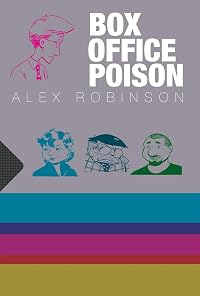
Box Office Poison
by Alex Robinson
On This Page
Description
This epic story of Sherman, Dorothy, Ed, Stephen, Jane, and Mr. Flavor is not to be missed. Alex Robinson's completely natural and inspiring knack for dialogue has made his story of dreary jobs, comic books, love, sex, messy apartments, girlfriends (and the lack thereof), undisclosed pasts, and crusty old professionals one of the most delightful and whimsical graphic novels to hit the stands in years.Tags
Recommendations
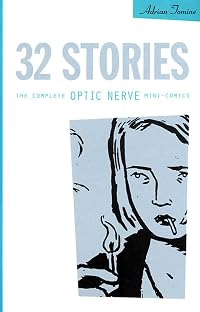
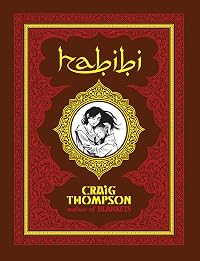
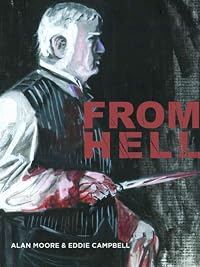


Member Recommendations
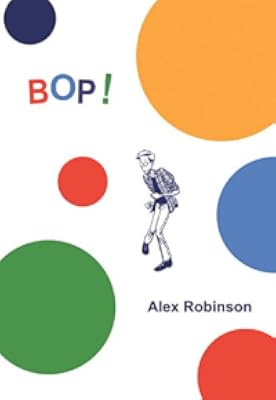
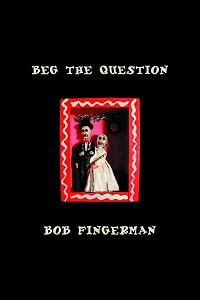
lifeguardsleeping i personally didn't care for "box office poison" due to my preference for fingerman's dirtier, raunchier, and more interestingly drawn version of the "hopeless cartoonist and crazy girlfriend in new york city narrative." read both and tell me which you think is better. ("bop" reminds me weirdly of doug, that 90s-era nickelodeon character, whereas "btq" reminds me of crumb.)
Member Reviews
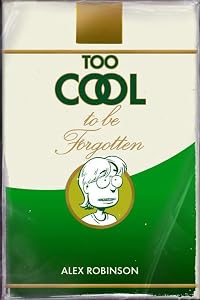
One of my favorite things about going into a good used bookstore (you know the ones that actually carry comics and graphic novels) is discovering artists/authors I hadn’t heard of before. And last year when exploring one of my favorite stores I came across the book “Too Cool To Be Forgotten” and was entranced by Alex’s art and story. So I eagerly looked to see what else he had done and soon discovered “Box Office Poison,” one of Alex’s best known works. The story explore themes of friendship, life, love...and comic books. How could I not be intrigued by that? But I have to admit when I first picked up the book I was a bit intimidated by it, I mean it is a massive book at just over 600 pages. But I was eager to read the show more story and dove into the work.
Sherman and Ed are two young friends trying to make it in the larger world. Sherman is just out of college and wants to be a writer, but for now he’s working a dead end job as a clerk in a bookstore. Ed, who is shy and a bit unsure of himself, wants to create comics for a living. He’s already got a few ideas brewing in his head and he’s got an internship lined up with a once great artist, whose know fallen out of favor and is forgotten. Along the way to fulfilling their dreams, Ed and Sherman make and lose new friends and roommates all on the same path as they are. All, even the oldest, are still trying to find their dreams and survive life as best as they can.
This is a long story, probably one of the longest that I’ve read in a long time (well since “Habibi” at the very least.) And dense. Wow is it dense, I had to stop a lot while reading it to ponder what was going on and because at times the storyline felt like it was resonating all too closely with my own life. I must have stopped and started the book a dozen or more times. Don’t get me wrong I enjoyed the book, but there was a lot to take in, not only with the story, but the artwork as well. But I kept reading the book, not just because I wanted to finish it, but because I related to the characters as they dealt with whatever life tossed their way (sometimes they dealt with it poorly, but still...) How they dealt and managed relationships and their own insecurities at times hit way too close to home, but enlightening at the same time. Alex did a great job of telling the story of these characters, not just of the troubles they had in life, but those moments of sheer joy and happiness as well. He made the story feel like I was reading a documentary, because nothing was kept out, nothing was scared, it was hopeful and depressing all at the same time.
I think one of my favorite parts of this book is right there at the very end, where there’s the discussion on friendships/catch up of what the characters are up too. There’s just this quote that really resonated with me and in many ways sums up how I viewed the book. The quote is “most friendships, if the end at all, end not by earthquake, but by erosion.” Not only does it tie everything together about the book (or at least it feels that way too me), but it just resonates with me at this juncture in my life as I’m in similar place. People moving, new jobs, doing new and different things and all of us moving along our own path to different parts of our lives. It almost feels like the fireworks and the explosions would be a better way to end it, because then you at least know why it ended and it’s definitive unlike the erosion...where no one did anything in particular to end but no one did anything to save it and you at times make half hearted efforts to restart it, before at some point just giving up. Its the thing that i’m still pondering even days after reading this book.
I have some difficulty with the art in this book, in part because Alex packs a lot and I do mean a lot, of art into the page. It at times makes it a bit difficult to see everything that’s going on and is another reason why I had to keep stopping and starting the book. He adds so many details in and in many ways it reminds me of some other underground comics artists, such as some of the work I’ve seen done by Matt Groening. What I did like though is that Alex isn’t often bound by typical border panels, he often has characters going off the edge or rearranging the panels till they twist and turn around a character’s head or in one instance using a solid black line through a panel bisecting the same scene to give a character the chance to interact with the story in a new way.
Overall I’d give the work 3.5 out of 5 stars (the density takes a bit off for me.) I’d recommend this book to those that like watching documentaries and wouldn’t mind reading one in print. show less
Sherman and Ed are two young friends trying to make it in the larger world. Sherman is just out of college and wants to be a writer, but for now he’s working a dead end job as a clerk in a bookstore. Ed, who is shy and a bit unsure of himself, wants to create comics for a living. He’s already got a few ideas brewing in his head and he’s got an internship lined up with a once great artist, whose know fallen out of favor and is forgotten. Along the way to fulfilling their dreams, Ed and Sherman make and lose new friends and roommates all on the same path as they are. All, even the oldest, are still trying to find their dreams and survive life as best as they can.
This is a long story, probably one of the longest that I’ve read in a long time (well since “Habibi” at the very least.) And dense. Wow is it dense, I had to stop a lot while reading it to ponder what was going on and because at times the storyline felt like it was resonating all too closely with my own life. I must have stopped and started the book a dozen or more times. Don’t get me wrong I enjoyed the book, but there was a lot to take in, not only with the story, but the artwork as well. But I kept reading the book, not just because I wanted to finish it, but because I related to the characters as they dealt with whatever life tossed their way (sometimes they dealt with it poorly, but still...) How they dealt and managed relationships and their own insecurities at times hit way too close to home, but enlightening at the same time. Alex did a great job of telling the story of these characters, not just of the troubles they had in life, but those moments of sheer joy and happiness as well. He made the story feel like I was reading a documentary, because nothing was kept out, nothing was scared, it was hopeful and depressing all at the same time.
I think one of my favorite parts of this book is right there at the very end, where there’s the discussion on friendships/catch up of what the characters are up too. There’s just this quote that really resonated with me and in many ways sums up how I viewed the book. The quote is “most friendships, if the end at all, end not by earthquake, but by erosion.” Not only does it tie everything together about the book (or at least it feels that way too me), but it just resonates with me at this juncture in my life as I’m in similar place. People moving, new jobs, doing new and different things and all of us moving along our own path to different parts of our lives. It almost feels like the fireworks and the explosions would be a better way to end it, because then you at least know why it ended and it’s definitive unlike the erosion...where no one did anything in particular to end but no one did anything to save it and you at times make half hearted efforts to restart it, before at some point just giving up. Its the thing that i’m still pondering even days after reading this book.
I have some difficulty with the art in this book, in part because Alex packs a lot and I do mean a lot, of art into the page. It at times makes it a bit difficult to see everything that’s going on and is another reason why I had to keep stopping and starting the book. He adds so many details in and in many ways it reminds me of some other underground comics artists, such as some of the work I’ve seen done by Matt Groening. What I did like though is that Alex isn’t often bound by typical border panels, he often has characters going off the edge or rearranging the panels till they twist and turn around a character’s head or in one instance using a solid black line through a panel bisecting the same scene to give a character the chance to interact with the story in a new way.
Overall I’d give the work 3.5 out of 5 stars (the density takes a bit off for me.) I’d recommend this book to those that like watching documentaries and wouldn’t mind reading one in print. show less
Robinson’s most famous work is in some ways his best—his obvious youthful enthusiasm for the comics medium helps you forgive his less successful experiments (the dark subplot about the runaway girls seems out of place with the more slice-of-life tone).
The plot revolves around a group of young New Yorkers in the mid-nineties, centered on frustrated book store clerk Sherman (clearly a stand-in for the young author) and his relationship with an alcoholic writer based on Algonquin wit Dorthy Parker. There’s a bit of comics history included, thanks to the interesting subplot about a cheated comics creator and his fight for recognition for having created the Night Stalker, a superhero who looks sort of like if Batman and Spider-Man. show more
The best part of the book is the characterization of the large cast. Robinson has a good ear for dialogue, and does a fun job of hinting that even minor supporting characters have their own stories going on.
The art is very much of its time, when “alternative” comics were in black and white and designed to appeal to lonely anti-social young men. It does have a crude cartoony charm and he does a very good job of “spotting blacks” which is a technical cartooning term for being awesome.
Also of its time are the dated mores of the latter half of the last century so more sensitive viewers should proceed with caution. There is a curious amount of male nudity (especially since comics at the time were, again, aimed largely at sexless, oafish males).
So if you like interesting characters and aren’t put off by the occasional wiener this book is definitely worth buying, used if you can. show less
The plot revolves around a group of young New Yorkers in the mid-nineties, centered on frustrated book store clerk Sherman (clearly a stand-in for the young author) and his relationship with an alcoholic writer based on Algonquin wit Dorthy Parker. There’s a bit of comics history included, thanks to the interesting subplot about a cheated comics creator and his fight for recognition for having created the Night Stalker, a superhero who looks sort of like if Batman and Spider-Man. show more
The best part of the book is the characterization of the large cast. Robinson has a good ear for dialogue, and does a fun job of hinting that even minor supporting characters have their own stories going on.
The art is very much of its time, when “alternative” comics were in black and white and designed to appeal to lonely anti-social young men. It does have a crude cartoony charm and he does a very good job of “spotting blacks” which is a technical cartooning term for being awesome.
Also of its time are the dated mores of the latter half of the last century so more sensitive viewers should proceed with caution. There is a curious amount of male nudity (especially since comics at the time were, again, aimed largely at sexless, oafish males).
So if you like interesting characters and aren’t put off by the occasional wiener this book is definitely worth buying, used if you can. show less
I tend to be skeptical about comic books about comic books, but this hefty tome ably captures the medium's spirit of creativity and community without falling prey to over-romanticization. It's also a book about being young and living in Brooklyn, friendship and love. Well done. I've had this book since it was published. Why'd I wait so long to read it?
well told story, great characterizations, and good interweaving plots. Very enjoyable. I was a bit disappointed with the ending, though.
I found this to be a fairly enjoyable story about a group of friends in New York during the 90s. It has received quite a few accolades, but I wasn't as enamored as I would have wished to be. The characters are somewhat interesting, the setting somewhat interesting, the events somewhat interesting, but nothing really stood out for me. It's all a bit starchy, even though I know that it's supposed to be about just regular people. Maybe I want my fictional "regular people" to stand out a little more than just any "regular people." The best character by far is the seemingly crazy landlady who turns out to be very far from crazy.
So many adult graphic novels are dreary (Fun Home for example). Unhappy families are all sooooooo similar. This one mixes personalities, has a range of endings (some people end up happy and other choose not to). I would recommend this one to people unfamiliar with graphic novels, since as you start to read, you forget that it is graphic and it simply becomes a good read.
Well-rounded characters for a graphic novel which won't leave you filled with sadness (which seems to be the case lately).
The characters are either comic writers or aspiring novelists, except for Mr Flavor, a cranky old comic artist. All in all I enjoyed more the relationships between the younger characters rather than the battle between Mr Flavor and Zoom comics.
The characters are either comic writers or aspiring novelists, except for Mr Flavor, a cranky old comic artist. All in all I enjoyed more the relationships between the younger characters rather than the battle between Mr Flavor and Zoom comics.
Members
- Recently Added By
Lists

Unshelved Book Clubs
579 works; 5 members

Read These Too
458 works; 9 members
Author Information

18+ Works 1,443 Members
Awards and Honors
Awards
Common Knowledge
- Original publication date
- 2001-04-15 (collection) (collection); 1996-12 – 2000-10 (issues) (issues)
- People/Characters
- Ed Velasquez; Sherman Davies; Beatrice Dorothy Lestrade; Irving Flavor; Jane Pekar; Stephen Gaedel
Classifications
- Genre
- Graphic Novels & Comics
- DDC/MDS
- 741.5 — Arts & recreation Drawing & decorative arts Drawing Comic books, graphic novels, fotonovelas, cartoons, caricatures, comic strips
- LCC
- PN6727 .R57 .B69 — Language and Literature Literature (General) Literature (General) Collections of general literature Comic books, strips, etc.
- BISAC
Statistics
- Members
- 573
- Popularity
- 51,761
- Reviews
- 11
- Rating
- (3.91)
- Languages
- English, French, Portuguese (Portugal)
- Media
- Paper, Ebook
- ISBNs
- 4
- UPCs
- 1
- ASINs
- 3