On This Page
Description
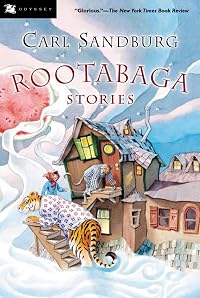
A selection of tales from Rootabaga Country peopled with such characters as the Potato Face Blind Man, the Blue Wind Boy, and many others.Tags
Recommendations
















Member Reviews
For several generations after the Declaration of Independence, USAmerican children had to content themselves with fantasies that were still decidedly European: Perrault, the Brothers Grimm, Andrew Lang; Alice’s Wonderland, Mr. Toad of Toad Hall, Beatrix Potter’s Peter Rabbit and Mrs. E. Nesbit’s Phoenix and the Carpet. Even Howard Pyle and Padraic Colum and their compatriots still told stories about kings and knights, about King Arthur and Robin Hood, about Mt. Olympus and Valhalla.
Of course, all-American bad boys had made the scene with Thomas Bailey Aldrich’s Story of a Bad Boy and Mark Twain’s Adventures of Tom Sawyer. But even Tom Sawyer was determined to teach Huck Finn and his buddies how to be knights-in-shining-armor. show more Jo March, of Little Women, though not as mischievous as Tom and Huck, was still a very American girl as were her offspring Anne of Green Gables, Rebecca of Sunnybrook Farm, Pollyanna, and later Caddie Woodlawn. But, for a long time, fantasy worlds still gravitated around Robert Louis Stevenson’s Puck Hill and A. A. Milne at Pooh Corner.
But four USAmerican writers pioneered a genuine Yankee Doodle fancy, and suddenly children’s characters were speaking a different dialect. Joel Chandler Harris collected the stories of Uncle Remus, and Br’er Rabbit and Br’er Fox scampered into our parlors. L. Frank Baum found Dorothy and Toto out in Kansas and let them be swept up by tornado to the land of Oz with a very American scarecrow and a technocratic tin man. And eventually, of course, there would be Dr. Seuss with characters considerably less genteel than the Mad Hatter and less polite than Pooh and Christopher Robin. But making way for Theodore Giesel to transform himself into Dr. Seuss and come up with these madcap characters was maybe the most quintessentially American of them all.
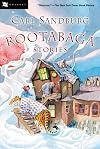
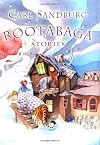
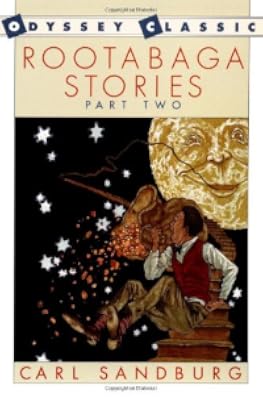
Carl Sandburg, famous for his free verse (e.g., “Chicago,” “The People, Yes”) and a multi-volume Lincoln biography took time to share his stories about zigzag railroads and a village called Liver-and-Onions and the Potato Face Blind Man and Blixie Bimber and the corn fairies of Illinois and Iowa. His Rootabaga Stories, first published in 1922, celebrated a Midwest that would have been recognized by all the Dorothys and Caddie Woodlawns and naughty boys named Tom, Huck, or Hardy. In the edition I have before me now (Harcourt Brace Jovanovich, 1988, 2vols) illustrations by Michael Hague give a new dimension of color and cartoonish liveliness to the citizens of Sandburg’s Rootabaga Country, but you really have to hear the stories read aloud in a brassy midwestern twang and you have to conjure up the characters in your own imagination to fully appreciate what Sandburg has created.
You may as well start where Sandburg started. Gimme the Ax lives with his children in a house “where everything is the same as it always was.” But they’re too curious to stay there. So they sell everything and tell the ticket agent, “We wish a ticket to where the railroad tracks run off into the sky and never come back—send us far as the railroad rails go and then forty ways farther yet.” The railroad tracks begin to zig and zag like one Z piled up on another Z. Finally they arrive in Rootabaga Country, and soon the train zigzags into the Village of Liver-and-Onions.
The stories are silly and strange and surprising and sometimes sad, but it’s the people and places in Rootabaga Country that will amuse you, confuse you, and stick in your memory for a lifetime. Oh, they’re all new and different, but you recognize them. You’ve seen the Potato Face Blind Man playing his accordion lots of places; by the time you finish reading all his stories you realize he looks and sounds like—well, none other than Carl Sandburg himself. And Uncle Remus and L. Frank Baum and Dr. Seuss. USAmerican children had their USAmerican fancies tickled. There are three stories about a gold buckskin whincher. There’s a wedding procession for the Rag Doll and the Broom Handle. There are stories about “the ways the wind went winding.”
One of my favorites is from that last section: “The Two Skyscrapers Who Decided to Have a Child.” They stand across the street from one another in the Village of Liver-and-Onions.
“High on the roof of one of the skyscrapers was a tin brass goat looking out across the prairies, and silver blue lakes shining like blue porcelain breakfast plates, and out across silver snakes of winding rivers in the morning sun. And high on the roof of the other skyscraper was a tin brass goose looking out across prairies, and silver blue lakes shining like blue porcelain breakfast plates, and out across silver snakes of winding rivers in the morning sun.”
The Northwest Wind comes blowing across the prairies from the mountains and the sea where the railroads go on and on. The wind promises never to blow the tin brass goat or the tin brass goose from the skyscrapers unless the time shall come when “I am sorry for you because you are up against hard luck.” The skyscrapers decide to have a child, and they determine that their child shall be free, not forced to stand her whole life on the same street corner. When she is born, she is named the Golden Spike Limited, “the fastest long distance train in the Rootabaga Country.” What happens to their child? How do the skyscrapers hear about it? How does the Northwest Wind react?
If you are a USAmerican reader, you will feel right at home in the Rootabaga Country. Because you will feel silly and strange and surprised and sometimes sad. But children who have Rootabaga Stories read to them are NOT likely to end up like some of the people Potato Face Blind Man describes:
“Some of the people who pass by here going into the postoffice and coming out, they have eyes—but they see nothing with their eyes. They look where they are going and they get where they wish to get, but they forget why they came and they do not know how to come away.”
People who travel to Rootabaga County keep looking and listening. Like the Potato Face Blind Man, they see even what they do not see. show less
Of course, all-American bad boys had made the scene with Thomas Bailey Aldrich’s Story of a Bad Boy and Mark Twain’s Adventures of Tom Sawyer. But even Tom Sawyer was determined to teach Huck Finn and his buddies how to be knights-in-shining-armor. show more Jo March, of Little Women, though not as mischievous as Tom and Huck, was still a very American girl as were her offspring Anne of Green Gables, Rebecca of Sunnybrook Farm, Pollyanna, and later Caddie Woodlawn. But, for a long time, fantasy worlds still gravitated around Robert Louis Stevenson’s Puck Hill and A. A. Milne at Pooh Corner.
But four USAmerican writers pioneered a genuine Yankee Doodle fancy, and suddenly children’s characters were speaking a different dialect. Joel Chandler Harris collected the stories of Uncle Remus, and Br’er Rabbit and Br’er Fox scampered into our parlors. L. Frank Baum found Dorothy and Toto out in Kansas and let them be swept up by tornado to the land of Oz with a very American scarecrow and a technocratic tin man. And eventually, of course, there would be Dr. Seuss with characters considerably less genteel than the Mad Hatter and less polite than Pooh and Christopher Robin. But making way for Theodore Giesel to transform himself into Dr. Seuss and come up with these madcap characters was maybe the most quintessentially American of them all.
Carl Sandburg, famous for his free verse (e.g., “Chicago,” “The People, Yes”) and a multi-volume Lincoln biography took time to share his stories about zigzag railroads and a village called Liver-and-Onions and the Potato Face Blind Man and Blixie Bimber and the corn fairies of Illinois and Iowa. His Rootabaga Stories, first published in 1922, celebrated a Midwest that would have been recognized by all the Dorothys and Caddie Woodlawns and naughty boys named Tom, Huck, or Hardy. In the edition I have before me now (Harcourt Brace Jovanovich, 1988, 2vols) illustrations by Michael Hague give a new dimension of color and cartoonish liveliness to the citizens of Sandburg’s Rootabaga Country, but you really have to hear the stories read aloud in a brassy midwestern twang and you have to conjure up the characters in your own imagination to fully appreciate what Sandburg has created.
You may as well start where Sandburg started. Gimme the Ax lives with his children in a house “where everything is the same as it always was.” But they’re too curious to stay there. So they sell everything and tell the ticket agent, “We wish a ticket to where the railroad tracks run off into the sky and never come back—send us far as the railroad rails go and then forty ways farther yet.” The railroad tracks begin to zig and zag like one Z piled up on another Z. Finally they arrive in Rootabaga Country, and soon the train zigzags into the Village of Liver-and-Onions.
The stories are silly and strange and surprising and sometimes sad, but it’s the people and places in Rootabaga Country that will amuse you, confuse you, and stick in your memory for a lifetime. Oh, they’re all new and different, but you recognize them. You’ve seen the Potato Face Blind Man playing his accordion lots of places; by the time you finish reading all his stories you realize he looks and sounds like—well, none other than Carl Sandburg himself. And Uncle Remus and L. Frank Baum and Dr. Seuss. USAmerican children had their USAmerican fancies tickled. There are three stories about a gold buckskin whincher. There’s a wedding procession for the Rag Doll and the Broom Handle. There are stories about “the ways the wind went winding.”
One of my favorites is from that last section: “The Two Skyscrapers Who Decided to Have a Child.” They stand across the street from one another in the Village of Liver-and-Onions.
“High on the roof of one of the skyscrapers was a tin brass goat looking out across the prairies, and silver blue lakes shining like blue porcelain breakfast plates, and out across silver snakes of winding rivers in the morning sun. And high on the roof of the other skyscraper was a tin brass goose looking out across prairies, and silver blue lakes shining like blue porcelain breakfast plates, and out across silver snakes of winding rivers in the morning sun.”
The Northwest Wind comes blowing across the prairies from the mountains and the sea where the railroads go on and on. The wind promises never to blow the tin brass goat or the tin brass goose from the skyscrapers unless the time shall come when “I am sorry for you because you are up against hard luck.” The skyscrapers decide to have a child, and they determine that their child shall be free, not forced to stand her whole life on the same street corner. When she is born, she is named the Golden Spike Limited, “the fastest long distance train in the Rootabaga Country.” What happens to their child? How do the skyscrapers hear about it? How does the Northwest Wind react?
If you are a USAmerican reader, you will feel right at home in the Rootabaga Country. Because you will feel silly and strange and surprised and sometimes sad. But children who have Rootabaga Stories read to them are NOT likely to end up like some of the people Potato Face Blind Man describes:
“Some of the people who pass by here going into the postoffice and coming out, they have eyes—but they see nothing with their eyes. They look where they are going and they get where they wish to get, but they forget why they came and they do not know how to come away.”
People who travel to Rootabaga County keep looking and listening. Like the Potato Face Blind Man, they see even what they do not see. show less
Welcome to Rootabaga Country--where the railroad tracks go from straight to zigzag, where the pigs wear bibs, and where the Village of Cream Puffs floats in the wind. You'll meet baby balloon pickers, flummywisters, corn fairies, and blue foxes--and if you're not careful, you may never find your way back home!
A collection of short stories from the imagination of Carl Sandburg, as told to his daughters. These are nonsense tales. You won't find any morals or lessons in them, although many are poignant and result in the hearer pondering life. They are best read aloud, slowly, turning the words over in your mouth before you speak them, for although they are prose, there is a rhythm and a cadence to the writing which delights the ear. The best example is of Sandburg himself reading them. There are a couple of recordings of that on YouTube, look it up and enjoy.
Note: This review is for the audiobook version.
This is a vintage collection of interconnected, whimsical short stories by famed poet, Carl Sandburg. His aim was to create a canon of Western American folk/fairy tales. The stories are fun, but don't have a particular relevance to our times. The narrator does a fine job of creating character voices and maintaining an upbeat tempo while highlighting the poetic nature of the prose. The story "The Two Skyscrapers Who Decided to Have a Child," is the best in the bunch...not whimsical, but thought-provoking and a bit haunting.
My complete review may be found at [https://www.audiofilemagazine.com/reviews/read/185024/rootabaga-stories-by-carl-sandburg-read-by-zura-johnson/]
My copy of Rootabaga show more Stories was provided by AudioFile Magazine. show less
This is a vintage collection of interconnected, whimsical short stories by famed poet, Carl Sandburg. His aim was to create a canon of Western American folk/fairy tales. The stories are fun, but don't have a particular relevance to our times. The narrator does a fine job of creating character voices and maintaining an upbeat tempo while highlighting the poetic nature of the prose. The story "The Two Skyscrapers Who Decided to Have a Child," is the best in the bunch...not whimsical, but thought-provoking and a bit haunting.
My complete review may be found at [https://www.audiofilemagazine.com/reviews/read/185024/rootabaga-stories-by-carl-sandburg-read-by-zura-johnson/]
My copy of Rootabaga show more Stories was provided by AudioFile Magazine. show less
Apparently Sandberg wrote these to be American fairy tales, feeling that traditional fairy tales from Europe had too many references to things we don't have here (such as royalty). In that aim, he only partially succeeded -- these are very nice childern's stories but overall they don't resonate. I think it is because they are mostly missing the conflict between good and evil that most traditional fairy tales have.
Supposedly american fairytales, although they have more semblance to Edward Lear nonsense. If they were in poetry form, or i was american or a child MAYBE these stories would be tolerable.
However i think even as a kid i would have hated this. I gave up reading at about the quarter mark but was just able to get through the rest thanks to a very good LibraVox recording.
However i think even as a kid i would have hated this. I gave up reading at about the quarter mark but was just able to get through the rest thanks to a very good LibraVox recording.
For 1920s picturebooks in Children's Books group, June 2020.
Not enough illustrations to fit the theme perfectly, but since we're having trouble finding a lot of choices, some of us are reading these.
I have long looked forward to reading this, because I have liked a lot of poems by Sandburg, including "Arithmetic," and at least one short story by him, "The White Horse Girl and the Blue Wind Boy" (which turns out to be included here). However, I failed to appreciate this. As one of the last stories puts it, "you must listen with your littlest and newest ears." And I no longer have access to any little and new ears, unfortunately.
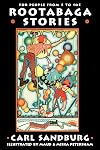
The rhythms and sounds of the language delight when read aloud (because, you know, poetry) and the art by the show more Petershams delights. But I just can't stop being a grown-up and enjoy these the way the first audience, the author's own little daughters, did.
(I do have to say, though, if you read this aloud to your littles, which I think you should do, skip the story of Rags Habakuk. Too confusing, and a real downer of an ending.) show less
Not enough illustrations to fit the theme perfectly, but since we're having trouble finding a lot of choices, some of us are reading these.
I have long looked forward to reading this, because I have liked a lot of poems by Sandburg, including "Arithmetic," and at least one short story by him, "The White Horse Girl and the Blue Wind Boy" (which turns out to be included here). However, I failed to appreciate this. As one of the last stories puts it, "you must listen with your littlest and newest ears." And I no longer have access to any little and new ears, unfortunately.
The rhythms and sounds of the language delight when read aloud (because, you know, poetry) and the art by the show more Petershams delights. But I just can't stop being a grown-up and enjoy these the way the first audience, the author's own little daughters, did.
(I do have to say, though, if you read this aloud to your littles, which I think you should do, skip the story of Rags Habakuk. Too confusing, and a real downer of an ending.) show less
Members
- Recently Added By
Lists

Children's Books by Adult Authors
26 works; 2 members

Before Austen Comes Aesop
318 works; 9 members
Talk Discussions
Past Discussions
Childrens Book: character's name is "Give me the Ax" in Name that Book (December 2018)
Author Information

235+ Works 13,036 Members
The son of Swedish immigrants, Sandburg was born in Galesburg, Illinois. At age 13 he left school to roam the Midwest; he remained on the road for six years, working as a day laborer. Sandburg served in the Spanish-American War and then, from 1898 to 1902, attended Lombard College in Galesburg. After college, he went to Milwaukee, where he worked show more as a journalist; he also married Lillian Steichen there in 1908. During World War I, he served as a foreign correspondent in Stockholm; after the war he returned to Chicago and continued to write about America, especially the common people. Sandburg's first poems to gain wide recognition appeared in Poetry magazine in 1914. Two years later he published his Chicago Poems (1916), and Cornhuskers appeared in 1918. Meanwhile, Sandburg set out to become an authority on Abraham Lincoln (see Vol. 3). His exhaustive biography of the president, which took many years to complete, appeared as Abraham Lincoln: The Prairie Years (2 vols., 1926) and Abraham Lincoln: The War Years (4 vols., 1939), which won a Pulitzer Prize. Sandburg's poetry is untraditional in form. Drawing on Whitman as well as the imagists, its rhymeless and unmetered cadences reflect Midwestern speech, and its diction ranges from strong rhetoric to easygoing slang. Although he often wrote about the uncouth, the muscular, and the primitive, there was a pity and loving kindness that was a primary motive for his poetry. At Sandburg's death, Mark Van Doren, Archibald MacLeish, and President Lyndon Johnson delivered eulogies. In his tribute, President Johnson said that "Carl Sandburg was more than the voice of America, more than the poet of its strength and genius. He was America. . . . He gave us the truest and most enduring vision of our own greatness." The N.Y. Times described Sandburg as "poet, newspaper man, historian, wandering minstrel, collector of folk songs, spinner of tales for children, [whose] place in American letters is not easily categorized. But it is a niche that he has made uniquely his own." Sandburg was the labor laureate of the United States. Sandburg received the Pulitzer Prize for poetry in 1951 for his Complete Poems (1950). Among his many other awards were the gold medal for history and biography (1952) from the American Academy of Arts and Letters; the Poetry Society of America's gold medal (1953) for distinguished achievement; and the Boston Arts Festival Award (1955) in recognition of "continuous meritorious contribution to the art of American poetry." In 1959 he traveled under the auspices of the Department of State to the U.S. Trade Fair in Moscow, and to Stockholm, Paris, and London. In 1960 he received a citation from the U.S. Chamber of Commerce as a great living American for the "significant and lasting contribution which he has made to American literature." (Bowker Author Biography) show less

Carl Sandburg has a Legacy Library. Legacy libraries are the personal libraries of famous readers, entered by LibraryThing members from the Legacy Libraries group.
Series

Work Relationships
Is contained in
Contains
How They Bring Back the Village of Cream Puffs When the Wind Blows It Away [short story] by Carl Sandburg
The Story of Blixie Bimber and the Power of the Gold Buckskin Whincher [short story] by Carl Sandburg
The Story of Jason Squiff and Why He Had a Popcorn Hat Mittens and Shoes [short story] by Carl Sandburg
Has the adaptation
Common Knowledge
- Canonical title
- Rootabaga Stories
- Original publication date
- 1922
- Dedication
- To Spink and Skabootch
- First words
- Gimme the Ax lived in a house where everything is the same as it always was.
- Original language
- English
Classifications
Statistics
- Members
- 520
- Popularity
- 57,773
- Reviews
- 12
- Rating
- (3.62)
- Languages
- Bulgarian, English, German, Swedish
- Media
- Paper, Audiobook, Ebook
- ISBNs
- 50
- UPCs
- 1
- ASINs
- 20